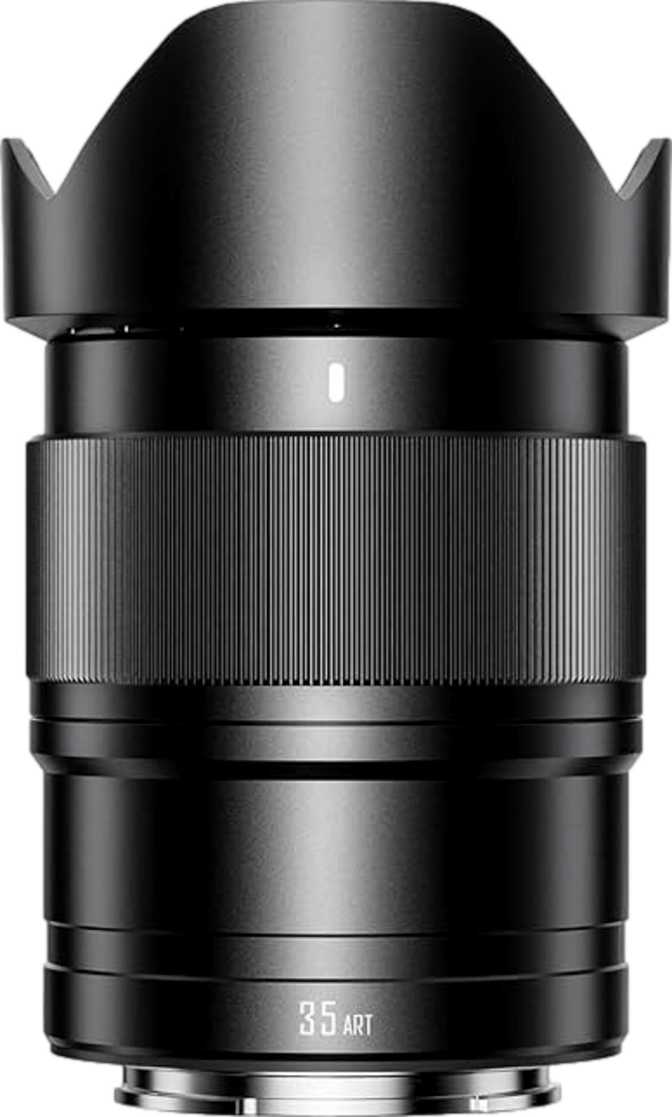
Yongnuo 35mm f/1.8 Art for Sony E-Mount: An Honest Full Review
Camera LensesKey Specifications at a Glance
Sony E-mount shooters have never had more options than they do today, and that's precisely what makes the Yongnuo 35mm f/1.8 Art such an interesting lens to examine. Yongnuo built its reputation making affordable Canon and Nikon glass long before it turned its attention to mirrorless systems, and this Sony E-mount entry represents the brand's push into a market already crowded with Sony's own native options and well-established third-party competitors. The question isn't whether this lens is cheap — it is — but whether "affordable" and "capable" can genuinely coexist here, or whether budget compromises quietly undercut an otherwise promising specification sheet.
Design and Build Quality
Physical Profile and Handling
At 265 grams, the Yongnuo 35mm f/1.8 Art sits in a genuinely comfortable middle ground on the size spectrum. It is light enough that a full day of street or travel shooting won't fatigue your wrist, yet substantial enough that it doesn't feel toy-like on a Sony body. Paired with a compact APS-C Sony body, the balance is natural. On a larger full-frame body it still handles well, though the size contrast becomes more visible.
The 52mm filter thread is a practical, wallet-friendly standard. Filters in this diameter — polarizers, UV protectors, ND glass — are widely available and generally cost less than their 67mm or 77mm counterparts. If you're building a kit from scratch, this matters more than it might seem.
Where the Build Doesn't Reach
No Weather Sealing — Worth Understanding Before You Shoot
This lens offers no weather sealing of any kind — no gaskets, no splash resistance, no dust protection. Shooting near ocean spray, in light rain, or in genuinely dusty environments means accepting real risk to the optics and internal mechanics.
For photographers who work primarily in studios, controlled indoor environments, or on dry days outdoors, this is a non-issue. For anyone who regularly shoots weddings in unpredictable weather, landscapes in misty conditions, or events where liquid and dust are occupational hazards, the absence of even basic sealing is a meaningful limitation to factor into the purchase decision.
Optical Performance: What f/1.8 Actually Gives You
Low Light and Depth of Field
The lens opens to f/1.8 — a wide maximum aperture that serves two core purposes. First, it allows significantly more light to reach the sensor compared to slower kit lenses, making it far more capable in dimly lit restaurants, indoor events, and evening scenes where flash is either unwanted or prohibited. Second, at f/1.8, the depth of field narrows considerably, which means subjects can be rendered sharply while backgrounds dissolve into soft, out-of-focus blur.
That background blur — bokeh — is directly shaped by the aperture blade design, and this is where Yongnuo made a genuinely smart choice. Nine rounded aperture blades produce smooth, circular out-of-focus highlights rather than the harsh polygonal shapes you get from lenses with fewer, straight blades. At f/1.8 through roughly f/5.6, bokeh circles remain pleasing and organic-looking. This matters most for portrait work, product photography, and any scenario where subject isolation is a creative goal.
The aperture range closes all the way down to f/22, giving you the flexibility to shoot in bright daylight without a neutral density filter and to maximize depth of field for landscape or architectural work where front-to-back sharpness is the goal.
Angle of View and the 35mm Perspective
On a Sony APS-C body, 35mm renders a field of view that approximates roughly 52–53mm equivalent — close to what the human eye perceives as natural. This makes it one of the most versatile focal lengths in existence: wide enough to capture environmental context in street and documentary work, yet tight enough to isolate a subject without excessive facial distortion.
On a full-frame Sony body, 35mm is a true moderate wide-angle — ideal for environmental portraits, photojournalism, and travel photography where you want to show a subject in their surroundings without going so wide that perspectives distort unnaturally.
Minimum Focus Distance
The lens can focus as close as 35 centimeters from the subject — measured from the sensor plane, not the front element. In practical terms, this allows you to fill a significant portion of the frame with relatively small subjects: a coffee cup, a pair of hands, a product on a table. It isn't a macro lens — the maximum magnification is modest — but for documentary detail shots and casual close-up work, the minimum focus distance is genuinely capable.
Autofocus: Quiet Operation With One Significant Flag
The Silent Motor
The built-in focus motor operates quietly — meaningfully so. During video recording, where lens noise can bleed into the audio track via the camera's microphone, a noisy focus motor is a genuine production problem. The silent motor here makes this lens usable for video work in a way that older, noisier designs simply aren't. Vloggers, documentary shooters, and anyone recording audio alongside video will appreciate this in practice.
Critical Limitation: This Lens Cannot Focus to Infinity
The autofocus and manual focus systems cannot lock onto subjects at extreme distances — distant mountains, cityscapes at dusk, stars, or landscapes where the horizon is miles away. For astrophotography, this lens is essentially unusable. For landscape work where distant elements must be sharp, this is a fundamental constraint that no technique can work around.
Before purchasing, be honest with yourself about how often your subjects are at true infinity distance. If you primarily shoot people, interiors, food, events, and street scenes, this limitation may never surface in actual use. If landscapes and night skies are core to your work, this lens simply isn't the right tool — no amount of technique compensates for a hard optical ceiling.
Full-Time Manual Focus Override
The lens does not support full-time manual focus override — meaning you cannot grab the focus ring and make fine adjustments while the autofocus system remains active. To manually control focus, you need to switch the camera or lens into a dedicated manual focus mode. For photographers who rely on autofocus-plus-manual refinement workflows — common in portrait and detailed product work — this adds a small but real friction point to the shooting process.
Who Should Buy This Lens
Understanding whether this lens fits your specific shooting habits is the most important step before purchasing.
The Right Buyers
- Street and documentary photographers wanting a discreet, lightweight prime for candid work in everyday shooting conditions
- Portrait photographers on Sony APS-C or full-frame bodies who want background separation without a major financial commitment
- Video creators and vloggers who need quiet autofocus and a natural field of view for talking-head and environmental footage
- New Sony mirrorless owners building a first prime lens kit on a constrained budget
- Travel photographers shooting in dry conditions who value light weight over weather protection
Look Elsewhere If...
- Landscape or seascape photography is part of your work — infinity focus and weather sealing are both absent here
- Astrophotography is a regular pursuit — the lack of infinity focus makes night sky shooting impractical with this lens
- Your assignments take you into rain, ocean spray, or dusty environments without reliable protection options for the gear
- You rely heavily on focus-and-refine workflows using full-time manual override during active autofocus shooting
Competitive Positioning
How the Yongnuo 35mm f/1.8 Art stacks up against its most logical Sony E-mount alternatives.
| Feature | Yongnuo 35mm f/1.8 Art | Sony FE 35mm f/1.8 | Sigma 35mm f/1.4 Art |
|---|---|---|---|
| Max Aperture | f/1.8 | f/1.8 | f/1.4 |
| Weather Sealing | No | Yes | Yes |
| Infinity Focus | No | Yes | Yes |
| Aperture Blades | 9 (Rounded) | 11 (Rounded) | 9 (Rounded) |
| Weight | 265 g | 280 g | 665 g |
| Filter Thread | 52 mm | 55 mm | 67 mm |
| Price Tier | Budget | Mid-Range | Premium |
Sony's 35mm f/1.8 adds weather sealing and infinity focus at a higher price, making it a more complete package. The Sigma 35mm f/1.4 Art is optically exceptional but significantly heavier and priced in a different tier entirely.
An Honest Assessment
Genuine Strengths
Nine rounded aperture blades at this price point is a genuine plus — a design choice that signals real attention to image quality beyond raw spec numbers. Smooth, pleasing background blur in portrait and product work is the direct result, and it's not something you automatically get from budget alternatives in this focal length range.
The silent focus motor is practically useful, not just a marketing line. Video shooters and vloggers can record audio without the mechanical noise that older lens designs produce. Combined with a natural 35mm perspective, this lens fits video production workflows more comfortably than many of its peers at this price.
At 265 grams with a 52mm thread, daily carry is undemanding and accessory costs stay low. For Sony users who want their first fast prime without a significant financial commitment, the f/1.8 aperture alone opens creative possibilities that kit lenses keep firmly closed.
Real Limitations
The absence of infinity focus is not a cosmetic weakness — it's a structural constraint that removes entire photographic genres from consideration. Landscape shooters, astrophotographers, and anyone who regularly works with subjects at extreme distances will encounter this limitation immediately and repeatedly in the field.
The lack of weather sealing means the lens needs more careful handling than comparable alternatives at the next price tier. Shooting in unpredictable conditions — weddings, outdoor events, coastal environments — means either accepting real risk or keeping protective solutions on hand at all times.
The inability to engage full-time manual focus override limits workflow flexibility in ways experienced photographers will feel more acutely than beginners. It adds friction in any scenario where fast autofocus-plus-manual refinement is the preferred working method.
Questions Buyers Ask Before Purchasing
Answers to the specific things real photographers search for before committing to this lens.
Final Verdict
A clear, direct purchase recommendation based on this lens's complete performance profile.
The Yongnuo 35mm f/1.8 Art for Sony E-mount is a legitimate option for a specific type of buyer — and a poor fit for others. If your photographic life centers around people, events, interiors, street scenes, and everyday travel in good weather, this lens delivers a fast aperture, pleasant bokeh, and quiet autofocus at an entry-level price. Those are real advantages that will show up in real photographs.
If your work regularly involves distant subjects, nightscapes, landscapes, or shooting in wet and dusty conditions, the limitations here aren't theoretical — they will affect your results in concrete ways that no post-processing can fix.
Buy this lens if you've honestly confirmed that no infinity focus and no weather sealing don't apply to your shooting. Pass on it if either limitation hits close to home — there are better-suited options at the next price tier that address both gaps directly.
What makes this lens honest rather than simply cheap is that its compromises are concentrated in specific, identifiable areas. A buyer who maps their actual shooting habits against those limitations can make a genuinely informed decision — and for the right user, the compromises may truly not matter.