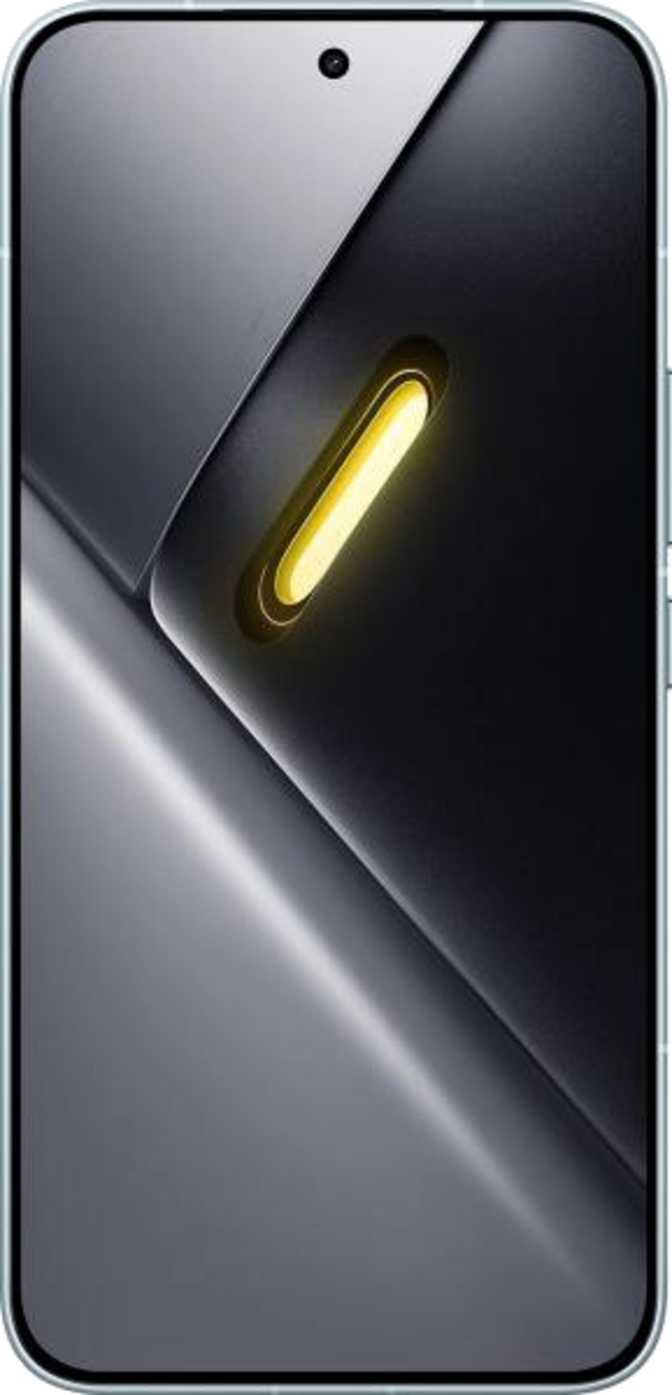
Xiaomi Poco X8 Pro Max Full Review: Extraordinary Battery, Real Trade-Offs
SmartphonesA battery-first flagship that keeps its promise — with deliberate trade-offs worth understanding before you buy.
Editor's Score
The Poco X8 Pro Max arrives at a crowded moment in the mid-to-upper tier of the Android market, but it does not arrive quietly. A 9,000mAh battery that would have been considered outlandish on a flagship just a few years ago, a chipset built on the same 3-nanometer manufacturing process as the best processors money can buy, and an IP69 waterproofing rating that outranks most phones at any price — these are not incremental improvements. They are a statement about what priorities Xiaomi's Poco sub-brand is betting on. Whether those are your priorities is what this review is designed to help you figure out.
Build and Design: Serious Protection in a Surprisingly Slim Frame
Physical build, IP rating, dimensions, and display glass
8.2mm
Slim Profile
218g
Weight
IP69
Water Resistance
GG 7i
Gorilla Glass 7i
At first glance, the numbers suggest a large, heavy phone — and the Poco X8 Pro Max is certainly not small. Spanning nearly 163mm tall and close to 78mm wide, it occupies a generous footprint in the hand. At 218 grams, it is a phone you will feel in your pocket. Yet the 8.2mm profile keeps it from feeling brick-like, and the absence of a rugged military-spec aesthetic means it reads as a premium smartphone rather than a construction site tool.
The flat display eliminates accidental edge touches and the visual distortion that curved screens can introduce. There is no foldable hinge, which removes any mechanical failure risk from that category of design choice. These are deliberate choices that prioritize reliability and longevity over novelty.
IP69: Beyond Standard Waterproofing
Most smartphones carry IP67 or IP68 ratings, which cover submersion at a fixed depth. IP69 goes further — it certifies resistance to high-pressure, high-temperature water jets fired at close range.
The phone handles a powerful tap rinse, a downpour, or a beach splash without concern. Its 1.5-meter submersion depth is almost secondary to that jet-wash tolerance.
The Display: Where This Phone Clearly Invests
6.83" OLED · Dolby Vision · HDR10+ · 120Hz · 480Hz touch sampling
6.83"
OLED Display
447ppi
Pixel Density
120Hz
Refresh Rate
480Hz
Touch Sampling
Size, Sharpness, and the OLED Advantage
The 6.83-inch OLED panel is the kind of screen that, once used for a few days, makes smaller displays feel cramped. OLED technology means every pixel generates its own light — blacks are genuinely black because those pixels switch off entirely, rather than being backlit and blocked. The result is a contrast ratio of 8,000,000:1, which translates into images with a visual depth and pop that LCD displays cannot replicate regardless of their brightness.
At 447 pixels per inch, sharpness exceeds what the human eye resolves at normal viewing distances. Text is razor-crisp, fine detail in photos is fully rendered, and there is no visible pixelation even at close range.
Motion, Touch, and HDR Color
The 120Hz refresh rate delivers noticeably smoother scrolling, navigation, and gaming compared to a standard 60Hz panel — one of those features you only miss when you go back to a slower display. The 480Hz touch sampling ensures screen response to finger movements is imperceptibly fast, a genuine advantage in fast-reflex gaming.
HDR10, HDR10+, and Dolby Vision support covers the full spectrum of high dynamic range content. Dolby Vision adds scene-by-scene tone mapping — Netflix, Apple TV+, and Disney+ Dolby Vision content displays with richer highlights and shadow detail than a standard HDR panel delivers.
Dolby Vision
Full Dolby Vision playback supported
Always-On Display
Time and notifications without a full wake
800-nit Brightness
Comfortable in most indoor and outdoor conditions
Performance: A 3-Nanometer Engine Under the Hood
MediaTek Dimensity 9500s · 12GB DDR5 · 512GB storage · 3nm process node
The Processor Explained
The MediaTek Dimensity 9500s sits at the top of MediaTek's lineup, manufactured on a 3-nanometer process. A smaller process node means more transistors fit in the same space — more processing power, better efficiency, and less heat. The 3nm generation is the same manufacturing standard used in the chips powering the most premium flagships on the market. This is not a cost-cut chipset wearing a new label.
The eight cores are arranged in three tiers: one high-performance core runs above 4.2GHz for peak demand, three cores at 3.5GHz handle sustained workloads, and four efficiency cores at 2.7GHz manage lighter tasks. The phone only spins up its most powerful cores when truly needed, maximizing endurance without sacrificing peak capability.
Geekbench 6 Benchmark Performance
Single-Core Score
Flagship-tier single-thread speed
Multi-Core Score
Competes at the highest available tier
12GB
DDR5 RAM
5,333 MHz · 85.3 GB/s bandwidth
512GB
Internal Storage
No microSD expansion slot
Memory: Speed That Never Bottlenecks
Twelve gigabytes of DDR5 RAM at 5,333MHz means the processor rarely waits for data. The phone keeps many apps loaded simultaneously — switching between a browser with multiple tabs, a streaming app, messaging, and navigation happens without reload delays. The 16MB L3 cache adds another fast-access layer, allowing the processor to retrieve frequently used data almost instantly without reaching out to slower main memory. The result is consistent, lag-free performance across every workload type.
Storage: 512GB and the No-Card Trade-Off
The 512GB of built-in storage is generous enough that most users will never manage it consciously. Years of photos, videos, offline content, and apps fit comfortably. The absence of a microSD slot is a deliberate choice common among flagship manufacturers — with 512GB on board, the practical impact is limited for the vast majority of users. It is, however, a firm ceiling rather than an expandable starting point.
Camera System: Competent, With Honest Limitations
Dual rear cameras · OIS · Phase-detection AF · 4K/60fps · 20MP front camera
- Resolution
- 50 megapixels
- Aperture
- f/2.2 (moderate wide)
- Stabilization
- Optical (OIS)
- Autofocus
- Phase-detection (PDAF)
- Sensor type
- BSI CMOS
- Video
- 4K at 60fps
- Optical zoom
- None — digital only
- Resolution
- 8 megapixels
- Aperture
- f/1.5 (wider, more light)
- Role
- Low-light optimization
- Focal range
- 15mm – 26mm
- HDR video
- Not supported
- Dolby Vision recording
- Not supported
What Makes It Work Well
Optical Image Stabilization physically counteracts hand movement during capture, reducing blur in lower-light conditions and making handheld video significantly more watchable. Phase-detection autofocus locks quickly onto subjects and tracks motion reliably — important for capturing children, pets, or fast-moving activity. The back-illuminated CMOS sensor design gathers more light per photosite, helping performance when lighting is challenging.
The 50-megapixel resolution means images carry enough data that cropping and reframing after the fact still leaves a sharp, detailed result — a practical advantage for anyone who frequently adjusts composition in post.
Where It Falls Short
The absence of optical zoom is the camera's most significant limitation. All magnification beyond the native field of view is digital — the processor crops into the image rather than bringing the subject closer optically. Digital zoom quality has improved with high-resolution sensors and processing, but it will not match a dedicated telephoto lens for distant subjects.
Video shooters should note the lack of HDR10 or Dolby Vision recording. The screen handles HDR playback beautifully, but footage captured on this phone is standard dynamic range. For everyday social content this is irrelevant; for serious video workflows it is a genuine constraint.
Manual Controls and Creative Features
Battery and Charging: The Most Distinctive Specification on the Sheet
9,000mAh capacity · 100W wired fast charging · Charger included in box
What This Capacity Means in Practice
Most smartphones carry batteries that demand charging every night — sometimes earlier under heavy use. The Poco X8 Pro Max, with its 9,000mAh capacity paired with the efficiency advantages of a 3nm processor, is designed to run for well over a day under heavy use and potentially two full days under moderate conditions before the cable comes out. For users who travel frequently, work long shifts away from outlets, or simply find daily charging a friction point in their lives, this is not a marginal improvement — it is a category shift in how you relate to your phone.
100W
Wired Fast Charging
Charger included in the box. Returns a depleted battery to a functional level in a fraction of the time a standard charger requires.
No Wireless Charging
There is no Qi pad compatibility and no reverse wireless charging for accessories. Users who rely on wireless pads at home, in the car, or at the desk must adapt to cable-only charging — a genuine lifestyle adjustment for wireless-first households.
Software: Android 16 With Xiaomi's Customizations
Android 16 · HyperOS overlay · Privacy controls · Multitasking features
Running Android 16, the Poco X8 Pro Max ships with one of the most current versions of Google's mobile operating system. The version brings meaningful privacy improvements to daily use: clipboard activity warnings alert you when apps access your copied text, granular camera and microphone permission controls let you limit access per session, and app tracking blockers reduce the data footprint you leave across installed applications.
Xiaomi's interface layer adds theme customization, dynamic theming, and widget support. Split-screen multitasking lets two apps share the display simultaneously — useful for comparing documents, watching video while messaging, or following a recipe while browsing. Picture-in-Picture keeps a video or call floating over other apps. The infrared blaster lets the phone act as a universal remote for televisions and air conditioning units.
Update policy note: OS updates route through Xiaomi's schedule rather than arriving directly from Google, which has historically introduced delays compared to Pixel and Samsung devices.
Key Software Features
Connectivity: Ready for the Next Decade of Networks
5G · Wi-Fi 7 · Bluetooth 5.4 · NFC · Dual SIM · USB-C 2.0 · GPS with Galileo
5G Ready
Full 5G cellular support
Wi-Fi 7
802.11be multi-link operation
Bluetooth 5.4
aptX HD supported
NFC
Contactless payments & pairing
Dual SIM
Two numbers simultaneously
USB-C (2.0)
USB 2.0 data speeds only
Wi-Fi 7 and 5G: Future-Proofed Wireless
Wi-Fi 7 introduces multi-link operation — the ability to simultaneously use multiple frequency bands — reducing latency and increasing throughput in congested environments like apartment buildings or offices. The phone is fully backward compatible with older Wi-Fi standards, so it works with any existing router. The theoretical maximum cellular download speed approaches 10,700 Mbps under ideal 5G conditions, reflecting the capability of the integrated modem rather than typical real-world figures.
The One Connectivity Compromise
The USB-C port operates at USB 2.0 speeds. On a phone designed around large storage and video capability, cable transfers of big media files to a computer are a patience test — a gap that a phone at this spec level should not have. Additionally, the absence of LDAC means Sony's ultra-high-resolution wireless audio codec is unavailable for audiophiles with compatible headphones, despite aptX HD support offering a meaningful step above standard wireless audio quality.
Audio Experience
Stereo speakers · aptX HD · Dual microphones · No 3.5mm jack · No LDAC
Stereo speakers deliver sound from two directions, creating a more immersive listening experience for video watching, gaming, and speakerphone calls — a meaningful upgrade over single-speaker devices. The dual microphone array uses both inputs for directional noise cancellation, filtering background sound during calls and recordings more effectively than a single microphone can manage.
For wireless audio, aptX HD transmits at higher bit depth and sample rate than standard Bluetooth codecs — closer to CD quality over a wireless connection. The absence of LDAC is the noteworthy gap: if your premium wireless headphones depend on Sony's ultra-high-resolution codec for critical listening, you will be limited to lesser codecs on this device. The 3.5mm headphone jack is not present; a USB-C to 3.5mm adapter or Bluetooth headphones are the path for wired listening.
Who Should Buy the Poco X8 Pro Max
Matching the right phone to the right buyer
A Strong Match For
-
Heavy users who hate charging anxiety.
If a dead phone disrupts your day and you resent the nightly charging ritual, the 9,000mAh battery solves this problem better than almost any other phone on the market.
-
Outdoor and active lifestyle users.
IP69 certification means rain, water, and dust are a non-issue. Its ingress protection exceeds most competitors at any price tier.
-
Performance-first buyers.
The Dimensity 9500s on a 3nm process delivers processing power that genuinely competes at the highest tier. Heavy gamers and multitaskers will find it more than sufficient.
-
Display enthusiasts.
A 6.83" Dolby Vision OLED at 447ppi with 120Hz and 480Hz touch sampling is a premium multimedia experience at whatever price this phone commands.
-
Travelers with dual SIM needs.
Dual SIM, strong 5G, and Wi-Fi 7 make international travel or multi-carrier use practical without workarounds.
A Poor Match For
-
One-handed phone users.
At 77.9mm wide and 162.9mm tall, this is a two-handed device by any reasonable definition. Those who prefer compact phones should look elsewhere.
-
Wireless charging households.
If your home and car are built around Qi pads, this phone forces a complete behavior change. Wireless charging is entirely absent.
-
Videographers who need HDR capture.
The absence of HDR10 or Dolby Vision video recording is a real gap for users building serious video content workflows.
-
Telephoto shooters.
Without optical zoom, the camera is wide-to-standard only. Wildlife, sports, and travel detail photography demand optical reach this phone lacks.
-
LDAC audiophiles.
If your premium wireless headphones depend on LDAC for high-resolution audio, the codec is not available on this device.
How It Compares to Its Logical Rivals
Where the Poco X8 Pro Max wins, loses, and draws against the competition
| Feature Area | Poco X8 Pro Max | Typical Upper-Mid Flagship | Premium Flagship |
|---|---|---|---|
| Chipset generation | 3nm flagship-class | 4nm or 3nm | 3nm |
| Battery capacity | ~9,000mAh — exceptional | ~5,000mAh standard | ~5,000mAh standard |
| Fast charging | 100W wired · charger included | 45–67W typical | 65–80W wired |
| Wireless charging | None | Usually present | Usually present |
| Water resistance | IP69 — superior rating | IP67–IP68 | IP68 |
| Display | 6.83" OLED · Dolby Vision | 6.1"–6.7" OLED | 6.1"–6.9" OLED |
| Optical zoom | None — digital only | 2x–5x optical | 3x–10x optical |
| HDR video recording | Not supported | Often supported | Supported |
| USB standard | USB 2.0 only | USB 2.0–3.2 | USB 3.2 |
| Wi-Fi standard | Wi-Fi 7 | Wi-Fi 6E–7 | Wi-Fi 6E–7 |
The pattern is clear: the Poco X8 Pro Max dominates on battery capacity and water resistance while making deliberate concessions in camera versatility, wireless charging, and USB transfer speed. It matches or exceeds the competition on processing power and display quality.
Honest Assessment: Where It Shines and Where It Falls Short
Stated plainly — because credibility comes from balance
Genuine Strengths
-
Extraordinary battery endurance. The 9,000mAh capacity on a 3nm processor produces real-world longevity that most competing phones cannot approach. This is not a marginal edge — it is a category difference.
-
Genuinely superior water resistance. IP69 exceeds what even expensive competitors offer. The phone handles scenarios that would damage IP67 and IP68 devices — a real-world advantage that matters when things go wrong.
-
A display that belongs in the premium tier. Dolby Vision OLED at 447ppi with 120Hz refresh and 480Hz touch sampling competes with the best screens available at any price.
-
Current-generation flagship processing power. The Dimensity 9500s is not a cost-cut chipset — its benchmark performance and efficiency place it in the same tier as the best silicon available.
-
512GB removes storage anxiety entirely. Most users will never need to manage space, delete files, or hesitate before downloading content. It is a liberating starting point for long-term ownership.
Real Weaknesses
-
No optical zoom is a genuine gap. The camera system is wide-to-standard only. Anyone who regularly photographs subjects at a distance will feel this absence every time they shoot.
-
Wireless charging is entirely absent. This is a lifestyle incompatibility for Qi-first households, not just a missing checkbox. Adapting your home and car charging setup is a real cost of ownership.
-
USB 2.0 data speeds are genuinely slow. On a phone built around large storage and video capability, cable transfers of large media files to a computer are a patience test that this spec level should not require.
-
No HDR video recording. The display handles Dolby Vision beautifully, but footage captured on this phone is standard dynamic range — a real gap for serious video creators.
-
OS updates depend on Xiaomi's schedule. Security patches and major version updates are not delivered directly from Google, which has historically meant delays compared to Pixel and Samsung flagships.
Questions Buyers Actually Ask
Straight answers to the searches that lead to this page
Final Verdict
A clear, direct purchase recommendation
Built Around a Specific Promise — And It Keeps It
The Poco X8 Pro Max is not trying to be the best at everything. It is specifically, deliberately built around the proposition that battery endurance and high-ceiling processing power matter more than camera completeness or wireless charging convenience — and then it executes that proposition at a level few phones at any price have attempted.
If you have always felt that your phone runs low at the worst times, if you work in environments where water is a concern, if you want a display that genuinely competes with the best on the market, and if you need enough processing headroom that your phone never becomes the limiting factor — this phone makes a compelling case. If wireless charging is part of your daily routine, if you regularly shoot at distance, or if the dimensions feel prohibitive in your hand, there are better-matched options for your needs.
Editor's Score