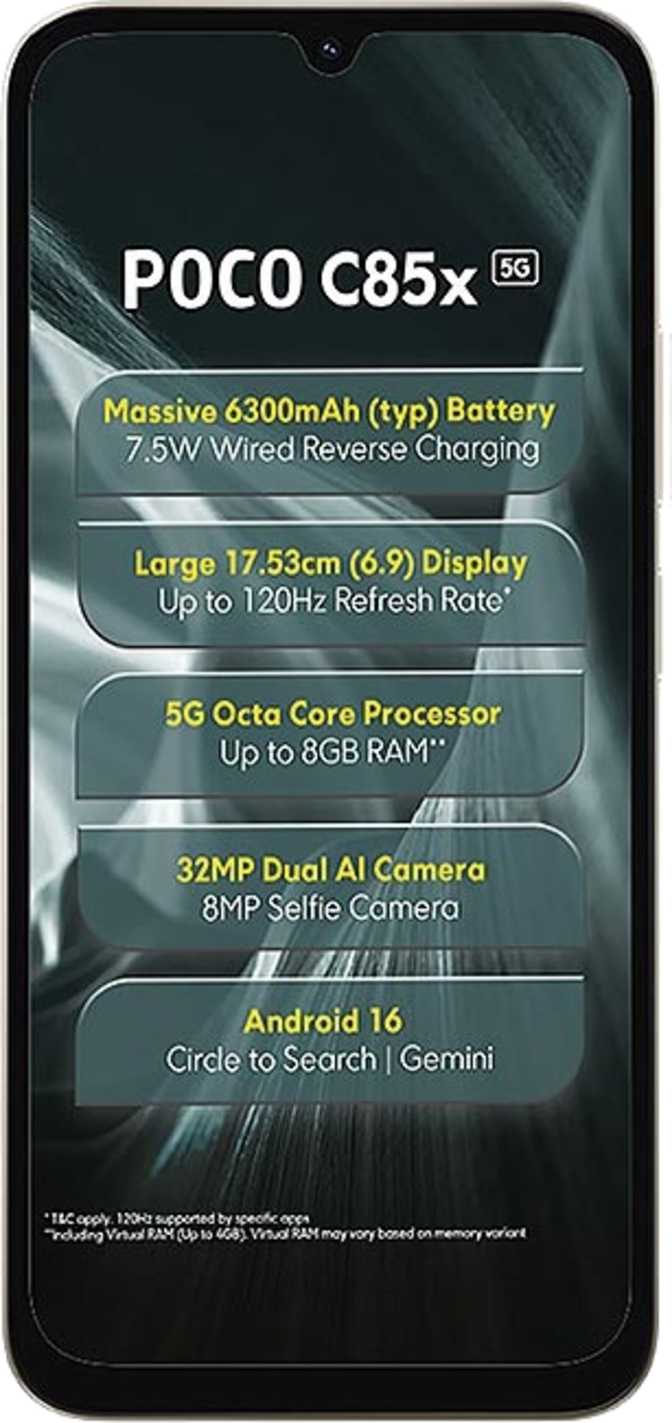
Xiaomi Poco C85x Full Review: Big Battery 5G Phone at a Budget Price
SmartphonesAt a Glance
How the Poco C85x scores across every category that matters
A battery-first 5G device that out-endures rivals at this price — with honest trade-offs on resolution and charging speed.
What the Poco C85x Is Really About
The budget smartphone space has become brutally competitive, and Xiaomi's Poco sub-brand has always thrived by pushing value harder than almost anyone else. The Poco C85x arrives as a statement device in the entry-level-to-mid tier — a phone that stacks an unusually large screen, a massive battery, 5G connectivity, and a 120Hz display into a package that undercuts far more expensive alternatives. Whether that combination holds together under scrutiny is exactly what this review answers.
Before assuming "budget" means "bad," consider the audience this phone is designed for: someone who needs a reliable daily driver, wants longevity between charges, and is stepping up to 5G for the first time. For that buyer, the C85x deserves serious attention.
Design and Build: Bigger Than It Looks on Paper
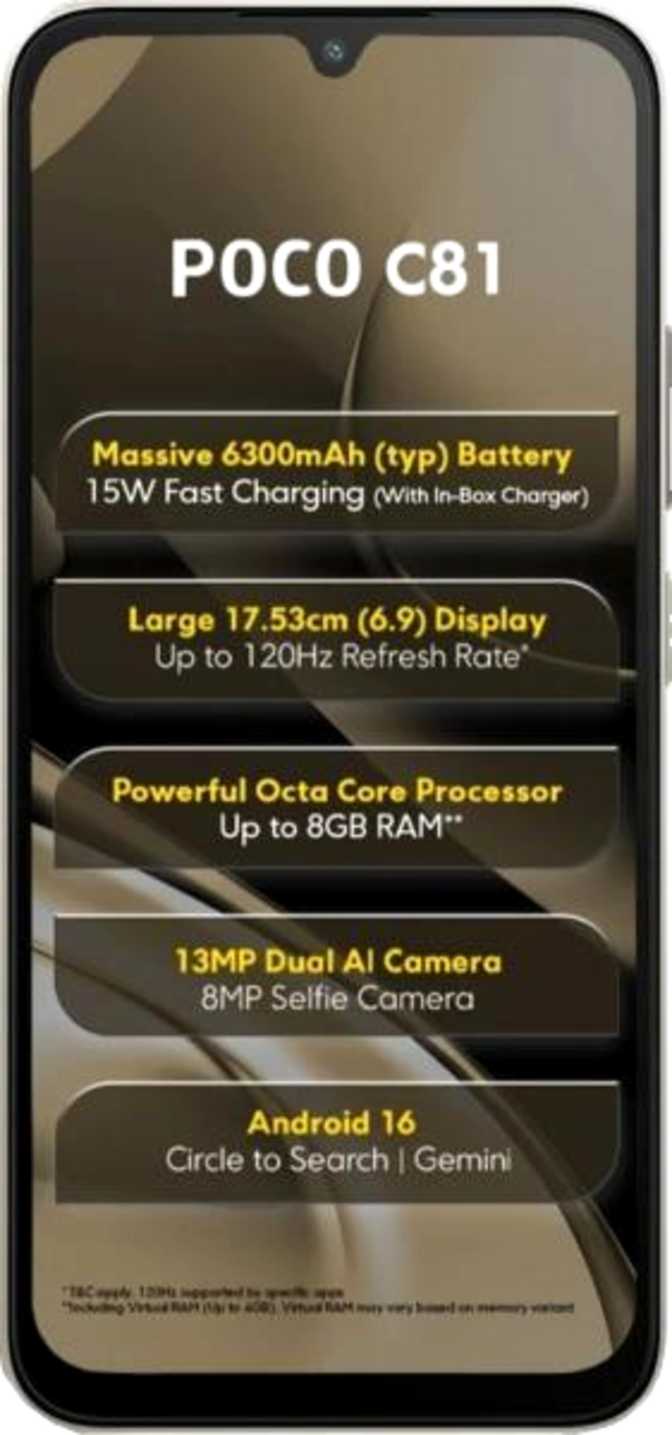
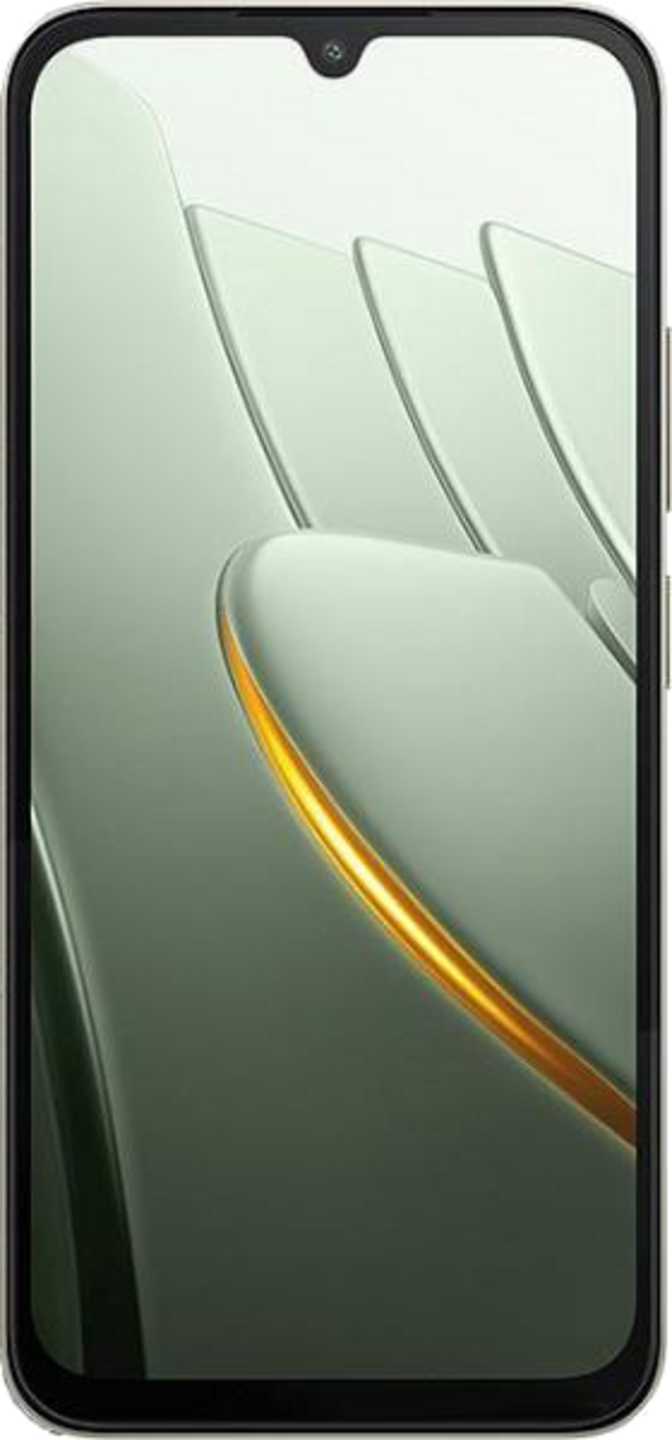
At 171.6 mm tall and 79.5 mm wide, the Poco C85x is unambiguously a large phone. Holding it single-handed is manageable for most adults, but one-thumb navigation across the full screen will require either an adjusted grip or a case that provides extra friction. At 210 grams, it carries noticeable weight — you feel it in a shirt pocket — though the 8.2 mm profile keeps it from feeling bulky when laid flat.
The build is straightforward plastic construction, which is standard at this price tier and genuinely practical: plastic absorbs drops better than glass backs and keeps manufacturing costs down without feeling cheap when properly finished. The phone carries a water-resistance designation covering splash and light rain — there is no certified IP rating, so submersion is not advised.
There is no branded scratch-resistant glass covering the display. A screen protector applied early is worthwhile maintenance. The USB-C port is a welcome modern choice, and the retention of a 3.5 mm headphone jack is genuinely useful at this price point, where buyers are less likely to own wireless audio accessories.
Display: A Large Canvas with One Significant Asterisk
The 120 Hz Advantage at This Price
The 6.9-inch IPS LCD panel is one of the C85x's most marketable attributes, and the 120 Hz refresh rate is legitimately impressive for the segment. Most phones at comparable price points ship with 60 Hz or 90 Hz panels. At 120 Hz, scrolling through feeds, swiping between apps, and navigating menus all carry a fluidity that feels more premium than the price tag suggests. This is a noticeable, tactile improvement — not a specification that disappears in real use.
IPS LCD technology delivers solid color accuracy and good viewing angles. It is not AMOLED, which means blacks appear slightly gray rather than true black, and the display is not as power-efficient as an organic panel in dark-mode scenarios. For everyday use — social media, web browsing, video — the visual experience is pleasing and well-suited to content consumption.
Resolution: The Honest Conversation
The display resolution across a 6.9-inch screen lands at approximately 254 pixels per inch. This is HD+, not Full HD. At arm's length during casual use, text and images look fine. Sit closer — during extended reading or when examining a photo closely — and pixel structure becomes faintly visible, particularly along diagonal lines and fine text.
This is the display's single significant compromise. Full HD resolution would cost more to implement, and Xiaomi has made a deliberate trade. For most buyers whose primary use is social media, streaming, and messaging, HD+ is adequate. For anyone who reads long-form content frequently or values sharp text above all else, this limitation is worth weighing honestly.
Performance: Built for Daily Tasks, Not Benchmarks
The Unisoc T8300 in Context
The Unisoc T8300 is a purpose-built chipset for the entry-to-mid segment, fabricated on a 6-nanometer process. The 6 nm node is meaningfully efficient — it is the same process generation used in chips from significantly more expensive phones, which translates to better thermal management and improved battery efficiency compared to older 8 nm or 12 nm chips that appear in rival devices.
The processor divides its eight cores into two performance cores at 2.2 GHz and six efficiency cores at 2.0 GHz — a big.LITTLE architecture that prioritizes battery savings during light tasks like browsing or messaging, then taps the faster cores when demand spikes. In practice, app launches, multitasking between social apps, and general navigation feel responsive.
Geekbench 6 — Single-Core
Handles everyday apps and UI interactions without hesitation. Not engineered for peak single-thread workloads.
Geekbench 6 — Multi-Core
Moderate multitasking and light productivity tasks handled without complaint. Not tuned for sustained heavy workloads.
RAM, Storage, and Expandability
4 GB of RAM is functional for Android at this price tier. Users who habitually keep more than six or seven apps open simultaneously will notice occasional reloads when returning to backgrounded applications. If you switch between two or three apps regularly, 4 GB handles it without drama.
128 GB of internal storage is genuinely generous at this level and eliminates the anxiety of constantly managing space. The presence of a microSD card slot adds further flexibility — capacity expansion is straightforward and inexpensive for users storing large video files or offline maps.
The Mali-G57 MP2 GPU handles casual and 2D gaming without issue. Graphically demanding 3D titles will require reduced settings to maintain acceptable frame rates. This is a media-and-communication device first; gaming is a secondary capability.
Camera System: Competent, Not Extraordinary
Main Camera Capabilities
The 32-megapixel main camera is a single-lens setup — no ultra-wide, no telephoto. In good light, 32 megapixels provides enough resolution to crop into shots and still retain usable detail. Photos for social media, family memories, and everyday documentation look solid when conditions cooperate.
The camera lacks optical image stabilization, which means hand movement during low-light shots translates directly into blur. The absence of phase-detection autofocus means focus acquisition relies on contrast-detection, which is slightly slower and less reliable when tracking moving subjects. For stationary scenes in adequate light, these limitations rarely surface.
On the positive side, the camera offers a surprisingly complete manual control set: manual ISO, manual exposure, manual focus, and manual white balance are all accessible. Slow-motion video, timelapse, burst mode, panoramas, and touch autofocus round out a feature list that punches above the typical entry-level offering. Video recording tops out at 1080p at 30 frames per second — adequate for everyday clips but not suited to content creators who need 4K output.
| Capability | Assessment | Rating |
|---|---|---|
| Daytime Photos | Good — 32 MP resolution is a genuine asset for cropping and detail | |
| Low-Light Photos | Moderate — no OIS or phase-detection AF is a real limitation | |
| Video Quality | 1080p / 30 fps — functional for everyday clips, not for creators | |
| Manual Controls | Surprisingly complete — ISO, exposure, white balance, focus all accessible | |
| Versatility (Zoom / Wide) | Limited — single lens only, no optical zoom, no ultra-wide |
Front Camera
The 8-megapixel front camera handles video calls and selfies at a level entirely acceptable for the target audience. The f/2.0 aperture allows reasonable light capture in typical conditions. There is no front-facing flash, so low-light selfies depend entirely on ambient light — screen flash via the camera app serves as a practical workaround.
Battery Life: The C85x's Most Compelling Feature
A 6,300 mAh battery in a smartphone is genuinely large. Most mid-range phones ship with cells in the 4,500 to 5,000 mAh range. This capacity, combined with the efficient 6 nm chipset, the LCD display — which draws less power than AMOLED in typical conditions — and the HD+ resolution, creates conditions for exceptional battery endurance.
Well above the mid-range category average of 4,500–5,000 mAh
Texts, social media, calls, occasional video throughout the day
Expect approximately 2.5 hours to fully charge from near-empty
Real-world expectations: light-to-moderate users — someone who texts, browses social media, watches occasional video, and takes calls throughout the day — should comfortably reach two full days on a single charge. Heavier users who stream video for hours or play games extensively will likely land at a solid full day with charge to spare.
Software Experience: Android 16 with Practical Privacy Tools
Running Android 16, the Poco C85x ships with one of the more current Android versions available — a meaningful advantage for longevity and security. The software includes a full suite of privacy controls: clipboard access warnings, granular camera and microphone permissions, app tracking controls, and location privacy options. These were once exclusive to premium Android devices.
Connectivity: 5G Without the Premium Price
5G support on a device at this price tier is one of the C85x's clearest market differentiations. The Unisoc T8300 integrates 5G connectivity directly into the chip. Wi-Fi covers both the 2.4 GHz and 5 GHz bands — you can connect to the less congested 5 GHz frequency at home for better throughput. Bluetooth 5.4 is current-generation. GPS and Galileo satellite navigation improve location accuracy by drawing from multiple satellite systems, which helps in dense urban environments.
Included
- 5G — sub-6 GHz, integrated into the T8300 SoC
- Wi-Fi 4 + Wi-Fi 5 — dual-band 2.4 GHz and 5 GHz
- Bluetooth 5.4 — current-generation for audio and peripherals
- Dual SIM — two physical SIM cards simultaneously
- GPS + Galileo — multi-system navigation for better urban accuracy
- USB-C — modern port for charging and file transfer
- FM Radio — useful where cellular data is costly
- Fingerprint Scanner — hardware-level biometric unlock
Not Included
- NFC — no contactless payments via Google Pay or similar
- Gyroscope — AR apps, tilt-based games, and compass transitions affected
- USB 3.x speed — port is USB 2.0; bulk file transfers will be slow
- Wi-Fi 6 — theoretical throughput ceiling for Wi-Fi 6 router owners
- Infrared Sensor — cannot be used as a universal remote
Who Should Buy the Poco C85x
- First-time smartphone buyers or those upgrading from a 4G device who want 5G readiness without a large outlay
- Users who prioritize battery life above all else — caregivers, travelers, workers away from chargers all day
- People who primarily use their phone for communication, social media, streaming, and light productivity
- Families wanting an affordable secondary device or a child's first smartphone
- Buyers in markets where 5G is rolling out and want to secure compatibility in advance at minimal cost
- Anyone who relies on contactless payments — the absence of NFC is a hard stop with no workaround
- Mobile gamers who play graphically intensive 3D titles — performance headroom is limited at high settings
- Photography enthusiasts who shoot in challenging light conditions regularly or need versatile multi-lens systems
- Users who rely on augmented reality apps or rotation-based navigation — no gyroscope is present
- Anyone expecting fast charging convenience — 15 W on a 6,300 mAh cell requires planning ahead, not topping up quickly
How the C85x Stacks Up Against the Competition
The Poco C85x wins on battery capacity and screen size at almost every comparable price point. The NFC absence and HD+ resolution are consistent gaps versus step-up mid-rangers — for buyers who can live without those, the value case is hard to argue against.
| Feature | Poco C85x | Typical Entry-Level Rival | Typical Step-Up Mid-Ranger |
|---|---|---|---|
| Screen Size | 6.9" | 6.5–6.7" | 6.6–6.7" |
| Refresh Rate | 120 Hz | 60–90 Hz | 90–120 Hz |
| Resolution | HD+ (720p) | HD+ | Full HD+ (1080p) |
| Battery Capacity | 6,300 mAh | 4,000–5,000 mAh | 4,500–5,000 mAh |
| 5G Support | Often No | ||
| NFC | Rarely | Usually | |
| Charging Speed | 15 W | 10–18 W | 25–33 W |
| RAM | 4 GB | 3–4 GB | 6–8 GB |
| Built-in Storage | 128 GB | 64–128 GB | 128–256 GB |
| Headphone Jack | Often No |
Strengths and Weaknesses: An Honest Assessment
The battery capacity alone justifies serious consideration — two-day battery life is a lifestyle upgrade, not a marginal improvement. Pairing that with a 120 Hz display and 5G at an entry-level price point represents a genuine engineering priority: deliver the daily-experience features that people actually feel every time they pick the phone up.
The 6 nm chipset brings efficiency that older budget chips cannot match, meaning the phone manages thermals and power draw intelligently rather than just brute-forcing tasks. Running Android 16 means software longevity is reasonable rather than immediately outdated — security patches and feature additions have room to arrive before the OS feels stale.
The 3.5 mm headphone jack, 128 GB base storage, dual SIM, and microSD expansion all add practical value that mid-range phones frequently strip away in search of a sleeker profile.
The 720p resolution is the most visible cost cut — not invisible, and not something that improves with use. If you spend meaningful time reading articles or scrutinizing photos, the display sharpness will remind you of the price tier daily. This is not a manufacturing defect; it is a deliberate trade to hit a lower cost target.
The 15 W charging speed transforms a generous battery capacity into a slower charging experience. The phone takes its time replenishing, and the absence of wireless or reverse wireless charging means you are entirely tethered to a cable at the wall. Knowing that in advance is more useful than discovering it after purchase.
The missing NFC and gyroscope are the two hardware absences that segment the audience most sharply. NFC is either irrelevant or critical depending on how you pay for things. The gyroscope will go unnoticed by most buyers and will frustrate AR users and serious navigation app users.
Common Questions Buyers Ask
Final Verdict
The Xiaomi Poco C85x is a focused device that solves a specific problem very well: delivering 5G connectivity, a large smooth display, and best-in-class battery endurance for buyers who cannot or choose not to spend more. It achieves that mission without major compromises in the areas that matter most to its intended audience.
The resolution is the most visible cost cut, and some buyers will feel it daily. The charging speed demands patience. The missing NFC and gyroscope narrow the audience — not for everyone, but specifically excluding anyone who pays with their phone regularly or relies on sensor-heavy apps.
For the buyer it is designed for, the Poco C85x delivers exactly what it promises — and then some, on battery life.
Buy the Poco C85x if
Battery life, screen size, 5G future-proofing, and value per dollar are your primary criteria — and NFC is not part of your daily routine. This phone over-delivers on endurance and under-promises on resolution, which is the right trade-off for its intended buyer.
Look elsewhere if
You want Full HD sharpness, fast charging convenience, contactless payment support, or plan to use the phone as your primary gaming device. Step-up mid-rangers address these gaps — at a higher price, but with a broader feature set that may justify the difference for your specific needs.