Whoop 5.0 Full Review: The Recovery Tracker That Ditches the Screen
Fitness TrackersMost fitness trackers try to do everything. The Whoop 5.0 makes a deliberate, almost defiant choice to ignore all of that. No screen, no GPS, no step-count ticker to glance at mid-run. What it does instead — measuring the hidden physiological signals beneath your skin — it does with a level of obsessive focus that most general-purpose wearables cannot match.
If that trade-off sounds right for you, this review covers every detail you need. If it sounds alarming, read on anyway — understanding why Whoop stripped those features out is what separates a well-informed buyer from a disappointed one.
Design, Build Quality, and Physical Experience
How it looks, how it wears, and how it holds up to real-world use
The No-Screen Philosophy
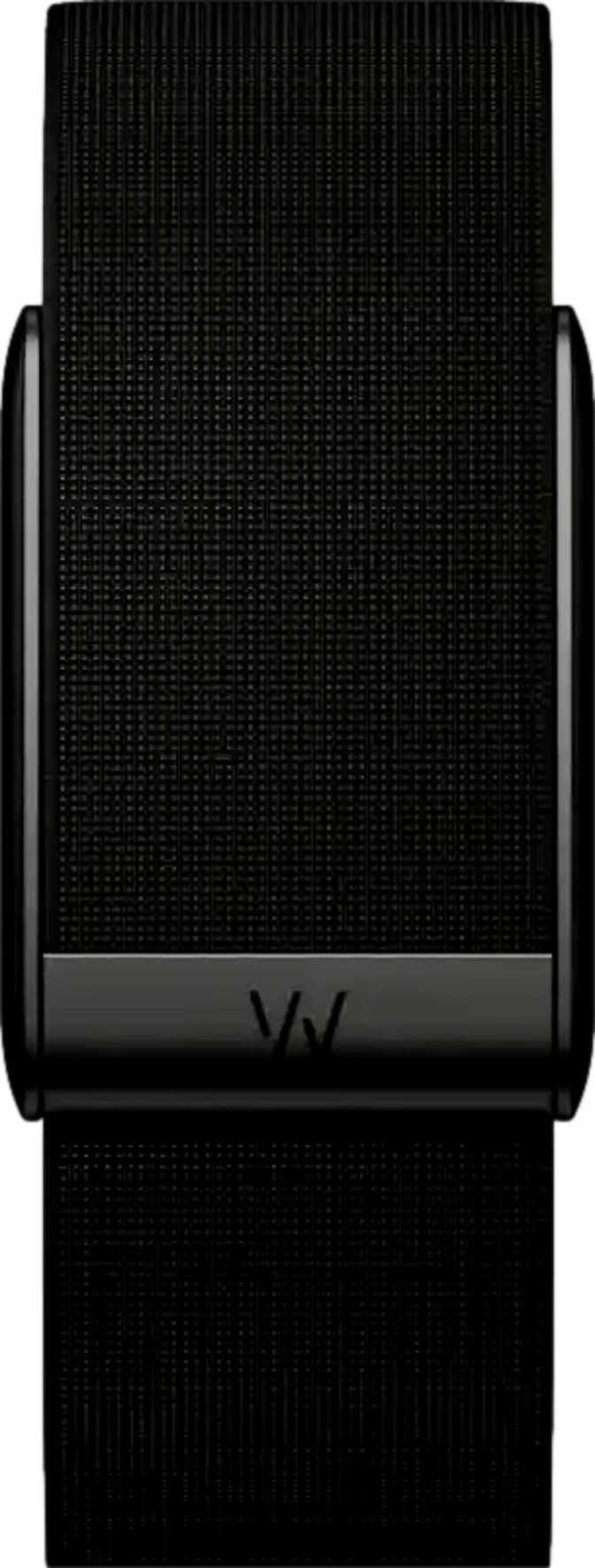
The most striking thing about the Whoop 5.0 is what is not there. No display, no buttons, no indicator lights demanding your attention. The device sits on your wrist as a flat, unobtrusive band — something between a thick bracelet and a medical sensor.
At 34.7 mm long, 24 mm wide, and just 10 mm thick, the form factor is genuinely minimal. Weighing 26.5 grams — roughly half the mass of a typical smartwatch — you stop noticing it on your wrist within a day or two. Athletes who sleep with their devices will appreciate the absence of any hard lump pressing against the wrist at night.
The band is fully user-replaceable without tools or servicing. Because Whoop is built for continuous wear, the band takes real punishment from sweat, pool water, and daily friction. Swappable bands mean the device itself does not become waste when the band eventually wears out.
Durability You Can Actually Trust
IP68-rated waterproofing and a 10-meter submersion depth place this firmly in serious aquatic territory. Lap swimming, open-water training, and casual snorkeling are all covered. The swim stroke count feature confirms this is not incidental water resistance — aquatic training is a first-class use case here.
The build is clean and understated enough for professional settings. There is nothing to signal, to someone who does not already know what Whoop is, that you are wearing a fitness device at all.
- IP Rating
- IP68
- Max Depth
- 10 Meters
- Weight
- 26.5 g
- Dimensions
- 34.7 × 24 × 10 mm
- Band
- User-Replaceable
Sensor Suite: What Is Under the Hood
Understanding what the Whoop 5.0 measures — and why those measurements actually matter
Heart Rate and Its Derivatives
Continuous heart rate monitoring forms the foundation of everything Whoop does. The raw beats-per-minute figure is almost secondary. What the device extracts from that data is more meaningful: heart rate variability (HRV), resting heart rate trends, and cardiovascular strain measured across full 24-hour periods.
HRV — the variation in time between consecutive heartbeats — is one of the most reliable indicators of nervous system recovery available without clinical equipment. When your HRV is suppressed below your personal baseline, your body is still adapting to recent stress: hard training, poor sleep, alcohol, or illness. The Whoop 5.0 tracks this continuously and factors it into its daily recovery score.
VO2 max estimation is also present — an inference of your maximal aerobic capacity, the ceiling of how efficiently your body delivers oxygen to working muscles. On a wearable this is always an estimate rather than a lab measurement, but tracked consistently over time, the trend is genuinely informative for endurance athletes.
Temperature, ECG, and Blood Oxygen
The body temperature sensor adds a dimension that pure heart rate monitors miss entirely. Skin temperature deviates meaningfully during illness, overtraining, and across the menstrual cycle. Continuous tracking creates a personal baseline, and deviations from that baseline become early warning signals.
The pulse oximeter measures blood oxygen saturation — relevant during high-altitude training, for users with respiratory conditions, or as an indicator that sleep-disordered breathing may warrant further investigation.
The ECG capability captures the electrical pattern of your heartbeat, underpinning the irregular heart rate warnings that flag potential arrhythmias or abnormal rhythm patterns. Not a substitute for a clinical ECG, but for a device worn around the clock, it provides a level of continuous cardiac awareness that was outside consumer reach until recently.
Sensor Overview
Included
- Heart Rate Monitor
- ECG (Electrocardiogram)
- Pulse Oximeter (SpO2)
- Body Temperature
- Gyroscope
- Accelerometer
Not Included
- GPS
- Barometer
- Cadence Sensor
- Perspiration Monitor
- Compass
Activity Tracking: Recovery-First, Not Stats-First
What the Whoop 5.0 tracks — and what it deliberately leaves out
-
Automatic Activity DetectionRecognizes when you have started training without requiring you to press a button or open an app.
-
Multi-Sport ModeCovers a wide range of activities with dedicated support for swimming and golf.
-
Swim Stroke CountTracks stroke count as a proxy for technique consistency and efficiency — data that GPS pace cannot capture.
-
Golf SupportAutomatic round detection with physiological data layered over play for performance-focused golfers.
-
Sleep Tracking & ReportsContinuous overnight monitoring with smart alarm that wakes you during a lighter sleep stage.
-
Step CountingPresent as a background data point, not a prominently displayed daily goal.
-
Distance TrackingCannot independently calculate distance traveled during any activity.
-
Route MappingNo GPS means no recorded routes, no breadcrumb trails, no post-run maps.
-
Pace MeasurementReal-time or average pace per mile/kilometer is not available without a connected phone.
-
Elevation TrackingNo barometer means vertical gain — critical for trail runners and cyclists — is not captured.
Whoop measures biological response to training, not the external parameters of training itself. For pace, maps, and elevation, a separate running watch or cycling computer remains necessary.
Sleep Tracking: Where Whoop Earns Its Reputation
Continuous overnight monitoring that changes how you think about rest
Sleep is arguably where the Whoop 5.0 outperforms most of its competitors. Continuous overnight monitoring captures sleep duration, sleep staging, and disturbances with a level of granularity that wrist-based trackers rarely achieve.
The sleep reports synthesize raw data — HRV, respiratory rate inferred from movement and heart rate patterns, body temperature, and time across sleep stages — into actionable feedback. The smart alarm and silent vibration alarm allow the device to wake you during a lighter sleep stage within a defined window, reducing the grogginess of being pulled from deep sleep by a fixed alarm time.
For users whose training or work performance is highly sensitive to sleep quality — which is most people, even if they do not realize it — this function alone justifies serious consideration.
Recovery and Readiness Scoring Explained
The core feedback loop that makes the Whoop 5.0 different from any other wearable
Every morning, the Whoop app surfaces a Recovery Score — a percentage expressing how prepared your body is for strain that day. This score integrates overnight HRV trends, resting heart rate, sleep performance, and body temperature deviation into a single actionable number.
High recovery means your body is primed to handle hard effort. Low recovery is a data-backed prompt to back off or rest. For athletes who struggle with the psychological pressure to train regardless of readiness, having an objective measure of fatigue carries real behavioral value. The complementary Strain Score builds throughout the day as cardiovascular load accumulates — from workouts, but also from stress, walking, and any sustained exertion. Balancing strain against recovery is the central loop the entire platform is built around.
What Feeds the Recovery Score
-
HRV (Heart Rate Variability)Primary Signal
-
Sleep PerformancePrimary Signal
-
Resting Heart Rate TrendContributing Factor
-
Body Temperature DeltaContributing Factor
Battery Life and Charging
Two weeks of endurance — and how the unique charging system works
Up to Two Weeks Between Charges
The rated battery endurance of around two weeks under typical use is exceptional for a device with this sensor density. Most competing health-focused wearables offer three to seven days at best. The extended life is especially meaningful because Whoop explicitly expects you to sleep in it — a device that requires nightly charging is architecturally at odds with the sleep tracking this platform is built around.
The sliding battery pack charges wirelessly, mounting directly over the device while it stays on your wrist. You never remove it to charge. A full charge takes approximately two hours — do it at your desk or during a meeting, and the device never breaks its data stream. There is no solar charging option and no wired backup method.
Battery Specifications
- Battery Endurance
- ~14 Days
- Charge Time
- ~2 Hours
- Charging Method
- Wireless
- Remove to Charge
- No
- Solar Option
- No
- Replaceable Battery
- Yes
Connectivity and Ecosystem
How the Whoop 5.0 connects, syncs, and fits into your digital life
Bluetooth and App-Dependent Operation
The Whoop 5.0 connects via Bluetooth with a reliable range of around five meters. There is no Wi-Fi, no NFC, and no ANT+ support — the device depends entirely on proximity to a paired smartphone for data transfer and analysis.
Compatible with both Android and iOS, the companion experience also runs via PC — useful for athletes and coaches who prefer analyzing data on a larger screen. Smart scale integration allows body composition data to feed into the broader health picture automatically, and goal setting, achievement tracking, and full app personalization are all available. The experience is completely ad-free.
The Subscription Model: Understand This Before You Buy
The app is not free, and this is non-negotiable. Whoop operates on a membership model — hardware cost is typically bundled into or subsidized by the subscription. Everything in this review — recovery scoring, sleep analysis, HRV insights, cardiovascular monitoring — is delivered through that subscription. Without it, the hardware is inert. This is either a fair ongoing exchange for a continuously improving analytics platform, or a fundamental barrier depending on your perspective. It must be factored into your total cost of ownership.
Connectivity at a Glance
- Bluetooth (Latest version)
- Android Compatible
- iOS Compatible
- PC App Available
- Smart Scale Integration
- Ad-Free Experience
- Wi-Fi
- NFC
- ANT+
- Cellular
Who Should Buy the Whoop 5.0
Real-world fit — the right buyer and the wrong buyer, clearly defined
- Serious endurance and strength athletes who train with structured periodization and need to quantify recovery, not just effort
- Athletes recovering from overtraining or illness, where readiness data guides safe return-to-training decisions
- Sleep-focused health optimizers who want continuous, detailed overnight data without nightly charging interruptions
- Cardiac awareness users interested in continuous ECG-based irregular heart rate monitoring
- Golfers and competitive swimmers who want physiological data layered over sport-specific activity tracking
- People who dislike wrist notifications and want a device that remains silent and invisible throughout the day
- Runners and cyclists who need GPS metrics — pace, route, distance, and elevation gain are simply not available here
- Buyers expecting a smartwatch — there are no notifications, no app display, no music controls, no contactless payments
- Budget-conscious buyers unwilling to commit to the ongoing subscription model — the financial commitment is continuous, not one-time
- Users who need to read the time from their wrist — there is literally no display of any kind on this device
- Casual trackers looking for basic step counting and move reminders — the platform rewards committed, data-driven engagement and penalizes casual use
How It Compares to Key Alternatives
Whoop 5.0 vs. smartwatches and the Oura Ring — an honest side-by-side
| Feature | Whoop 5.0 | Typical Smartwatch (Garmin / Apple tier) |
Oura Ring (Gen 3) |
|---|---|---|---|
| Display | None | Full Touchscreen | None |
| GPS | Most models | ||
| Battery Life | ~14 days | 1–7 days | 5–7 days |
| ECG | Varies by model | ||
| HRV Tracking | Continuous | Spot / overnight | Overnight |
| Recovery Score | Daily | Body Battery / Vitals | Daily |
| Sleep Tracking | Comprehensive | Good to Excellent | Excellent |
| Swim Stroke Count | Varies | ||
| Form Factor | Wrist Band | Wrist Watch | Finger Ring |
| Water Resistance | 10 m | 5–10 m (varies) | 100 m |
| Subscription Required | Yes — Required | Mostly no | Optional / Yes |
The Whoop 5.0 sits in a specific niche between the all-capable smartwatch and the passive wellness tracker. It out-recovers the former in physiological depth and out-trains the latter in athletic utility. Its closest philosophical rival is the Oura Ring, though Whoop delivers more active athletic monitoring — swim strokes, strain tracking, multi-sport modes — while the Oura Ring offers superior finger-form discretion and strong sleep staging for users prioritizing overnight analysis.
Honest Strengths and Limitations
What the Whoop 5.0 genuinely does well — and where it falls short
What It Does Exceptionally Well
The Whoop 5.0's greatest strength is also its greatest source of buyer confusion. By removing every feature unrelated to physiological recovery — no screen, no GPS, no notifications, no time display — the device achieves a clarity of purpose that diluted wearables cannot match. The sensors, battery architecture, and software are all aligned toward one goal: telling you, accurately and continuously, how recovered and ready your body is.
For athletes who find themselves grinding through sessions their body is not ready for, or who chronically under-rest because they cannot objectively measure fatigue, that focused capability has genuine value. The ECG and irregular heart rate warnings add a cardiac awareness dimension that raises the stakes beyond fitness into genuine health monitoring.
At 26.5 grams worn continuously — including through sleep — it collects a far more complete data picture than a device you take off at night or remove during workouts.
Where It Falls Short
The lack of GPS is the largest structural gap. The Whoop 5.0 is an incomplete standalone training tool for any distance-based sport. You will need a phone, a running watch, or a cycling computer to capture the external metrics of your sessions. The Whoop then contextualizes how your body responded to what those devices recorded — a coherent role, but one that requires accepting this device is one instrument in an ensemble.
The subscription cost is the other honest caveat. For athletes who engage seriously with the data, it represents genuine ongoing value. For occasional users or those who sign up out of curiosity and then disengage, it becomes an expensive idle subscription. The platform rewards commitment; it penalizes casual use.
The five-meter Bluetooth range and absence of Wi-Fi mean the device must stay near your phone to sync. In practice this rarely matters — but for athletes who train phone-free in remote environments, it is a real constraint.
Questions Real Buyers Ask Before Purchasing
The most common concerns answered plainly and honestly
The Whoop 5.0: A Clear Recommendation for the Right Buyer
The Whoop 5.0 is one of the most physiologically capable wearables available outside a clinical setting, built for a specific type of user who values biological insight over feature breadth. If you train with intent, care about recovery as much as performance, and are prepared to wear a device around the clock — including through sleep — the data it returns is genuinely difficult to replicate at this form factor and weight.
It is not a smartwatch. It is not a GPS running watch. It is not a general-purpose wearable. Approach it as any of those and you will be disappointed. Approach it as a continuous physiological monitoring platform and pair it with whatever sport-specific tools your training requires, and it earns its place convincingly.
Buy It If
You are an athlete or health-focused individual who trains consistently, values recovery data above performance stats, and is prepared to commit to the subscription model.
Skip It If
You need GPS, a screen, standalone training metrics, or are unwilling to pay an ongoing membership. This device knows exactly what it is — make sure you do too.