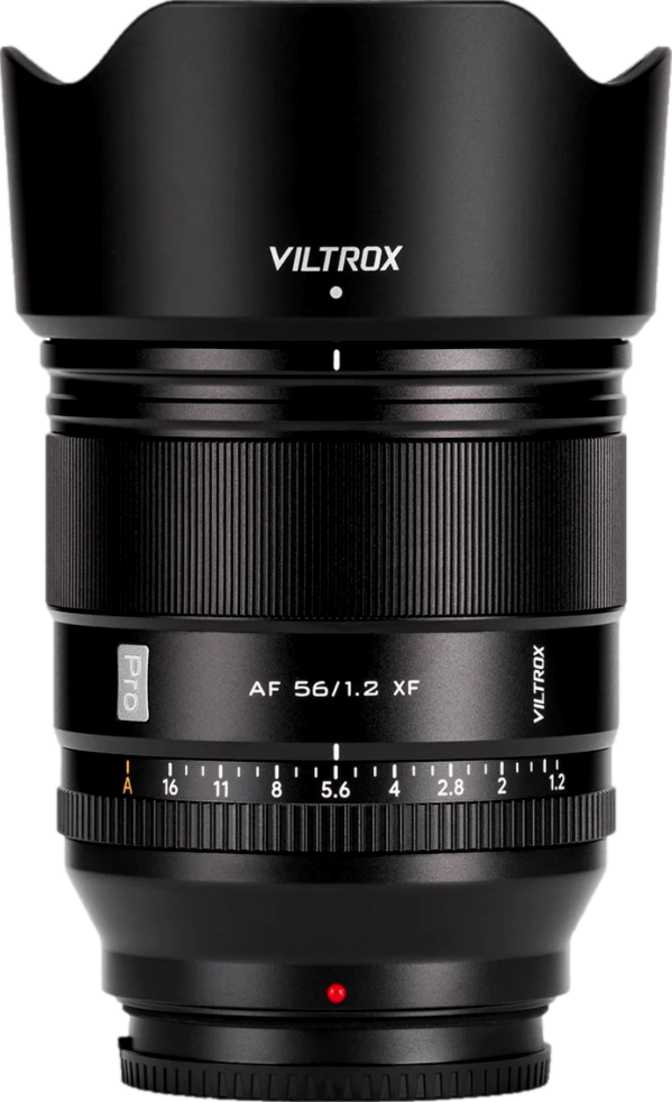
Viltrox AF 56mm f/1.2 Pro: Full Review for Fujifilm Portrait Shooters
Camera LensesOn a Fujifilm X-mount body, 56mm translates to roughly 85mm in full-frame equivalent — the portrait focal length that flatters faces, compresses perspective naturally, and separates subjects from backgrounds with authority. Paired with an f/1.2 maximum aperture, the Viltrox AF 56mm f/1.2 Pro positions itself at the serious end of APS-C portrait glass without demanding first-party pricing.
Fujifilm shooters have first-party options at this focal length, but they command a premium. The Viltrox 56mm f/1.2 Pro challenges that positioning directly — matching or exceeding key specifications at a lower cost of entry. Whether those specifications translate into a lens worth recommending is exactly what this review determines.
At a Glance
- TypePrime — Fujifilm X Mount
- Max Aperturef/1.2 — outstanding light gathering
- Aperture Blades11 rounded blades
- Weather SealedDust and splash resistant
- Weight575g — substantial
- Filter Thread67mm — common standard
- AutofocusSilent, built-in motor
- Min Focus Distance0.5m (~20 inches)
Build Quality and Physical Design
Premium construction that earns its weight
Materials and Durability
At 575 grams, the Viltrox 56mm f/1.2 Pro is noticeably denser than most APS-C primes. The weight communicates substance immediately — this is a lens built from metal and glass. The mount connecting lens to camera is metal, resisting the gradual micro-wear that comes with thousands of lens changes over the lifetime of the equipment.
Weather sealing allows shooting in light rain, humidity, and dusty environments without anxiety. This is splash resistance rather than waterproofing, but for outdoor portrait sessions and street photography in variable conditions, it removes a meaningful layer of risk from the shooting experience.
Practical Physical Features
The front element stays fixed during autofocus — it does not rotate. This matters practically for anyone using circular polarizing filters or graduated ND filters. Position the filter once and it stays regardless of what the focus motor is doing. Rotating front elements make this kind of filter use frustratingly impractical.
The 67mm filter thread is a widely used standard diameter, keeping compatible options plentiful and costs manageable. A lens hood ships in the box, providing immediate protection against stray light and frontal impacts without an additional purchase.
Aperture: The f/1.2 Advantage Explained
Light Gathering Power
f/1.2 admits roughly twice the light of a typical f/1.8 lens — a full stop of additional exposure. In low-light settings such as evening events, dimly lit venues, or indoor natural-light environments, this translates to cleaner images at lower sensitivity settings, or faster shutter speeds that freeze subject motion in conditions where slower lenses force a painful choice between noise and blur. On APS-C, where sensor area is smaller than full-frame, that extra light-gathering matters more, not less.
Background Separation
At f/1.2, depth of field becomes selective to a precise degree. Eyes can be sharp while the tip of a nose begins to soften. Backgrounds dissolve into smooth, unrecognizable gradients rather than remaining distractingly present. Achieving this level of subject isolation on an APS-C sensor requires the wide aperture to compensate for what a larger format achieves more easily — and f/1.2 delivers it convincingly at the 85mm equivalent focal length.
Eleven Rounded Aperture Blades: Why It Matters
Behind the f/1.2 opening, eleven rounded aperture blades shape how out-of-focus areas render. Blade count and curvature determine the character of background highlights — and eleven curved blades sit at the high end of what this lens category offers.
Point light sources in the background — string lights, streetlamps, water reflections — render as smooth circles rather than polygonal shapes. This out-of-focus rendering reads as organic and pleasing rather than mechanical. For portrait photographers, the difference between circular and hexagonal background highlights is clearly visible in the final image and is a quality marker that buyers in this category specifically seek out.
- Blade Count
- 11 Blades
- Blade Shape
- Rounded
- Highlight Rendering
- Circular
- Aperture Range
- f/1.2 to f/16
Autofocus Performance and Lens Handling
A focus system built for real-world use
Silent Focus Motor
The built-in motor operates without audible mechanical noise. For video, focus acquisition does not bleed into on-camera audio. For candid and documentary photography, it means quiet operation that does not break a moment.
Full-Time Manual Override
Reach for the manual focus ring at any time without switching modes or flipping a physical clutch. For photographers who use autofocus to establish and then fine-tune focus manually, this behavior is the correct one — and it is fully implemented here.
Focus Range
From 0.5 meters (roughly 20 inches) to infinity, the range covers every practical portrait, street, and landscape scenario. This is not a macro lens, but close-portrait framing is fully achievable at a natural, comfortable shooting distance.
On eye detection and face tracking: Electronic communication between this lens and Fujifilm X-mount bodies enables body-side autofocus features to function through the built-in motor. Eye detection and face tracking capabilities depend on the camera body — the lens motor is well-suited to the rapid micro-adjustments those systems require.
The 85mm Equivalent Perspective
The 28-degree angle of view that 56mm provides on APS-C is narrow enough to compress perspective and render faces flatteringly, yet wide enough to include environmental context when composition calls for it. This is precisely why the 85mm equivalent has remained the portrait standard across decades of photography — it occupies the sweet spot between distortion-free rendering and comfortable working distance. For street photography, it demands closer engagement with subjects. For events and venue work, it performs where a longer lens would become impractical.
Who This Lens Is For — and Who Should Look Elsewhere
Ideal For
- Portrait photographersFujifilm X-mount shooters who want the classic short-telephoto perspective with maximum subject isolation
- Low-light and available-light shootersWorking at events, venues, or indoor natural-light environments where sensor noise is an ongoing concern
- Video creatorsShooting narrative, documentary, or interview content requiring silent autofocus and smooth aperture rendering
- Value-focused Fujifilm usersExpanding into serious prime glass without committing to first-party pricing
- AstrophotographersWanting an 85mm-equivalent wide-aperture option for star fields and nightscapes on existing Fujifilm gear
Less Suited For
- Shooters requiring optical stabilizationNo OIS is built in. Without IBIS in the camera body, handheld shooting in low light demands careful shutter speed management.
- Close-up and macro shootersThe minimum focus distance and low magnification make this a portrait and environment lens — not suited for filling the frame with small subjects.
- Travelers prioritizing a compact kitAt 575g, this lens contradicts the portability appeal of the Fujifilm X system. It requires a real camera bag and deliberate packing decisions.
- Action and sports photographersA fixed focal length requires repositioning rather than zooming to reframe — impractical in fast-moving scenarios where subject position changes rapidly.
Competitive Positioning
How the Viltrox AF 56mm f/1.2 Pro compares to the logical Fujifilm X-mount alternatives in this focal length range
| Lens | Max Aperture | Stabilization | Weather Sealed | Weight |
|---|---|---|---|---|
| Viltrox AF 56mm f/1.2 Pro This Review | f/1.2 | 575g | ||
| Fujifilm XF 56mm f/1.2 R WR | f/1.2 | 445g | ||
| Fujifilm XF 50mm f/1.0 R WR | f/1.0 | 845g | ||
| Fujifilm XF 56mm f/1.2 R (original) | f/1.2 | 405g |
On aperture: The Viltrox matches both Fujifilm 56mm options on maximum aperture. Against the f/1.0, it gives up roughly a third of a stop — a difference that is largely academic in most real-world shooting conditions.
On stabilization: None of these lenses include optical stabilization — meaning the Viltrox's absence of OIS is not a disadvantage relative to the competition. It is simply category-standard at this focal length.
Honest Assessment: Strengths and Real Limitations
What It Gets Right
The f/1.2 aperture is the lens's most significant achievement — and it is genuine. Combined with the eleven-blade rounded aperture system, background rendering becomes a defining characteristic of images taken with this glass. In this central regard, the Viltrox AF 56mm f/1.2 Pro delivers what it promises.
Weather sealing and a metal mount at this price point represent real, tangible value. Third-party lenses at competitive pricing sometimes sacrifice these construction features to reach a lower number — the Viltrox does not. Silent autofocus and full-time manual override address the needs of video and hybrid shooters without compromise.
The non-rotating front element, included lens hood, and 67mm filter thread reflect thoughtful practical design. These are the details that matter on every shoot and are frequently omitted from budget-tier alternatives.
What to Know Before Buying
The weight is the honest challenge. At 575 grams, this lens is significantly heavier than most APS-C primes and noticeably tips the balance on compact Fujifilm bodies. Photographers who chose X-mount partly for its portability will feel the contradiction when this lens is mounted. A larger grip or handle improves ergonomics on smaller bodies, but the mass itself cannot be designed around.
The absence of optical stabilization will matter differently depending on the body it is paired with. On Fujifilm cameras with in-body stabilization, body-side compensation bridges the gap. On older or entry-level bodies without it, handheld shooting in low light requires conscious shutter speed management — though the wide aperture helps by permitting faster shutter speeds in those same conditions.
The 0.5m minimum focus distance is adequate for portraiture but will frustrate photographers who occasionally need to fill the frame with smaller subjects. This lens is built for people, not products.
Questions Buyers Ask Before Purchasing
Final Verdict
The Viltrox AF 56mm f/1.2 Pro is a serious lens for Fujifilm X-mount shooters who want the portrait focal length with maximum light-gathering capability and are not willing — or not able — to pay the premium that first-party glass at this specification level demands.
It earns a genuine recommendation for portrait, event, and low-light photographers who shoot on Fujifilm. The f/1.2 aperture, eleven rounded aperture blades, weather sealing, silent autofocus, and metal mount together form a specification profile that would have been considered exceptional at any price not long ago.
The weight is a real consideration, not a dismissible one. Understand going in that you are adding substantial mass to your kit. If that trade-off works for your shooting style, the Viltrox 56mm f/1.2 Pro delivers on its central promise — and at a price that makes first-party alternatives genuinely difficult to justify on specification grounds alone.
Quick Verdict
Best for portrait and low-light Fujifilm shooters