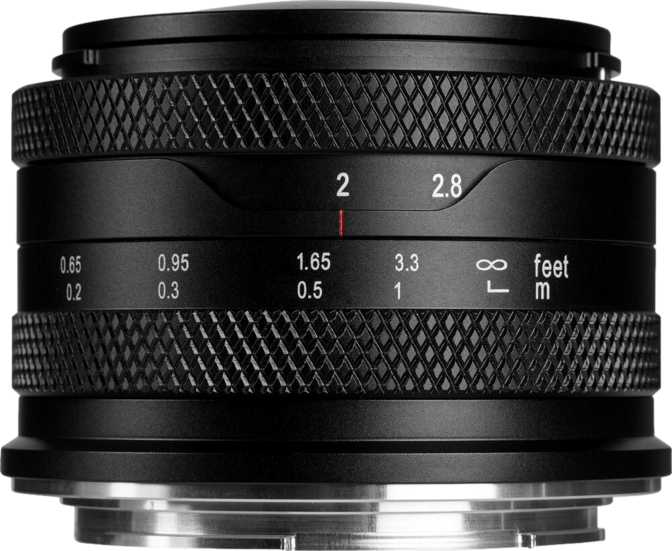
AstrHori 6.5mm f/2.0 APS-C Fisheye – Full Review for Canon RF Shooters
Camera LensesA Fisheye That Actually Respects Your Camera Body
Canon RF shooters have faced a quiet frustration for years: no native RF fisheye from Canon itself. AstrHori steps directly into that gap with a fully electronic, autofocus-capable circular fisheye built natively for the RF mount — combining mount compatibility, a genuinely fast maximum aperture, and an accessible price point that makes it worth serious attention.
Quick Verdict
The only native RF circular fisheye with autofocus and f/2.0 speed. A genuine solution for APS-C RF shooters — not a novelty compromise.
Design and Build: Small Footprint, Serious Construction
Physical experience, materials, and handling
At 268 grams, the AstrHori 6.5mm sits comfortably in hand and on camera — light enough that it won't fatigue you during a long street session, but substantial enough that nothing about it feels hollow or toy-like. The metal mount is the most important structural detail: where budget lenses often cut costs with plastic mounts that introduce micro-wobble and eventual wear, the machined metal mount here locks into Canon's RF bayonet with the kind of solid click that builds confidence.
Weather sealing is present, which is genuinely meaningful for a lens in this category. It won't survive submersion, but it does mean you can shoot in light rain, mist, or dusty outdoor environments without nursing the lens like a piece of antique china. For street photographers, skatepark shooters, and event documentarians — the natural audience for a fisheye — this is a practical daily-use feature, not a marketing footnote.
The 64mm filter thread stays fixed during focusing because the front element does not rotate. This matters because fisheye lenses are occasionally paired with circular polarizers for dramatic sky effects, and a rotating front element would make that completely unworkable. With a fixed front element, filter use remains consistent and predictable.
Build Specifications at a Glance
- Weight
- 268 g
- Mount Material
- Metal
- Weather Sealed
- Yes (splash/dust)
- Filter Thread
- 64 mm
- Front Element Rotation
- Fixed (non-rotating)
- Lens Hood
- Included
The included lens hood primarily protects the bulbous front element from physical impact. Given that the lens captures 192 degrees of the scene, it cannot meaningfully shade incoming light — the field of view is simply too extreme. Having it bundled rather than sold separately remains the right call from a value standpoint.
The 192-Degree View: What This Actually Means in Practice
Understanding the circular fisheye projection
The field of view here exceeds 180 degrees — 192 degrees to be precise. This is not a rounding error or a marketing exaggeration. It means the lens captures light from slightly behind its own axis, producing the characteristic circular image that distinguishes a full circular fisheye from a diagonal fisheye. The resulting photograph contains a complete circle surrounded by black borders within the sensor frame.
Subjects entering from the extreme edges of that circle are technically coming from a direction behind the front of the lens. This is the most extreme category of optical distortion available in a photographic lens — and it is absolutely intentional. Architectural lines bow dramatically. Horizons curve. Subjects close to the lens appear to balloon outward.
For APS-C cameras — bodies like the Canon EOS R7, R10, or R50 — this produces the full circular effect without any cropping of the fisheye circle. If you were to mount this lens on a full-frame RF body, the circle would appear smaller relative to the larger sensor, though the optical projection itself would not change. This lens is designated APS-C because that is the sensor format where the circular fisheye presentation fills the frame most effectively.
Clarity check before purchase: This is not an action-camera wide-angle look. Architectural lines will not remain straight. If you need a wide interior shot that looks architecturally faithful, this is the wrong lens — that is a factual note, not a criticism.
Optical Specification Summary
| Focal Length | 6.5 mm (fixed prime) |
|---|---|
| Lens Type | Circular Fisheye |
| Field of View | 192° |
| Projection | Circular (cropped frame) |
| Magnification | 0.12x |
| Sensor Compatibility | APS-C (optimal) |
Aperture Performance: The f/2.0 Advantage
Why the maximum aperture matters more than it seems
Most fisheye lenses, including respected options from major manufacturers, max out at f/2.8 or f/3.5. The AstrHori opens to f/2.0, which represents roughly 80% more light-gathering capability than an f/2.8 equivalent. In practical terms, this allows you to shoot in considerably darker environments while maintaining shutter speeds fast enough to freeze motion.
Concert & Live Events
Shoot in dark venues without pushing ISO to noise-inducing extremes. The extra stop of light keeps images cleaner and shutter speeds workable.
Night & Astro Work
Capture a full hemisphere of night sky in a single frame. The f/2.0 aperture pulls in significantly more starlight than the f/2.8 alternatives.
Indoor Action Sports
Skate parks and indoor arenas are rarely well-lit. A faster aperture means either lower ISO or higher shutter speed — both improve the final frame.
Aperture Range in Context
Nine Rounded Aperture Blades
The aperture mechanism uses nine rounded blades. At maximum aperture the blades are fully retracted, so their shape is irrelevant. When stopped down, the rounded design produces smoother, more circular out-of-focus highlights rather than the harsh geometric shapes that cheaper five- or six-blade straight designs create.
For video use or any shot where small light sources appear in frame, this produces a more natural, cinematic rendering at closed apertures.
Focus System: Electronic, Silent, and Overrideable
Where this lens separates itself from the budget fisheye pack
A fully electronic focus motor is built into the lens, communicating natively with Canon RF camera bodies. This means autofocus works — your camera's face detection, eye tracking, and subject recognition systems all apply. You are not manually focus-pulling every shot.
Native RF Communication
Full electronic integration with Canon bodies — no adapter, no signal loss.
Silent Focus Motor
No audible motor noise in video audio tracks — essential for action sport coverage.
Full-Time Manual Override
Grab the focus ring anytime without switching modes — instant creative control.
20 cm Minimum Focus
Place the lens extremely close to subjects for theatrical, balloon-effect perspective distortion.
The Close-Focus Creative Advantage
The 20-centimeter minimum focus distance is one of this lens's most entertaining capabilities. At that distance, with a 192-degree field of view, placing the lens extremely close to a subject — a skateboard deck, a musical instrument, a face — makes the perspective distortion extreme and theatrical. This close-focus capability combined with the fisheye effect is something photographers actively seek out for high-impact imagery, and it works here without any workarounds.
Who This Lens Is For — and Who Should Look Elsewhere
Real-world usage scenarios and honest audience matching
Right Fit
-
Skateboarding & Action Sports
The fisheye aesthetic is embedded in skate culture's visual language. This lens delivers it natively on RF bodies without adapter compromises.
-
Concert & Live Event Photographers
The f/2.0 aperture in low-light venues plus the ability to capture an entire stage from close range makes this a practical tool, not a specialty toy.
-
Astrophotographers
Capture an entire hemisphere of night sky in a single frame — something no conventional ultra-wide can achieve.
-
Stylized Video Creators
Music videos, action sport coverage — the autofocus, silent motor, and weather sealing make this a working production lens.
Wrong Fit
-
Architecture & Interior Photography
The distortion is circular and extreme, not controlled barrel distortion. Lines will not remain straight. Look at rectilinear ultra-wides instead.
-
Casual All-Purpose Wide Angle Seekers
The fisheye effect is a deliberate artistic statement, not a subtle widening of the frame. It requires creative intentionality to use well.
-
Full-Frame RF Body Owners Expecting Full Coverage
The lens will mount on full-frame RF bodies, but the fisheye circle becomes smaller relative to the larger sensor. APS-C is the optimal format for this projection.
Competitive Positioning: What Else Is in This Space
How the AstrHori compares to realistic Canon RF fisheye alternatives
The Canon RF mount fisheye market is genuinely thin, which is part of why this lens has a clear opening. The table below maps the AstrHori against the realistic alternatives an RF shooter would actually consider.
| Lens | Native RF | Max Aperture | Autofocus | Weather Sealed | Field of View |
|---|---|---|---|---|---|
| ThisAstrHori 6.5mm f/2.0 | Yes | f/2.0 | Yes (electronic) | Yes | 192° circular |
| Canon EF 8-15mm f/4L (adapted) | Via adapter | f/4.0 | Varies with adapter | Yes | Variable diagonal/circular |
| Meike 6.5mm f/2.0 APS-C RF | Yes | f/2.0 | Typically no | Varies | ~190° circular |
| Laowa 4mm f/2.8 MFT (reference) | MFT only | f/2.8 | No | No | 210° circular |
The Canon EF 8-15mm f/4L is the gold-standard optical reference — but it requires an adapter on RF bodies, costs significantly more, and opens only to f/4. For a dedicated RF shooter who wants native communication and a faster aperture, the AstrHori makes a compelling case on specifications alone.
Honest Assessment: Strengths and Weaknesses
What the AstrHori 6.5mm does well — and where it asks for patience
Where It Delivers
The genuine strengths of this lens cluster around what it does that competitors don't. Native RF mount with electronic communication, f/2.0 maximum aperture, silent autofocus, and weather sealing — finding all four of those in a fisheye at this price tier is uncommon. The build quality, with its metal mount and non-rotating front element, reflects thoughtful engineering rather than corner-cutting for margin.
The autofocus system is arguably the single most significant differentiator. Most competing circular fisheyes at this price point are fully manual focus. The AstrHori supports Canon's full subject recognition pipeline — face detection, eye tracking — which transforms how usable this lens is for fast-moving subjects in action shooting or event coverage.
The 20-centimeter minimum focus distance, combined with the 192-degree field of view, enables a specific category of close-perspective distortion that photographers deliberately seek out. This is not a technical limitation being generously described — it is a genuine compositional tool.
Where It Asks for Patience
There is no optical image stabilization, which is the most notable missing feature for video shooters. Canon's in-body stabilization on RF bodies compensates to a degree, and at ultra-wide focal lengths, shake is inherently less visible — but handheld video shooters who demand steady footage at arm's length should factor this in.
AstrHori is a newer manufacturer without the decades of optical refinement that established brands carry. Sharpness at the extreme edges of the circular image, chromatic aberration control at maximum aperture, and flare resistance are areas where independent optical testing would be most valuable — and where heritage brands have historically had advantages.
Software correction of circular fisheye images is also a more involved process than correcting standard barrel distortion. Defisheye tools exist in Photoshop and Lightroom, but using them crops the frame significantly — plan your compositions with the circular format in mind from the start.
Questions Buyers Are Actually Asking
Straightforward answers to the most common pre-purchase concerns
Final Recommendation
Our Verdict on the AstrHori 6.5mm f/2.0
The AstrHori 6.5mm f/2.0 APS-C Fisheye fills a specific, real gap in the Canon RF ecosystem. If you shoot on an RF APS-C body and want a native, autofocus-capable, circular fisheye with a faster-than-average aperture — there is essentially no direct competition at this price point.
This is not a lens for photographers who are uncertain whether they want a fisheye. The 192-degree circular effect is total and non-negotiable. But for the skate shooter, the action sport videographer, the creative portrait artist, or the night-sky enthusiast who has specifically decided they want a fisheye on their RF camera — this lens delivers the essentials without forcing you into adapter compromises or optical hand-me-downs from another mount era.
The f/2.0 aperture is the standout feature that justifies serious consideration even against more established names. Combined with the silent autofocus and weather sealing, this is a working lens rather than a novelty item. Invest time learning the creative demands of the circular format, and the AstrHori 6.5mm will return images that simply cannot be produced any other way.
Overall Rating
4.5 / 5
Highly Recommended for APS-C RF Shooters
Best For
- Action & skate photographers
- Low-light event shooters
- Video creators & filmmakers
- Night sky & astro enthusiasts
- Architecture / interior work