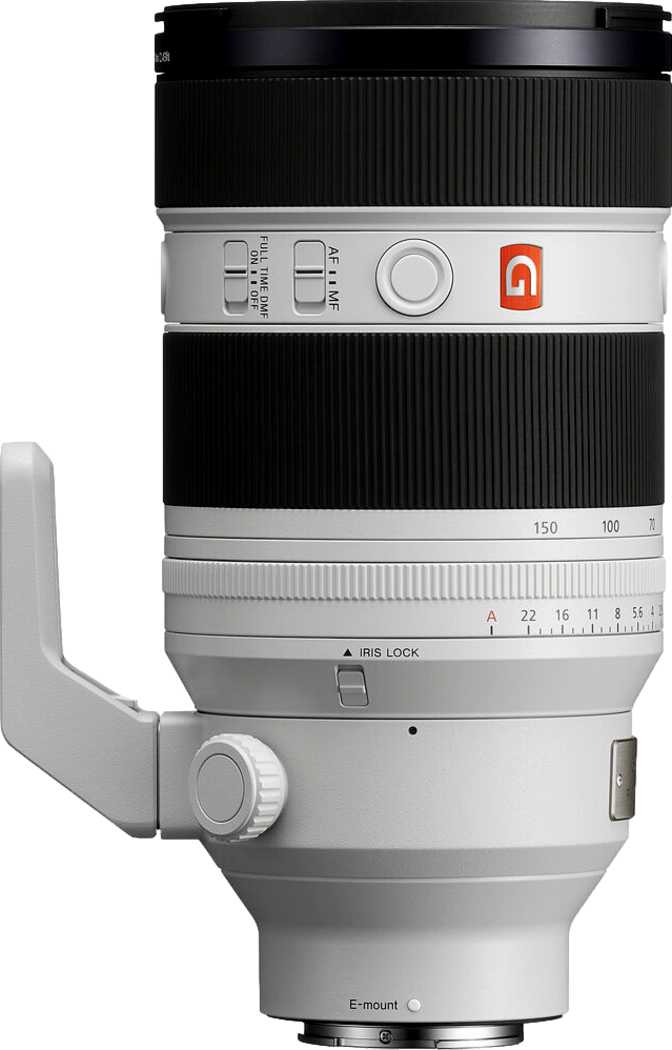
There are fast lenses, and then there are lenses that redefine what fast means for a zoom. The Sony FE 50-150mm f/2 GM occupies a category where very few lenses have existed: a mid-to-telephoto zoom that holds a constant f/2 maximum aperture at every focal length across its range. Not f/2.8 — the benchmark most professionals consider exceptional — but f/2, a full stop faster. For portrait shooters, event photographers, and anyone who earns a living in mixed or challenging light, that one stop changes the exposure math, the background separation, and the low-light ceiling of every shot.
This is a G Master lens — Sony's highest-tier optical designation, applied only when the company commits to elite resolving power, premium mechanical construction, and autofocus performance worthy of professional deployment. The FE 50-150mm f/2 GM is a deliberate specialist tool — and in the right hands, it delivers a capability the Sony system has never offered before.
At a Glance
A constant f/2 aperture across a 3× telephoto zoom range — one of the most capable portrait and event lenses in the Sony system.
Build Quality and Physical Design
Construction That Matches the Price Category
The FE 50-150mm f/2 GM is built without compromise on materials. The mount is metal — a practical necessity for a lens of this weight and intended use — and the barrel conveys the confidence expected of a professional instrument. Weather sealing throughout the body protects against dust and moisture, which matters enormously for photographers working outdoor events, weddings in unpredictable conditions, or any assignment where the environment cannot be controlled.
At 1,340 grams, this lens is unambiguously heavy. That figure needs context: maintaining a constant f/2 aperture throughout a 3× zoom range requires a substantial amount of optical glass moving in precise mechanical synchrony. The weight is the physical cost of that optical ambition. Photographers accustomed to lightweight mirrorless setups will feel this immediately. Those who already work with professional 70–200mm f/2.8 glass will recognize it as familiar territory.
The 95mm front filter thread is one of the largest standard filter diameters in current use. Compatible circular polarizers and variable ND filters at this size carry a meaningful price premium and are not universally stocked. Anyone planning a filter system around this lens should budget for that separately. The non-rotating front element — a practical design highlight — means any installed filter holds its orientation throughout the focus range, which is particularly valuable for polarizers.
Hood and Handling
The included petal-shaped lens hood reverses for compact transport. When deployed, it reduces stray light — a meaningful benefit at f/2, where veiling glare directly affects contrast and color saturation — and provides physical protection for the large front element. The hood locks firmly onto the barrel and feels purposefully designed rather than generic.
- Full weather and dust sealing throughout the barrel
- Metal lens mount for long-term mechanical reliability
- Non-rotating front element keeps filters fixed during focus
- Reversible petal hood included in the box
- 95mm filter thread — expect higher accessory costs
- 1,340g requires a quality strap for extended sessions
Core Optical Performance
Aperture — The Headline Specification
An f/2 constant zoom lens is rare at any focal range. At 50–150mm, it means the photographer shooting at 150mm still has access to the same maximum aperture as at 50mm. In practical terms: at 150mm and f/2, depth of field is extremely shallow, subject isolation is dramatic, and the camera can use a shutter speed fast enough to freeze motion in dimly lit indoor venues without pushing ISO into problematic territory.
Compare this to the f/2.8 constant aperture that defines the professional telephoto zoom standard. At equivalent settings, this lens admits twice as much light. In a dimly lit reception hall or an evening outdoor ceremony, that difference can determine whether a file is clean and sharp or requires heavy noise correction in post.
Bokeh Quality: 11 Rounded Blades
The 11-blade aperture assembly uses fully rounded blades, producing circular out-of-focus highlight rendering rather than the polygonal artifacts seen on lenses with fewer, straight-edged blades. At f/2 with the background compression available at 150mm, that rendering quality is visible in nearly every portrait and subject-focused shot. For photographers who sell on the quality of their background treatment, this is not a minor detail.
Close Focus and Reproduction Ratio
The closest focus distance of approximately 41 centimeters allows tight portrait framing at wider focal lengths and meaningful detail capture at the telephoto end without excessive physical distance from the subject. A maximum reproduction ratio of 0.2× means subjects render at one-fifth life size — appropriate for environmental portraits and event detail work, though not a substitute for a dedicated macro lens.
- Widest aperture
- f/2
- Narrowest aperture
- f/22
- Aperture blades
- 11 rounded
- Max magnification
- 0.2×
- Min focus distance
- 0.41m
Why one stop matters
f/2 versus f/2.8 means twice the light reaching the sensor. In low-light environments that translates directly to faster shutter speeds, lower ISO, and cleaner files — without any post-processing workarounds.
Autofocus System
The built-in focus motor operates silently — critical for video work where any audible mechanical noise during recording is unusable for professional delivery. Sony's motor integration within the lens means focusing speed benefits from both optical and electronic precision, contributing to reliable subject tracking at the telephoto end on moving subjects.
The lens focuses from 41 centimeters all the way to infinity, making it viable for landscape, architectural, and astrophotography applications at the longer focal lengths — even though its primary strengths lie firmly in the portrait and event space.
Silent Focus Motor
Inaudible during video recording. Suited for hybrid shooting without needing audio solutions to mask lens noise during operation.
No Full-Time Manual Focus
The focus ring cannot be grabbed during AF operation. Video focus pullers and photographers who rely on touch-confirm manual focusing will need to adjust their workflows accordingly.
Who This Lens Is Built For
The FE 50-150mm f/2 GM is a specialist tool. Knowing whether it fits your work is as important as knowing its capabilities.
Portrait & Wedding Photographers
The 50–150mm range covers every focal length a portrait specialist consistently reaches for. From environmental portraits at 50mm to isolated headshots at 150mm, one body handles the entire session at f/2 throughout. Weather sealing adds confidence for outdoor ceremonies.
Event & Press Photographers
Indoor sports, press conferences, theater performances, and corporate events benefit from telephoto reach combined with f/2. The silent AF motor is an asset in quiet environments. Continuous zoom without aperture loss means fewer lens changes and more keepers.
Video Producers
Silent AF and f/2 low-light performance suit run-and-gun video. Sony Eye AF and subject tracking work well with this lens. However, the absence of full-time manual focus is a real operational limitation for follow-focus and scripted production workflows.
Landscape & Travel Photographers
The 50mm starting point limits wide-angle versatility, and 1,340 grams is a real penalty for all-day carry. The extra aperture stop over f/2.8 glass does not reward static subjects in good light — the weight trade-off simply is not justified for this style of shooting.
Sports Photographers Needing 200mm+
If your work requires 200mm, 300mm, or greater reach for large fields or subject distance, 150mm is a hard constraint. Dedicated telephoto primes or longer zoom ranges serve those requirements far more effectively.
No Optical Image Stabilization — Understanding the Trade-Off
This lens does not include built-in optical image stabilization.
At focal lengths up to 150mm, Sony's in-body IBIS compensates for camera motion in most real-world shooting scenarios. The absence of in-lens OIS keeps the optical formula cleaner and the weight lower than a stabilized equivalent would require.
The practical impact depends directly on which body this lens is paired with. On Sony bodies with strong IBIS, the combination handles static and moderately active subjects effectively. For fast-moving subjects, shutter speed rather than stabilization governs sharpness — and at f/2, there is enough light to run fast shutter speeds even in dim environments, which is exactly where the stabilization question becomes most relevant.
Videographers shooting handheld should plan around the body's stabilization capabilities and consider a gimbal for productions requiring consistent smoothness throughout extended sessions.
Competitive Positioning
How the FE 50-150mm f/2 GM compares to the logical alternatives a Sony full-frame shooter would consider at this tier.
| Lens | Aperture | Range | Weight | Filter | OIS |
|---|---|---|---|---|---|
| Sony FE 50-150mm f/2 GM This Lens | f/2 constant | 50–150mm | 1,340g | 95mm | |
| Sony FE 70-200mm f/2.8 GM II | f/2.8 constant | 70–200mm | ~1,045g | 82mm | |
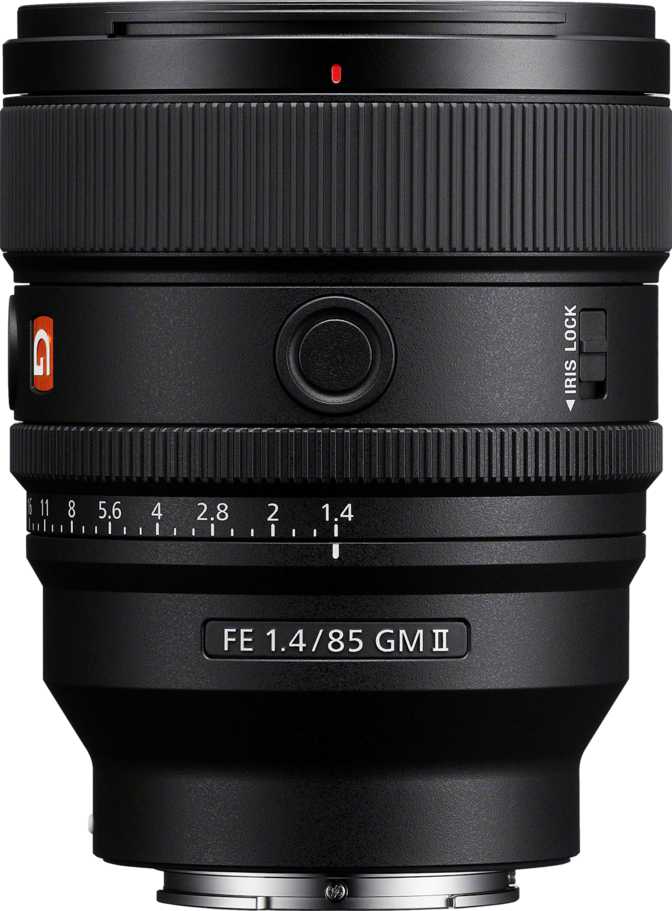
| Sony FE 85mm f/1.4 GM | f/1.4 prime | 85mm only | ~820g | 77mm | |
| Third-party 70-200mm f/2.8 options | f/2.8 constant | 70–200mm | Varies | Varies | Varies |
vs. Sony 70-200mm f/2.8 GM II
The 70-200mm offers longer reach, includes OIS, and weighs meaningfully less. Photographers who need 200mm or rely heavily on stabilization have a clear preference. But it cannot match the one-stop aperture advantage or the wider 50mm starting focal length of this lens.
vs. Sony 85mm f/1.4 GM
The prime is lighter and a stop faster at its single focal length. Photographers currently shooting events with two prime bodies can now cover the entire range and more with a single lens — sacrificing only one stop of maximum aperture versus the fastest prime options available.
Honest Strengths and Limitations
Strengths
- Constant f/2 across the full zoom rangeNo other zoom in the Sony system provides this — the defining reason to choose this lens over any alternative.
- G Master optical engineeringSony's highest optical standard — resolving power, edge consistency, and aberration control held to prime-lens expectations.
- 11-blade rounded aperture diaphragmProduces smooth, circular out-of-focus highlights — a visible quality difference in portrait work at wide apertures.
- Professional weather and dust sealingReliable protection for outdoor events, weddings, and press assignments in unpredictable conditions.
- Silent autofocus motorExpands usability into professional video work without additional workarounds or audio solutions.
- Non-rotating front element with reversible hoodPractical engineering that matters daily for polarizer users and compact storage during transit.
Limitations
- Weight: 1,340 gramsSubstantial enough to rule out casual or travel use. Extended handheld sessions require a quality strap — or a monopod for long shooting days.
- 95mm filter thread — expensive to accessorizePolarizers and ND filters at this diameter cost significantly more than the 77mm or 82mm equivalents most photographers already own.
- No optical image stabilizationBody IBIS compensates in most scenarios, but this creates a real dependency on which body the lens is paired with for handheld work.
- No full-time manual focusVideo focus pullers and hybrid shooters who rely on touch-confirm focusing will need to rethink how they work with this lens.
- Specialized use case — not a versatile zoomThe 50mm starting point and professional-grade weight make this a specialist lens, not a walk-around companion or general-purpose upgrade.
Questions Buyers Ask Before Purchasing
The most common questions that come up before committing to this lens — answered directly.
Final Verdict
Sony FE 50-150mm f/2 GM
The Sony FE 50-150mm f/2 GM earns strong consideration from Sony Alpha full-frame shooters who work consistently in portrait, wedding, event, or press photography — specifically those who have felt the f/2.8 ceiling as a genuine practical limitation and not a theoretical one.
If your shooting regularly puts you in environments where mixed artificial light, fast-moving subjects, and tight timing converge — and where the difference between f/2 and f/2.8 shows up measurably in your real-world keeper rate — this lens offers something no other Sony zoom currently provides.
If you need longer reach than 150mm, prioritize a lighter kit for travel, or find that f/2.8 already serves your practical needs, the Sony FE 70-200mm f/2.8 GM II remains a compelling and versatile alternative for most telephoto zoom scenarios.
Buy if you need constant f/2 at telephoto focal lengths
Buy for portrait, wedding, and event photography
Skip if you need reach beyond 150mm or lighter carry