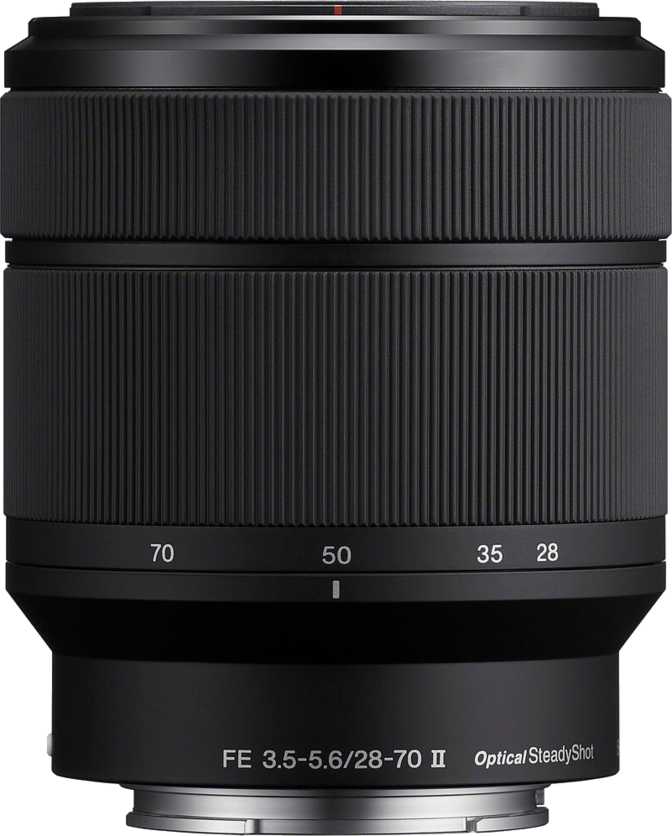
Sony FE 28-70mm f/3.5-5.6 OSS II: An Honest Full-Frame Kit Lens Review
Camera LensesEvery Sony Alpha full-frame shooter eventually faces the same question: is the kit lens good enough to keep, or is it the first thing to replace? With the FE 28-70mm f/3.5-5.6 OSS II, the answer is more nuanced than it used to be. This is not the lens serious photographers dream about at night, but dismissing it outright means ignoring a genuinely capable optic that suits a specific and very real kind of shooter better than almost anything else at this size and price point.
At a Glance
Overall Score
Best suited for travel and everyday photography
Performance Breakdown
Focal Range
28–70mm
Max Aperture
f/3.5–5.6
Weight
293g
Filter Thread
55mm
Min Focus
30cm
Weather Seal
None
Design and Build: Compact Without Feeling Cheap
At 293 grams, the 28-70mm OSS II is one of the lightest full-frame zoom lenses you can put on a Sony E-mount body. Paired with a compact body like the A7C or even the A7 IV, you end up with a kit that slips into a shoulder bag, survives a full day of walking without shoulder fatigue, and draws far less attention than a professional-grade zoom. For travel, street, and casual documentary work, that is a genuine advantage.
The 55mm filter thread keeps accessory costs down — 55mm filters are widely available and more affordable than the 67mm or 82mm threads common on larger lenses. A lens hood is included in the box, which is a detail worth appreciating since many manufacturers treat it as an optional purchase.
The mount itself is metal, which matters for longevity. A metal mount resists wear through repeated body changes in a way that plastic alternatives simply cannot. The build feels light but not flimsy, and the zoom and focus rings operate smoothly. Think of this lens as a precision tool designed for favorable conditions, not a workhorse built for abuse.
Key Limitation: No Weather Sealing
There are no gaskets around the barrel or mount to protect against moisture and dust. Shooting in rain or dusty environments carries real risk. If you regularly work outdoors in variable conditions, this is the most significant factor to evaluate before purchasing.
Build Summary
- Metal mount for long-term durability
- 55mm filter thread — affordable accessories
- Lens hood included in the box
- Smooth, well-damped zoom and focus rings
- No weather or moisture protection
Focal Range and Optics: The Most Useful Zoom You Can Own
The 28-70mm range is often described as the "standard zoom" — and that label undersells it. At 28mm, the wide end delivers a 75-degree angle of view, broad enough to capture sweeping indoor scenes, architecture, group portraits, and environmental contexts without the distortion of an ultra-wide lens. At 70mm, the angle narrows to 34 degrees, pulling subjects closer in a way that flatters faces, isolates subjects from backgrounds, and brings distant details within reach.
Wide End
28mm
Angle of View: 75 degrees
Ideal for indoor spaces, architecture, group shots, and environmental portraits where setting and context matter as much as the subject.
Telephoto End
70mm
Angle of View: 34 degrees
Flattering compression for portrait work, subject isolation, and pulling distant details into frame without physically repositioning.
The minimum focus distance of 30 centimeters at any focal length allows reasonably close subject work. The 0.19x maximum magnification means small subjects like coins or insects will not fill the frame, but you can get close enough to flowers, food, or table-top detail to produce compelling results without a dedicated macro lens. This 2.5x optical zoom covers nearly every photographic situation a generalist encounters — and a photographer using only this lens could complete an entire trip without feeling constrained.
Aperture: Understanding the Variable Maximum
The lens opens to f/3.5 at 28mm and narrows to f/5.6 at 70mm. This is a variable aperture design — as you zoom in, the maximum available aperture closes down automatically. For photographers new to interchangeable lenses, this can be surprising the first time it happens in a dim environment.
In practical terms: at 28mm, f/3.5 is wide enough to allow a reasonable amount of light for indoor shooting in reasonably lit rooms. By 70mm, f/5.6 is tighter, and you will need good ambient light, a higher ISO setting, or the stabilization system to compensate.
Seven rounded aperture blades produce smooth, circular bokeh. The roundness of out-of-focus highlights — streetlights, candles, window light — remains consistent through the aperture range. The rounded blade design also contributes to pleasing sunstars when stopping down considerably at point light sources.
| Position | Focal Length | Max Aperture | Min Aperture |
|---|---|---|---|
| Wide | 28mm | f/3.5 | f/22 |
| Tele | 70mm | f/5.6 | f/36 |
Optical Image Stabilization: The Feature That Changes the Equation
Built-in optical image stabilization (OSS) is not a bonus feature on this lens — it is one of the primary reasons to choose it over alternatives. The stabilization system physically compensates for camera shake by moving optical elements inside the lens barrel, allowing sharp handheld shots at shutter speeds that would otherwise produce blur.
Indoor Natural Light
Scenes that require slow shutter speeds without wanting flash — window-lit portraits, dimly lit interiors — benefit most from OSS active shooting.
Golden Hour Travel
Early morning and evening light is beautiful but dim. Stabilization lets you retain image quality without pushing ISO to destructive levels.
Handheld Video
OSS suppresses micro-tremors that make handheld footage look amateur. Combined with silent autofocus, this is a legitimately capable video lens.
Silent Autofocus: Performance Where It Matters
The built-in focus motor operates silently — a detail with outsized importance for specific use cases. When recording video, an audible focus motor clicks and whirs its way onto the soundtrack, rendering audio unusable without a separate microphone setup. The silent motor in this lens eliminates that problem entirely.
For photography, the silent motor is equally valuable in contexts where discretion matters: ceremonies, street scenes, wildlife situations where sound draws attention. The autofocus system performs without announcement.
The presence of a dedicated internal focus motor is generally associated with faster and more reliable autofocus than older lens designs that relied on body-driven motors. Real-world performance will depend on the camera body paired with the lens — newer Sony bodies tend to extract better autofocus behavior from all lenses through firmware-level improvements.
Silent AF Advantages
Video Recording
No motor noise contaminates audio tracks during active autofocus pulls.
Ceremonies & Events
Operate without drawing attention or disrupting quiet, formal moments.
Wildlife & Nature
Silence matters when a single noise can scatter or startle a subject.
Street Photography
Discreet operation for capturing candid scenes without announcement.
Real-World Usage: Who Should — and Should Not — Buy This Lens
The 28-70mm OSS II earns its place in specific hands. Understanding where the match is strong — and where it breaks down — will save you money and frustration.
-
The Traveler Who Prioritizes Mobility
Boarding planes, walking cities, hiking with a camera — the weight savings versus constant-aperture professional zooms are substantial, and the range covers nearly every situation you will encounter.
-
The Sony Alpha Newcomer
An accessible entry point to full-frame shooting that teaches focal length intuition across a versatile range without requiring a second lens before understanding your preferences.
-
The Hybrid Photo-Video Shooter
Silent autofocus and optical stabilization make this lens capable on video without the compromises of manually focused or optically unstabilized alternatives.
-
The Casual Portrait and Lifestyle Photographer
Family moments, social events, everyday life — the rendering and focal range are well-suited to these needs without over-engineering for occasional shooters.
-
Primarily a Low-Light or Night Photographer
At f/5.6 on the long end, this lens asks your camera's ISO to work hard. A fast prime — a 35mm f/1.8 or 50mm f/1.8 — will consistently outperform it in dim environments.
-
Shooting in Rain, Dust, or Harsh Conditions
Without weather sealing, this lens is not built for conditions that action, nature, or adventure photographers routinely face. The risk of damage is real and consequential.
-
Anyone Needing Close-Up or Macro Work
The 0.19x magnification is useful but limited. Dedicated macro lenses offer 1:1 reproduction ratios that make this lens look modest by comparison.
-
Studio and Portrait Professionals
Commercial work demands Sony G Master or G series optical rendering precision, corner-to-corner sharpness, and maximum aperture consistency that this lens cannot match.
Competitive Positioning: How It Stacks Up
Three lenses cover the most logical decision points a Sony E-mount shooter faces at this level. The comparison below shows exactly where the 28-70mm OSS II leads, matches, and trails.
| Feature | Sony FE 28-70mm f/3.5-5.6 OSS II | Sony FE 24-105mm f/4 G OSS | Sony FE 35mm f/1.8 (Prime) |
|---|---|---|---|
| Focal Range | 28–70mm | 24–105mm | Fixed 35mm |
| Aperture | f/3.5–5.6 (variable) | f/4 (constant) | f/1.8 (fixed) |
| Optical Stabilization | |||
| Weather Sealed | |||
| Weight | 293g | 663g | 280g |
| Filter Size | 55mm | 77mm | 49mm |
| Low-Light Strength | Moderate | Moderate | Excellent |
| Best For | Portability & versatility | Professional all-rounder | Low light & isolation |
vs. Sony FE 24-105mm f/4 G OSS
The 24-105mm G OSS offers a wider zoom range, constant aperture throughout, and weather sealing — advantages that justify its significantly higher price and greater weight. Choose the G OSS when budget allows and you regularly shoot in challenging conditions. Choose the 28-70mm OSS II when portability and value are the priority.
vs. Sony FE 35mm f/1.8 Prime
The prime wins on light gathering and image quality at equivalent focal lengths, but loses every advantage the moment you need flexibility in framing without moving your feet. If your shooting style is adaptable and you work in good light, the zoom's versatility often outweighs the prime's optical advantages.
Honest Assessment: Strengths and Weaknesses
Every lens earns its reputation through trade-offs. These are the ones that matter most for this specific optic.
Where It Excels
The 28-70mm OSS II's greatest strength is coherence. Every design choice — the weight, the filter size, the focal range, the stabilization system — points toward the same goal: a full-frame lens that makes exceptional image quality accessible without the physical or financial burden of professional-tier glass.
The optical stabilization is a genuine differentiator at this level. It meaningfully expands the conditions under which you can produce sharp, usable images handheld. Combined with the silent focus motor, it makes the lens more capable for video than its price category typically delivers.
The metal mount deserves recognition as a positive that prevents long-term wear — it suggests the manufacturer treated this as a durable component rather than a cost-cutting opportunity, which is not guaranteed at this price tier.
Where It Falls Short
The variable aperture becomes a real constraint in low-light photography, and no amount of stabilization corrects for a subject in motion — only a wider aperture does that. Photographers who frequently shoot people moving in dim environments will feel this limitation regularly.
The absence of weather sealing is the most meaningful omission for photographers who work outdoors in variable conditions. This is not a paranoid concern — moisture and dust are routine companions for outdoor photographers, and a single exposure event can cause lasting damage to an unsealed lens.
The 0.19x magnification will frustrate anyone drawn to close-up work. It is a real ceiling, not a minor footnote, for photographers whose interests include insects, flowers, textures, or any subject requiring significant magnification.
Common Questions Answered
The questions real buyers search for before purchasing — answered directly.
Final Verdict
Purchase Recommendation
Out of 5
The Sony FE 28-70mm f/3.5-5.6 OSS II is a lens that does exactly what it sets out to do — and nothing more. It is not a statement piece, not the sharpest optic in the Sony catalog, and it will not replace specialized glass for demanding professional work. What it offers is a thoughtfully executed, portable full-frame zoom with genuine optical stabilization, silent autofocus, and a focal range that covers a wide range of everyday photographic needs.
For a traveler, a family photographer, a Sony newcomer, or anyone who values carrying less without giving up full-frame quality, this lens earns its place in the bag without reservation. The absence of weather sealing is the one specification that can genuinely disqualify it for specific buyers — if you shoot outdoors in variable conditions regularly, that gap deserves serious thought before committing.
Buy This If
- Portability is a genuine priority for you
- You shoot primarily in favorable light conditions
- Versatility across focal lengths matters to your work
- You shoot handheld video and want silent, stabilized results
Look Elsewhere If
- Weather or dust resistance is non-negotiable
- You regularly shoot in low light with moving subjects
- Close-up or macro photography is part of your work
- Professional commercial quality is required