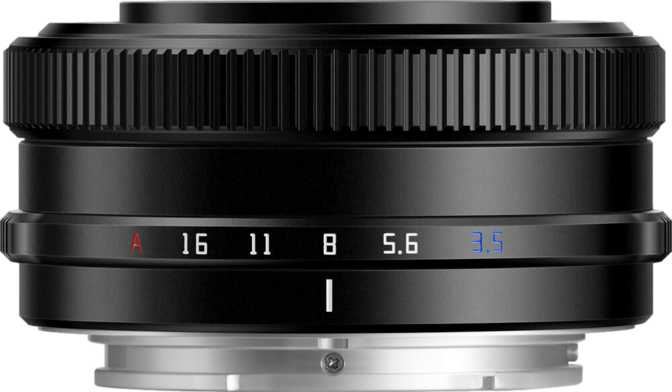
TTArtisan AF 14mm f/3.5 Review: A Serious Ultra-Wide for Fujifilm X
Camera LensesA compact, autofocus ultra-wide prime for Fujifilm X mount that delivers weather sealing, silent focusing, and a non-rotating front element — all in a package weighing less than 100 grams.
Editor's Rating
4.5 / 5
Ultra-Wide Prime Value
A Serious Ultra-Wide for Fujifilm Shooters Who Don't Want to Spend a Fortune
TTArtisan has built its reputation by offering optics that punch above their price class, and the AF 14mm f/3.5 for Fujifilm X mount is one of the most interesting entries in that catalog. Ultra-wide prime lenses have historically been either expensive, manual-only, or both — this lens challenges that assumption directly.
If you shoot Fujifilm APS-C and have been waiting for an affordable autofocus ultra-wide that doesn't feel like a compromise, this lens deserves a close look before you settle for anything else.
Focal Length in Real Terms: What 14mm Actually Gives You on Fujifilm
Because Fujifilm X cameras use an APS-C sensor, there's a crop factor to account for. The 14mm focal length on an X-mount body translates to a field of view equivalent to roughly 21mm on a full-frame camera — placing this squarely in ultra-wide territory, wide enough to feel dramatic and immersive, but not so extreme that straight lines become cartoonish across the frame.
The 92-degree angle of view means you're capturing nearly a full quarter of the visual hemisphere in front of you. To put that in practical terms:
Interiors
Stand in a small room and fit the entire space in a single frame without distortion becoming unmanageable.
Landscapes
Foreground, midground, and horizon all captured in one sweeping composition with real depth and scale.
Architecture
Photograph a building from across the street and show it in full context — facades, surroundings, and sky.
Buyer note: This focal length fundamentally changes how you compose and approach subjects. It is a different creative discipline from standard or telephoto lenses — understand that before purchasing.
Build Quality and Physical Design
Compact and Surprisingly Light
Weighing just under 100 grams, this lens is genuinely light. A typical kit zoom weighs two to three times as much, and most dedicated ultra-wide primes from first-party manufacturers tip even further beyond that. On a compact Fujifilm body, the AF 14mm f/3.5 balances naturally — it doesn't nose-dive, doesn't create an awkward carrying weight, and fits comfortably in a jacket pocket alongside the camera.
The 39mm filter thread is notably small — filter rings at this diameter are among the smallest and least expensive available, which is a real practical advantage if you use polarizers or ND filters.
Key Build Features at a Glance
-
Metal lens mount
The mount is the mechanical interface between lens and camera body — machined metal construction resists wear and maintains precise registration over thousands of attach-detach cycles.
-
Weather sealing
Gaskets and sealing at key construction points resist dust and light moisture. Paired with a sealed Fujifilm body, you have a combination ready for outdoor shooting in rain, humidity, and dusty environments.
-
Non-rotating front element
Critical for circular polarizer users. The front element stays fixed during autofocus, meaning the filter position you set remains exactly where you left it — no realignment needed between shots.
-
Lens hood included
Ships in the box — not always guaranteed at this price tier. Blocks stray light to reduce flare and preserve contrast, particularly important with a 92-degree field of view where off-axis light sources are common.
Autofocus: How It Performs and What to Expect
Silent In-Lens Motor
The autofocus motor is built directly into the lens barrel and operates with minimal noise. For video shooters, this is critical — a loud focus motor gets picked up by on-camera microphones and ruins otherwise usable footage. For street photographers, silence reduces conspicuousness. For ceremony and event work, it simply keeps you from drawing unwanted attention.
Full-Time Manual Override
At any moment — regardless of whether the camera is in autofocus mode — you can reach for the focus ring and adjust manually without switching any settings. If autofocus lands slightly off, a quick manual correction takes less than a second without breaking your shooting rhythm.
Minimum Focus Distance
The lens can focus as close as 25 centimeters — roughly the length of a standard ruler from your hand to the tip of your fingers. For an ultra-wide prime, this is genuinely usable. Combined with the wide field of view, close focusing enables the compositional technique where a subject looms large in the foreground while an expansive scene stretches behind it — a hallmark of ultra-wide photography.
The lens also maintains full infinity focus capability, meaning distant subjects — mountain ranges, city skylines, star fields — are rendered with equal precision.
Aperture and Optical Characteristics
Understanding f/3.5 on an Ultra-Wide
The maximum aperture of f/3.5 means the lens opens to a moderately wide setting — not as bright as a dedicated low-light prime at f/1.4 or f/1.8, but respectable for a wide-angle design. Wide-angle lenses have naturally greater depth of field than longer lenses at equivalent apertures. In practical terms, at f/3.5 on this 14mm ultra-wide, the vast majority of your scene will be sharp from a fairly close foreground all the way to infinity.
Important: If your primary goal is isolating a single subject against a beautifully blurred background, this is not the right lens. Ultra-wides are designed for context and environment — not subject isolation.
What f/3.5 does provide is enough light-gathering ability for shooting in reasonably dim conditions — evening street scenes, dimly lit interiors, and overcast outdoor conditions are all workable without pushing your camera's ISO to extreme settings.
Aperture Blades and Highlight Rendering
Seven aperture blades, rounded in shape, ensure that out-of-focus specular highlights — small bright points like street lights, distant windows, or water reflections — render as smooth circles rather than harsh polygons. The lens closes to f/16 at its smallest setting, giving full control for bright daylight situations or long-exposure creative work. This is an optical quality-of-life detail that affects how pleasing the overall image appears even when the primary subject is tack sharp.
Who This Lens Is For — and Who Should Look Elsewhere
Strong Candidates
-
Landscape and travel photographers
A single, lightweight ultra-wide prime for coastal scenes, mountain vistas, and sweeping urban environments.
-
Architecture and interior photographers
Work in confined spaces without needing to back up beyond the available room.
-
Street photographers
Work close to subjects while including the surrounding environment. Silent autofocus and compact size are direct advantages here.
-
Fujifilm video creators
Wide, silent-focusing lens for vlogging, environmental storytelling, or documentary-style shooting.
-
Astrophotographers
Capture large portions of the night sky — Milky Way arches, star trails, and wide constellation fields.
-
Prime-curious zoom shooters
Explore the discipline of prime lenses at a price that doesn't require full commitment to a first-party ultra-wide.
Look Elsewhere If You Need
-
Shallow depth of field and subject separation
A 35mm or 50mm prime at f/1.4 or f/1.8 will serve portrait and isolation work far better.
-
Built-in optical image stabilization
This lens has no OIS — it relies on any in-body stabilization your camera provides. Handheld video in challenging conditions requires attention.
-
Focal length flexibility
This is a fixed prime with no zoom. 14mm is a committed perspective that requires you to physically move to compose.
Competitive Positioning
The ultra-wide prime space for Fujifilm X mount sits in a specific tension between expensive first-party options and more affordable third-party alternatives. Here is how the TTArtisan AF 14mm f/3.5 positions itself:
| Lens Category | Autofocus | Weather Sealed | Weight | Filter Thread |
|---|---|---|---|---|
| TTArtisan AF 14mm f/3.5 | ~98g | 39mm | ||
| First-party Fujifilm ultra-wide prime | Select models only | Notably heavier | 72mm+ | |
| Third-party manual-focus ultra-wide | Varies | Varies | Varies | |
| Third-party fast wide prime (f/2 or brighter) | Varies | Heavier | Larger |
The TTArtisan's competitive advantage comes from the combination of autofocus, weather sealing, and a compact lightweight package — all at a price significantly below first-party alternatives. The primary concession is aperture speed: if you need f/2 or faster, you are looking at a different category, typically heavier, larger, and considerably more expensive.
Honest Strengths and Real Weaknesses
The TTArtisan AF 14mm f/3.5 gets a lot right for its target audience. The autofocus motor is a genuine differentiator — manual-focus-only ultra-wides require a different shooting discipline, and the addition of a quiet, full-time-overridable AF system opens this lens to a far wider range of photographers and shooting situations.
The weather sealing is not window dressing — it meaningfully expands where you can take this lens without anxiety. The weight, or rather the absence of it, is something you notice immediately when pairing it with a compact Fujifilm body. The build quality, particularly the metal mount, signals that TTArtisan did not cut corners in the places that determine long-term reliability. The non-rotating front element and included lens hood reflect awareness of real-world shooting workflows.
Where It Excels
- Silent in-lens autofocus motor usable for both stills and video
- Weather sealing at a price point where it is rarely offered
- Sub-100g weight that preserves the compact character of Fujifilm systems
- Non-rotating front element for uninterrupted polarizer use
- Inexpensive 39mm filter ecosystem — practical cost savings over time
- Full-time manual focus override without menu changes
Where It Asks for Compromise
- f/3.5 maximum aperture narrows options in very demanding low-light scenarios without in-body stabilization
- No optical image stabilization — handheld video stability depends entirely on the camera body
- Fixed ultra-wide perspective requires adjustment in shooting approach for photographers accustomed to zoom lenses
- Advanced AF tracking feature compatibility depends on individual body firmware — verify before purchasing
Questions Real Buyers Ask
Final Verdict
Overall Score
4.5 /5Recommended for Fujifilm X landscape, travel, street, and video shooters
The TTArtisan AF 14mm f/3.5 is a well-considered, honestly useful lens for Fujifilm X shooters who want a proper autofocus ultra-wide without committing to first-party pricing. It covers the essentials with genuine quality — autofocus that works quietly and reliably, weather sealing that expands where you can shoot, a compact and balanced build, and optical design choices that reflect thoughtful engineering rather than a spec-sheet mentality.
The aperture is the primary caveat. f/3.5 is practical for the vast majority of what this focal length is used for, but photographers with specific needs for a brighter maximum aperture should weigh that carefully. Astrophotographers, in particular, will get acceptable but not optimal results.
Purchase Verdict
For landscape photographers, travel shooters, architecture work, street photography, and wide environmental video — particularly those who want their system to stay light and packable — this lens delivers meaningfully more value than its price suggests. It is a legitimate tool, not a stopgap while saving for something else.