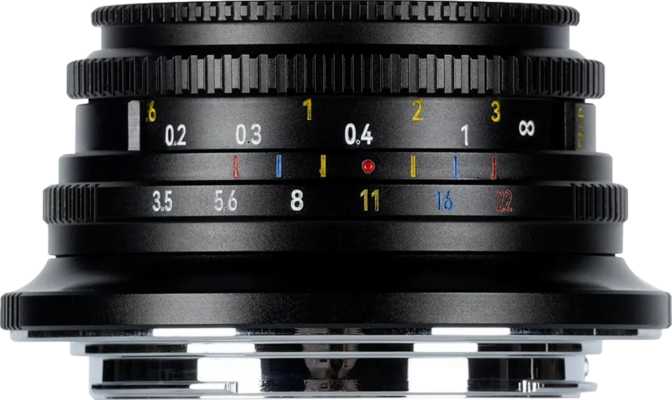
7artisans 10mm f/3.5 MFT Review: A Compact Ultra-Wide Prime Tested
Camera LensesThe 7artisans 10mm f/3.5 is a stripped-back ultra-wide manual prime that trades autofocus and weather sealing for exceptional compactness and an accessible price. For landscape, architecture, and street photographers committed to manual focus, it delivers a compelling 108-degree field of view in a package that weighs almost nothing.
Overall Rating
Build Quality
Optics
Value
Usability
Key Specifications at a Glance
| Specification | Value | What It Means |
|---|---|---|
| Lens Type | Prime | Fixed focal length — lighter and sharper than a zoom at the cost of versatility |
| Mount | Micro Four Thirds | Compatible with Olympus, OM System, and Panasonic Lumix G series bodies |
| Focal Length | 10mm (~20mm equiv.) | Ultra-wide on MFT — the 2x crop factor gives a 20mm full-frame perspective |
| Angle of View | 108° | Captures more in a single frame than the human eye typically perceives at once |
| Maximum Aperture | f/3.5 | Moderate light gathering; performs best in daylight and golden-hour conditions |
| Minimum Aperture | f/22 | Full exposure control for bright conditions; enables long-exposure techniques on a tripod |
| Aperture Blades | 5 | Produces pentagonal bokeh highlights — a minor aesthetic consideration at this focal length |
| Min. Focus Distance | 20 cm | Exceptionally close for an ultra-wide — enables dramatic foreground-to-background compositions |
| Focus System | Full Manual | No autofocus motor — ring is always live; more forgiving than it sounds at this focal length |
| Image Stabilization | None | Relies entirely on camera body IBIS; less critical at ultra-wide angles than at telephoto |
| Filter Thread | 37mm | Compact, affordable filter size — UV protectors and polarizers cost very little at 37mm |
| Weight | 125.5g | Roughly the weight of a large apple — negligible on any Micro Four Thirds body |
| Weather Sealed | No | No splash or dust protection — requires care in adverse shooting conditions |
| Metal Mount | Yes | More durable than plastic mounts — resists wear from repeated lens changes over time |
| Lens Hood Included | Not Included | Budget for an aftermarket hood — useful for controlling flare at 108° coverage |
Design, Build Quality, and Physical Experience
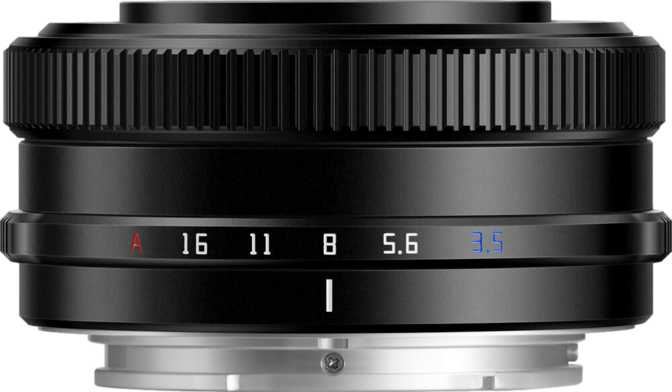
Pick up the 7artisans 10mm f/3.5 and the first thing you notice is how little of it there is. At just over 125 grams, it weighs roughly the same as a large apple. On a compact Micro Four Thirds body like an Olympus OM-D or a Panasonic G series camera, it creates a balanced, pocketable combination that feels genuinely unobtrusive — the kind of setup you can carry all day without fatigue or drawing attention.
The build quality punches above its price point in one key area: the mount is metal. That matters because the mount is where mechanical stress accumulates over years of lens swapping, and a metal mount resists the kind of gradual wear that can loosen the fit on cheaper all-plastic designs. The rest of the barrel is a mix of materials that feels solid without being premium — functional rather than luxurious.
The filter thread measures 37mm, a compact size consistent with the lens's overall footprint. Filters at this diameter are inexpensive and widely available, so adding a UV protector or a polarizer won't strain your accessory budget.
Two things are absent from the box: a lens hood and weather sealing. The lack of a lens hood is a minor inconvenience — hoods for small lenses are cheap and easy to source separately, and at ultra-wide focal lengths, flare is more a compositional challenge than a constant annoyance. The absence of weather resistance is more meaningful. Shooting in rain or dusty environments carries real risk with this lens. It is fair-weather glass that demands thoughtful handling.
Build Highlights
-
Metal Mount Resists wear from repeated lens swaps — a genuine durability advantage at this price tier.
-
125g Total Weight Genuinely negligible on any MFT body — balances without tipping or straining the mount.
-
37mm Filter Thread One of the cheapest and most accessible filter sizes on the market.
-
No Weather Sealing Zero splash or dust protection — handle with care in challenging conditions.
-
No Lens Hood Included Source one separately — especially useful at the extreme 108° angle of coverage.
Optics: What 108 Degrees of View Means in Practice
Understanding the Focal Length on Micro Four Thirds
The Micro Four Thirds sensor applies a 2x crop factor to all focal lengths. A 10mm lens on MFT delivers a field of view equivalent to approximately 20mm on a full-frame camera — placing this squarely in ultra-wide territory. At 108 degrees, you capture more horizontal spread than the human eye comfortably perceives at once.
Aperture and Light Gathering
The maximum aperture of f/3.5 opens a practical conversation about low-light performance. f/3.5 is not a fast aperture by prime lens standards, but the context matters: ultra-wide lenses are rarely chosen for their ability to separate subjects from backgrounds with shallow depth of field. At 10mm on MFT, even at f/3.5, the depth of field is so expansive that nearly everything from about half a meter to infinity will appear sharp. The aperture here functions primarily as a light-control mechanism rather than a creative tool for selective focus.
In practical terms, f/3.5 performs acceptably in daylight and golden-hour conditions. For very low light — indoor venues or night streets without tripod access — you will find yourself pushing ISO on your camera body to compensate. Micro Four Thirds bodies with strong in-body image stabilization, such as those from Olympus or OM System, provide a meaningful assist since the lens carries no optical stabilization of its own.
The aperture closes down to f/22 at minimum, giving full control over exposure in bright conditions and enabling long-exposure techniques like silky water or light trails when mounted on a tripod.
Aperture Range
Optimal Sharpness Range
Best corner-to-corner performance typically falls between f/5.6 and f/11 — the practical sweet spot for most shooting scenarios.
Aperture Blades and Bokeh Character
There are five aperture blades in the diaphragm. Five blades produce pentagonal bokeh highlights when shooting at stopped-down apertures — some photographers find this distracting, others find it characterful. At ultra-wide focal lengths, this is rarely a practical concern. You will not often shoot this lens in a way that produces soft, circular out-of-focus highlights. Worth knowing, but unlikely to shape your day-to-day shooting experience.
Focus System: Full Manual, All the Way
There is no autofocus motor in this lens. Focus is achieved entirely by turning the focus ring manually, which rotates with a smooth, tactile resistance. This is a fundamental characteristic of the lens, not a minor footnote — it shapes every shooting scenario you bring it into.
Why Manual Focus Works Well at This Focal Length
Ultra-wide lenses are among the easiest to focus manually. The extreme depth of field at 10mm means that once you learn your lens's hyperfocal distance — the focus point at which everything from a certain near distance to infinity appears acceptably sharp — you can set it and leave it for most shooting situations. Street photographers, landscape photographers, and architecture shooters routinely tape the focus ring in place on lenses like this and shoot without ever touching it again during a session.
For beginners nervous about missing shots due to mis-focus: at this focal length, stopped down to f/5.6 or f/8, the zone of acceptable sharpness is so deep that focusing errors of moderate severity will often still yield a usable image.
Minimum Focus Distance: Getting Remarkably Close
The lens can focus down to just 20 centimeters — about the length of a human hand. For an ultra-wide lens, this is a genuinely useful capability. It enables a style sometimes called "wide and close": getting physically near a foreground subject while the background stretches away dramatically behind it. Environmental portraiture, architectural details with spatial context, travel photography with strong foreground interest — this close-focus ability extends the lens's creative range well beyond simple landscape shooting.
Focus Specifications
- Min. Focus Distance
- 20 cm
- Infinity Focus
- Yes
- Full-Time Manual
- Yes
- Silent AF Motor
- None
No Autofocus
If you rely on autofocus for fast-moving subjects — sports, wildlife, children in motion — this lens is not the right fit for those scenarios.
Who Should Buy This Lens — And Who Should Not
This Lens Is Built For
-
Landscape & Outdoor Photography The wide angle captures sweeping scenes naturally. The 20cm close focus enables dramatic foreground-to-background compositions that define the ultra-wide style.
-
Architecture & Interior Spaces Tight rooms, tall buildings, structural details — 108 degrees of coverage handles challenging indoor spaces that shorter focal lengths cannot contain in a single frame.
-
Street & Documentary Photography Manual focus at ultra-wide focal lengths is a proven street photography approach. Set to hyperfocal distance and shoot with confidence without touching the focus ring.
-
Travel Photography Light weight, small size, and wide coverage make this a smart travel companion where bag space and carrying weight are genuine daily constraints.
-
Video on MFT Bodies Fixed focal length eliminates zoom creep, compact size reduces rig weight, and the ultra-wide view suits vlogging, action documentation, and wide cinematic shots.
This Lens Is NOT For
-
Action, Wildlife & Sports Photographers No autofocus means fast-moving subjects will be missed. Manual tracking at action speed is not practical for the vast majority of shooters.
-
Shooters in Unpredictable Weather Zero weather sealing means rain, spray, or heavy dust can permanently damage the lens. This is fair-weather glass that demands thoughtful care.
-
Regular Low-Light Shooters Without a Tripod f/3.5 is not a fast aperture. Indoors or at night without stabilization, you will be pushing ISO aggressively or losing shots to motion blur.
-
Photographers Seeking a Versatile Daily Driver 108 degrees is a specialist field of view — dramatic and distinctive, but narrow in application. This is not a walk-around prime for general everyday shooting.
Competitive Positioning: How It Compares
The market for manual ultra-wide lenses on Micro Four Thirds is not enormous, but the 7artisans 10mm f/3.5 occupies a specific and defensible position within it. The autofocus alternatives from native MFT manufacturers command significantly higher prices and are heavier — they offer weather sealing and autofocus, which are meaningful advantages for working photographers in dynamic environments. For photographers who have already decided that manual focus suits their style, paying a premium for autofocus they will not use makes little sense.
| Specification | 7artisans 10mm f/3.5 MFT | Autofocus MFT Ultra-Wide | Other Manual MFT Wide Primes |
|---|---|---|---|
| Focal Length (equiv.) | ~20mm | 9–14mm range | 7.5–12mm range |
| Autofocus | No | Yes | No |
| Weight | ~125g | 200–400g+ | 100–200g |
| Weather Sealing | No | Often Yes | Typically No |
| Filter Thread | 37mm | Varies | Varies |
| Price Tier | Budget | Mid to Premium | Budget to Mid |
Within the manual lens category, 7artisans competes with brands like Meike, Pergear, and TTArtisan at the budget end. The metal mount construction gives it a durability edge over fully plastic alternatives at comparable price points.
Honest Assessment: What It Gets Right and What It Doesn't
Genuine Strengths
The 7artisans 10mm f/3.5 does several things genuinely well. Its combination of extreme compactness and a usable ultra-wide focal length is rare at any price. The 20cm minimum focus distance opens up compositional techniques that many ultra-wide lenses in this price range cannot match — it is not just a number, it unlocks the "wide and close" shooting style that gives ultra-wide images their most distinctive quality.
The metal mount is a meaningful quality choice that extends the practical lifespan of the lens. On a well-built body, a well-built mount means this lens can last years of consistent use without loosening or developing play. And the compact 37mm filter thread makes accessories genuinely affordable.
For photographers targeting landscape, architecture, or street work who do not need autofocus, the value proposition here is difficult to fault. The weight alone can make a measurable difference on a full day of shooting.
Real Weaknesses
The aperture is a genuine limitation in certain contexts. f/3.5 is not fast even by manual prime standards — some competitors offer f/2 or f/1.8 at similar focal lengths, which translates to dramatically better low-light performance. Photographers planning to use this lens in mixed lighting conditions or indoors without a tripod will feel this constraint regularly.
The lack of a lens hood in the box is a small but real annoyance. Ultra-wide lenses have bulbous front elements that are particularly vulnerable to flare when light sources appear near or within the frame — a situation that happens frequently at 108 degrees. Sourcing an aftermarket hood should be part of the initial purchase plan.
The five-blade aperture diaphragm is a cost-driven decision that compromises optical character when stopped down. Pentagonal bokeh highlights are visible in out-of-focus areas. Weather sealing would have transformed this from a capable casual option into a versatile tool — its absence demands more care than a similarly-positioned lens from a native MFT manufacturer.