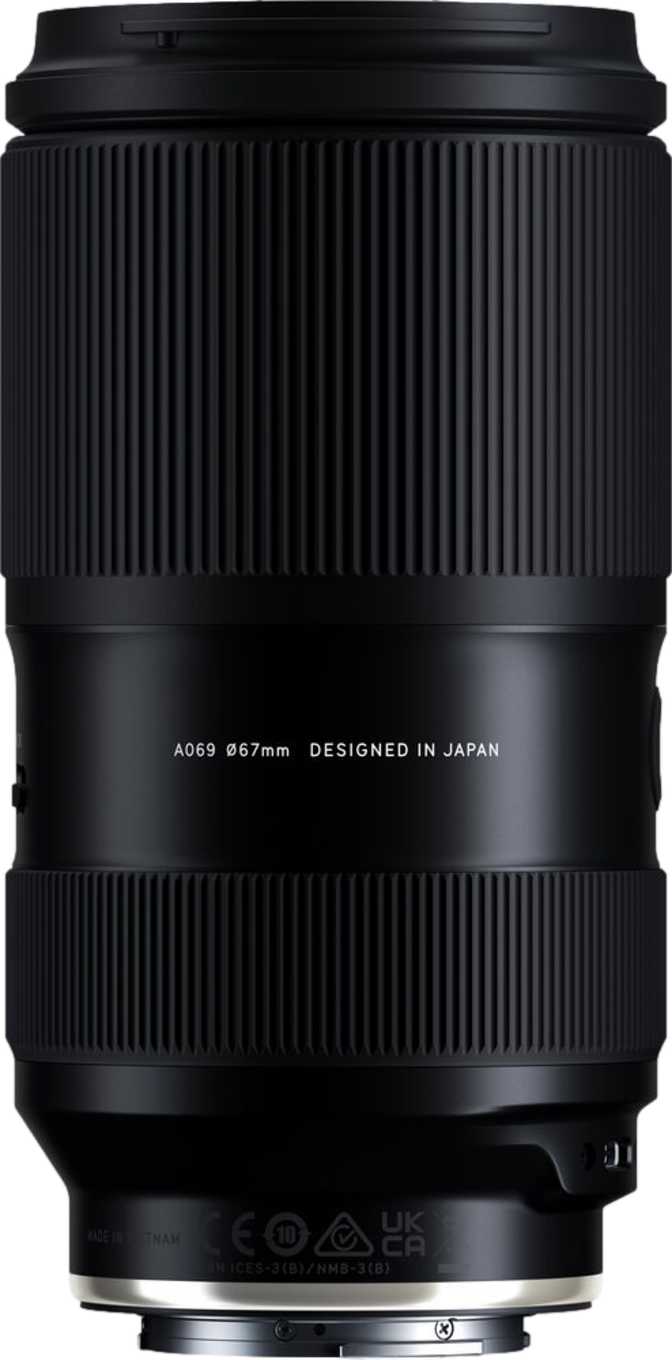
Tamron 50-300mm f/4.5-6.3 Di III VC VXD – Full Review for Sony Shooters
Camera LensesA telephoto zoom spanning 50mm to 300mm with half-life-size close-focus capability, weather sealing, and a silent VXD autofocus motor — all in a 665-gram package for Sony E mount.
Editor's Rating
Exceptional versatility for wildlife, travel, and nature photographers on Sony mirrorless.
A Telephoto Zoom That Refuses to Be Put in a Box
Most telephoto zooms ask you to make a compromise before you even take it out of the bag. Go wide and you lose reach. Go long and you give up the ability to work up close. The Tamron 50-300mm f/4.5-6.3 Di III VC VXD for Sony E mount is a direct challenge to that trade-off — a lens that covers an unusually broad slice of the telephoto spectrum while hiding a genuinely surprising close-focus capability beneath an unassuming exterior.
Whether you shoot wildlife from a distance, compress street scenes, or want to fill the frame with a small subject without switching lenses, this focal range combination is more useful than it first appears. The 50mm starting point, the 300mm reach, and a 25-centimeter minimum focus distance with 0.5x magnification sit together in a single barrel — and that combination is rarer than it should be.
Build Quality and Physical Design
At 665 grams, this lens sits in a comfortable middle ground for a zoom of its reach. It's substantial enough to feel premium in hand without the wrist fatigue that comes with larger, heavier telephoto zooms. Shooters who carry their kit through long sessions — hiking trails, sporting events, travel days — will appreciate that it doesn't punish endurance.
The metal mount maintains precise, consistent contact with your camera body over thousands of attach-and-detach cycles. Plastic mounts can wear and introduce tiny wobble over time; here, that concern is eliminated from the start.
Weather sealing is present throughout the barrel. Light rain, mist, dust, and the general unpredictability of outdoor shooting are not reasons to hesitate. This is not a studio-only lens — it's built for real conditions.
-
665g — Manageable Carry Weight
Light enough for all-day shooting; substantial enough to feel premium in hand.
-
67mm Filter Thread
Compact diameter for a 300mm zoom — compatible filters are affordable and widely available.
-
Non-Rotating Front Element
Set your polarizer once — it stays in position regardless of focus activity.
-
Reversible Lens Hood Included
Reverses for compact storage — a small quality-of-life detail that matters when packing frequently.
Understanding the 50–300mm Focal Range
What these numbers mean in real shooting situations — not on a spec sheet.
At 50mm you're framing scenes roughly the way the human eye perceives them — a natural, undistorted view suited to candid portraits, street photography with compression, and environmental shots that include context around a subject. Starting here rather than at 70mm means fewer lens changes and fewer missed moments.
At 300mm you're pulling in distant subjects dramatically — isolating them against compressed backgrounds, working at a distance that lets wildlife behave naturally. Small birds on distant branches, athletes across a pitch, animals across a clearing: subjects that simply cannot be captured meaningfully at shorter focal lengths.
The 6x Optical Zoom Advantage
A six-times optical zoom ratio from one continuous focal range means you rarely need to step forward or backward to reframe — the lens moves with your creative intent. The gap between a 50–300mm zoom and a standard kit lens is far smaller than the gap left by a 70–300mm, making this a more complete single-lens solution for telephoto shooting.
The Close-Focus Capability Most Buyers Overlook
This may be the lens's most distinctive characteristic — and it fundamentally changes what the lens can do.
25cm
Minimum Focus Distance
0.5x
Maximum Magnification
The minimum focus distance of 25 centimeters allows 0.5x magnification — meaning a subject is rendered at half its actual size on the sensor. For a telephoto zoom reaching 300mm, this is genuinely unusual. Most lenses in this category cannot focus anywhere near that close, and those that can rarely approach this level of magnification.
In practical terms: flowers, insects, small food details, product shots, textured surfaces — subjects typically reserved for a dedicated macro lens — become accessible without swapping glass. This is not macro photography in the true 1:1 sense, but 0.5x magnification produces images that feel up-close and intimate.
Combined with the background compression a longer focal length delivers, the results can be striking: a sharply rendered subject floating against a smooth, defocused background. For nature photographers especially, this means shooting a landscape, zooming in on a distant bird, and crouching down for a wildflower — all without touching a lens release button.
Autofocus: Fast, Quiet, and Reliable
The VXD linear motor system delivers two qualities that matter in very different situations.
Silent Operation
Essential for video work. Motor noise picked up by an on-camera microphone is near-impossible to remove in post. This lens focuses without audible clicking or whirring — safe for film sets, quiet environments, and sound-sensitive situations.
High-Speed Tracking
A VXD linear motor responds fast enough to track unpredictably moving subjects — children, pets, birds in flight, athletes. The motor keeps pace when a subject changes direction, which separates reliable performance from a missed shot.
Full-Time Manual Override
Reach for the focus ring at any moment — the lens responds immediately without switching modes. Valuable when autofocus and the photographer disagree about what should be sharp in a complex multi-subject scene.
Aperture, Bokeh, and Low-Light Behavior
Understanding the Variable Aperture
At 50mm, the widest available aperture is f/4.5. As you zoom toward 300mm, the maximum aperture narrows to f/6.3. This variable aperture design is standard for zoom lenses in this category — the alternative (a fixed wide aperture across the entire range) would result in a significantly larger, heavier, and more expensive lens.
In good light the aperture limitation is irrelevant. Outdoors during daylight, at indoor events with reasonable lighting, or when shooting with electronic shutter at elevated ISO, you'll have no constraints. In low light — indoors without auxiliary lighting, at dusk, or in overcast conditions at the long end — you may need to lean on your camera's high-ISO performance or accept some motion blur at slower shutter speeds.
Sony mirrorless bodies pair well with this lens precisely because modern Sony sensors handle elevated ISO sensitivity with impressive cleanliness. The combination is more capable than the f/6.3 maximum aperture might suggest in isolation.
Bokeh Quality
Nine aperture blades configured in a rounded arrangement produce background blur that renders out-of-focus highlights as smooth circles rather than polygonal shapes. This is a meaningful optical quality detail.
9 rounded aperture blades is above average for this lens category — most competitors use 7.
Stabilization: The VC System
The "VC" in this lens's name refers to Vibration Compensation — Tamron's optical image stabilization mechanism that compensates for camera shake inside the lens itself. This becomes progressively more important as focal length increases. At 300mm, even the subtlest hand tremor is magnified dramatically in the final image.
Paired with Sony IBIS: A Combined Advantage
When used with a Sony body that includes in-body image stabilization, the two systems work in coordination — the lens handles rotational movement while the camera addresses translational shift. The result is meaningfully more usable handheld performance at longer focal lengths and slower shutter speeds than either system could achieve alone.
Who This Lens Is For — and Who Should Look Elsewhere
Understanding where this lens excels helps you decide quickly whether it's the right tool.
Strong Match For
-
Wildlife and Nature Photographers
Weather sealing, long reach, close-focus capability, and fast autofocus in a single lens. You don't need to know in advance whether your subject will be far away or inches from your lens.
-
Travel Photographers
A single telephoto solution without the weight of professional super-telephoto glass. The 50mm start means this lens can stay on the camera for a larger portion of a travel day.
-
Birders and Bird Photographers
Silent VXD motor, substantial reach, and weather resistance for outdoor shooting sessions. Birds are sensitive to mechanical sounds — this lens doesn't alert them.
-
Video Creators
Silent autofocus for run-and-gun shooting, stabilization for handheld B-roll, and a non-rotating front element for consistent filter positioning throughout a shoot.
-
Portrait Photographers
Flexible across distances — environmental portraits at 50mm, tightly compressed headshots further out, with subject separation that flatters at every focal length.
Look Elsewhere If
-
Low-Light Indoor Sports and Events
Concerts under stage lighting, gymnasium basketball, evening football — the variable aperture is a limiting factor here. A lens with a wider, fixed aperture will serve these scenarios better.
-
Wide-Angle and Standard Shooting
This lens begins where standard zooms end. It covers nothing below 50mm — if wide-angle coverage is part of your workflow, this doesn't address that need.
-
Maximum Optical Performance at 300mm
If peak image quality at the long end is your only priority, a prime lens at 300mm will outperform any zoom optically — though at the cost of versatility, weight, and significant additional expense.
Competitive Positioning
How the Tamron 50-300mm stacks up against the logical alternatives Sony shooters consider.
| Feature | Tamron 50-300mm f/4.5-6.3 | Typical 70-300mm Alternatives | Typical 100-400mm Alternatives |
|---|---|---|---|
| Starting Focal Length | 50mm | 70mm | 100mm |
| Maximum Reach | 300mm | 300mm | 400mm |
| Weight Class | ~665g | Similar | Heavier |
| Minimum Focus Distance | 25cm | 90–150cm typical | 75–150cm typical |
| Magnification | 0.5x | ~0.25x | ~0.25–0.35x |
| Filter Size | 67mm | 67–77mm | 77–95mm |
| Weather Sealing | Yes | Varies | Usually yes |
Competitor values represent typical specifications in those zoom categories — individual models vary. Always verify specifications of any specific alternative before purchasing.
Honest Assessment: Strengths and Limitations
Where this lens genuinely delivers — and where it asks you to compromise.
Where It Excels
The combination of a 50mm starting point, 300mm reach, 0.5x close-focus magnification, weather resistance, silent VXD autofocus, and a non-rotating 67mm filter thread is rare in a single lens. Most telephoto zooms pick two or three of these qualities. This lens attempts all of them and succeeds in a way that feels intentional rather than compromised.
The close-focus performance deserves repeated emphasis because buyers often discover it only after purchase, as a pleasant surprise. At 0.5x, this lens blurs the boundary between telephoto zoom and close-up lens — adding real versatility for photographers who work across multiple genres without wanting to carry multiple specialist lenses.
Where It Asks More of You
The variable aperture is the honest limitation. It's not a flaw in execution — it's an inherent trade-off of the zoom design. Buyers who need consistent exposure across a zoom range for specific workflows will find themselves adapting. With Sony IBIS helping to compensate at slower shutter speeds, this becomes less of a practical issue for stills than it might initially appear.
The 665-gram weight, while reasonable for a 300mm zoom, will feel present on longer outings. This is not a lightweight pocketable lens — it benefits from a proper camera strap or bag support during extended shooting sessions.
Questions Real Buyers Ask Before Purchasing
The most common pre-purchase questions, answered directly.
Final Recommendation
The Verdict
The Tamron 50-300mm f/4.5-6.3 Di III VC VXD makes a convincing case for itself by doing something few telephoto zooms attempt: it genuinely tries to cover multiple photographer types rather than serving one audience at the expense of another.
The focal range is more useful than comparable 70-300mm options because of its 50mm starting point. The close-focus performance — 0.5x magnification at a 25-centimeter working distance — is exceptional for a zoom of this reach. Autofocus is fast and silent. Build quality is professional-grade with weather sealing and a metal mount. The 67mm filter size keeps the system lean and affordable to accessorize.
The f/4.5-6.3 aperture is a real consideration in low-light environments, and buyers who prioritize dim-condition performance above all else should factor that into the decision. For most shooting environments — particularly paired with modern Sony bodies and their strong high-ISO capabilities — this limitation is entirely manageable.
Buy With Confidence If
- You shoot wildlife, travel, or nature on Sony mirrorless
- You want one telephoto zoom that handles both distance and close-up work
- Silent AF matters for your video or field photography workflow
- You shoot primarily in daylight or reasonable ambient light
Consider Alternatives If
- Low-light indoor sports is your primary use case
- You need more than 300mm reach consistently