Spigen SA-HP P10 Review: Big Battery, Strong ANC, Real Trade-Offs
HeadphonesSpigen built its reputation on phone cases — protective shells that millions of people trust to guard their devices. So when the brand ventures into headphones with the SA-HP P10, skepticism is fair. Accessory brands stepping into audio territory often produce forgettable hardware that rides on name recognition alone. The SA-HP P10, however, arrives with a specification sheet that deserves a closer read. Sixty hours of battery life, Bluetooth 5.4, active noise cancellation, five microphones, and a folding design with a carrying case — all at what appears to be an accessible price point. Whether these features translate into a headphone worth recommending is exactly what this review settles.
Design and Build: Familiar Comfort, Practical Choices
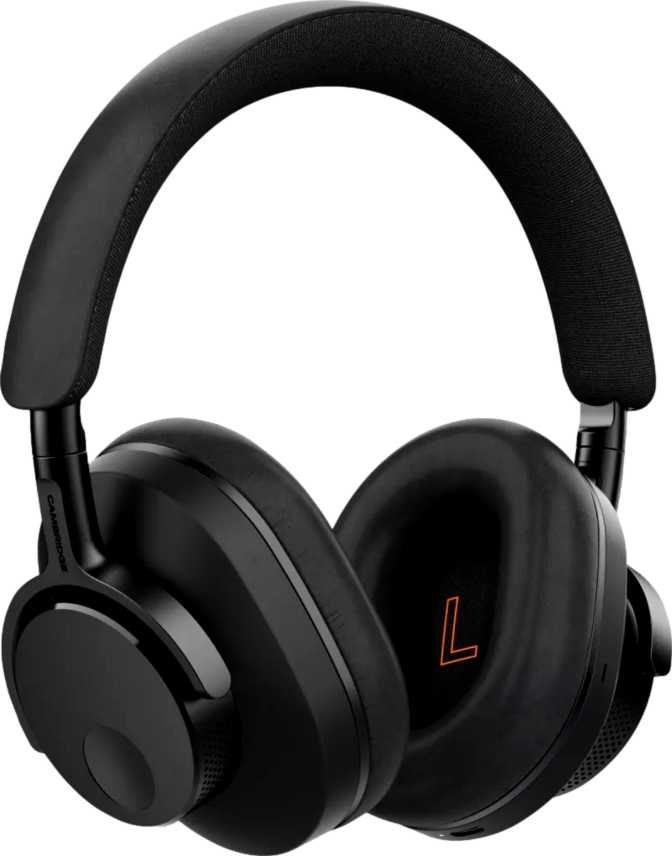
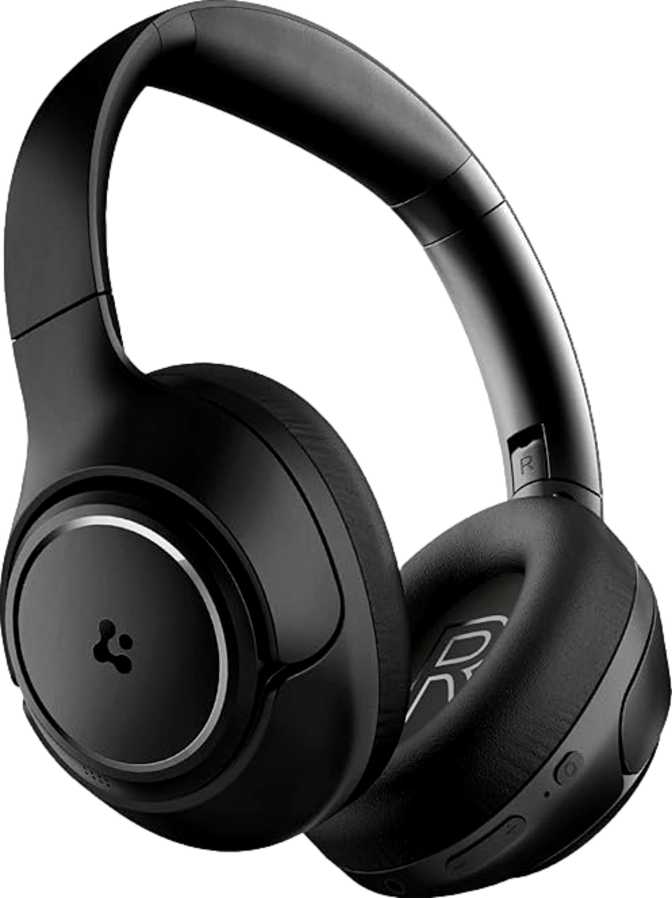
The SA-HP P10 is an over-ear headphone, meaning the ear cups fully surround the ears rather than pressing against them. For long listening sessions, this distinction matters enormously — over-ear designs distribute clamping pressure across a wider area and allow air circulation around the ear, reducing heat and fatigue compared to on-ear alternatives.
At 456 grams, this is a noticeably substantial headphone. Most mainstream wireless headphones in this category weigh between 250 and 350 grams, so the P10 sits toward the heavier end of the spectrum. That weight is something prospective buyers should acknowledge honestly: it may not be the ideal companion for extended commutes or all-day desk wear, particularly for people sensitive to neck or shoulder strain. On a stationary basis — home listening, gaming sessions, video calls — the weight becomes much less of a factor.
The closed-back design is a deliberate choice. Unlike open-back headphones that allow sound to pass freely in both directions, closed-back cups seal sound in and external noise out. This makes the P10 appropriate for shared spaces, offices, and commuting — contexts where you do not want your audio leaking to the person beside you.
The 0.5-meter cable included in the box is notably short, best treated as an emergency or charging-scenario connection rather than a primary listening cable. Users who prefer wired listening for audio quality or battery preservation should plan for a longer third-party cable from the start.
- Over-ear closed-back design seals sound in and noise out
- Foldable frame collapses for compact storage and transport
- Travel bag included — uncommon at this price tier
- IPX5 water resistance handles sweat, rain splashes, and spills
- 456 g — noticeably heavier than most rivals in this segment
- 0.5 m cable — far too short for comfortable wired desk use
Sound Performance: What the Drivers Actually Deliver
The SA-HP P10 uses 40mm dynamic drivers — the standard size for full-size over-ear headphones at this tier. Driver size alone does not determine sound quality, but it does indicate that Spigen is not cutting corners with undersized components that would limit low-end response. Larger drivers have more physical surface area to move air, which typically supports fuller bass reproduction.
The frequency range spans the full extent of human hearing. This means the P10 will not artificially cut off bass or treble at the extremes — though real-world tuning and driver quality determine how faithfully those extremes are reproduced in practice. Any headphone claiming this range still relies on the quality of its internals to actually deliver on it.
Critical note for audiophiles and high-res streamers
The SA-HP P10 does not support any high-resolution audio codecs — no aptX, no aptX HD, no LDAC, no AAC. The headphone relies on standard SBC Bluetooth transmission, which is the baseline codec supported by all Bluetooth audio devices. For the majority of listeners streaming music at typical quality settings, SBC is perfectly adequate. For those using LDAC-capable sources with lossless or high-resolution streaming subscriptions, this is a meaningful limitation that should factor directly into the purchase decision.
Spatial audio is not supported, which removes the immersive three-dimensional sound processing that some streaming platforms and gaming environments offer. This is a feature sacrifice that most mainstream listeners will not notice in daily use, but it is worth flagging for anyone who specifically values that experience.
Active Noise Cancellation: Real Filtering, Budget Constraints
The P10 includes active noise cancellation — a feature that uses microphones to sample ambient sound and generate opposing audio signals to cancel it out before it reaches your ears. This is not a marketing label on this headphone; it is a functional system backed by five microphones distributed across the headset.
Five microphones is a meaningful number in this context. Higher-end headphones like the Sony XM5 or Bose QC45 also use multi-microphone arrays for effective ANC. More microphones allow the system to sample noise from multiple angles, improving cancellation accuracy in complex sonic environments.
That said, ANC performance is not determined by microphone count alone — it depends heavily on the quality of the DSP (digital signal processing) chip, the algorithm, and the physical seal of the ear cups. Without independent measurement data, it is not possible to claim the P10's ANC matches premium offerings. What can be said is that the hardware configuration positions it to deliver usable noise reduction for consistent low-frequency sounds — air conditioning units, engine hum, open-plan office background noise — which are the conditions where ANC is most effective regardless of price tier.
Two Layers of Isolation
Closed-back cups and the over-ear fit create a physical seal that blocks a portion of ambient sound even without the ANC circuitry engaged. Active processing then adds a second layer on top of that passive attenuation. This means the P10 provides meaningful noise isolation even if the battery is dead or ANC is switched off — a practical advantage in unpredictable listening environments.
Ambient Sound Mode
An ambient sound mode is included, allowing users to let in environmental audio without removing the headphones — useful for hearing announcements, conversations, or road traffic. This adds real-world flexibility beyond simple on/off noise control and is a feature that users who wear headphones during commutes or light outdoor activity will appreciate having immediately accessible.
Battery Life: The P10's Most Compelling Specification
Sixty hours of wireless playback is exceptional at any price point. To put that in context: a listener who uses headphones for three hours every day would get nearly three weeks of listening from a single charge. At five hours per day — the kind of use a remote worker might see across calls and music — that is still twelve full days before needing to plug in.
The category benchmark makes this specification genuinely stand out. Most mid-range wireless headphones offer between 25 and 40 hours per charge. Premium options like the Sony WH-1000XM5 top out at around 30 hours. The P10's sixty-hour figure, if accurate under real-world conditions with ANC active, represents a differentiator that very few headphones at any price can match.
Charging is handled via USB-C — no proprietary cables required. The headphone does not support wireless charging, which is an acceptable omission at this price tier. A battery level indicator is present, meaning users can check remaining charge without guessing or consulting a companion app. The battery is not user-replaceable, which is standard practice for sealed wireless headphones — but worth noting for long-term ownership planning, since significant battery degradation over years of heavy use would require a service visit rather than a quick swap.
Connectivity: Bluetooth 5.4 With Honest Trade-Offs
The SA-HP P10 connects via Bluetooth 5.4, which is among the more recent Bluetooth versions currently available. Version 5.4 brings improved connection efficiency and stability compared to older 5.0 and 5.2 implementations — meaning lower power draw from the wireless radio and more reliable pairing behavior in congested wireless environments like offices or busy public spaces.
Multipoint connectivity is included, supporting two simultaneous device connections. This is a practical feature for people who switch between devices regularly — a work laptop and a personal phone, for example — allowing the headphone to stay paired to both and transition between them without manual re-pairing each time.
The Bluetooth range tops out at 10 meters, which is the standard for typical Bluetooth devices and reflects real-world performance within a single room. Leaving your source device in a different room may introduce dropouts. The P10 does not support fast pairing protocols, NFC pairing, or Bluetooth LE Audio. These are convenience features rather than core functionality, but their absence means the initial pairing experience follows the standard Bluetooth setup procedure with no shortcuts.
- Bluetooth Version5.4
- Max Wireless Range10 m
- Multipoint Devices2
- Audio CodecSBC only
- Fast Pair
- NFC Pairing
- Bluetooth LE Audio
Microphone System: Built for Calls, Not Just Music
Five microphones on a headphone signals a deliberate focus on voice quality, not just listening. The SA-HP P10 includes a noise-canceling microphone system designed to isolate the user's voice from surrounding sound during calls, making it suitable as a full headset — usable for phone calls, video conferencing, and online voice chat — rather than just a passive music listener.
The specific microphone configuration likely uses some elements for ANC environmental sampling and others dedicated to voice capture, a common dual-purpose arrangement consistent with how multi-mic headphone systems are typically engineered. This is an inference from the hardware setup rather than a manufacturer-confirmed specification.
Two features missing that daily users will notice
The P10 does not include a physical mute button — a meaningful gap for remote workers who mute themselves frequently during meetings, since they must use software controls on the source device or application instead. In-ear detection (auto-pause when the headphones are removed) is also absent, meaning music continues playing even if the headphones come off. Both of these omissions will surface in everyday use on a regular basis.
Who Should Buy the Spigen SA-HP P10
- You are a remote or hybrid worker who spends hours daily on video calls and needs reliable ANC without flagship pricing
- You travel frequently and want a foldable headphone with a carry case that won't die mid-trip
- You are on a strict budget but still need ANC and multipoint Bluetooth connectivity in one device
- You stream music at typical quality settings and do not require high-resolution wireless audio codecs
- You need a moisture-resistant headphone for sweaty workouts or unpredictable outdoor conditions
- You use an LDAC-capable device with a lossless streaming subscription and care about wireless audio fidelity
- You need a physical mute button or auto-pause when removing the headphones mid-session
- You find heavier headphones uncomfortable and need a lightweight option for extended all-day wear
- You want spatial audio for immersive gaming or cinematic streaming experiences
- You expect ANC performance comparable to Sony, Bose, or Jabra premium flagship headphones
How the P10 Compares to Key Alternatives
The table below maps the SA-HP P10 against two logical alternatives: the Sony WH-1000XM5 as the premium benchmark, and the Anker Soundcore Q45 as the most comparable everyday budget rival. The P10 column is highlighted.
| Feature | Spigen SA-HP P10 | Sony WH-1000XM5 | Anker Soundcore Q45 |
|---|---|---|---|
| Active Noise Cancellation | Flagship-tier | ||
| Battery Life | 60 hours | ~30 hours | ~50 hours |
| High-Res Audio Codec | SBC only | LDAC | LDAC |
| Bluetooth Version | 5.4 | 5.2 | 5.0 |
| Multipoint Pairing | 2 devices | 2 devices | 2 devices |
| Microphones | 5 | 8 | 2 |
| Weight | 456 g | 250 g | ~260 g |
| Foldable Design | |||
| Water Resistance | IPX5 | None | None |
| Carry Case Included |
The Anker Q45 is the most direct like-for-like competitor. The P10 trades lighter weight and better codec support — where the Anker wins — for longer battery life, more microphones, and genuine weather resistance. Neither is an outright win; the right choice depends on which of those trade-offs matters more to you.
Strengths and Weaknesses: The Honest Assessment
Where It Excels
The P10's strongest cards are its battery endurance and its all-in approach to practical everyday features. Sixty hours with ANC active is not something most wireless headphones at any price can match, and it genuinely changes the ownership experience — charging becomes a weekly event rather than a daily ritual.
Adding IPX5 protection, a carry case, multipoint pairing, and a five-mic array into what appears to be a budget-accessible package is genuinely compelling. These are features that mid-range buyers often have to compromise on individually; the P10 stacks most of them together in a single headphone.
Where It Falls Short
The weight is the biggest ongoing compromise — at 456 grams, some users will love it for stationary desk use and politely tolerate it on longer commutes. The absence of any enhanced Bluetooth codec means users with capable sources leave wireless audio quality on the table, which is a persistent limitation that cannot be fixed with a firmware update.
The missing physical mute button is a daily friction point for call-heavy users, and the brand's audio engineering heritage does not match that of dedicated headphone manufacturers. The SA-HP P10 is an honest product at an honest price — but experienced listeners should calibrate expectations accordingly and not expect a hidden audiophile gem.
Common Questions Before Buying
Buy It for What It Is
The Spigen SA-HP P10 is a product built around a clear value proposition: long battery life, practical everyday features, and accessible pricing from a brand people already trust for accessories. On those terms, it delivers.
It is not competing with Sony or Bose on sound engineering, codec support, or refined ANC performance — and it does not claim to. What it offers instead is a headphone that will not die mid-week, handles calls competently with a five-mic setup, folds down for travel with a carry case included, and resists the weather better than many pricier alternatives.
For a remote worker, a budget-conscious everyday listener, or someone who needs a secondary headphone for travel without obsessing over audio purity — the P10 makes a strong, grounded case for itself. For audiophiles or anyone who needs lightweight comfort for all-day wear, it is the wrong tool. Buy it for what it is. It rewards that kind of clarity.
- Remote workers who live on video calls
- Budget-conscious buyers who won't compromise on ANC
- Frequent travelers who hate mid-trip charging stops
- Gym users and outdoor listeners needing IPX5
- Casual everyday listeners who stream at standard quality