Sony WF-1000XM6 Full Review: ANC Earbuds Put to the Real-World Test
Wireless EarbudsSony has long treated active noise cancellation as a serious engineering discipline rather than a checkbox feature, and the WF-1000XM6 carries that tradition forward in a compact, fully wireless form. This is the earbuds category’s most scrutinized product line — buyers at this price point are not impulse shoppers. They want reassurance that the premium is justified, and they deserve an honest account of exactly what they are getting. That is what this review delivers.
Design and Build Quality
Physical experience, fit, and materials
Physical Profile and Fit
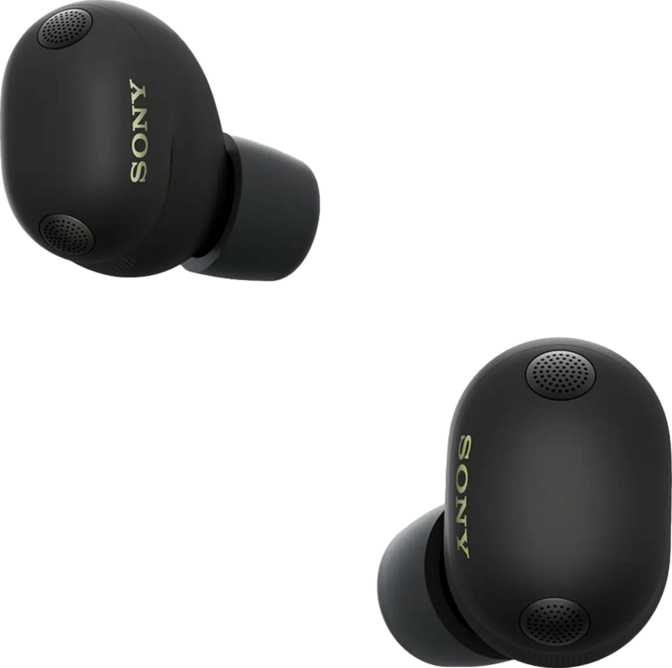
At 13 grams per earbud, the WF-1000XM6 sits comfortably within the range that most people can wear for extended sessions without fatigue. That said, fit is always personal with in-ear designs — the seal you achieve determines both sound isolation and bass response, so spending time swapping ear tip sizes when you first unbox these is time well invested.
There are no wingtips in the package. Sony is betting that the ergonomic housing shape alone holds these securely enough for most activities. For casual listening, commuting, and light exercise, that bet typically pays off. For intense running or gym sessions with a lot of head movement, the absence of a physical anchor may give some buyers pause.
These handle sweat and the occasional light splash comfortably — a rain dash to your car, a sweaty commute, a gym session. They are not designed for submersion. That protection level is appropriate for the primary use case but falls short of what sport-focused competitors offer.
Aesthetics and Controls
The WF-1000XM6 maintains Sony’s refined design language — no LED light show, no gimmicks. These look like serious audio equipment. Touch controls are built directly into the earbuds themselves, allowing you to manage playback, calls, ANC modes, and volume without reaching for your phone. The control panel is on the earbud surface; gestures register without any external hardware.
The charging case ships with a travel bag included — a small but appreciated detail that signals Sony understands who buys this product. People who spend at this level travel, and protecting the case in transit matters.
Sound Quality: What the Specs Actually Mean
Driver performance, noise cancellation depth, and ambient awareness
Driver Performance and Frequency Reach
The 8.4mm dynamic driver at the heart of each earbud is a meaningfully sized transducer for an in-ear form factor. Larger drivers generally move more air, which translates to a more physical sense of bass and a lower noise floor. The frequency response spans from the very bottom of human hearing all the way up to 40,000 Hz — well beyond what the ear can consciously perceive, but relevant because high-resolution audio formats encode content into those upper registers. Reproducing them faithfully affects the perceived air and spaciousness of music even if you cannot hear that range directly.
The 48-ohm impedance is on the higher side for a wireless earbud. In practical terms, the drivers are designed to receive a controlled, stable signal — which benefits clarity and reduces distortion. Sony’s internal amplification handles delivering adequate power to those drivers. You will not run into volume problems.
Active Noise Cancellation — The Real Differentiator
ANC is the reason most people consider this product over less expensive alternatives. The WF-1000XM6 combines active noise cancellation with passive isolation from the in-ear seal — these two approaches work in tandem. Passive isolation physically blocks higher-frequency noise through the ear tip seal; ANC electronically counters lower-frequency continuous sounds like airplane cabin hum, train rumble, and HVAC systems.
Multiple microphones allow the processing system to model the acoustic environment more accurately — both outside the ear and inside it — resulting in cancellation that adapts to your surroundings rather than applying a one-size solution. Four mics also provides redundancy: if one is partially obstructed by hair or clothing, the others compensate.
Ambient Sound Mode
When you need awareness of your surroundings — crossing a street, hearing an announcement, having a quick conversation without removing the earbuds — ambient sound mode pipes controlled external audio through the drivers. This is meaningfully different from pausing your music. You stay connected and can switch back instantly. The result is a fluid, low-friction daily experience that becomes second nature quickly.
Connectivity: Codec Support and Range
LDAC, Bluetooth 5.3, and what the codec choices mean for your listening
LDAC: The High-Resolution Advantage
The presence of LDAC is a significant specification for anyone invested in high-quality audio sources. LDAC is Sony’s proprietary wireless codec capable of transmitting audio at roughly three times the data rate of standard Bluetooth audio. If you use a streaming service that offers lossless or high-resolution tiers, or if you have a local library of FLAC or Hi-Res Audio files, LDAC is what bridges the gap between your source and your ears without the typical compression compromise.
AAC support ensures Apple device users get a better-than-baseline Bluetooth audio experience even when LDAC is not available. Notably, aptX and its variants are absent, and so is Bluetooth LE Audio. The aptX family is primarily relevant on Qualcomm-powered Android devices where manufacturer support varies; Sony has its own high-quality codec path in LDAC. The absence of LE Audio means these do not support Auracast broadcast audio — a feature gaining traction but not yet mainstream.
| Codec | Supported | Best Used For |
|---|---|---|
| LDAC | Supported | Hi-Res Audio, FLAC files, lossless streaming tiers |
| AAC | Supported | iPhone, Apple Music, standard streaming services |
| aptX / aptX HD | Not supported | Qualcomm Android devices — not relevant here |
| aptX Adaptive | Not supported | Latest Qualcomm platform devices |
| Bluetooth LE Audio | Not supported | Auracast broadcast, emerging wireless standard |
Bluetooth 5.3 and Range
Bluetooth 5.3 provides a stable, modern connection baseline. The wireless range of approximately 10 meters is a real-world figure — walls and interference will reduce this in practice, but for typical use with a phone in your pocket or on a desk nearby, this is entirely sufficient. There is no NFC pairing, but connection is straightforward through your device’s Bluetooth settings or the Sony companion app.
Battery Life: The Honest Picture
Daily endurance, real-world context, and charging options
Daily Endurance
Roughly 5.5 hours of playback per charge — dropping slightly when ANC is running — is enough for a one-way transatlantic flight segment before you need to return the earbuds to the case. Most commuters, office workers, and gym-goers will complete a full day’s listening without touching the case at all.
The charging case extends total playback to roughly 17.5 hours combined. For multi-day trips, you will need to charge the case every couple of days depending on usage. Some rivals have pushed past 6 to 8 hours on a single charge — the WF-1000XM6 is competitive, but not the category leader on per-session endurance.
Charging Flexibility
Both wired and wireless charging are supported. The USB-C port on the case means you are not hunting for legacy cables, and Qi wireless charging means you can drop the case on any compatible pad. Fast charging is also supported — a short stint in the case before heading out recovers meaningful playback time quickly. A full charge from empty takes approximately one hour.
Call Quality and Microphone Performance
Four mics, active voice pickup, and real-world calling performance
The four-microphone configuration serves two functions: ANC processing and voice pickup for calls and voice assistants. Active noise-canceling microphone technology means the system works to isolate your voice from background sounds before transmitting it — rather than simply relying on directional pickup from proximity.
In real-world calling scenarios — open offices, busy streets, cafes — this matters considerably more than specifications suggest. The difference between a two-mic and a four-mic system with active noise reduction is clearly audible to the person receiving your call: your voice arrives cleaner, with less environmental bleed behind it.
-
Active noise-canceling microphone
Isolates your voice from surrounding noise before transmission -
Mute function
Silence your microphone during calls without ending the connection -
Voice prompts
Guides you through mode changes and connection states audibly -
Full headset capability
Works for voice and video calls, not just music playback
Smart Features That Change Daily Use
The built-in functionality that shapes the long-term ownership experience
Auto Pause and In-Ear Detection
Remove one earbud and playback pauses automatically. Replace it and music resumes. Small automation, large quality-of-life improvement — the kind you quickly forget exists until you appreciate it mid-conversation.
Find My Earbuds
Losing one earbud at a premium price point is a genuinely stressful event. Having a locating function built in is practical insurance — worth more than any spec sheet communicates.
Fast Charging and Wireless
A short stint in the case before heading out recovers meaningful listening time. Wireless Qi charging adds flexibility — drop the case on any compatible pad without searching for a cable.
Ambient Sound Mode
Switch from full noise cancellation to complete environmental awareness with a single tap. Cross a street, hear an announcement, or have a conversation — without removing the earbuds at all.
Voice Assistant Access
Invoke your phone’s voice assistant without pulling the device from your pocket. Voice prompts guide you through connection and mode states so you are never left guessing the earbud’s status.
Travel Bag Included
The charging case ships with a protective travel bag — practical during transit and absent from many competitors. For a product aimed at frequent travelers, it is a thoughtful inclusion that signals genuine product thinking.
Who Should Buy the Sony WF-1000XM6
Match your use case before committing to the purchase
Buy These If You…
- Need serious noise cancellation daily — commuters, frequent flyers, open-plan office workers
- Use high-resolution audio sources and want LDAC to deliver that quality wirelessly without compression
- Want one pair that handles music, calls, and voice assistance without asking you to compromise
- Value accessories that match the asking price: travel bag, USB-C, wireless charging, fast charging
- Exercise at casual to moderate intensity where sweat resistance covers your needs and wingtips are unnecessary
Consider Alternatives If…
- You need deeper IPX protection for swimming or heavy rain — IPX4 is sweat-resistant, not waterproof
- Intensive sport is your primary use and you need a physical anchor like ear hooks or wingtips to stay secure
- Your Qualcomm-powered Android phone is where you prefer aptX Adaptive’s adaptive-bitrate codec path
- Spatial audio formats like Dolby Atmos or Apple Spatial Audio are central to how you already listen
- Per-session battery life above 6 hours is a firm requirement before any recharge from the case
Competitive Context
How the WF-1000XM6 compares to logical alternatives in the same price range
| Factor | Sony WF-1000XM6 | Typical Premium Alternatives |
|---|---|---|
| Hi-res wireless codec | LDAC | aptX Adaptive (Qualcomm), AAC-only (Apple) |
| ANC microphone count | 4 mics with active NC | 2–6 mics, varies by model |
| Wireless charging | Yes | Yes on most competitors |
| In-ear detection | Yes | Yes on most competitors |
| Spatial / 3D audio | Not supported | Supported on some (Dolby Atmos, spatial audio) |
| Codec flexibility | LDAC + AAC only | Often broader aptX family alongside own codec |
The absence of spatial audio support is a genuine trade-off for users who have built listening habits around Dolby Atmos music or Apple Spatial Audio. Sony’s position is that stereo fidelity at the highest codec quality is the priority — a defensible stance, but worth knowing before committing.
Strengths and Weaknesses: The Balanced View
What this product does well and where it shows its limits
Where It Excels
- The ANC processing stands out as among the most capable in this category — a four-microphone array adapts to your acoustic environment rather than applying a fixed cancellation profile. The dual passive-and-active approach covers both frequency ranges where each method works best.
- LDAC support gives serious listeners what they have paid for. The gap between standard Bluetooth compression and LDAC is audible on high-resolution material, and Sony’s implementation here is mature and reliable.
- The hardware package is genuinely thoughtful: wireless charging, USB-C, fast charging, in-ear detection, and an included travel bag are signs of a product designed by people who considered the full ownership experience.
- Consistency across every dimension of daily use. The WF-1000XM6 earns its position not through one standout feature but through execution that holds up across months of real-world wear.
Where It Falls Short
- Battery life at 5.5 hours per session is competitive but not leading. Some rivals push past 6 to 8 hours on a single charge — which matters when you are on a long-haul flight and would rather not pause listening to return the earbuds to the case.
- The combined 17.5-hour total is acceptable but no longer impressive at this price tier. Competitors are extending case capacity significantly, and the WF-1000XM6 does not lead that race.
- IPX4 water resistance will disappoint athletes who train in heavy rain or want confidence around water. This is a sweat-resistant product — not a waterproof one — and the distinction matters for a segment of buyers.
- No spatial audio support is a real limitation for users who have organized their listening around Dolby Atmos music or Apple Spatial Audio. Sony’s stereo-first priority means that ecosystem is simply not served here.
Common Questions Before You Buy
Answers to what real buyers search for most before purchasing
A Confident Recommendation for the Right Buyer
The WF-1000XM6 is one of the most technically accomplished in-ear wireless options available for those who want serious noise cancellation, high-fidelity wireless audio, and a thoughtfully assembled daily-carry experience. It earns its position at the top of the market not through a single standout feature but through the consistency of its execution across every dimension that matters.
Buy These
If your daily life involves commuting, flying, open offices, or any environment where background noise is a constant friction — and you want to hear music at the quality your sources can actually deliver — the WF-1000XM6 delivers. The trade-offs are real but narrow. For most buyers evaluating this category seriously, they will not be dealbreakers.
Look Elsewhere If
Spatial audio formats are central to your listening life, if you need water resistance beyond IPX4, or if per-session battery above 6 hours is a firm requirement before any case recharge. In those specific cases, alternative products address those needs more directly and you should seek them out.