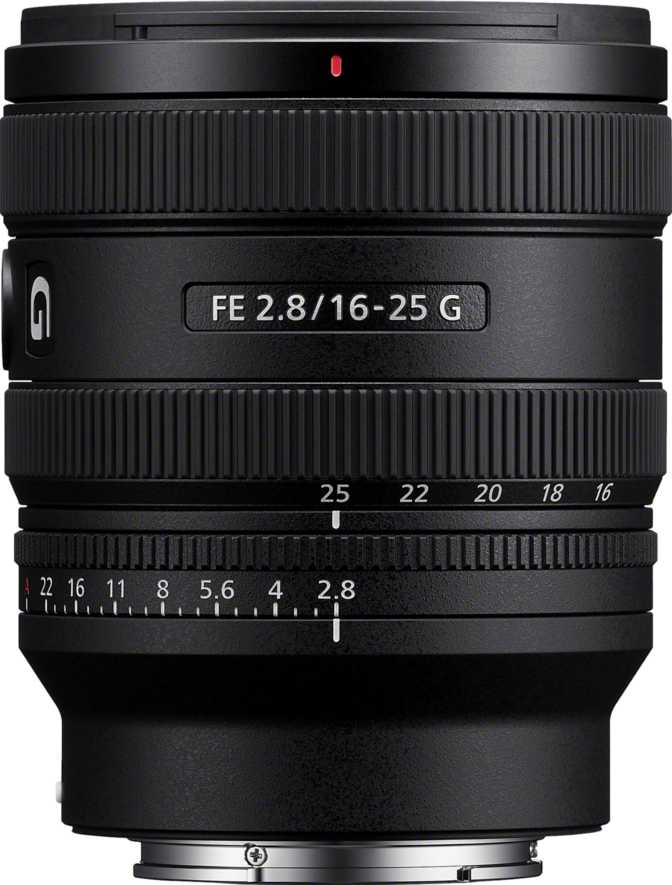
Sony FE 16-25mm f/2.8 G Review – Compact f/2.8 Wide-Angle Zoom for Sony
Camera LensesWide-angle zooms have long forced photographers into an uncomfortable compromise: lenses with serious optical credibility tend to be heavy and unwieldy, while compact alternatives sacrifice the light-gathering ability that makes a bright aperture worth having. The Sony FE 16-25mm f/2.8 G sits squarely in the middle of that tension — and largely resolves it. This is a lens for Sony full-frame shooters who need genuine wide-angle reach with a constant bright aperture, in a package they will actually carry.
Design and Build Quality
Size and Weight in Practice
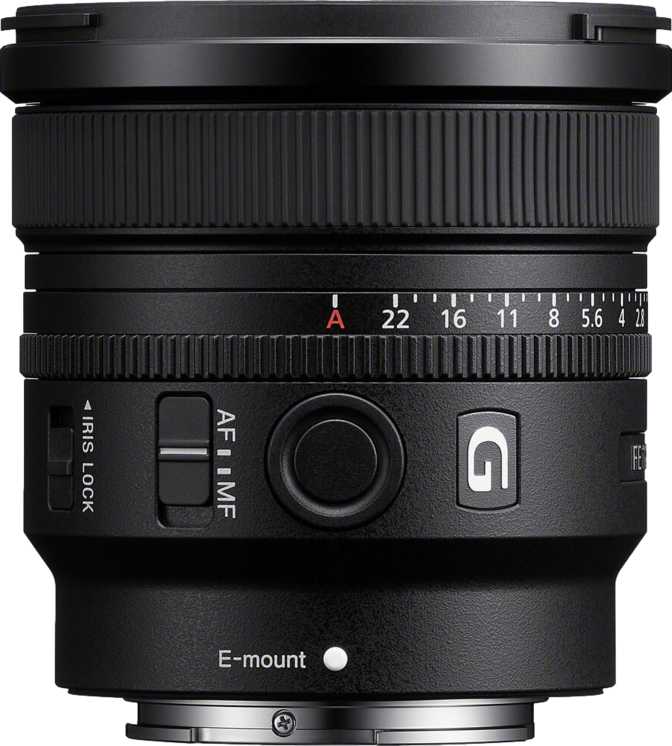
At 409 grams, the Sony FE 16-25mm f/2.8 G occupies a genuinely useful position in the size hierarchy of professional Sony glass. It is light enough to pair with a compact full-frame body for an all-day carry without shoulder fatigue, yet substantial enough to feel like a serious, well-engineered tool in hand. This is notably lighter than Sony's 24-70mm f/2.8 GM II — a fact that matters enormously when traveling with a full kit or shooting handheld for extended periods.
The 67mm filter thread is a practical advantage that extends beyond the lens itself. It is a common diameter, meaning polarizers, ND filters, and UV protectors are widely available and affordable. Photographers who already own 67mm filters from other lenses can use them immediately, reducing the hidden cost of adding this glass to a working kit.
Build Materials and Weather Protection
The mount is metal — not a minor detail. A metal mount provides mechanical integrity over long-term use: no flex, no wear, whether swapping glass in a studio or attaching the lens in gusty, damp conditions. Combined with full weather sealing at the zoom ring, focus ring, and mount interface, this lens is built to work in the environments where serious photographers actually shoot.
Weather sealing note: This lens resists dust and moisture ingress at all critical points. It is not waterproof — but light rain, humidity, and dusty environments are well within its capability.
Front Element and Filter Usability
The front element does not rotate during focusing or zooming. Screw-on filters — particularly circular polarizers — stay exactly where you set them regardless of what the lens does internally. Any photographer who has wrestled with a polarizer spinning out of position mid-composition understands exactly why this matters.
The included lens hood is reversible, meaning it can be flipped backward onto the barrel for compact transport without adding bulk to a bag — a small but genuinely useful design decision that reflects a lens made for photographers who use it in the field.
Optical Performance
The Constant f/2.8 Advantage
The aperture holds at f/2.8 across the entire zoom range — from 16mm all the way to 25mm. Many wide-angle zooms at this price and size class use variable apertures that dim as you zoom in, creating unpredictable exposure shifts during video work and forcing higher ISO settings in low light. A constant f/2.8 eliminates both problems entirely.
At this aperture, the lens collects roughly four times as much light as a comparable f/5.6 lens. In practice, that translates to shooting in dimly lit interiors, evening events, and night-time cityscapes at lower ISOs for cleaner images — or at faster shutter speeds that freeze motion without a tripod.
What 16–25mm Looks Like in the Field
At 16mm, with a field of view approaching 107 degrees, the lens captures an entire room interior from a corner, a building facade from across a narrow street, or a landscape with dramatic foreground-to-sky coverage. It is an assertive, perspective-stretching view of the world.
At 25mm, the field tightens to approximately 82 degrees — still genuinely wide, but with noticeably less geometric distortion and a more natural spatial rendering. Subjects at the frame edges appear less stretched, making 25mm a more flattering focal length for environmental portraits and group shots.
The 1.6× zoom ratio is narrower than a general-purpose travel zoom, but intentionally so. This lens prioritizes optical quality and constant light transmission within a deliberately chosen wide-angle corridor. Versatile range and compact bright-aperture performance are different design priorities — understanding this distinction is key to knowing whether this lens fits your work.
Close Focus Capability
A minimum focus distance of 24 centimeters is impressive for a wide-angle zoom. At 16mm, focusing this closely creates striking perspective effects: foreground subjects loom large against sweeping backgrounds, a technique used frequently in landscape photography to transform rocks, foliage, or textures into dominant compositional elements. The 0.2× magnification ratio will not replace a dedicated macro lens, but it adds creative flexibility that many travel-focused wide zooms cannot match.
Aperture Blades and Rendering
Eleven aperture blades govern how out-of-focus highlights render. At f/2.8 — the aperture most users favor — the blades are fully open and their geometry is irrelevant to rendering quality. The maximum small aperture of f/22 at the wide end serves architectural photography where total depth of field is required, or long-exposure creative work with neutral density filters.
Autofocus System
The internal focus motor is built to Sony's current professional standard: fast, accurate, and completely silent. For video work, silence is non-negotiable — an audible focus motor is picked up by camera microphones during quiet scenes, creating an audio problem that cannot be fixed in post. The silent motor on this lens eliminates that issue without any workarounds.
Full-time manual focus is available even when the lens operates in autofocus mode. Reaching for the focus ring at any point produces an immediate response — useful for photographers who use autofocus to get close and then fine-tune by hand, a technique common in portrait and street photography.
Infinity focus note: This lens is listed as unable to achieve optical infinity focus. For most landscape and travel photography this is not a practical constraint, but astrophotographers with workflows requiring precise infinity focus should verify this limitation before purchasing.
No Built-In Stabilization: What That Actually Means
There is no optical image stabilization inside this lens. For the majority of Sony body owners, this is not a problem: Sony's full-frame cameras have included in-body image stabilization for several generations, and body-based stabilization compensates for camera shake regardless of which lens is attached. If your camera has IBIS, this lens is effectively stabilized for still photography.
The absence of lens-based stabilization is most relevant in video — particularly handheld video in challenging conditions without a gimbal. The combination of optical and body stabilization can produce smoother results than IBIS alone. Videographers using gimbal rigs will not notice any difference. Those on older Sony bodies without IBIS, or shooting significant handheld video in demanding conditions, should factor this in before purchasing.
- Your camera body has IBIS (most current Sony full-frame)
- Shooting on a gimbal for video work
- Still photography at standard handheld shutter speeds
- Your body lacks IBIS (older Sony models)
- Frequent handheld video shooting without gimbal support
Who Should Buy This Lens
Light enough for all-day carry on a camera body, bright enough for indoor landmarks and evening street scenes, and weather-sealed for the unpredictable conditions that travel reliably delivers.
Constant f/2.8, completely silent autofocus, and a focal range covering the most cinematic wide-angle perspectives — establishing shots, environmental context, architectural interiors — make this a credible primary video lens.
Weddings, conferences, and live performances demand a wide lens that handles difficult lighting, stays quiet, and survives demanding environments. This lens meets all three criteria without the bulk of larger f/2.8 glass.
Carries light without sacrificing low-light performance. The close minimum focus distance adds foreground-interest compositional options that purely travel-focused wide zooms do not provide.
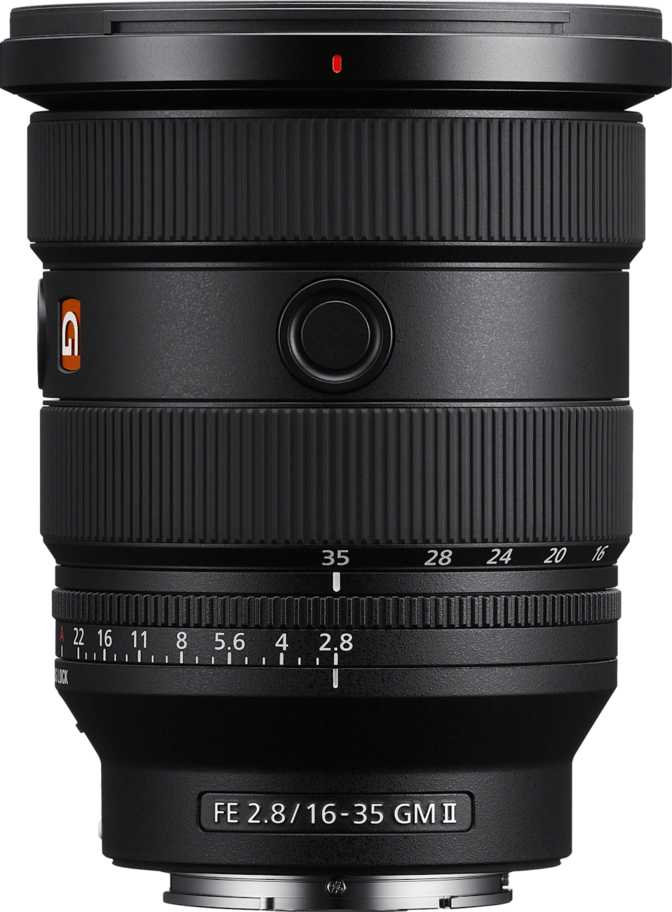
Photographers who transition from wide establishing shots to tighter character work will find 25mm a limiting ceiling. The 16-35mm f/2.8 GM II covers all of this lens's range and adds 10mm at the long end — at greater size and weight.
Without in-body stabilization on the camera side, handheld shooting in very low light at slow shutter speeds becomes notably more challenging. Older Sony bodies without IBIS should factor this into their decision.
The G designation represents Sony's professional lens line optimized for a balance of performance and portability. For the absolute optical ceiling of Sony's system, the G Master series sets a higher bar — at significantly greater size and cost.
How It Compares to the Alternatives
Here is how the Sony FE 16-25mm f/2.8 G sits against the two most logical Sony alternatives in the constant f/2.8 wide-angle space.
| Feature | Sony FE 16-25mm f/2.8 G | Sony FE 12-24mm f/2.8 GM | Sony FE 16-35mm f/2.8 GM II |
|---|---|---|---|
| Aperture | Constant f/2.8 | Constant f/2.8 | Constant f/2.8 |
| Wide End | 16mm | 12mm | 16mm |
| Long End | 25mm | 24mm | 35mm |
| Filter Thread | 67mm — standard | No front filter use | 82mm standard |
| Weight | 409g — lightest | ~847g | ~547g |
| Weather Sealed | Yes | Yes | Yes |
| Best For | Compact everyday carry | Ultra-wide specialists | Wide-to-mid versatility |
The 12-24mm f/2.8 GM reaches wider with G Master optical credentials, but at more than double the weight and without standard front filter capability — a meaningful constraint for landscape photographers. The 16-35mm f/2.8 GM II extends to 35mm for broader coverage, but at greater size and weight. The 16-25mm f/2.8 G carves its own space as the most compact constant-f/2.8 option in Sony's wide-angle lineup.
Honest Assessment: Strengths and Limitations
Where It Excels
The Sony FE 16-25mm f/2.8 G earns its reputation primarily through what it does not sacrifice in the name of compactness. Many lightweight wide zooms cut corners on maximum aperture, autofocus quality, or weather protection. This lens keeps all three — and that combination is genuinely uncommon at this weight class.
Constant f/2.8 throughout the zoom range, completely silent internal focus, standard 67mm filter compatibility, a metal mount, and full weather sealing in a sub-410-gram package — each attribute matters independently. Finding all of them together in a wide-angle zoom is this lens's core value proposition.
The 24cm minimum focus distance adds creative range beyond what the category typically implies. The non-rotating front element means filter-based workflows — polarizers, ND grads — proceed cleanly without interruption.
Where It Asks for Compromise
The zoom range is narrow by general-purpose standards. Photographers who need a single lens to cover wide establishing shots and tighter character work will find 25mm a limiting ceiling. This is a deliberate design choice made to achieve the size and weight target — but it disqualifies the lens for shooters who need one piece of glass to cover multiple focal-length jobs.
The absence of optical stabilization is a real limitation on older Sony body platforms without IBIS. On current full-frame Sony bodies, body-based stabilization compensates effectively. For video in challenging conditions without a gimbal, it is a genuine constraint worth planning around before purchasing.
The infinity focus limitation is minor for most workflows but deserves acknowledgment. It does not affect everyday landscape or travel photography, but it is relevant context for specific technical use cases that depend on precise optical infinity focus.
Common Questions Before Buying
Highly Recommended for the Right Shooter
The Sony FE 16-25mm f/2.8 G makes a specific promise — a compact, weather-sealed, constant-aperture wide zoom built for everyday carry — and delivers on it with very few concessions. For travel photographers, video creators, and event shooters on modern Sony full-frame bodies with IBIS, this lens eliminates most of the traditional pain points associated with wide-angle f/2.8 glass: the weight, the bulk, the rotating front element, the variable aperture, and the noisy autofocus.
It is not the right tool for photographers who need coverage from 16mm to 35mm without a lens change, or for those requiring stabilized glass on older Sony body platforms without IBIS. For everyone else — the compact traveler, the video-first creator, the all-day event photographer on a current Sony body — the Sony FE 16-25mm f/2.8 G is a well-considered lens that earns a permanent place in a working kit.