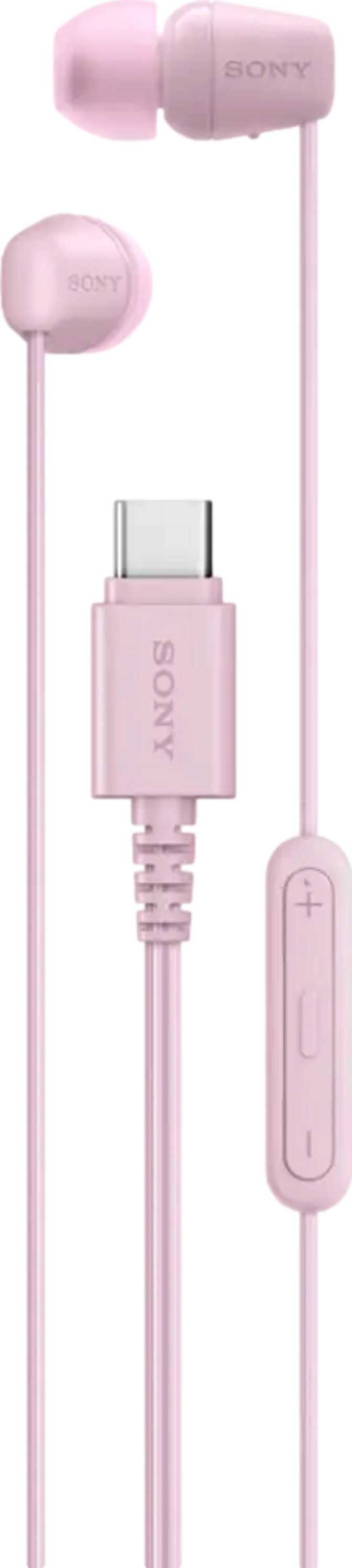
The shift away from the 3.5mm headphone jack has created an entire category of earphone that simply did not exist a decade ago. Today, a growing number of phones — particularly flagship Android devices and newer laptops — ship with USB-C as the only audio port, leaving millions of users hunting for earphones that actually fit the port on their device. The Sony IER-EX15C is Sony's direct answer to that reality: a wired in-ear model built from the ground up for USB-C devices, no dongles required.
This is an entry-level earphone in a Sony lineup with serious audio heritage, and the question is not just whether it fits your port — it is whether it earns its place as a daily companion worth the money. Here is what the IER-EX15C actually delivers.
At a Glance
Key Strengths
- Featherlight at 6 gramsAmong the lightest in its class — disappears during extended wear
- Native USB-C connectionPlugs directly into modern devices — no adapter needed
- Tangle-resistant cable1.2 m cable that untangles quickly from bag or pocket
- Passive noise isolationIn-ear seal blocks ambient sound without electronics or battery cost
Key Limitations
- No water or sweat resistanceNot suitable for exercise, gym use, or rain-exposed commutes
- Fixed, non-detachable cableCable damage means replacing the entire earphone
- No warranty period statedVerify current warranty terms with Sony before purchasing
- No in-line cable controlsVolume and playback are managed at the device level only
Design and Build Quality
A Weight That Disappears in Your Ears
At just 6 grams, the IER-EX15C is among the lightest earphone options in its class. For reference, a standard USB-C cable connector alone weighs more than this earphone. In practical terms, this means the earphones stop registering as physical objects within minutes of wearing them — a detail that matters enormously during extended calls, long commutes, or all-day desk sessions where ear fatigue is a real consideration.
The in-ear form factor places the earphone tips inside the ear canal, creating a natural physical seal. This seal holds the earphones in place during normal movement and is the mechanism behind their passive noise reduction — no electronics or special materials required, just a well-matched fit.
Cable Design
The 1.2-metre cable hits a practical sweet spot. Long enough to reach a phone in a jacket pocket or a laptop on a desk without pulling taut, short enough that excess slack is never a management problem. The cable is engineered to resist tangling — a genuine construction choice, not a marketing label — which means it untangles quickly after being coiled in a bag rather than forming a stubborn knot.
The cable is fixed, not detachable. If the cable sustains damage, the entire earphone is affected — there is no option to swap in a replacement. This is a standard design decision at this price tier and worth knowing before purchase rather than after.
Water and Weather Resistance
The IER-EX15C carries no water or moisture resistance rating. If you plan to use these during exercise, jogging in light rain, or in environments where sweat contact is likely, look elsewhere. These earphones are designed for controlled environments — commuting, desk work, casual listening. They will not survive prolonged sweat or moisture exposure.
Sound Performance
Driver Size and Magnetic Technology
The IER-EX15C uses a 5-millimetre driver — the moving component that converts electrical signal into sound. Drivers in this category range from 5mm to around 13mm across different products; size is one factor among several that influences bass response, detail retrieval, and driver speed.
Sony pairs this compact driver with a neodymium magnet — a rare-earth material that generates a substantially stronger magnetic field than the ferrite alternatives used in lower-specification products, achieving this in far less physical space. The practical result is a driver that responds with more precision and efficiency — faster and more accurately than the driver size alone would suggest. This is how compact earphones with quality magnets can outperform larger drivers with weaker magnetic systems.
Frequency Coverage
The earphone covers the full spectrum of human hearing from the deepest audible bass through the highest perceivable treble. This means the driver is spec'd to reproduce every frequency the human ear can process. For general music listening, video calls, and media consumption, that coverage is exactly what you need. The IER-EX15C is positioned as a daily-use earphone, not a reference monitor, and its driver selection reflects that practical intent rather than a commitment to any specific sound signature.
Passive Noise Isolation
Without any active electronics, the closed in-ear design physically blocks ambient noise. When the ear tips seal in your ear canal, external sound — office chatter, commuter hum, background music — is noticeably reduced.
This is not active noise cancellation, which uses microphones and processing to electronically counteract ambient sound. For the environments the IER-EX15C targets, passive isolation is often sufficient and comes with no battery cost or processing overhead.
Zero processing overhead
No battery dependency. No active circuitry. Just physics working in your favour.
Connectivity
The USB-C Advantage
The IER-EX15C connects via USB-C — the same port used to charge most modern Android phones, tablets, and an increasing number of laptops. If your device has no headphone jack, you no longer need to carry a USB-C to 3.5mm adapter. The earphones plug directly in.
Wired Connection Benefits
Wired audio carries inherent advantages that wireless connections still cannot fully replicate. There is zero pairing process, zero Bluetooth latency — relevant if you watch video and want audio in sync with lip movements — and no battery management to think about. You plug in, audio works.
For users who have simplified their tech setup or who use earphones primarily for calls and work, this zero-friction reliability is a genuine selling point.
Important Compatibility Check
Not every USB-C port supports audio output. While the majority of modern smartphones do, some implementations — particularly on budget devices, certain PC ports, and some hubs — are configured for data and charging only.
Before purchasing, confirm your specific device supports USB-C audio output via the manufacturer's specification page — it takes under a minute.
Call and Communication Features
Microphone Setup
The IER-EX15C includes a single microphone for call and voice input use. This standard single-microphone configuration works competently for phone calls, video meetings, and voice dictation in environments with moderate background noise.
Where it shows its limits is in very loud settings: a single mic cannot apply the directional noise filtering that dual or multi-microphone headsets use to isolate your voice from surroundings. For most office and home call use, this is not a problem. In busy public spaces, callers may notice more ambient noise than they would with a higher-specification headset.
Controls and Mute Function
A control element is integrated into the earphone body itself — not on a cable remote. This keeps the cable clean and free from the additional hardware that can add weight and become a cable pinch point over time.
A mute function is accessible through this on-body control — practical for anyone who spends regular time on video calls and needs to silence their microphone without reaching for their phone or screen.
There is no inline remote on the cable. Volume adjustment and media playback control happen at the device level.
Who This Earphone Is Built For
The IER-EX15C fits a well-defined user profile. Understanding this profile is the most useful thing this review can offer.
This earphone suits you if
- Your primary device has USB-C and no headphone jack
- You use earphones mainly for calls, meetings, commuting, or casual listening
- You want wired simplicity — plug in, audio works, no setup or battery
- Lightweight, all-day comfort matters more than premium sound performance
- You want a reliable daily option without high expenditure
This earphone is not right for you if
- Exercise or outdoor use is part of your plan — no moisture resistance means real damage risk
- You need in-line cable controls for hands-free volume and media management
- Long-term repairability matters — fixed cable and unconfirmed warranty are real concerns
- Your listening is dedicated enough that driver quality and audio tuning are priorities
- You want or need wireless functionality
How It Compares to the Competition
| Feature | Sony IER-EX15C | Typical USB-C Alternatives |
|---|---|---|
| Connection Type | USB-C wired | USB-C wired or Bluetooth |
| Driver Technology | 5mm neodymium magnet | 6mm–10mm, magnet quality varies |
| Cable Design | Tangle-resistant, fixed, 1.2 m | Fixed on most; tangle management varies |
| Earphone Weight | Best6 g — exceptional | 7 g–14 g typical |
| Microphone | Single mic, on-body mute control | Single or dual mic; often inline remote |
| Water Resistance | None | IPX4 splash resistance common at this tier |
| Wireless Option | None | Many offer Bluetooth variants |
| Warranty | Not stated — verify with Sony | 1–2 years standard across category |
Competitor column represents typical category benchmarks. Individual products will vary.
Where It Excels and Where It Doesn't
Where It Earns Its Keep
The IER-EX15C gets the fundamentals right for its intended use case. The weight is exceptional — most earphones in this price bracket are noticeably heavier, and the difference is felt during extended wear. The tangle-free cable is a day-to-day quality-of-life improvement that sounds minor until you have dealt with the alternative for months. The USB-C connection removes the adapter question entirely, which has real value for anyone whose device ecosystem has moved past the 3.5mm era.
Sound performance is appropriate for the earphone's positioning. The neodymium driver delivers full-range audio that handles music listening, calls, and video content with competence. This is not an earphone that invites critical listening; it is one that handles whatever you are doing reliably and gets out of the way.
Where It Falls Short
The absence of any moisture resistance is the clearest practical limitation. This category — entry-level wired in-ears — often includes at least a basic splash resistance rating, and the IER-EX15C's lack of any moisture protection narrows its use context meaningfully. Pair that with a fixed, non-detachable cable, and the long-term durability story is something buyers should factor carefully.
The warranty situation deserves direct mention. No stated warranty period is an unusual omission for a branded product from a major manufacturer. Buyers should verify Sony's current warranty policy for this specific model through official Sony channels before purchasing, rather than assuming standard coverage applies.
Questions Buyers Ask Before Purchasing
Final Verdict
The Sony IER-EX15C is a purposeful earphone for a specific audience and it delivers on that purpose well. If you have a USB-C device, want wired audio without adapters, and your primary use is daily listening, calls, and commuting, this earphone meets those needs reliably. The weight, cable design, and zero-setup connection make it genuinely easy to live with day to day.
The purchase decision hinges on two questions: do you need moisture resistance, and are you comfortable with the warranty ambiguity? Verify Sony's current warranty policy before committing. If any chance of sweat or rain exposure exists in your use, consider moisture-protected alternatives first.
Editorial Verdict
Recommended
For daily USB-C use
Not recommended for athletes or outdoor use