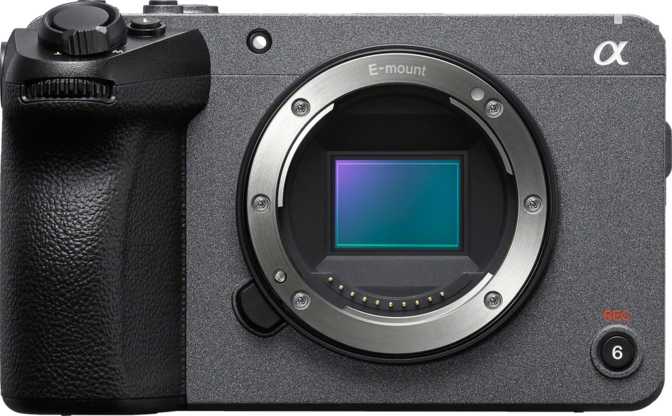
Sony FX30 Full Review: A Cinema Camera for Independent Filmmakers
CamerasMost cameras are built around photography, with video added as a feature. The Sony FX30 flips that logic entirely. As part of Sony's Cinema Line — a family engineered from the ground up for video professionals and serious content creators — it brings cinematic capability into an APS-C body at a price independent filmmakers can actually reach. That single distinction is the most important thing to understand before evaluating everything else. If you shoot primarily stills, this review will tell you something critical. If your creative work lives in moving images, read on carefully.
Key Specifications at a Glance
Six numbers that define what the Sony FX30 is built to do
Design and Build: A Cinema Body That Fits in Your Bag
Form Factor and Physical Footprint
The FX30 does not look like a conventional mirrorless camera, and that is intentional. It inherits the boxy, utilitarian silhouette of Sony's Cinema Line — a form more closely related to a compact cinema camera than a traditional mirrorless body. At roughly 130mm wide and just under 78mm tall, it is genuinely compact for what it offers. The weight, approximately 646 grams body-only, is manageable for handheld operation and will not punish you over a long shooting day.
The body is designed to be rig-friendly. Straight lines, flat surfaces, and logical port placement make it easy to mount on a cage, add a top handle, or attach a monitor without fighting the ergonomics. For solo shooters building a compact cinema rig, this is a considered design choice — not an afterthought.
Screen and Touch Controls
The rear screen is a fully articulating flip-out panel — not a simple tilt — which opens the display away from the body and allows framing at virtually any angle. This matters enormously for gimbal work, low-angle shooting, vlogging, and any scenario where the camera is not at eye level. The screen is fully touch-sensitive with touch autofocus support, meaning you can tap a subject on screen to lock focus during a live shoot — a workflow that becomes second nature quickly.
Physical Specifications
- Width
- 129.7 mm
- Height
- 77.8 mm
- Depth
- 84.5 mm
- Body Weight
- 646 g
- Rear Screen
- 3″ Flip-Out Touch, 2360k dots
- Operating Range
- -20°C to 40°C
- Hot Shoe
- Multi Interface Shoe
- Weather Sealed
- No
No Standard Hot Shoe
The FX30 replaces the traditional hot shoe with Sony's Multi Interface Shoe, which supports XLR audio adapters and compatible accessories. For videographers this is rarely a practical issue. For hybrid shooters who rely on speedlights, it requires planning.
No Weather Sealing
The FX30 is not weather sealed. Shooting in rain, dusty environments, or humid conditions requires housing the camera or accepting the risk. If your work routinely takes place in unpredictable outdoor conditions, this is a meaningful constraint.
The Sensor: Cinema Pedigree in APS-C Format
Size, Resolution, and Sensor Architecture
The FX30 uses an APS-C sensor — the format Sony calls "Super 35" in a cinema context, and that framing matters. Super 35 is the format motion picture cameras have used for decades of filmmaking. Shooting on the FX30 gives you a field of view and depth-of-field characteristic that cinematographers recognize and work with intentionally. At 26 megapixels, the sensor produces more than enough data for 4K output at every quality setting and handles large, detailed stills when needed.
This is a back-illuminated sensor design, meaning the light-gathering architecture is arranged to maximize how efficiently each pixel captures photons. The practical result is cleaner images in lower light before noise becomes a problem.
Low Light Behavior
The FX30's light sensitivity allows usable footage under streetlights, in candlelit interiors, and in dimly lit event spaces where many competing APS-C cameras would produce footage too noisy for professional use. The Bionz XR processor — the same engine Sony places in its high-end full-frame bodies — processes image data at a speed and efficiency that enables real-time noise reduction, log profile rendering, and complex autofocus calculations simultaneously without thermal throttling degrading quality.
In-Body Stabilization
Sensor-shift image stabilization means the sensor itself moves to compensate for camera shake — a system that works with any lens you attach. For video, this provides meaningful baseline smoothness during handheld operation. The FX30 does not support combined stabilization, so optically stabilized lenses operate independently rather than in coordination with the body. The in-body system works well on its own, but users chasing maximum handheld stability will find higher-end Sony bodies more capable in that specific dimension.
- APS-C / Super 35 format
- 26 megapixel resolution
- Back-illuminated (BSI) CMOS design
- Bionz XR processing engine
- Sensor-shift image stabilization
- ISO up to 32,000 native
- No stacked CMOS architecture
- No combined OIS + IBIS coordination
Autofocus: Professional-Grade Tracking That Earns Its Claims
Coverage and Speed
The FX30 uses phase-detection autofocus — a technology that calculates focus distance by comparing two separate views of a scene, rather than hunting for contrast. The result is fast, confident subject acquisition rather than the momentary hesitation that older contrast-detect systems produce. Coverage across the frame is expansive, with 759 focus points distributed across a wide area of the image, including the corners and edges.
For video work, this means the camera can maintain lock on a subject moving across frame — left to right, or toward and away from the lens — without the operator manually steering focus. Continuous autofocus during recording operates with the same intelligence and coverage as the stills system, not a simplified version.
Subject Tracking and Touch AF
AF tracking is active for both stills and video. Locking onto a subject lets the camera maintain that lock through environmental changes — elements entering the frame, partial occlusion, and lighting shifts. Touch autofocus allows the operator to initiate or redirect tracking with a tap on screen, which during live recording is a far cleaner action than repositioning focus points manually.
For solo creators who shoot themselves, or operators running a camera without a dedicated focus puller, this system meaningfully reduces the number of unusable takes caused by focus errors.
Video Capabilities: The Reason This Camera Exists
The video specification set is the centerpiece of the FX30's entire value proposition — and it is difficult to argue with at this price.
Slow Motion and Frame Rate Ceiling
At 120fps in 4K, you can slow footage down by a factor of five in a 24fps timeline — smooth, cinematic slow motion from a handheld camera with no specialist hardware. Many cameras at this price tier offer 4K at 60fps and require a crop or resolution drop for high-frame-rate modes. The FX30's 4K/120fps capability represents a genuine gap that competitors in the APS-C category have not consistently closed.
For product photography, sports coverage, music videos, or any narrative work that benefits from temporal drama, this level of slow motion adds a production value dimension that previously required cameras costing several times more.
Bitrate and Color Science
At 600 Mbps, footage responds to color correction, exposure adjustments, and selective grading far more gracefully than consumer-bitrate recordings. Detail retained in the file allows colorists to push highlights and pull shadows without the image breaking into artifacts.
The FX30 supports Sony's S-Log and S-Cinetone picture profiles, capturing in flat, log-encoded formats that retain maximum dynamic range for post-production grading. In plain terms, this gives colorists room to work without footage blowing out highlights or crushing shadows — the foundation of any serious color pipeline.
Audio: Built for the Field Without Compromise
The FX30 includes both a 3.5mm microphone input and a 3.5mm headphone output — both standard connectors accepting virtually any professional or prosumer audio equipment. This combination allows simultaneous external microphone input and real-time headphone monitoring of the recorded audio, which is the minimum requirement for any serious production where audio quality matters. The port accepts condenser microphones, dynamic microphones, and lavalier systems without adapters.
Sony's Multi Interface Shoe accepts XLR adapters, which add professional-grade balanced XLR audio inputs to the top of the camera. XLR is the connection standard used across professional film and broadcast equipment — a three-pin balanced system that eliminates electrical interference over long cable runs. For documentary, interview, or event work where a lavalier on a long cable feeds back to camera, the FX30's shoe makes XLR accessible without a separate audio recorder in the chain.
The built-in stereo microphone with two capsules functions adequately as a reference track or for casual capture, but any serious production should default to the external audio options above. Think of the onboard microphone as a convenience, not a final destination for audio quality.
Audio I/O Summary
- 3.5mm Microphone InputStandard port — accepts any pro or prosumer microphone
- 3.5mm Headphone OutputReal-time monitoring of recorded audio during capture
- XLR via Multi Interface ShoeBalanced pro-grade connections — no separate recorder needed
- Built-In Stereo MicrophoneTwo-capsule onboard mic — suitable for reference tracks
Connectivity and I/O: Ready for Professional Workflows
HDMI Output
Connect to external monitors and recorders. Combined with log output, a director monitor can show a graded preview while the camera records flat footage internally — a standard professional monitoring workflow.
Dual Card Slots
Simultaneous backup recording, overflow recording, or format-specific workflows. For professional assignments where a lost card means lost irreplaceable footage, redundant recording is an insurance policy clients increasingly expect.
Wi-Fi 5 + Bluetooth 5
Wi-Fi 5 (802.11ac) provides faster wireless file transfer than older standards. Bluetooth 5 maintains a persistent low-power connection for smartphone control and remote operation between transfers.
USB-C at 3.2 Gen Speed
Fast data transfer and firmware updates. Also accepts USB-C power input — a quality power bank can act as a continuous power source for static setups, eliminating battery anxiety entirely in those scenarios.
Stills Capability: Capable, But Not the Priority
The FX30 shoots RAW files, including lossless compressed RAW — a format that combines the editing flexibility of uncompressed RAW with significantly smaller file sizes, without meaningful image quality loss. The full manual control suite is present across exposure, ISO, shutter speed, white balance, and focus. An HDR mode handles high-contrast scenes, and in-camera panorama stitching is available for wide landscape captures without specialist software.
A note for photographers: The FX30 is capable for stills work, but its trade-offs — no weather sealing, no traditional hot shoe for flash, no built-in timelapse — reflect a video-primary philosophy. Dedicated stills shooters will find better value in Sony's Alpha mirrorless lineup, which makes different choices in favor of photography workflows.
Battery Life: Know What You Are Getting Into
Under standard testing conditions, the FX30 is rated for approximately 570 shots per charge. That figure uses an industry-standard methodology developed for still cameras — it does not translate directly to video recording time, which draws significantly more power. High-bitrate, high-frame-rate recording will reduce real-world endurance considerably below what that figure implies.
For a half-day or full-day shoot, planning on multiple batteries is not overcaution — it is basic production preparation. The battery is removable and compatible with several Sony bodies and accessories, meaning third-party extended-capacity batteries are widely available and represent a practical path to longer sessions without a wall outlet.
USB-C power input changes the calculus for static setups. A quality USB power bank connected to the FX30 during an interview setup or product shoot effectively eliminates battery concerns in those scenarios entirely.
Battery at a Glance
- Removable and rechargeable battery
- USB-C continuous power input supported
- Battery level indicator on screen
- Compatible with third-party extended batteries
Who Should Buy the Sony FX30 — And Who Should Not
The FX30 is a video specialist. Understanding that makes the decision straightforward.
- Independent Filmmakers and Narrative CreatorsCinema-grade video — log formats, professional audio I/O, high data rates — at a price accessible to individuals and small productions.
- Hybrid Content Creators and YouTubersThe flip-out screen, touch autofocus, compact form, and native live streaming support serve solo operators producing high-production-value video.
- Commercial VideographersSlow motion, dual-card redundancy, and professional audio connectivity meet the demands of product video, event, and corporate production work.
- Emerging Filmmakers and StudentsAccess to professional recording formats, professional audio, and one of the widest lens ecosystems in mirrorless — without a full cinema camera budget.
- Existing Sony E-Mount UsersStep up from any Sony Alpha body with full lens compatibility and zero additional lens investment required.
- Primarily Stills PhotographersNo weather sealing, no traditional hot shoe for flash, and no built-in timelapse. A Sony Alpha body serves stills-first work far better.
- Wildlife and Sports PhotographersNo weather sealing and no GPS limit its viability for field work in unpredictable outdoor environments.
- Shooters Who Need Location MetadataNo internal GPS means location data is absent from files unless added via external accessories or a paired smartphone app.
- Run-and-Gun in Harsh EnvironmentsWithout weather sealing, shooting in rain, dust, or splashing water requires protective housing or avoidance of those conditions entirely.
Competitive Positioning: How the FX30 Compares
The FX30 occupies a position that few cameras genuinely achieve — cinema-level recording specifications in a compact APS-C body at an accessible price.
| Feature | Sony FX30 | Typical APS-C Hybrid | Cinema-Tier Alternative |
|---|---|---|---|
| Sensor Format | APS-C / Super 35 | APS-C | Super 35 or larger |
| 4K Frame Rate Ceiling | 120fps | 30–60fps | 60–120fps |
| Max Recording Bitrate | 600 Mbps | 100–200 Mbps | 400–800 Mbps |
| Log / Cinema Profiles | Yes | Limited or absent | Yes |
| Professional Audio I/O | 3.5mm + XLR via shoe | 3.5mm only | XLR built-in |
| Dual Card Slots | Yes | Varies by model | Yes |
| Weather Sealing | No | Often no | Often yes |
| Lens Ecosystem | Sony E (extensive) | Manufacturer-dependent | Manufacturer-dependent |
| Body Weight | ~646 g | ~450–600 g | 800 g–1.5 kg+ |
Honest Strengths and Limitations
Where the FX30 Genuinely Excels
The video specification set is the honest headline strength. A camera recording 4K at 120fps at 600 Mbps in a log color profile with phase-detection autofocus and professional audio connectivity, at this price, does not have a long list of competitors. The Bionz XR processor means the performance headroom that usually justifies spending considerably more is genuinely accessible here.
The autofocus system is another real strength. Phase-detection tracking at this level of coverage and consistency removes one of the biggest technical barriers to professional-looking video for operators working without a dedicated focus puller. The combination of reliable continuous AF and touch screen control changes the practical feasibility of solo shooting.
The Sony E-mount lens ecosystem deserves explicit credit. Access to one of the widest native lens catalogs of any mirrorless system — covering cinema primes, fast telephotos, and everything between — means the FX30 is a long-term platform investment. Lens investment grows in value here over time in a way that proprietary or smaller ecosystems cannot match.
Where the FX30 Falls Short
Weather sealing is the most significant real-world limitation for working professionals. Cameras get used in conditions that are not ideal, and the absence of environmental protection means the FX30 requires additional protective measures or avoidance of situations where sealed bodies operate freely. For outdoor commercial work, this requires planning.
Battery endurance in video mode demands operational discipline. High-bitrate, high-frame-rate recording is structurally power-intensive — this is a physics reality, not a malfunction — but it requires the kind of multi-battery preparation that some users accustomed to stills cameras will find inconvenient.
The lack of a built-in timelapse function feels inconsistent with the feature depth elsewhere. It is workable with external solutions, but it requires additional gear or software that competitor cameras offer natively — a gap that stands out given how strong the rest of the video feature set is.
Combined stabilization — coordinating in-body and in-lens stabilization simultaneously — is absent. The in-body system works well independently, but users who demand maximum handheld smoothness will find higher-end Sony Cinema Line bodies more capable in that one dimension.
Questions Buyers Ask Before Purchasing
A Clear, Specific Purchase Recommendation
The Sony FX30 makes a specific, unambiguous promise: cinema-grade video capability in a compact APS-C body, at a price that serious independent creators and small production operations can reach. It keeps that promise more completely than most cameras at this price point manage.
The 4K/120fps ceiling, professional audio connectivity chain, log color science, phase-detection autofocus, dual-slot recording architecture, and Bionz XR processor together form a package that would have required a significantly larger budget just a product generation ago. For filmmakers, video producers, content creators, and commercial videographers whose output is primarily moving image, the FX30 represents genuine, defensible value. The weather sealing gap and battery management demands are real — not dismissible — and anyone buying this for outdoor professional work should plan accordingly.
Video is your primary output, you need professional recording specifications, and you want access to a world-class lens system in a body small enough to rig, travel with, and operate solo. This is the camera for you.
You shoot primarily stills, work regularly in wet or dusty conditions, or need a true all-rounder rather than a video specialist. The Sony Alpha lineup makes different trade-offs that suit those priorities better.
The FX30 earns its place by being genuinely excellent at the thing it is designed to do. That clarity of purpose, honestly, is one of its most attractive qualities.