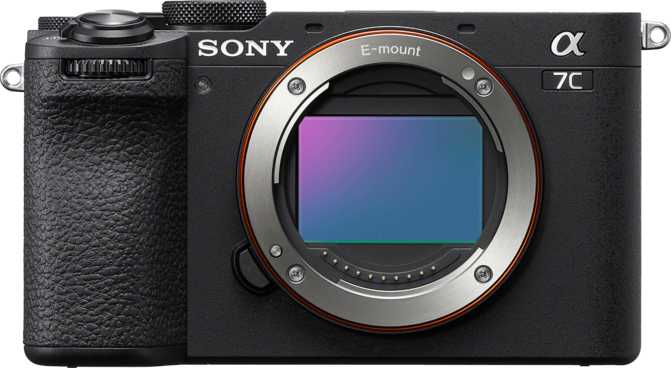
Sony Alpha 7C II Review: Full-Frame Quality in a Compact Body
CamerasPerformance at a Glance
Build Quality and Physical Experience
A full-frame camera you will actually carry every day.
A Body That Earns Its Compact Reputation
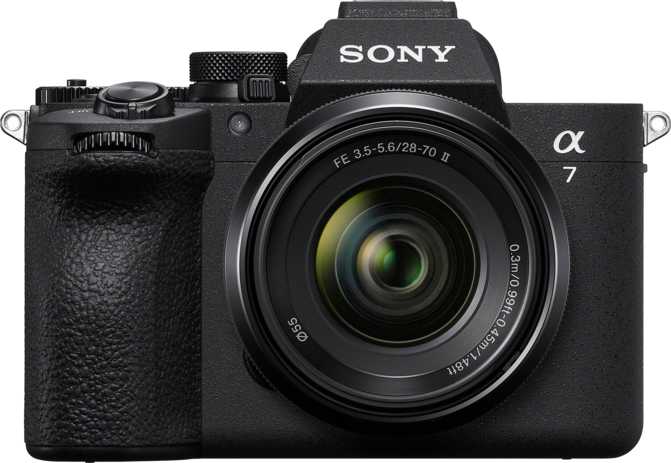
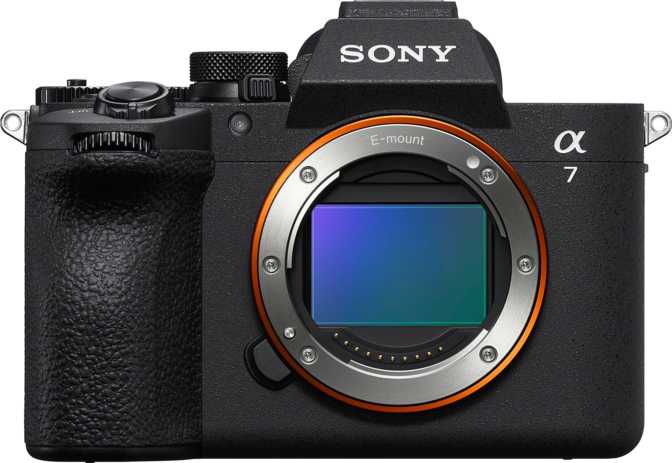
At 124mm wide and 71mm tall, the Alpha 7C II sits in a genuinely unusual position: it is a full-frame camera that disappears into a small shoulder bag without compromise. Most full-frame bodies announce their presence. This one does not. The grip is proportional rather than deep and protruding, which makes single-hand operation natural — particularly with lighter prime lenses. Holding it for the first time, the weight surprises you. Just over half a kilogram is meaningfully lighter than the full-frame category norm, and on a long shooting day that difference accumulates. Your shoulder notices around hour five.
The 63mm depth keeps the profile flat enough for a jacket pocket with the right lens, though you will push your luck with anything larger than a compact prime. The compact grip that enables this size becomes a real consideration when pairing with large, heavy glass — the ergonomic tradeoff of miniaturization becomes tangible at that point.
Screen and Viewfinder
The rear panel is a fully articulating flip-out screen — not a simple tilt, but one that rotates completely forward. This distinction matters considerably. Video creators who monitor their own framing use this daily. Photographers shooting from ground level or overhead get the same benefit. Touchscreen functionality extends to autofocus point selection, making it a genuinely useful control input rather than just a browsing convenience.
The electronic viewfinder delivers 100% frame coverage — what you see maps precisely to what gets captured. There is no tilting mechanism on the viewfinder itself, which limits certain overhead or low-angle compositions for photographers who prefer EVF-based framing over the rear screen.
- Width124 mm
- Height71 mm
- Depth63 mm
- Weight514 g
- Screen3″ Flip-Out Touch
- ViewfinderEVF, 100% Coverage
- Hot ShoeAdvanced Multi-Interface
- Operating Range0°C – 40°C
Protected against splashes and dust — enough to keep shooting through light rain or a dusty market without anxiety.
Not rated for heavy rain or submersion. Extreme cold below 0°C is outside its operating range.
Sensor and Image Quality
Where the real full-frame advantage lives.
33 Megapixels
A resolution sweet spot — crop aggressively without losing usable output. Even at 60% of the frame you still exceed what many competing cameras deliver at full capture, while file sizes stay manageable compared to ultra-high-resolution alternatives.
BSI Low-Light Sensor
Back-illuminated sensor architecture places light-gathering circuitry behind the pixel layer. In plain terms: dim restaurants, evening street scenes, and indoor events produce noticeably cleaner results than older sensor designs of equivalent resolution.
7-Stop Stabilization
Best-in-class IBIS for this form factor. Shots that previously required a tripod — architecture in dim interiors, available-light portraits at dusk — become achievable handheld. It also coordinates with optically stabilized lenses for compounding benefit.
ISO Range and Real-World Low-Light Performance
The native sensitivity ceiling gives real confidence in available light without reaching for flash. The expanded range pushes well beyond, but practically it is best treated as a safety net — digital noise at those extreme settings is significant. The native range is where real-world shooting lives, and the full-frame advantage over smaller sensor cameras is most apparent here. Confident shooting in low-light situations is one of the core arguments for choosing this category, and the Alpha 7C II delivers on that promise.
Autofocus System
Fast, confident, and subject-aware — the AF system removes cognitive load from shooting.
Phase Detection Across the Frame
The 759-point phase-detection system distributes detection points broadly across the frame. Phase detection calculates subject distance directly rather than hunting for contrast peaks, which means focus acquisition is fast and decisive even in difficult conditions — low contrast, moving subjects, side-lit scenes. The practical difference from older or slower systems is most apparent when a subject is moving toward the camera, where the AF system anticipates rather than chases.
Subject recognition for human subjects — eyes, faces, and full bodies — is built into the system. The camera identifies and prioritizes the correct focus target without requiring manual point selection. For street photography, family candids, or unposed portraits, this operates without prompting, reducing the gap between seeing a moment and capturing it.
Autofocus During Video Recording
The phase-detection system runs continuously during video recording, tracking subjects smoothly rather than hunting visibly on screen. This distinction separates cameras genuinely suited to video production from those that technically handle it. Visible focus hunting — where the image goes briefly soft before recovering — ruins usable clips and cannot be repaired in post. The Alpha 7C II avoids this reliably in standard shooting scenarios, making it a credible choice for solo video creators who need the camera to handle focus while they concentrate on performance or composition.
Distributed across the full frame for reliable subject acquisition from edge to center, regardless of composition choice.
Continuous burst shooting captures ten distinct moments every second — sufficient for peak expressions, decisive action moments, and birds in flight without requiring a dedicated sports body.
Video Capabilities
The video specification goes well beyond what compact full-frame buyers would typically expect.
4K at 60 Frames Per Second
Recording 4K at 60fps unlocks two distinct benefits. The primary one is delivery-quality footage with smooth, detailed motion that holds up on large displays and in professional edits. The secondary benefit is useful slow-motion in post: footage shot at 60fps can be slowed to half speed — playing back at 30fps — for fluid, cinematic deceleration without requiring a separate high-frame-rate mode or a second body. For a creator who wants one camera for both standard delivery and occasional slow-motion, this removes the need to compromise.
The 24-frame cinema mode is available for those who want footage that matches the motion cadence of film rather than the smoother, more "video" look of higher frame rates. This single option makes a visible difference to how footage reads in the final edit — it is not a marketing checkbox.
600 Mbps Bitrate: What It Means in Practice
The maximum recording bitrate of 600 megabits per second is a professional-grade figure that substantially exceeds comparable cameras in this category. Higher bitrate means more raw data captured per second — better color gradation in shadows and highlights, less visible compression blocking, and far more latitude when color grading in post. For creators who shoot in a neutral or log profile and grade their footage, this headroom is the difference between footage that grades cleanly and footage that falls apart when pushed. This is the Alpha 7C II's most unexpectedly strong specification for its price and body size.
Substantially higher than most cameras at this price. More captured data means more color detail and cleaner, more flexible grades.
Audio Provision
- 3.5mm microphone input for external mics and wireless receivers
- 3.5mm headphone output for real-time audio monitoring during recording
- Dual built-in stereo microphones for casual use and reference tracks
- Advanced hot shoe for compatible digital audio adapters
Battery Life
Plan ahead — but USB-C charging makes this a manageable limitation.
A conservative standardized benchmark. Real-world totals vary meaningfully by shooting style and screen-vs-viewfinder usage habits.
The 540-shot CIPA rating deserves honest context. The testing methodology is deliberately conservative — it cycles through settings and powers the camera on and off frequently in ways that do not reflect typical shooting behaviour. Photographers who primarily use the rear screen instead of the viewfinder, minimize in-camera image review time, and shoot in bursts regularly find real-world performance meaningfully exceeds this figure.
Heavy video use tells a different story. Extended recording sessions, continuous autofocus tracking, and prolonged stabilization processing are all more power-intensive than still photography. For a full shooting day or an extended video session, at least one spare battery is straightforward preparation — this is standard practice across the full-frame mirrorless category, not a specific deficiency here.
The USB-C port supports in-body charging, meaning a standard power bank tops up the battery between locations without a separate wall charger or dedicated dock. For travel photographers, this meaningfully extends effective shooting range per day without carrying additional charging accessories.
Connectivity
A comprehensive connectivity suite with one notable gap that demands attention before purchasing.
What Is Present
- USB 3.2 via Type-CFast data transfer for large RAW files and the camera's charging interface — one cable handles both.
- HDMI OutputConnects to external monitors and recorders for expanded video workflow on professional shoots.
- Wi-Fi 4 & 5 (2.4GHz + 5GHz)File transfer and smartphone remote control via Sony's companion app.
- Bluetooth 4.2Persistent low-energy connection for remote shutter triggering and location tagging via a paired smartphone.
- Advanced Multi-Interface Hot ShoeSupports audio adapters, flash units, and a broad range of Sony ecosystem accessories beyond basic triggering.
- External Memory Card SlotSupports standard memory cards with full RAW and high-bitrate video recording capability.
Notable Omissions
- No GPSLocation data requires smartphone tethering via Bluetooth. Functional, but adds a dependency for photographers who rely on geotagged files.
- No NFCSmartphone pairing uses Bluetooth and Wi-Fi setup rather than instant tap-to-pair. Minor inconvenience in practice.
- No Built-In FlashA deliberate size trade-off. The advanced hot shoe supports external flash units for those who need one.
This is the most significant structural limitation of the camera. Professionals who depend on simultaneous dual-card backup — for weddings, editorial work, or any non-repeatable paid assignment — have no redundancy here. If a card fails mid-shoot, that footage or those images are gone. This single factor will lead some buyers to a different camera regardless of how everything else compares.
Who Is This Camera For?
Matching the Alpha 7C II's strengths to real-world shooting profiles.
-
You Are a Travel Photographer
Full-frame quality, compact size, weather sealing, and USB-C field charging combine into a near-ideal travel kit. Paired with a compact prime lens, it covers landscapes, street portraits, and dim interiors without demanding a dedicated camera bag or excess weight.
-
You Create Video Content
The audio inputs, 4K/60p capability, 600 Mbps bitrate, flip-out screen, and tracking autofocus work together as a coherent solo-creator system. It functions as a genuine A-camera for self-shooting scenarios — not a camera that also happens to record video.
-
You Shoot Portraits
Subject-tracking autofocus, exceptional stabilization for available-light handheld shooting, and 33MP resolution for detailed retouching work make this a highly capable portrait tool across studio and location work.
-
You Are Upgrading from a Crop-Sensor Camera
Photographers who feel limited by noise at higher sensitivities or want genuine depth-of-field control will find a compelling step up that does not demand a heavier or larger daily carry. This is the upgrade path that does not ask you to sacrifice portability.
-
You Shoot Paid, Non-Repeatable Events
The single memory card slot makes simultaneous backup impossible. Wedding photographers, editorial shooters, and anyone whose livelihood depends on irreplaceable images should consider the Sony Alpha 7 IV or another body with dual-slot redundancy first.
-
You Specialise in Sports or Wildlife
Photographers who need the highest burst rates and deepest buffer capacity will find more capable tools in Sony's dedicated action-oriented bodies, where stacked sensor design delivers burst performance at a fundamentally different level.
-
You Work Exclusively in a Controlled Studio
Controlled, tripod-mounted studio work does not benefit from the stabilization, weather sealing, or compactness this body offers. You would be paying a premium for features your shooting style does not require. Other bodies offer better value for purely static, studio-based workflows.
How It Compares to the Alternatives
Positioned against its most logical competition within the Sony ecosystem.
| Feature | Sony Alpha 7C II | Sony Alpha 7 IV | Sony Alpha 7C (Gen 1) |
|---|---|---|---|
| Resolution | 33 MP | 33 MP | 24 MP |
| Sensor Type | BSI CMOS | BSI CMOS | BSI CMOS |
| Stabilization (IBIS) | 7 stops | 5.5 stops | 5 stops |
| Continuous Burst | 10 fps | 10 fps | 10 fps |
| 4K Video | Up to 60fps | Up to 60fps | Up to 30fps |
| Max Video Bitrate | 600 Mbps | 200 Mbps | 100 Mbps |
| Dual Card Slots | |||
| Body Weight | 514 g | 659 g | 509 g |
| Flip-Out Screen |
Reading the Comparison
Against its predecessor, the Alpha 7C II improves on every meaningful specification — resolution, stabilization, video capability, and processing power — while maintaining essentially the same physical footprint and weight. Against the Alpha 7 IV, the trade is clear and direct: the 7C II is smaller and lighter, with a substantially superior video bitrate and a stronger stabilization rating, but surrenders the dual card slots and the more traditional physical control layout that professional shooters often prefer. Third-party alternatives from Canon, Nikon, and Panasonic compete at similar price points, but none currently match the specific combination of high video bitrate, class-leading stabilization, and compact full-frame form factor that the Alpha 7C II delivers in a single body.
Strengths and Weaknesses
An honest assessment — credibility requires acknowledging both sides clearly.
What It Gets Right
-
Industry-Leading Stabilization for This Form Factor
The seven-stop IBIS is best in class for a compact full-frame body. It interacts with Sony E-mount optically stabilized lenses for compounding benefit and makes handheld shooting in available light reliably excellent in ways that were not possible with smaller-sensor alternatives.
-
Video Specification That Exceeds Expectations
The 600 Mbps bitrate ceiling exceeds what any reasonable buyer at this price point and body size would expect. Paired with 4K/60p, phase-detection video autofocus, and full audio provision, this is a coherent video tool — not a still camera with a compromised video mode attached.
-
Autofocus That Removes Cognitive Load
The 759-point phase-detection system with subject recognition tracks confidently and acquires focus decisively across stills and video. The gap between seeing a moment and capturing it sharply is smaller here than on most competing systems in this category.
-
Genuine Compactness for Full-Frame
The size and weight advantage over traditional full-frame mirrorless bodies is not a marginal gain — it is the difference between a camera you carry every day and one that stays on the shelf when the journey demands a light pack. The compactness is the feature.
Where It Falls Short
-
Single Memory Card Slot
This is a structural limitation, not a minor inconvenience. For anyone whose work cannot be reshot, it is the reason to choose a different camera regardless of how everything else compares. It simply eliminates a critical safety net that professional workflows depend on.
-
Viewfinder and Screen Resolution Are Adequate, Not Exceptional
The EVF and rear panel do the job without impressing. Photographers who prioritize a brilliant, detailed live view will notice the difference against higher-specified alternatives in the full-frame segment. Critical focus checking demands playback zoom rather than trust in the live view.
-
Battery Endurance Requires Active Planning
A full shooting day — particularly one involving heavy video recording — demands either a spare battery or a power bank. Buyers new to mirrorless, or coming from older DSLR bodies with larger cells, may find the endurance surprising on first use.
-
Compact Grip Meets Its Limits with Heavy Lenses
The ergonomic tradeoff of miniaturization becomes tangible when this body is paired with large, heavy glass. The grip is excellent for the lenses it was designed around — it becomes less comfortable as lens weight and physical size increase significantly.
Buyers' Questions Answered
The questions real buyers search for before committing to a purchase.
Full-Frame Power Without Full-Frame Inconvenience
The Sony Alpha 7C II keeps the promise its name implies.
The sensor, stabilization, autofocus, and video systems in the Alpha 7C II are not compromised versions of technology found in larger Sony bodies. They are the same generation of capability in a smaller package — and that distinction is the core of this camera's value proposition.
The camera earns a strong recommendation for travel photographers, content creators, and enthusiast shooters who prioritize portability without conceding image quality. Upgrading from a crop-sensor body? This is the full-frame path that does not demand you also upgrade to a heavier daily carry.
The single card slot prevents an unconditional recommendation for working professionals whose livelihood depends on irreplaceable images. For that specific use case, the Alpha 7 IV and comparable dual-slot alternatives deserve evaluation first. For everyone else, the Alpha 7C II is the answer to the question of whether full-frame has to be heavy. It does not.