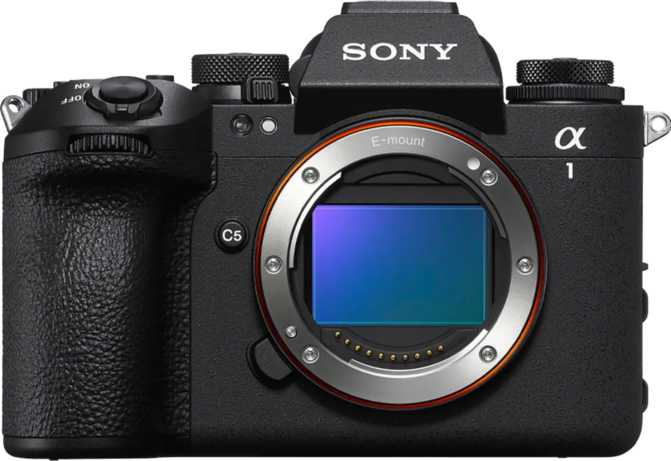
Sony Alpha 1 II Review: Professional Power With No Easy Compromises
CamerasThere is a specific kind of camera buyer who has already owned several excellent cameras, knows exactly what they want, and refuses to compromise. The Sony Alpha 1 II was built for that person. It is not a camera for someone taking their first steps into interchangeable-lens photography — not even for the serious enthusiast who shoots weekends and wants something impressive. This is professional-tier hardware: a full-frame mirrorless body that attempts to answer every question a working photographer might ask, simultaneously. Whether it succeeds at that, and what you give up in pursuit of that versatility, is what this review covers.
The Sony Alpha 1 II earns its position through a combination of resolution and speed that very few cameras can match simultaneously. For a working professional who needs a single body covering editorial, commercial, sport, and documentary video without switching systems — it delivers. The battery demands planning, the GPS gap is a real inconvenience, and the weight is not for everyone.
Build, Size, and What It Feels Like to Hold
Physical Profile
The Alpha 1 II occupies the upper tier of full-frame mirrorless bodies in physical scale. Its dimensions put it firmly in serious-professional territory — wide enough for a deep, substantial grip, and tall enough to feel balanced against full-size G Master lenses. At 743 grams body-only, it is not light. Anyone coming from a compact mirrorless body will notice the difference immediately. Anyone coming from a DSLR will feel right at home.
That weight is not incidental — it is a consequence of the engineering inside. The metal chassis is fully weather-sealed, designed to resist dust and moisture ingress across the joints, buttons, and dials. The rated operating temperature range runs from just above freezing to 40°C, which covers the conditions most working photographers actually face. This is not a camera you need to baby at a rainy sporting event or a dusty desert shoot.
Screen and Viewfinder
The rear screen measures 3.2 inches at just over 2 million dots of resolution — sharp enough that pixel structure disappears at arm's length. More importantly, it flips out rather than just tilting on a single axis. This allows the screen to face forward for self-shooting or solo video work, fold flat for transport, and angle freely during low-angle or overhead shooting. Touch response is built in for tapping focus points and navigating menus.
The electronic viewfinder provides 100% frame coverage — what you see through the eyepiece is exactly what the sensor captures. One deliberate omission: there is no tilting viewfinder. For most workflows this is inconsequential, but photographers who frequently work with upward-angle EVF viewing should note it.
The Sensor: Why 50 Megapixels Changes Your Workflow
Resolving Power in Practical Terms
Fifty megapixels on a full-frame sensor means something very specific in practice. A single file from this camera contains enough data to produce a print at poster scale — think 40 × 60 inches — with no perceptible quality loss at normal viewing distances. For advertising photographers, that matters because art directors frequently crop, reframe, and enlarge selectively. For wildlife photographers, it means a bird occupying a third of the frame can still yield a publishable image after heavy cropping.
That pixel count also enables Pixel Shift, which combines multiple sequential exposures into a single ultra-high-resolution composite. The result is a file with far more spatial detail than any single exposure could achieve. This is specifically useful in controlled conditions — architecture, product photography, fine art reproduction — where the subject is stationary and absolute sharpness is the primary goal.
Sensor Architecture
The sensor uses a stacked CMOS design with back-side illumination. The stacked architecture separates the photodetector layer from the readout circuitry, allowing both to be optimized independently. The practical result is dramatically faster readout speed — the sensor can be read and cleared so quickly that the rolling shutter distortion that plagues conventional sensors becomes negligible.
This architecture is what makes the electronic shutter mode genuinely useful for fast action, where shutter speeds reaching 1/32,000th of a second become accessible without any mechanical vibration — no camera shake, no shutter noise, no wear on mechanical parts.
Autofocus: 759 Points and What That Number Means
The focus system covers the frame with 759 individual phase-detection points. Phase-detection autofocus works by measuring focus direction and distance simultaneously rather than hunting by contrast alone — it locks on fast and stays locked when subjects are moving unpredictably.
The tracking capability is where this becomes meaningful for specific workflows. Once the camera acquires a subject — a tennis player, a bird in flight, a car approaching the lens — it continues to analyze and follow that subject across the frame automatically. The photographer's job becomes composition; the camera handles keeping the subject sharp.
Touch autofocus works in both photo and video modes. For video shooters doing interviews or documentary work, being able to tap a face on the screen to shift focus smoothly is genuinely useful — particularly when operating without a dedicated focus puller.
Speed: Continuous Shooting and What 10fps Actually Enables
The mechanical shutter delivers 10 frames per second in continuous shooting. That rate means a one-second burst of peak action produces ten distinct frames to choose from — a goalkeeper's dive, a sprinter's stride, a bird folding its wings. In many professional sports and wildlife contexts, 10fps sits at the lower boundary of what photographers consider adequate. The electronic shutter, however, opens the door to higher burst rates without mechanical wear.
The flash sync speed via the mechanical shutter is 1/400th of a second — notably faster than the 1/200th or 1/250th common on many cameras. For photographers using flash outdoors in bright light, this means more flexibility to balance ambient light against strobe output without resorting to ND filters or HSS flash modes.
A 1/400s flash sync ceiling is meaningfully faster than category norms. Outdoor portrait and fashion photographers working with strobe in daylight will have significantly more creative control over the ambient-to-flash exposure ratio without needing high-speed sync flash units.
Image Stabilization: 8.5 Stops Is a Meaningful Claim
The sensor-shift stabilization system carries a CIPA rating of 8.5 stops. To translate that into practical terms: a shutter speed that would normally require a tripod — something around half a second when shooting with a standard lens — can be handheld and still produce a sharp image. That is a significant amount of insurance for low-light shooting without a tripod.
The system supports combined stabilization, coordinating in-body sensor movement with optical stabilization built into compatible lenses. When both systems work together, effective compensation often exceeds what either can achieve independently. For photographers who shoot in available light — concerts, events, indoor sports — this translates directly into cleaner images without flash.
ISO Range and Low-Light Behavior
The native ISO sensitivity tops out at 32,000, with an expanded ceiling that reaches four times beyond that. The native range is what matters most — expanded ISO values on any camera involve software amplification that introduces visible noise. For most professional workflows — journalism, events, indoor sports — the native ceiling provides enough latitude to shoot in genuinely dark environments while retaining detail and usable dynamic range.
It is worth understanding the trade-off honestly: 50 megapixels means smaller individual photosites than a 24-megapixel sensor of the same physical dimensions. For astrophotography or extreme low-light work where a 12–24 megapixel sensor has a physical advantage, other tools serve better. For almost every professional daytime and indoor use case, the low-light performance is more than adequate.
Video Capabilities: An 8K Camera That Takes Video Seriously
Resolution and Frame Rate
The Alpha 1 II records video at 8K resolution — 7,680 × 4,320 pixels at up to 30 frames per second. At the current state of consumer display technology, most audiences cannot display 8K content. So why does it matter? Shooting 8K and delivering 4K means oversampling: multiple sensor pixels combine into each output pixel, producing exceptionally clean, detailed 4K footage with more color accuracy than a native 4K sensor would provide. It also gives editors dramatic reframing latitude in post-production without visible quality degradation.
Bitrate and Audio
The maximum video bitrate of 400 megabits per second is very high — higher than many professional video cameras at lower price points. Higher bitrate means more data retained per second of footage, which translates into smoother gradients, better fine detail, and more flexibility in color grading. For videographers delivering to broadcast or streaming platforms with technical quality requirements, this number matters.
Connectivity and Memory
Wireless
Wi-Fi 5 (802.11ac) supports faster wireless transfer than older standards — relevant when tethering to a laptop on location or transferring large raw files wirelessly. Bluetooth 5 provides the persistent low-power connection used to keep the camera linked to a smartphone for remote control and location data functions.
There is no built-in GPS. Photographers who need embedded location metadata in every file will need to use a smartphone's GPS through the Bluetooth-linked app, or a dedicated GPS accessory in the hot shoe. There is also no NFC, removing the one-tap pairing convenience some Sony users are accustomed to from older bodies.
Memory and Physical Connections
Dual card slots mean you can shoot to two cards simultaneously for redundancy — critical for wedding photographers, press photographers, and anyone whose raw files have commercial or journalistic value. Losing a shoot to a card failure is a career risk; dual slots eliminate it.
Battery: Honest Assessment of Real-World Stamina
The CIPA-standard battery rating of 520 shots represents a controlled laboratory measurement — useful for comparison but not a prediction of what you will actually get. In practice, heavy use of the electronic viewfinder, continuous shooting bursts, video recording, and wireless connectivity all reduce battery life relative to that number.
Photographers shooting a full wedding reception, a long sporting event, or a day of wildlife photography should plan on carrying at least two batteries, and likely three. The battery is removable and rechargeable via the USB-C port, which means you can top up from a power bank in the field. A battery level indicator provides on-screen percentage readout so you are never caught off-guard by sudden shutdown.
This is not a camera you will forget to charge. At 2,280 mAh, the battery rewards preparation. Budget for multiple packs on any full-day professional assignment.
The Lens System: Sony E-Mount and What It Means
The Alpha 1 II uses the Sony E-mount, the same mount as Sony's entire mirrorless lineup — from entry-level bodies to the Alpha 7 and Alpha 9 series. This means access to one of the most comprehensive native lens ecosystems in mirrorless photography, including Sony's own G Master lineup, Zeiss-branded optics, and a large catalog of third-party lenses from Sigma, Tamron, Rokinon, and others.
Switching to the Alpha 1 II from another Sony mirrorless body is straightforward. Switching from a competing mount involves lens replacement costs that should be factored into any purchase decision. Adapters exist for using older Sony A-mount lenses and, with limitations, lenses from other manufacturers.
Who Should Buy the Sony Alpha 1 II
Right For
- Working sports and wildlife photographers who need speed, tracking reliability, and resolution headroom to crop aggressively
- Commercial photographers whose clients require large-format print delivery and occasional video capability
- Photojournalists who need weather sealing and dual-card redundancy as non-negotiable requirements
- Video producers working documentary or commercial projects wanting 8K capture and high bitrate in one body
- Sony E-mount users already invested in a lens ecosystem who want the highest-performing body available
Not Right For
- First-time mirrorless buyers — the complexity, cost, and weight are all excessive for learning
- Travel photographers who prioritize portability — 743g body-only plus a large lens is a heavy daily carry
- Photographers who need native GPS — the absent GPS module is a genuine inconvenience
- Video-first creators on a budget — dedicated cinema cameras deliver comparable video for less
- Casual shooters and hobbyists — total cost of ownership far exceeds enthusiast spending patterns
How It Stacks Up Against the Alternatives
Competitor specifications are based on publicly available data and are included for comparative context. Buyers should verify competitor specifications independently.
| Feature Area | Sony Alpha 1 II | Nikon Z8 | Canon EOS R5 II |
|---|---|---|---|
| Resolution | 50.1 MP | 45.7 MP | 45 MP |
| Sensor Type | Stacked BSI CMOS | Stacked BSI CMOS | Stacked BSI CMOS |
| IBIS Rating | 8.5 stops | 6 stops | 8 stops |
| Max Video | 8K / 30p | 8K / 60p | 8K / 60p |
| Flash Sync | 1/400s | 1/200s | 1/250s |
| Built-in GPS | |||
| Body Weight | 743g | 910g | 746g |
The Alpha 1 II leads on flash sync and stabilization. Where it trails is in maximum 8K frame rate — competitors support 8K/60p. GPS absence is a consistent gap versus the Nikon option. Lens ecosystem choice ultimately depends on what glass a photographer already owns.
Strengths and Weaknesses in Plain Terms
The Sony Alpha 1 II earns its position through a combination of resolution and speed that very few cameras can match simultaneously. The stacked sensor enables shutter speeds and continuous shooting performance that mechanical sensor designs cannot achieve, and the 50-megapixel output provides latitude that most professionals will never fully exhaust. The image stabilization leads its class, making handheld work in difficult light a realistic option rather than a compromise.
The flip-out screen reflects genuine attention to how working photographers actually operate — not just how cameras look in marketing materials. The advanced hot shoe, dual card slots, and high-bitrate video all contribute to a body that takes professional workflows seriously.
Where the camera asks for patience is battery life. A rating of 520 shots under ideal conditions means real-world intensive sessions will drain a battery well before the day ends. Photographers disappointed by mirrorless stamina before will find this body requires the same disciplined battery management as its predecessors.
The absence of GPS is a concrete shortcoming for specific workflows, not a nitpick. Location-embedded metadata is increasingly important for editorial and commercial image cataloguing, and relying on a phone-linked workaround introduces a dependency that a body at this price should not require.
The weight and physical size deserve honest acknowledgment. This camera is not uncomfortable to use, but it demands real estate in a bag, real weight on a strap, and real fatigue over a twelve-hour shoot day. Photographers who have shifted to smaller systems for relief will feel the difference.
Questions Real Buyers Ask Before Purchasing
Final Verdict
The Sony Alpha 1 II is a camera that makes very few technical compromises. It resolves at a level that challenges medium format in practical use, focuses with a speed and accuracy that professional sports shooters depend on, and records video at specifications that belong in a dedicated cinema conversation. The build quality matches the expectations of photographers working in environments where gear failures have real consequences.
The cost — financial and physical — is real. The battery demands planning. The GPS gap is a genuine inconvenience for specific workflows. And the weight is what it is. But for a working professional who needs a single body capable of covering editorial assignments, commercial portraits, sporting events, and documentary video without switching systems, there is essentially no direct competitor that answers all of those demands with the same combination of resolution and speed.
Buy it if you are a professional or serious working photographer in the Sony E-mount ecosystem who needs both top-tier resolution and reliable high-speed performance from a single body. Wait, or look elsewhere, if your primary need is video at 8K/60p, portability, GPS, or you are not already committed to the E-mount ecosystem.