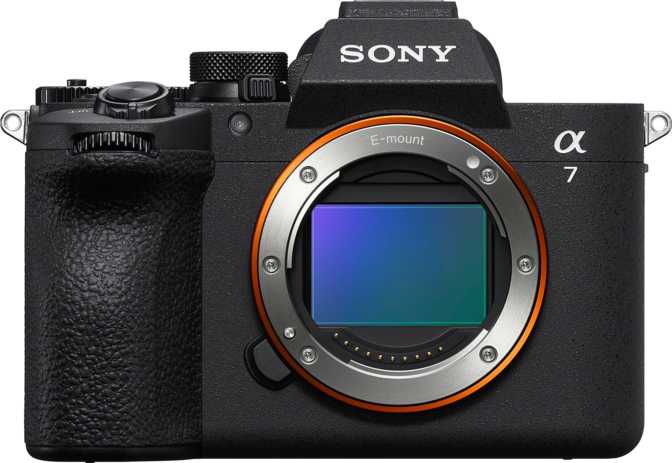
Sony Alpha 7 V Full Review: The Mirrorless Camera That Does It All
CamerasThe Sony Alpha 7 series has carried the full-frame mirrorless torch longer than almost any competing lineup, and each generation has sharpened the formula rather than reinvented it. The Alpha 7 V arrives as the most complete iteration yet — one that finally closes the gaps that enthusiasts politely tolerated in earlier models while delivering genuine advances that matter to working photographers and serious video creators alike.
It is not a camera that chases spec-sheet headlines. It is a camera engineered to disappear in your hands while you concentrate on the picture. Whether you shoot portraits, landscapes, street photography, events, or hybrid photo-video work, the A7V sits in a position where very few cameras can credibly challenge it — and what follows tests that claim honestly.
Build Quality and Physical Design
A Body That Means Business
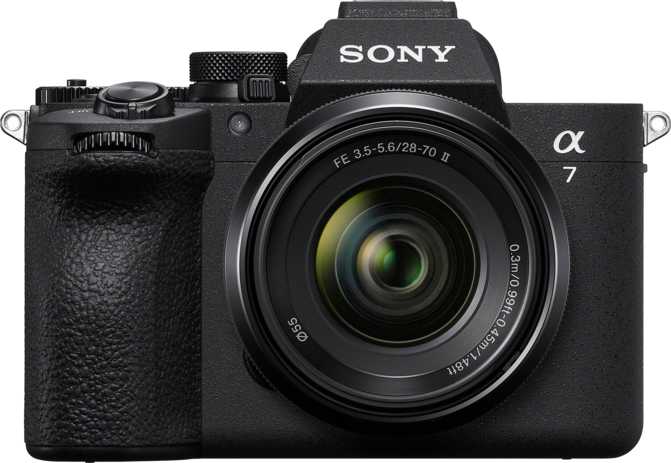
The Alpha 7 V occupies that productive middle ground between a compact travel camera and a full-sized professional workhorse. At just over 130mm wide and roughly 96mm tall, it fits confidently in one hand without the bulk that makes all-day shooting exhausting. The 695-gram body weight — with battery and card but without a lens — feels substantial enough to signal quality but light enough that a long day on a city street or a mountain trail won't end with a sore shoulder.
Build materials are magnesium alloy throughout the critical structural areas, and the weather sealing earns genuine respect rather than a footnote mention. Sony's environmental protection covers moisture, dust, and light splashing — meaning light rain, ocean spray, and dusty event venues are workable rather than terrifying. Operating temperatures are rated from 0°C to 40°C, which covers the overwhelming majority of real-world shooting conditions. If you regularly work in sub-zero temperatures, note that the camera's specification stops at the freezing point.
The hot shoe on top is Sony's advanced multi-interface type, carrying audio and communication signals in addition to the standard flash trigger. Third-party flash compatibility is broad through standard ISO sync, but Sony-ecosystem accessories gain enhanced control through that expanded interface.
The Screen and Viewfinder Experience
The fully articulating rear screen — not just a tilt, but a genuine flip-out — is one of those features that, once used, makes fixed screens feel like a step backward. Ground-level shots, overhead crowd photography, and tripod-mounted chest-height framing all become natural rather than contorted. The panel resolves over two million dots, which is sharp enough for critical manual focus confirmation without squinting.
The electronic viewfinder is the sharper optic: nearly 3.7 million dots at a 120-frames-per-second refresh rate means the live preview feels continuous and motion-smooth rather than the stuttery experience that lower-spec EVFs produce. Coverage is 100% — what you see is precisely what you capture, with no hidden edges. Both screen and viewfinder support touch input, with Sony's touch autofocus implementation mature enough to trust in real shooting situations.
| Type | Mirrorless |
| Width | 130.3 mm |
| Height | 96.4 mm |
| Depth | 82.4 mm |
| Weight | 695 g |
| Screen Size | 3.2″ Flip-out Touch |
| Screen Resolution | 2,095k dots |
| EVF Resolution | 3,690k dots |
| EVF Refresh Rate | 120 fps |
| EVF Coverage | 100% |
| Weather Sealed | Yes |
| Operating Temp | 0°C – 40°C |
| Hot Shoe | Advanced Multi-Interface |
Sensor and Image Quality
33 Megapixels: The Productive Resolution
The full-frame sensor at the heart of the A7V lands at 33 megapixels — a figure chosen with deliberate intent rather than by accident. This is enough resolution to produce prints at poster dimensions, crop into a wide shot and still retain substantial detail, and deliver files that editorial clients and agency workflows can handle without complaint. It is not 60 megapixels, which means files process faster, storage costs less, and the burst buffer empties more quickly.
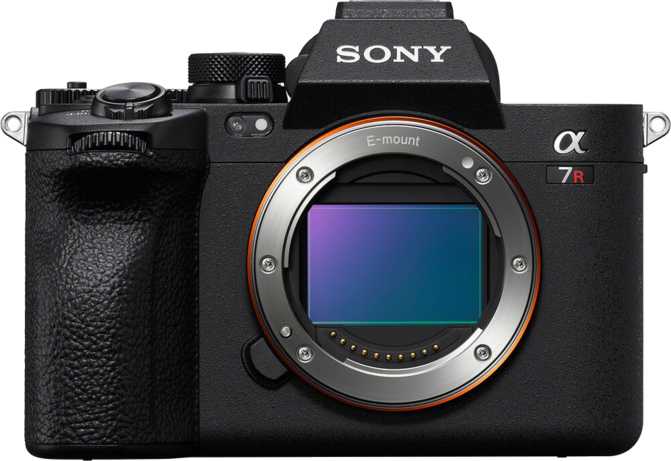
Photographers who demand maximum medium-format-rivaling resolution will want to look at the Alpha 7R line. Those who need speed above everything will find the Alpha 9 series more purpose-built. The A7V is the camera that delivers excellent results to both of those photographers most of the time — which is actually the harder engineering feat.
Stacked BSI CMOS: What It Actually Means
The sensor uses back-illuminated stacked CMOS architecture. Back-illuminated means the light-gathering photodiodes face the light directly rather than behind a layer of wiring, improving low-light efficiency. Stacked means the processing circuitry sits on a separate layer beneath the sensor chip, allowing faster data readout — the practical result is that the electronic shutter reaches 1/16,000 second with virtually no rolling shutter distortion on fast-moving subjects.
Conventional CMOS sensors at equivalent speeds produce a skewed, bent-looking effect on aircraft propellers or athletes at full sprint. The A7V's stacked architecture minimizes this significantly. For low-light work, the native ISO ceiling delivers usable images at values that would render a smaller sensor's output unusable — with an extended range available for genuine emergencies rather than everyday use.
| Format | Full Frame |
| Resolution | 33 MP |
| Sensor Architecture | Stacked BSI CMOS |
| Native ISO Max | 51,200 |
| Expanded ISO Max | 204,800 |
| Mechanical Shutter | Up to 1/8,000s |
| Electronic Shutter | Up to 1/16,000s |
| Flash Sync Speed | 1/250s |
| Long Exposure | Up to 30s |
| Lens Mount | Sony E |
| RAW Support | Lossless Compressed |
| Processor | Bionz XR2 |
Autofocus: Genuinely Intelligent Tracking
759 Points That Actually Work
The phase-detection autofocus system deploys 759 individual points across the sensor area — a density that provides both broad scene coverage and precise micro-subject tracking. Phase-detection operates by comparing two offset images of the same scene to calculate focus distance directly, rather than hunting back and forth to find peak contrast. The practical meaning: focus acquisition is fast, confident, and holds under motion.
Sony's subject recognition — covering humans, animals, birds, insects, vehicles, and aircraft — is deeply integrated with the tracking system. Point the camera toward a subject, and the system identifies it, locks onto the most relevant feature (a person's eye, a bird's head), and maintains that lock through movement, partial occlusion, and reframing. For portrait photographers in particular, the eye-tracking behavior has become an industry benchmark that competing systems are measured against.
Continuous shooting at 10 frames per second with the mechanical shutter means a one-second burst captures ten frames from which to select the decisive moment. Combined with the reliable tracking, the keeper rate on moving subjects improves meaningfully compared to systems requiring manual intervention to hold focus.
- 759-Point Phase-DetectionFull sensor coverage for precise subject tracking across the frame
- Real-Time Eye TrackingHuman, animal, and bird subject recognition with face-priority lock
- Touch AutofocusTap-to-lock on touchscreen, even during burst shooting
- Continuous AF in VideoPhase-detection active during recording — no hunting or pulsing
- 10fps Mechanical BurstFull AF and AE tracking maintained at maximum frame rate
In-Body Image Stabilization: 7.5 Stops Is Not Marketing
The stabilization system in the A7V achieves 7.5 stops of compensation under CIPA's standardized testing protocol — a measurement that allows direct comparison between manufacturers rather than relying on marketing language. Seven and a half stops means a shutter speed that would normally produce a blurred handheld image can be slowed by that factor and still yield a sharp result.
Practically speaking: if you can hold a sharp image at 1/125 second handheld, the IBIS extends that capability to exposures approaching one second. This matters most in low-light photography without a tripod, telephoto work where lens shake is magnified, and any shooting situation where a tripod is inconvenient or prohibited.
Low-Light Stills
Slower shutter speeds without a tripod, enabling cleaner low-ISO exposures in dimly lit venues, interiors, and evening environments.
Telephoto Reach
Lens shake is amplified at longer focal lengths. Combined optical and sensor stabilization addresses this directly and measurably.
Handheld Video
Run-and-gun video shooting benefits enormously from IBIS when a gimbal isn't available or would slow down the work.
The system also cooperates with compatible Sony lenses, combining optical stabilization from the lens with sensor-shift stabilization from the body for enhanced combined performance — particularly effective at telephoto focal lengths.
Video Capabilities
4K at 120 Frames Per Second
The A7V shoots 4K video at up to 120 frames per second — a specification that places it in a distinct class for video creators. At 120fps, footage can be slowed to one-fifth speed in a 24fps timeline while retaining perfectly smooth, artifact-free motion. Slow-motion video at this resolution is not a novelty feature; it is a creative tool that wedding videographers, sports documentarians, and commercial directors actively book cameras for.
The maximum data rate of 200 megabits per second means the image data written to the card retains considerable detail in compression. This is the specification that distinguishes a camera whose video holds up in color grading from one that looks flat or degraded the moment saturation or shadows are pushed in editing. A 24p cinema mode is included for those working in the standard film frame rate.
Audio Infrastructure
Dual built-in stereo microphones provide baseline ambient audio capture. A 3.5mm microphone input accommodates external mics — a lavalier for interview work, a directional shotgun for events, a recorder feeding line-level audio for professional productions. A 3.5mm headphone output allows real-time monitoring of recorded audio, which is the only reliable way to catch problems while they can still be corrected.
Live streaming is natively supported, allowing the A7V to function as a high-quality streaming device without third-party workarounds. Phase-detection autofocus is active during video recording, maintaining lock on subjects without the hunting or pulsing that plagues lesser systems in movie mode.
| Max Resolution | 4K (2160p) |
| Max Frame Rate | 120 fps |
| Max Bitrate | 200 Mbps |
| 24p Cinema Mode | Yes |
| Slow Motion | Yes |
| Phase-Detect AF (Video) | Yes |
| Mic Input (3.5mm) | Yes |
| Headphone Output | Yes |
| Built-in Stereo Mic | Dual |
| HDMI Output | Yes |
| Live Streaming | Native Support |
Battery Life and Power
The A7V's battery delivers approximately 630 shots per charge under CIPA test conditions. CIPA ratings are conservative by design — they include half-press cycles, frequent playback, and other behaviors that reduce efficiency compared to focused shooting sessions. Working photographers typically find real-world shot counts meaningfully higher, particularly when using the viewfinder consistently rather than the rear screen, which draws more power.
The removable battery means spares can be carried and swapped — a straightforward advantage for a full day of event shooting where charging between shots is not possible. USB-C charging means the same cable and compatible power bank that charges a laptop or phone can top up the camera between assignments, which simplifies travel kit considerably.
For intensive video recording sessions, battery consumption increases noticeably. A spare battery or a battery grip accessory is worth budgeting for video-heavy use cases. In stills-only event shooting, most photographers find a single charge sufficient for a standard working session.
- Removable and user-swappable battery for all-day shoots
- USB-C charging — compatible with laptop chargers and power banks
- Detailed battery level indicator with granular status display
- Extended 4K recording significantly increases drain — carry a spare for video-focused work
Connectivity and Workflow
Getting Images Off the Camera
Dual memory card slots mean two cards can be used simultaneously for backup redundancy — every image written to both cards at once — or for overflow, where the second card activates automatically when the first fills. For professional assignments where a corrupted or failed card would be catastrophic, dual-slot redundancy is not optional equipment; it is a professional minimum standard.
Wireless connectivity covers Wi-Fi 6E — the most current standard, operating on 6GHz spectrum in addition to 5GHz and 2.4GHz. The practical advantage over older Wi-Fi standards is faster transfer speeds and less congestion in environments where dozens of other devices are broadcasting. Bluetooth maintains the connection to a paired smartphone for remote control, location data sharing, and quick image transfer.
Notable absences include NFC and built-in GPS. NFC's absence is unlikely to be felt in daily use given Bluetooth handles persistent pairing. GPS requires a smartphone relay through Sony's companion app — photographers who need embedded location data in every frame without phone dependency will need to factor that workflow dependency into their decision. HDMI output enables external monitors and recorders; USB-C handles tethered shooting and data transfer.
- Wi-Fi 6E (802.11ax)Includes Wi-Fi 6, 5, and 4 backward compatibility
- BluetoothPersistent smartphone pairing for remote control and transfer
- Dual Memory Card SlotsSimultaneous backup redundancy or overflow shooting
- USB-CCharging, high-speed data transfer, and tethered shooting
- HDMI OutputExternal monitor and high-bitrate recorder support
- No Built-in GPSLocation tagging via smartphone relay only
- No NFCBluetooth handles pairing; NFC not included
Who This Camera Is For — and Who Should Look Elsewhere
Ideal Candidates
- Hybrid Photographers and Video CreatorsOne body that handles demanding, varied workloads without compromising between photo and video performance.
- Travel and Documentary PhotographersWeather sealing, moderate weight, and the deep E-mount lens ecosystem make it exceptionally adaptable in the field.
- Portrait and Event ProfessionalsEye tracking, 33MP resolution, and dual card redundancy tick every box for professional client-facing work.
- Solo Content CreatorsFlip-out screen, continuous AF in video, and native live streaming support work collectively, not just individually.
- Existing Sony System UsersThe E-mount compatibility means upgrading the body only — no lens budget reinvestment required.
Consider Alternatives If…
- You Need Maximum Burst SpeedSports and action specialists demanding 20fps-plus with deep buffers should look at the Alpha 9 series instead.
- You Require Ultra-High ResolutionLarge-format commercial work or multi-crop repurposing demands the pixel count of the Alpha 7R V.
- You Are a Budget-Constrained BeginnerPrevious-generation full-frame bodies deliver 80% of the results at substantially lower cost.
- You Shoot Regularly in Sub-Zero ConditionsThe 0°C minimum operating temperature excludes confident sub-zero field use.
- You Need Broadcast-Specific Video CodecsProductions requiring specific broadcast formats or internal RAW recording need a dedicated cinema camera.
How It Stacks Up Against Key Competitors
| Feature Area | Sony Alpha 7 V | Nikon Z6 III | Canon EOS R6 Mark II |
|---|---|---|---|
| Sensor Architecture | Full-Frame Stacked BSI CMOS | Full-Frame Partially Stacked CMOS | Full-Frame CMOS |
| Resolution | 33 MP | 24.5 MP | 24.2 MP |
| Max 4K Frame Rate | 120 fps | 60 fps | 60 fps |
| IBIS Rating (CIPA) | 7.5 stops | 6 stops | 8 stops |
| Continuous Shooting | 10 fps (mechanical) | 14 fps | 40 fps (electronic) |
| EVF Resolution | 3.69M dots | 5.76M dots | 3.69M dots |
| Dual Card Slots | Yes | Yes | Yes |
| Weather Sealed | Yes | Yes | Yes |
| Lens Ecosystem | Sony E-Mount Extensive |
Nikon Z-Mount Growing |
Canon RF-Mount Extensive |
The Sony Alpha 7 V's 4K/120fps capability is its clearest hardware differentiator. The Nikon Z6 III offers a noticeably sharper EVF; the Canon R6 Mark II edges the IBIS rating and delivers higher electronic burst speed. Lens ecosystem maturity remains a genuine decision factor for long-term system investment.
Honest Assessment: Strengths and Weaknesses
Where It Excels
The A7V's greatest genuine strength is coherence. Individual specifications are excellent, but no single feature explains the appeal in isolation — it is the way the autofocus, stabilization, sensor readout speed, and video capability work together without asking the photographer to make sacrifices between them. Cameras with better resolution sacrifice readout speed. Cameras with faster burst rates sacrifice pixel count. The A7V makes fewer of those trades than alternatives in its tier.
- 4K/120fps video is the clearest hardware differentiator at this price tier — giving cinematic slow-motion capability that competing full-frame bodies simply don't offer.
- Stacked BSI CMOS architecture delivers both strong low-light efficiency and fast enough readout to make the electronic shutter practical for everyday shooting, not just controlled studio conditions.
- Eye-tracking autofocus has set the benchmark that other manufacturers now chase — confident, low-intervention, and reliable in real-world conditions beyond controlled tests.
- 7.5-stop IBIS combined with compatible lens stabilization delivers genuinely measurable results in low-light stills and handheld video work.
- Sony E-mount lens ecosystem is the most mature native mirrorless full-frame library available — covering every focal length, style, and budget across native and third-party options.
Where It Falls Short
No camera at this level is without real compromises, and the A7V has genuine gaps that matter to specific users. Acknowledging them clearly is what separates a useful review from a product brochure.
- No built-in GPS means location data requires a connected smartphone, adding a dependency that isn't always practical during remote or extended field work.
- Menu system complexity remains a real barrier for new Sony users. The customization depth is impressive, but the learning curve demands deliberate time investment before any critical assignment.
- 0°C minimum operating temperature excludes confident sub-zero field use — a real limitation for wildlife and landscape photographers who shoot through winter conditions.
- Grip depth may be insufficient for large-handed photographers during extended telephoto sessions. A battery grip accessory addresses this but adds cost and weight to the kit.
- Battery endurance for video is adequate but not class-leading. Intensive recording sessions practically require a spare, which is an additional budget line for video-focused buyers.
Frequently Asked Questions
Final Verdict
Sony Alpha 7 V — The Definitive All-Around Full-Frame Mirrorless
The Sony Alpha 7 V is the answer to the question: what full-frame mirrorless camera should a serious photographer or hybrid creator own if they can own only one? The specification gaps that required enthusiasts to choose between resolution and speed, or between photo performance and video capability, have been narrowed to the point where the A7V handles both with genuine rather than compromised competence.
It earns a strong recommendation for photographers who currently shoot Sony and are weighing an upgrade — the familiar lens mount means no lens budget reinvestment, and the performance advances over predecessors are substantial enough to justify the transition. It equally earns consideration for those switching from other systems who want to enter the Sony ecosystem at its current peak performance point rather than at a stepping stone model.
Those best served by waiting or looking elsewhere are beginners who would pay for performance they won't access, budget-constrained shooters who can achieve strong results from older hardware at significantly lower cost, and specialists who need category-leading burst speed or resolution more than balanced versatility.