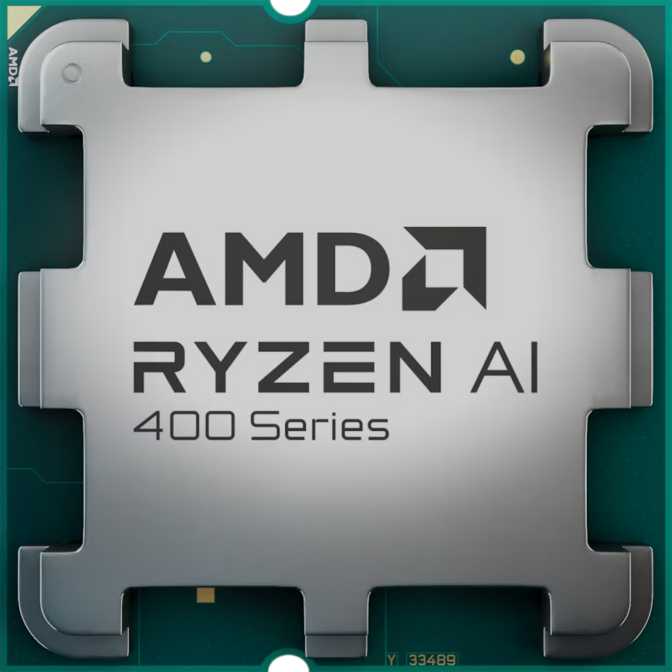
AMD Ryzen 7 9850X3D Review: The 3D V-Cache Processor Built for Gaming
CPUsSpecifications at a Glance
Six core figures that define what this processor delivers in practice
8C / 16T
Cores / Threads
5.6 GHz
Max Boost Clock
96 MB
L3 3D V-Cache
120W
Thermal Design Power
DDR5
Up to 5600 MHz
PCIe 5.0
Interface Version
What Is the Ryzen 7 9850X3D — and Why Should You Care?
AMD's Ryzen 7 9850X3D sits at the intersection of two separate conversations: one about raw CPU performance for creators and professionals, and another about what happens when you give a capable processor an almost absurd amount of cache memory. The result is a processor that speaks fluently to both audiences without fully committing to either — and depending on what you need from a desktop chip, that ambiguity is either its greatest strength or a reason to look elsewhere.
This is not a straightforward processor to evaluate. The 9850X3D carries AMD's 3D V-Cache technology — a physical stack of additional cache memory bonded directly on top of the processor die — alongside a modern architecture, high clock speeds, and a power profile that is genuinely reasonable for what you get. Understanding what all of that actually means for your daily workload is what this review is here to do.
- High-framerate PC gaming
- Mixed gaming + productivity builds
- Cache-sensitive simulation software
- AM5 platform long-term investment
- PCIe 5.0 forward compatibility
Design, Build Quality & Platform
The AM5 Ecosystem
The Ryzen 7 9850X3D uses AMD's AM5 socket — the current-generation platform that AMD has committed to for the long term. If you already own an AM5 motherboard, this processor likely drops straight in subject to a BIOS update. If you are building from scratch, the platform is well established with boards available across multiple price points.
Chipset Compatibility
The 9850X3D works across five chipsets. Premium X670 and X870 options offer more PCIe lanes, connectivity, and better power delivery for enthusiast setups. B-series boards — B650, B840, and B850 — bring the cost of entry down without limiting the processor's core capabilities. For most users, a mid-range B-series board runs this chip without compromise.
Purple = premium enthusiast chipsets • Grey = value and mid-range chipsets
The Physical Reality of 3D V-Cache
The X3D designation means this chip is physically taller than a standard Ryzen processor due to the stacked cache die bonded on top. Most modern coolers accommodate the slightly raised profile without issue, but if you are reusing an older or tight-fitting cooler, verify compatibility with the manufacturer before you build.
Cooling Requirements
At 120W TDP, this is a manageable chip for any quality mid-range air cooler or 240mm liquid cooler. You are not building a thermal emergency — provided you choose a cooler that matches the task.
Normal Behaviour, Not a Warning Sign
The 9850X3D is designed to operate right up to its 95°C ceiling under boost conditions. Brief temperature spikes to 90–95°C during demanding workloads are expected — not a sign of inadequate cooling. AMD's architecture is tuned to use every degree of thermal headroom available.
Architecture & Performance Analysis
4nm Process Node
Built on a 4-nanometer manufacturing process, the 9850X3D represents the current state of what AMD can put inside a consumer desktop processor. Smaller transistors mean more of them fit in the same space, switching faster while consuming less power. In practical terms, this translates to better efficiency under load than older process nodes — more computation per watt, which benefits both performance ceilings and thermal management.
Clock Speeds: What They Feel Like
Eight cores run at a base of 4.7 GHz and can accelerate to 5.6 GHz on the fastest available core when conditions allow. For everyday use — launching applications, browsing, light productivity — single-core boost speed is what you perceive most directly. At 5.6 GHz, that figure is competitive at this tier and notably strong for a chip carrying this much stacked cache, where previous X3D generations required more significant frequency trade-offs.
Eight Cores, No Hierarchy
All eight physical cores are built to the same specification — there is no big.LITTLE-style split between performance and efficiency tiers. This delivers consistent, predictable behaviour across every workload. With sixteen logical threads, the processor handles demanding multitasking, video editing timelines, and software compilation comfortably without breaking a sweat.
Cache Hierarchy
640 KB
L1 Cache
8 MB
L2 Cache
96 MB
L3 (3D V-Cache)
Why 96MB of L3 Cache Changes the Experience
A processor's cache is its fastest, closest memory — data that lives on the chip itself, accessible in nanoseconds rather than the microseconds required to reach system RAM. The more cache available, the more of your active workload the processor can hold without reaching out to slower memory. The 9850X3D's 96MB of L3 is roughly four times what a standard Ryzen 7 without 3D V-Cache carries. That gap is where this product's identity lives.
Gaming
Modern games continuously stream large datasets — geometry, textures, AI state, physics. When more of this fits in the processor's cache, frame delivery becomes smoother and more consistent. This is the use case where the X3D cache earns its premium most visibly.
Simulation & Technical
Engineering, scientific, and CAD applications that operate on large datasets in tight processing loops see meaningful improvements when the processor avoids reaching out to slower RAM. Cache-rich architectures shine in these workflows.
General Productivity
Document editing, spreadsheets, and web browsing do not generate the sustained, large working sets that stress cache capacity. The 9850X3D performs excellently here — but you will not be fully using the value of what you paid for.
Memory & Connectivity
DDR5 Memory System
The 9850X3D is DDR5-only. If you are migrating from a DDR4 platform, your existing memory will not transfer — factor a new memory kit into your build budget. DDR5 pricing has matured considerably and the cost gap over DDR4 is no longer the barrier it once was when the platform first launched.
The platform is rated for memory up to 5600 MHz. Faster kits can be run via AM5's tuning options, though stability beyond rated speeds depends on the specific memory and motherboard pairing. Installing RAM in matched pairs across both channels is the standard approach — a single stick leaves half the memory bandwidth on the table.
ECC Memory Support
This processor supports ECC (Error-Correcting Code) memory, which detects and corrects single-bit errors automatically. For data-critical professional environments, this matters. Note that most mainstream desktop motherboards do not enable ECC even when the processor supports it — verify your board if this feature is a firm requirement.
PCIe 5.0 Interface
PCIe 5.0 doubles the per-lane bandwidth of PCIe 4.0, which is directly relevant for two growing product categories: next-generation graphics cards and the latest high-speed NVMe storage. A PCIe 5.0 SSD can reach read speeds that would have been interface-bottlenecked on older platforms. For a processor at this tier, PCIe 5.0 is the expected standard — and its presence keeps the 9850X3D compatible with the next wave of high-bandwidth components as they become mainstream.
| Specification | Value |
|---|---|
| Memory Type | DDR5 |
| Max Rated Frequency | 5600 MHz |
| Memory Channels | Dual Channel |
| Maximum Capacity | 192 GB |
| ECC Support | Yes |
| PCIe Generation | 5.0 |
| 64-bit Support | Yes |
| Socket | AM5 |
Additional Features & Technical Completeness
The 9850X3D includes an on-chip GPU that boosts up to 2200 MHz. It is useful for system troubleshooting, situations where a discrete GPU has not yet arrived, or light desktop tasks that do not justify a dedicated card. It is not designed for gaming or GPU-accelerated creative work. Virtually everyone buying this processor at its price point will be pairing it with a discrete graphics card.
The unlocked multiplier allows clock speed adjustment beyond factory settings — standard on AMD's mainstream desktop lineup. The important caveat for the 9850X3D specifically: the 3D V-Cache stacking creates thermal and electrical constraints that make traditional core overclocking less effective than on non-X3D chips.
AMD points to memory overclocking and infinity fabric tuning as the more productive paths for this specific chip. Experienced enthusiasts should calibrate their expectations accordingly — the unlocked multiplier is present, but real-world headroom is limited.
A comprehensive set of instruction extensions serves professional and developer use cases:
- AES — hardware encryption acceleration for all secure applications
- AVX2 — used by video encoders, scientific tools, ML inference
- FMA3 — fused multiply-add for floating-point computation
- F16C — half-precision floating-point conversion
- SSE 4.1 / 4.2, MMX — full legacy and modern SIMD coverage
Real-World Usage: Who Should Buy This?
Be honest about what your machine actually does for most of its running hours. That answer should guide this purchase decision more than any spec sheet.
This Processor Is Right For You If...
- You are a PC gamer who wants the most consistent, high-framerate experience possible and understands that the massive cache is the specific mechanism that delivers it
- You run a mixed workload — heavy gaming alongside streaming, content creation, or professional software — and want one processor to handle all of it without compromise
- Your professional software involves simulation, CAD visualization, finite element analysis, or large in-memory datasets that benefit from low-latency cache access
- You want a processor that stays relevant through multiple GPU upgrade cycles on the same AM5 motherboard without needing a platform change
- ECC memory support or the ability to address up to 192GB of RAM matters for your professional environment
Consider an Alternative If...
- Your primary workload is video rendering, 3D animation, or audio production — raw multi-threaded throughput from a higher core count processor serves these tasks better than cache
- Budget is a priority and gaming is not your main use — the 3D V-Cache premium is real, and you should not pay for capability you will never fully use
- Heavy virtualisation is central to your workflow — a higher-core-count processor would serve VM-heavy environments better than eight cores, even with ECC support factored in
- You plan to push clock speeds aggressively — X3D overclocking headroom is materially more constrained than on non-X3D counterparts at the same price point
How It Compares to the Competition
The right processor depends on which workload you spend more hours on each day. This table shows where the 9850X3D sits relative to its most logical alternatives.
| Processor | Cores / Threads | L3 Cache | Primary Strength | Best For |
|---|---|---|---|---|
| SelectedAMD Ryzen 7 9850X3D | 8C / 16T | 96 MB 3D V-Cache | Cache-driven gaming + balanced performance | Gaming-primary and mixed workloads |
| AMD Ryzen 9 9900X | 12C / 24T | ~64 MB | Higher core count for parallel workloads | Content creation, heavy multi-threaded tasks |
| AMD Ryzen 7 9700X | 8C / 16T | ~32 MB | Efficiency-focused general-purpose computing | Budget-conscious AM5 builds |
| Intel Core Ultra 9 (comparable tier) | Higher core count, hybrid | Varies | Productivity-weighted hybrid architecture | Professional workloads, background tasks |
The Ryzen 9 9900X finishes a render faster. The 9850X3D delivers smoother frames in a game at high refresh rates. Both statements are true — the right choice follows directly from what your machine spends most of its running hours doing.
Editorial Performance Ratings
Overall Editorial Score
4.4
out of 5.0
Based on analysis across gaming, productivity, platform longevity, thermal efficiency, and gamer value
Honest Assessment: Strengths & Weaknesses
A balanced look at what this processor genuinely excels at — and where it asks you to accept trade-offs.
Strengths
- The 96MB 3D V-Cache performs tangible work in gaming and simulation — delivering more consistent frame delivery and reducing the stalls that occur when a processor must wait for data from slower memory.
- A 5.6 GHz single-core boost is competitive at this tier and notably strong for an X3D design — previous cache-stacked generations required more significant frequency compromises to accommodate the stacked die.
- 120W TDP keeps cooling requirements manageable — a quality mid-range cooler is sufficient, and you are not building a furnace that will dominate your case's entire thermal budget.
- PCIe 5.0 ensures this processor accepts next-generation GPUs and the fastest NVMe drives without interface bottlenecks for the foreseeable future.
- Compatibility across five AM5 chipsets means flexibility at every budget — from cost-efficient B840 boards to full-featured X870 platforms with no capability trade-off at the processor level.
- ECC memory support adds genuine professional utility for builders in data-critical fields who also want the performance and longevity advantages of the AM5 platform.
Weaknesses
- Traditional core overclocking is constrained by the thermal and electrical complexity of the stacked cache die. The unlocked multiplier is present but provides far less practical headroom than on non-X3D processors at the same price point.
- DDR5 is mandatory — no DDR4 compatibility. Builders migrating from an older platform must budget for a new memory kit as part of the total cost of ownership.
- The cache premium only pays off in specific workloads. Pure content creators in video production, 3D rendering, or audio will find the extra cost over a standard Ryzen 7 buys them little tangible benefit day to day.
- Eight cores will show their limits in heavily multi-threaded professional applications where a 12-core or 16-core alternative would pull ahead materially in sustained workloads.
- The symmetric core design, while consistent, lacks the efficiency cores Intel's hybrid architecture provides for background task management — a structural difference worth acknowledging in mixed desktop environments.
Frequently Asked Questions
Answers to the questions real buyers search for before purchasing the Ryzen 7 9850X3D.
Final Verdict
The Ryzen 7 9850X3D makes the most sense for a specific buyer: someone building or upgrading a gaming-primary PC who wants the best possible frame delivery in CPU-sensitive titles without giving up practical productivity performance. The massive cache is not marketing — it is the architecture doing tangible work in exactly the scenarios this processor was designed for.
For that buyer, the recommendation is clear. The combination of modern 4nm architecture, a competitive 5.6 GHz boost clock, 96MB of 3D V-Cache, PCIe 5.0 connectivity, and a 120W power profile that your cooling budget can handle makes this a processor worth the premium over its non-X3D equivalent.
If your workload skews toward content creation, video production, or heavy multi-threaded computing rather than gaming, the calculus shifts. A processor with more cores will serve those tasks better and likely cost less. Be honest about what your machine actually does for most of its running hours — and let that answer guide the decision.
Overall Editorial Score
4.4
out of 5.0
Verdict Tags