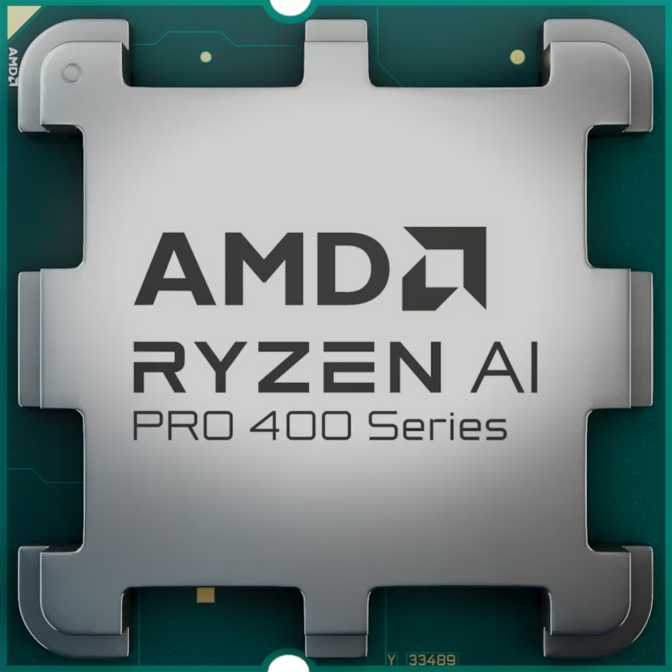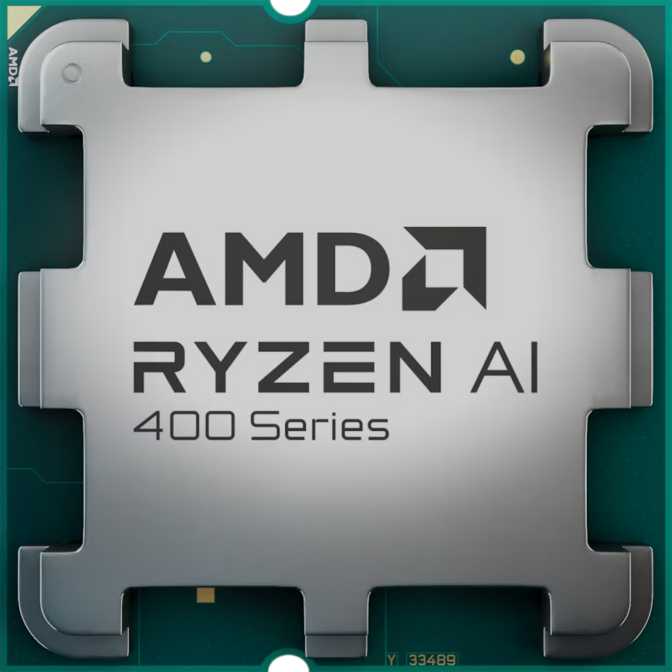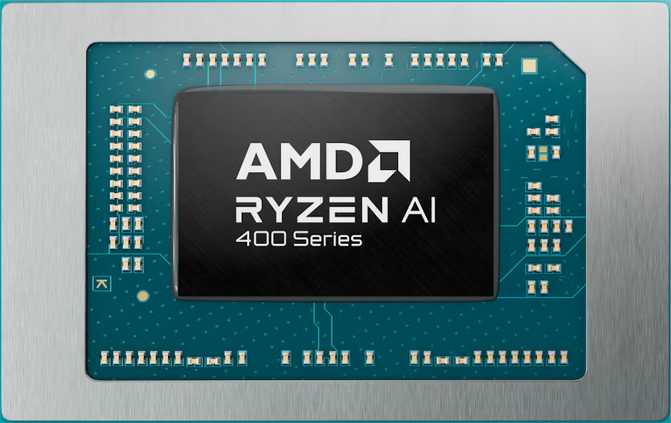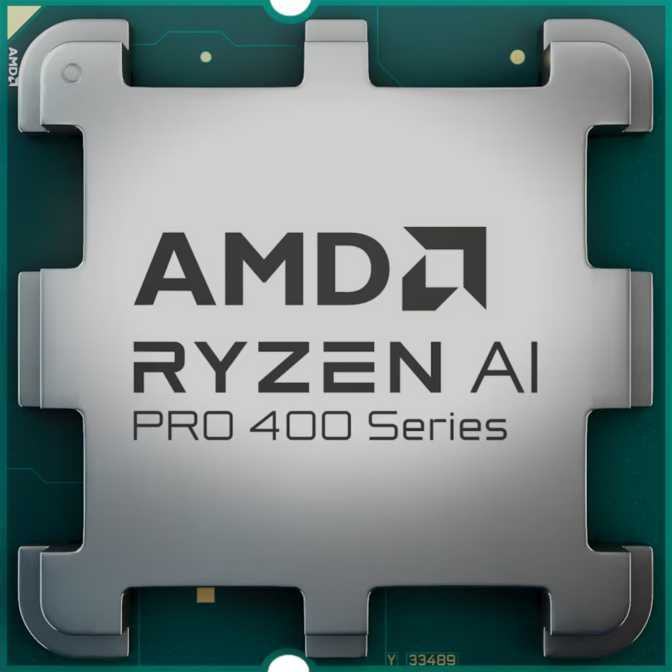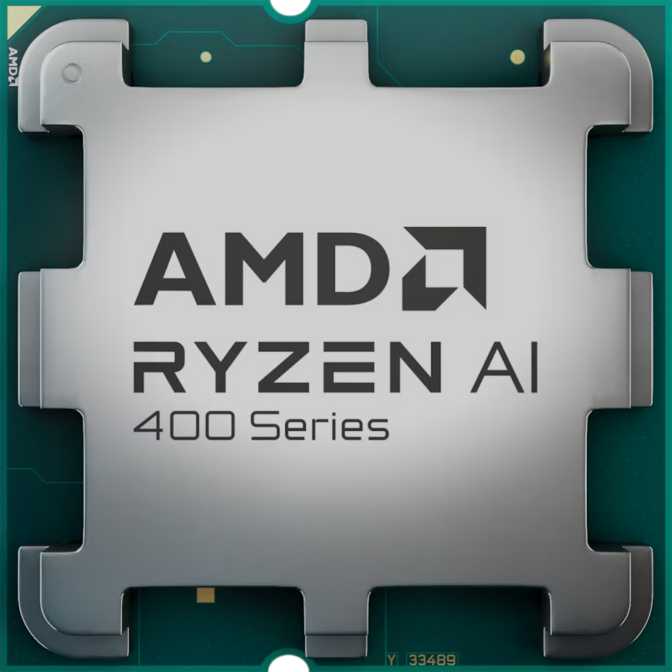
AMD Ryzen AI 7 450GE: Full Review — Efficient Power Done Right
CPUsAMD Ryzen AI 7 450GE at a Glance
The six specifications that define this processor's character and purpose
Most desktop processors are built around a simple premise: deliver maximum performance, and let the cooling system worry about the heat. The AMD Ryzen AI 7 450GE takes the opposite approach. It trades peak wattage for something increasingly valuable in modern computing — the ability to do a lot with very little power. Built on AMD's AM5 platform with a 35-watt power envelope, this processor is aimed squarely at builders who want a capable, compact, whisper-quiet desktop without making meaningful sacrifices in day-to-day speed. Whether you're designing a living room media center, a low-profile office workstation, or an always-on home server, understanding exactly what this chip offers — and what it doesn't — will determine whether it belongs in your next build.
Review Score
Exceptional for compact, quiet, and semi-professional desktop builds on a future-proof platform
Design, Build Quality and Platform
Socket, chipset compatibility, and what the 4nm process node actually means for you
The Ryzen AI 7 450GE uses AMD's AM5 socket, the same modern platform found under full-fat Ryzen 9000 series processors. That matters for a practical reason: AM5 is AMD's committed platform for the foreseeable future, which means motherboards you buy today are likely to support several more processor generations through firmware updates. You're not investing in a dead-end.
The chip is manufactured on a 4-nanometer process node. In practical terms, this advanced manufacturing process is a big part of why the 450GE can hit competitive speeds while staying within that 35-watt ceiling. Smaller transistors mean less wasted energy as heat at a given performance level. It's the same reason a modern laptop chip can outrun a decade-old desktop despite running cooler and quieter.
One important physical note: the 450GE is a desktop processor, not a laptop or embedded chip. It requires a standard AM5 desktop motherboard and a CPU cooler — though given its thermal profile, even a modest 65-watt-rated air cooler will keep it well within its limits.
B-series boards are the recommended pairing — more affordable, often available in compact form factors, and more than capable of supplying what this processor actually draws.
- PCIe 4.0 — GPU upgrade path preserved
- 4nm manufacturing — efficiency by design
- Full 64-bit OS and application support
Core Performance Analysis
Eight equal cores, a 5.1 GHz ceiling, and a cache hierarchy built for real-world multitasking
Core and Thread Configuration
The Ryzen AI 7 450GE has eight physical cores and sixteen processing threads, thanks to AMD's simultaneous multithreading (SMT) technology. Each core can handle two tasks at once, which matters for productivity workloads — video rendering, compilation, multi-tab browser sessions, and background services running while you work. For most users, sixteen threads is enough headroom that the processor never feels congested.
Importantly, this chip does not use a hybrid big/small core architecture. All eight cores are equal, running the same instruction sets and operating at the same performance tier. This makes task scheduling simpler and more predictable than designs that mix high-efficiency and high-performance cores — especially relevant for software that doesn't explicitly know how to prioritize across different core types.
Clock Speeds: The Base and Boost Dynamic
The base clock sits at 2.0 GHz per core, which sounds modest on paper. What actually defines the user experience is the boost clock — and here the 450GE surprises: individual cores can surge to 5.1 GHz when conditions allow. That's competitive with processors drawing twice or three times the power. The transition between low-power idle and full-speed boost is automatic and nearly instantaneous.
Base Clock — 2.0 GHz
The power-efficient floor. Under light loads, the chip idles here — keeping energy use and heat minimal while remaining instantly ready to scale.
Boost Clock — 5.1 GHz
Peak responsiveness. Individual cores sprint here on demand spikes — launching apps, compiling code, or responding to sudden workload bursts.
Cache Architecture
Cache is ultra-fast memory baked directly onto the chip — it holds recently used data so the processor doesn't have to reach out to system RAM, which is comparatively slow. The 450GE's hierarchy is generous for its class.
| Cache Level | Total Size | Per Core | Role in Practice |
|---|---|---|---|
| L1 | 640 KB | 80 KB | Immediate instruction and data storage — fastest possible access |
| L2 | 8 MB | 1 MB per core | Second-tier buffer — reduces RAM dependency during active workloads |
| L3 | 16 MB | 2 MB per core | Shared pool — aids multitasking and medium-data processing jobs |
Integrated Graphics: Radeon 860M
Considerably more capable than standard office graphics — and it changes the entire value proposition
A processor with capable integrated graphics doesn't require a dedicated graphics card to function well — you can build a complete, functional desktop around this chip without spending anything on a discrete GPU. The Radeon 860M is the integrated GPU inside the Ryzen AI 7 450GE, and it sits firmly above the minimal graphics found in typical business or productivity processors.
The GPU base clock starts at 600 MHz and boosts up to 3.1 GHz under load. That turbo figure is notably high for integrated graphics and contributes to its ability to handle demanding display tasks. Support for DirectX 12 Ultimate means it runs modern Windows applications and games without compatibility gaps. OpenGL 4.6 and OpenCL 2.1 extend this to professional applications — content creation, scientific computing, and GPU-accelerated workflows.
Light to moderate gaming is within reach. Titles with lower graphical demands — older releases, indie games, or games with scalable settings — can run at 1080p on medium or lower settings. Competitive multiplayer games that prioritize frame rate over visual fidelity tend to perform particularly well on integrated GPUs. The PCIe 4.0 slot means a dedicated GPU can be added later without a bandwidth bottleneck.
- Shader Units512
- Texture Units (TMUs)32
- Render Outputs (ROPs)16
- Base / Boost Clock600 / 3100 MHz
- DirectX12 Ultimate
- OpenGL4.6
- OpenCL2.1
Memory: DDR5 with ECC Support
Current-generation memory standard with professional-grade reliability options rarely seen in consumer chips
The Ryzen AI 7 450GE uses DDR5 memory — the current generation of RAM — with a dual-channel configuration. Dual-channel means the processor communicates with two RAM sticks simultaneously, effectively doubling memory bandwidth compared to a single-stick setup. For integrated graphics especially, this matters: the Radeon 860M draws on system RAM rather than its own dedicated pool, and more bandwidth translates directly into better graphics performance. Always run two matched sticks in this chip rather than one.
Maximum supported RAM speed — the practical sweet spot for DDR5 before costs climb steeply for negligible real-world gains
Maximum addressable RAM — far beyond home desktop needs, but highly relevant for workstation and always-on server contexts
Detects and corrects memory errors in real time — essential for always-on servers and data-sensitive workloads, rare in consumer desktop chips
Thermal Profile: The 35W Advantage
Low heat, low noise, and lower energy bills — all by design
The Thermal Design Power rating of 35 watts is the defining characteristic of this processor. Mainstream desktop processors often operate at 65 watts at minimum, with many high-performance chips drawing 125 watts or more. The 450GE draws less power than a typical incandescent light bulb during heavy work. In a year of regular use, the energy cost difference between a 35-watt and a 125-watt chip is meaningful — particularly if the machine runs continuously around the clock.
Cooler Requirements
Any air cooler rated for 65 watts or above handles this chip with headroom to spare. Slim low-profile coolers designed for compact cases pair particularly well — an ideal match for Mini-ITX builds where space is at a premium.
Noise Profile
Fan speeds stay low because they simply don't need to work hard, translating directly into a quieter machine. Near-silent operation is practical, not aspirational — especially valuable for living room builds, shared office spaces, or any environment where fan noise is noticeable.
Max Temp Ceiling: 95°C
The chip is rated safe up to 95°C before thermal protection activates. In normal use with appropriate cooling, real-world temperatures will run far below this ceiling — the gap prevents unexpected performance throttling under reasonable sustained loads.
Feature Depth: Instruction Sets and Software Compatibility
Hardware-level acceleration for encryption, AI, 3D processing, security, and beyond
The 450GE supports a full complement of modern instruction sets. These aren't abstractions — they translate to specific real-world speed improvements in software that knows how to use them.
AES Acceleration
Encryption and decryption operations — VPNs, secure file storage, HTTPS traffic — run with minimal CPU overhead. The chip handles these tasks in hardware, keeping performance impact negligible.
AVX & AVX2
Parallel math operations that speed up scientific computing, audio and video processing, and machine learning inference tasks. Software optimized for AVX2 can perform multiple calculations simultaneously per clock cycle.
FMA3
Fused multiply-add operations improve floating-point performance in 3D rendering pipelines, physics simulations, and certain game engine calculations — relevant for light content creation workloads.
F16C — AI Inference Ready
16-bit floating-point conversions accelerate AI inference workloads and modern GPU-compute tasks. As AI-assisted software becomes more prevalent in creative and productivity tools, this gains real practical relevance.
NX Bit Security
A hardware security feature that prevents certain classes of memory-based exploits from executing malicious code. Relevant for machines handling sensitive data or running as a local server accessible from a network.
Multithreading (SMT)
Each physical core handles two threads simultaneously — 8 physical cores become 16 logical threads. This maximizes CPU utilization during multitasking and benefits workloads that can distribute tasks across many threads.
Who This Processor Is For — and Who It Isn't
-
Compact Desktop BuildersMini-ITX and Micro-ATX builds benefit enormously from lower thermal loads. A quiet, capable system in a small footprint becomes straightforward — no large cooler, no high-wattage PSU required.
-
Home Server and NAS BuildersECC memory support and minimal energy draw (which matters enormously in 24/7 operation) make this one of the best consumer-class options for always-on systems — a combination rarely found together at this price tier.
-
Home Theater PC BuildersThe Radeon 860M handles 4K video playback and modern streaming services comfortably. Low power keeps the system silent enough for a living room — no jet-engine cooling noise during movie night.
-
Office and Productivity UsersNo discrete GPU required. A capable, future-proofed platform for document work, communication tools, light creative tasks, and web browsing — with the platform longevity to avoid a board replacement for years.
-
Developers and IT ProfessionalsECC reliability and efficient multitasking suit local development environments, container workloads, and virtual machines — where stability over extended sessions matters more than outright burst speed.
-
High-Frame-Rate GamingDemanding titles at high settings require a dedicated GPU, which the 450GE supports via PCIe 4.0. But gamers needing sustained GPU-heavy performance at high frame rates should budget for a discrete card — or consider a higher-TDP processor with better sustained multi-core throughput for CPU-bound games.
-
Heavy Creative ProductionVideo editors and 3D artists working with large project files and long render queues will hit the ceiling of what 35 watts can sustain. Time-sensitive production workloads benefit from processors with higher sustained power budgets that complete renders measurably faster.
-
Aggressive OverclockingThe unlocked multiplier is present, but the power envelope constrains how aggressively sustained overclocks can run. Dramatic, stable frequency gains aren't realistic — this chip is optimized for efficiency over frequency headroom. Enthusiasts chasing overclocking peaks should look elsewhere.
Competitive Positioning
How the 450GE stacks up against mainstream and high-performance desktop alternatives
| Consideration | AMD Ryzen AI 7 450GE | Mainstream 65W CPU | High-Performance 125W+ CPU |
|---|---|---|---|
| Power Draw | 35W | 65W | 125W+ |
| Cooling Cost | Low — modest air cooler | Moderate | High — large air or AIO |
| Integrated GPU Strength | Radeon 860M — capable | Varies — often weaker | Often absent or minimal |
| ECC Memory Support | Yes | Rare | Varies |
| Noise Potential | Very Low | Moderate | High under load |
| Sustained Heavy Workload | Moderate | Higher | Highest |
| Form Factor Flexibility | Excellent | Good | Limited — large coolers required |
| Platform Longevity | AM5 — Long-term | Depends on platform | Depends on platform |
The 450GE occupies a specific niche that few desktop processors target directly. Its closest competition comes from small form factor chips — often laptop-derived processors repurposed for compact desktops — or older-generation low-power chips on platforms without the same longevity. The combination of 4nm efficiency, a modern AM5 platform, capable integrated graphics, and ECC support is genuinely uncommon at this power level.
Honest Assessment: Strengths and Limitations
The case for the Ryzen AI 7 450GE rests on three pillars that genuinely distinguish it. Its power efficiency is class-leading for a mainstream desktop chip on a current platform. The integrated Radeon 860M graphics removes the GPU as a required expense for many users. And ECC support unlocks reliability options that most consumer chips simply don't offer.
The 450GE is also a platform investment. AM5 with DDR5 and PCIe 4.0 is a forward-looking foundation. Users who start here can upgrade to more powerful AM5 processors as their needs grow, without replacing the motherboard or memory — preserving the initial investment across future generations.
The limitations are real and shouldn't be understated. The 35-watt power ceiling creates an inherent limit on how much sustained computing the processor can push through. In workloads that keep all cores fully loaded for extended periods — long renders, large compilations, data processing jobs — processors with higher power budgets will complete the work faster. This is physics, not a flaw.
The 2.0 GHz base clock means that workloads which genuinely stress the thermal limit will see some clock speed reduction compared to what the processor delivers in short bursts. Users who expect to run sustained heavy computation should benchmark their specific use case carefully before committing to this chip.
Common Questions Before You Buy
Answers to what real buyers search for before purchasing the Ryzen AI 7 450GE
Final Verdict
Overall Score
The AMD Ryzen AI 7 450GE is a processor built around a clear philosophy: do more with less. It executes that philosophy well. Eight cores, sixteen threads, a 5.1 GHz boost ceiling, capable Radeon 860M graphics, DDR5 support, ECC compatibility, and an AM5 platform foundation — all within a 35-watt thermal envelope — represent a combination that's genuinely difficult to find in the desktop space.
This is the right processor if your priority is a compact, quiet, energy-efficient desktop that handles real work without needing a discrete GPU. It's not the right choice if sustained maximum throughput for heavy creative or computational workloads is what you need. For its intended purpose, it does exactly what it promises — and on a platform built to remain relevant well into the future.
Buy It If
- You want a silent, space-efficient desktop build
- An always-on home server or NAS is the goal
- You don't want to budget for a separate GPU
- Long-term platform investment matters to you
Skip It If
- Sustained heavy rendering is your primary task
- You need maximum gaming frame rates at high settings
- Aggressive overclocking results are the goal
- Raw multi-core throughput is your top priority