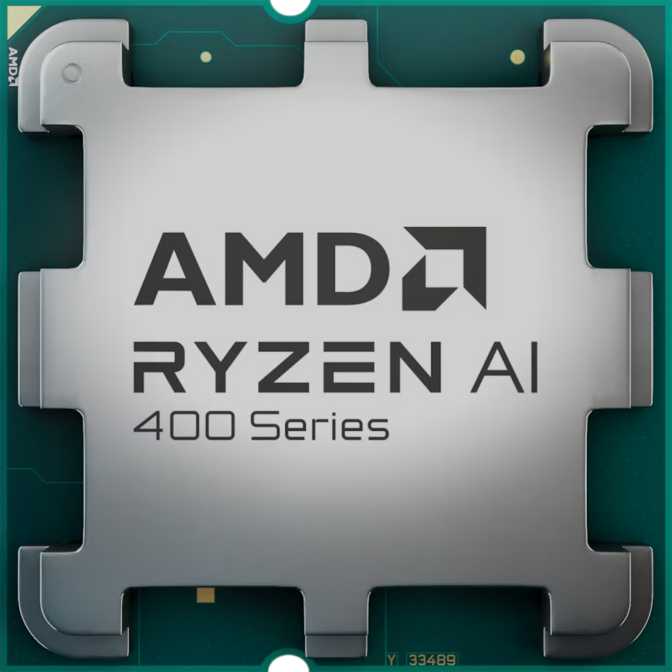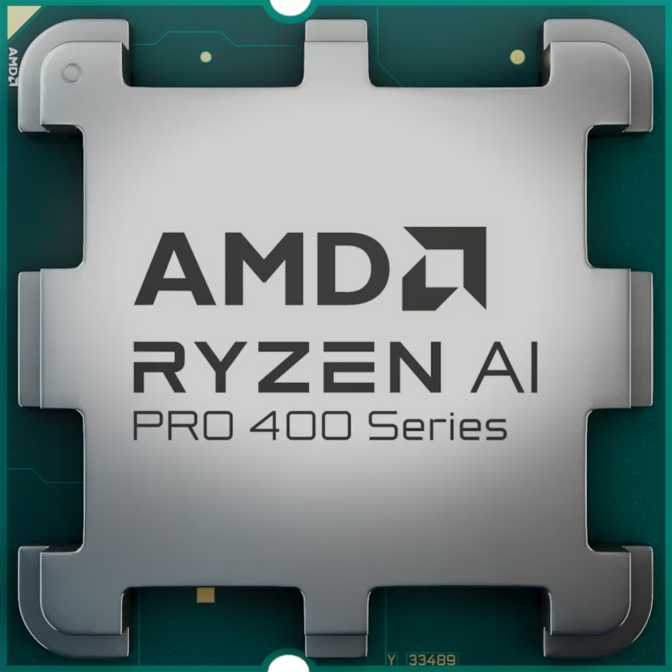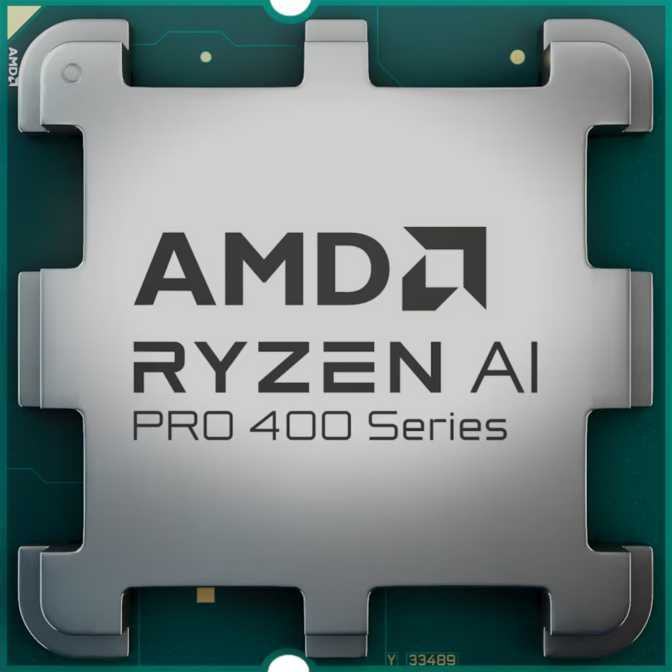
AMD Ryzen AI 7 Pro 450G Review: An Honest Look at the AM5 Desktop APU
CPUsMost desktop builds follow the same tired script: buy a processor, buy a graphics card, spend more than you planned. The AMD Ryzen AI 7 Pro 450G quietly challenges that script. It packages a capable eight-core processor with a genuinely useful integrated GPU on AMD's modern AM5 platform, positioning itself as a serious option for compact builds, budget-conscious workstations, and anyone who wants a complete, functional system without the cost or space demands of a dedicated graphics card.
Integrated graphics have carried a stigma for years, and rightfully so. The real question is not whether this chip can display a desktop, but whether the Radeon 860M inside it changes what you can actually accomplish without a discrete GPU. That is exactly what this review answers.
- SocketAM5
- TDP65 W
- Cores / Threads8 / 16
- Max Boost5.1 GHz
- iGPURadeon 860M
- MemoryDDR5 · 5,600 MHz
- ECC SupportYes
- Process Node4 nm
Design, Platform & Build Context
AM5 socket · 4 nm process · 65 W TDP · five compatible chipsets
The Ryzen AI 7 Pro 450G uses AMD's AM5 socket — the current-generation platform AMD has committed to supporting for the foreseeable future. That commitment has practical consequences: the motherboard you buy today remains relevant for future CPU upgrades without a socket change, which is an increasingly rare guarantee in desktop computing.
Chipset compatibility spans a wide spectrum. Entry-level B840 boards serve budget-focused builds. Mainstream B650 and B850 boards suit most users. Enthusiast-grade X670 and X870 boards unlock advanced connectivity, higher-quality power delivery, and expanded PCIe lane counts. The chip's behavior does not change based on which board you choose — the platform surrounding it does.
The 4-nanometer manufacturing process is central to this chip's efficiency. Smaller process nodes pack transistors more densely, producing better performance-per-watt ratios and less heat per computation. At 65 watts of rated thermal output, this processor sits squarely in mainstream desktop territory — manageable by any decent mid-range air cooler and quiet enough for near-silent configurations with appropriate cooling hardware. The maximum rated junction temperature of 95°C provides meaningful thermal headroom before the chip throttles, which matters most inside compact cases where airflow is limited.
Compatible Chipsets
X-series targets enthusiasts · B-series covers mainstream & budget
Platform Snapshot
- PCIe Version
- 4.0
- Process Node
- 4 nm
- Max Temperature
- 95 °C
- 64-bit Support
- Yes
- NX Bit Security
- Yes
Processing Performance: Eight Cores That Do Real Work
8 cores · 16 threads · 5.1 GHz boost · 24+ MB total cache
Core Count & Multithreading
Eight physical cores and sixteen threads put the Ryzen AI 7 Pro 450G comfortably in the mainstream sweet spot for productivity desktops. The sixteen-thread figure comes from simultaneous multithreading — each core handles two instruction streams at once, keeping the processor busier during parallel workloads. For video encoding, code compilation, running multiple applications simultaneously, or churning through large spreadsheets while a background task runs, sixteen threads provide meaningful real-world headroom.
This chip does not use big.LITTLE-style heterogeneous core clusters — all eight cores are equal in capability, which simplifies scheduling and produces predictable, consistent behavior across varied workloads without unexpected latency spikes on background tasks.
Clock Speeds in Context
A base clock of 2 GHz rarely tells the whole story on modern processors, and that is especially true here. Desktop chips spend very little time at base frequency during real workloads. The processor boosts dynamically up to 5.1 GHz on lightly threaded tasks — and single-core speed is precisely what governs how fast everyday applications feel: browsers, office software, most games, and anything that does not explicitly parallelize across many cores.
Manual overclocking is not possible. This is intentional in AMD's Pro lineup, prioritizing stability and predictability over tuning headroom. If overclocking is a priority, the Ryzen X-series is the appropriate alternative.
Cache Architecture: The Hidden Performance Multiplier
Cache is the fast-access memory that lives directly on the processor die. The closer data sits to the execution units, the faster it can be used — and the 450G's three-tier structure is well-configured for its tier. The combined total exceeds 24 MB across all levels, meaning the processor can hold substantial working datasets near the cores without repeated trips to slower system memory. For gaming, code compilation, and data processing, this working reservoir makes a tangible difference in responsiveness beyond what clock speeds alone suggest.
Closest to the cores. Fastest access, smallest size. Split between instruction and data per core for maximum throughput on tight loops.
1 MB per core — a generous per-core allocation at this tier. Significantly reduces how often the processor must reach out to slower L3 or system memory.
Shared across all cores. Acts as a large working reservoir for gaming, data processing, and compilation. Reduces latency when multiple cores access overlapping datasets.
Integrated Graphics: The Radeon 860M Explained
RDNA architecture · 512 shaders · 3,100 MHz boost · DirectX 12 Ultimate
This is where the 450G's identity diverges sharply from a standard desktop CPU. The Radeon 860M is not a token display output — it is a proper RDNA-architecture GPU integrated directly onto the die, and it is the chip's defining differentiator. Most mainstream desktop processors without the "G" suffix offer no meaningful graphics capability at all. This one genuinely changes that equation.
GPU Specifications
API & Compatibility Support
The Radeon 860M supports the current standard across all three major graphics interfaces, ensuring compatibility with any modern game renderer or GPU-accelerated application without exception.
OpenCL 2.1 support means GPU-accelerated compute tasks — image editors, video tools, and data science frameworks — can leverage the graphics silicon directly rather than falling back to the CPU cores for those operations.
What You Can Realistically Do
- 1080p gaming in competitive and esports titles at low-to-medium settings — playable frame rates
- 4K video playback with hardware decode acceleration, leaving CPU cores free
- Video conferencing, media consumption, and light photo editing — fully capable
- GPU-accelerated compute tasks in creative and scientific software via OpenCL
- Demanding AAA titles at high settings — this is not a replacement for a discrete card in that use case
- High-fidelity 3D rendering or large-scale GPU-accelerated professional visualization
Memory System: DDR5 With Professional Headroom
DDR5 exclusive · dual-channel · 5,600 MHz · 256 GB max · ECC supported
The Ryzen AI 7 Pro 450G uses DDR5 memory exclusively — a requirement of the AM5 platform and a generational step beyond DDR4. The chip officially supports DDR5 running at up to 5,600 MHz in dual-channel configuration, combining high bandwidth with the lower latency characteristics of the modern memory standard.
Dual-channel operation is particularly critical here because the Radeon 860M shares system memory with the CPU. Running in dual-channel mode effectively doubles the available memory bandwidth to the integrated GPU, and that translates directly into better graphics performance. Installing a single memory stick will measurably reduce what the Radeon 860M can deliver — two matched sticks are not optional, they are the correct configuration for this platform.
The maximum supported capacity of 256 GB belongs firmly in the workstation and server conversation. Consumer users will realistically install 16 GB to 64 GB, which is more than adequate for everyday and creative use. That ceiling exists for professional deployments: virtualization hosts, database servers, and engineering simulation environments where memory-heavy workloads are the primary concern.
- DDR VersionDDR5
- Max Supported Speed5,600 MHz
- ChannelsDual-channel
- Maximum Capacity256 GB
- ECC SupportYes
Single-channel memory significantly reduces Radeon 860M graphics performance. Always install memory in matched pairs for the best integrated GPU results.
Professional Features: ECC, Instruction Sets & PCIe 4.0
Pro-tier reliability · advanced compute extensions · fast storage & expansion
ECC Memory Support
ECC (Error-Correcting Code) memory detects and corrects single-bit memory errors automatically in real time — without the user ever knowing an error occurred. For most home users, standard DDR5 is perfectly appropriate and more cost-effective. For professional, business, or server environments where data integrity and uptime are non-negotiable — financial systems, medical workstations, scientific computing, always-on servers — ECC support is a baseline requirement. Pairing this chip with ECC-capable DDR5 on a supporting motherboard produces a compact, efficient workstation platform with reliability guarantees consumer hardware simply cannot provide.
PCIe 4.0 Connectivity
PCIe 4.0 means NVMe SSDs on this interface run at full speed — drives capable of sequential reads in the 5,000 to 7,000 MB/s range, transforming load times and file transfer speeds compared to SATA or older PCIe 3.0 storage. If you later add a discrete GPU, a PCIe 4.0 x16 slot provides sufficient bandwidth for current-generation graphics cards without creating a performance bottleneck. The platform does not limit your upgrade path.
Instruction Set Support
For most users these are invisible background capabilities. For professionals and developers, specific instruction sets directly affect software performance on targeted workloads.
- AVX2
- Wide vector math — accelerates scientific computing, machine learning inference, and multimedia encoding in optimized software.
- FMA3
- Fused multiply-add for floating-point — benefits simulation, audio processing, and certain rendering pipelines.
- F16C
- Half-precision floating-point operations — increasingly relevant for AI inference and neural network workloads on the CPU.
- AES
- Hardware-level encryption and decryption — disk encryption, VPN throughput, and secure communications handled with no measurable CPU overhead.
Who This Processor Is For — And Who Should Look Elsewhere
The right chip for specific use cases · a poor fit for others
- Silent or compact SFF builds
65 W TDP and 4 nm efficiency make this chip manageable in small chassis without noisy cooling. No discrete GPU means fewer heat sources and simpler thermal management overall.
- Budget-conscious all-in-one builds
A mid-range discrete GPU can easily cost more than the processor itself. For workloads that do not require dedicated GPU power, the Radeon 860M eliminates that line item entirely.
- Professional and enterprise workstations
ECC support, locked multiplier (stable and predictable), and Pro SKU classification make this a legitimate choice where reliability and software certification matter more than tuning flexibility.
- Light gaming on a strict budget
Competitive esports titles and older games run at playable frame rates. Starting with the 450G and adding a discrete GPU later is a valid phased approach — the chip will not bottleneck mid-range cards.
- A dedicated gaming rig with a discrete GPU already planned
If you are already budgeting a graphics card, a non-G Ryzen processor often delivers a better price-to-performance ratio for the CPU spend, freeing budget for a stronger GPU where gaming performance actually lives.
- Overclocking and manual tuning
The locked multiplier closes that door entirely. Ryzen X-series processors are the appropriate choice if manual overclocking headroom is a meaningful priority for your build.
- Extreme performance workloads
Rendering farms, professional 3D animation pipelines, and heavy video production suites will hit this chip's ceiling. Higher core-count processors in AMD's lineup are better suited for those sustained, parallelized demands.
Competitive Positioning
How the 450G stacks up against logical alternatives in the same segment
The Ryzen AI 7 Pro 450G's primary trade-off is straightforward: it costs more than a comparable processor without an integrated GPU, but it eliminates the need for a separate graphics card. Whether that premium pays for itself depends entirely on whether the iGPU is genuinely useful to your build. Against the previous generation of integrated-graphics desktop chips, the jump in graphical capability is substantial — more shader units, higher boost clocks, and full modern API support that older architectures could not deliver.
| Feature | Ryzen AI 7 Pro 450G | Typical Non-G Mainstream CPU | Previous-Gen iGPU Chip |
|---|---|---|---|
| Integrated GPU Tier | Radeon 860M (RDNA) | None / basic display only | Lower RDNA generation |
| Memory Standard | DDR5 | DDR5 | DDR4 or DDR5 |
| ECC Support | Yes | Rarely | Rarely |
| Platform Longevity | AM5 (current gen) | AM5 | AM4 (previous gen) |
| Overclocking | No (locked) | Some models yes | No |
| TDP Range | 65 W | 65–125 W | 65 W |
Honest Assessment
Where it excels and where it falls short — stated plainly
The Ryzen AI 7 Pro 450G's greatest strength is its coherence as a platform. Everything about it — the AM5 socket, DDR5 support, PCIe 4.0, ECC capability, and the Radeon 860M — fits together into a chip that handles a wide range of real-world tasks without requiring additional hardware. The 4 nm process keeps power consumption controlled. The 5.1 GHz boost ceiling keeps single-threaded performance competitive. And the Radeon 860M sets a new standard for what desktop integrated graphics can deliver at the mainstream tier.
- Best-in-class desktop iGPU — Radeon 860M on current RDNA architecture
- AM5 platform longevity — a rare guarantee in mainstream desktop
- ECC memory support is rare at this price tier — genuine Pro differentiator
- 5.1 GHz boost is competitive within the mainstream desktop segment
- Comprehensive instruction set: AVX2, AES, FMA3, and F16C all present
- 65 W TDP enables quiet, compact builds with no GPU heat load added
The weaknesses here are structural and intentional rather than defective. The locked multiplier is a deliberate Pro-series decision prioritizing stability over flexibility. The integrated GPU, despite its substantial advances, cannot compete with even an entry-level discrete card in demanding 3D workloads — that gap is real and should not be minimized. And because DDR5 is mandatory, the minimum cost to build a functioning system carries a higher memory floor than competing DDR4 platforms.
- No overclocking — locked multiplier applies to all Pro SKUs
- iGPU cannot replace even a budget discrete card for demanding 3D
- DDR5 requirement raises the minimum build cost vs. DDR4 platforms
- iGPU premium is wasted if a discrete GPU is already in the build budget
Common Pre-Purchase Questions
Answers to what real buyers search for before deciding
Final Verdict
A clear, direct recommendation based on what this chip actually delivers
The AMD Ryzen AI 7 Pro 450G is the right processor for a specific kind of buyer — and a poor fit for others. Being honest about that distinction is more useful than a blanket recommendation in either direction.
If you are building a complete desktop without a discrete GPU, want a processor on AMD's current AM5 platform with professional-grade reliability features, and need integrated graphics capable of handling everyday computing and light gaming without compromise, this chip delivers on all of those requirements. The Radeon 860M alone separates it from almost every other desktop processor in the mainstream tier, and the ECC support, DDR5 headroom, and platform longevity of AM5 make the full package coherent and well-considered.
If you are building a dedicated gaming machine with a discrete GPU already in the budget, or if overclocking flexibility is a meaningful priority for you, your money is better directed elsewhere — to a non-G Ryzen processor with higher core count or a Ryzen X-series with an unlocked multiplier.
For its intended purpose — a capable, self-contained desktop platform that does not need a graphics card to function — the Ryzen AI 7 Pro 450G is a well-executed option that holds up clearly to scrutiny.
- GPU-free compact & SFF builds
- Professional workstations requiring ECC
- Budget-first phased GPU upgrade builds
- Light gaming & productivity-first desktops
- Dedicated gaming rigs with a discrete GPU
- Overclockers and multiplier-tuning enthusiasts