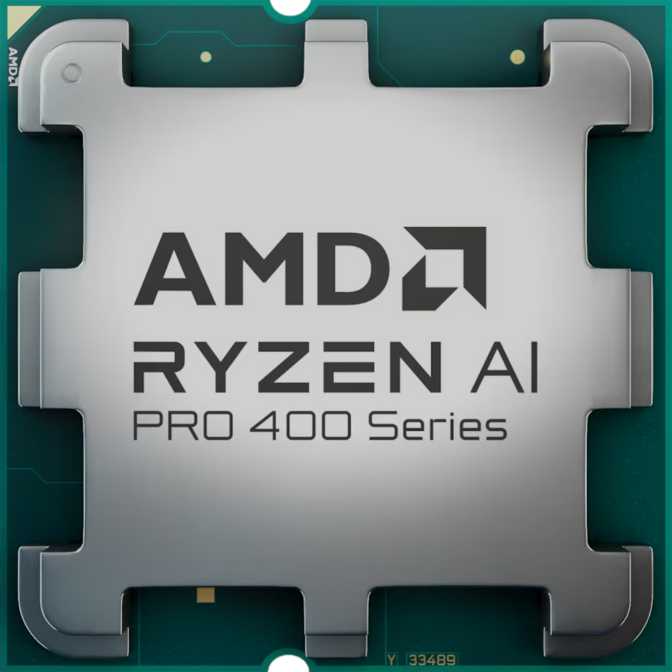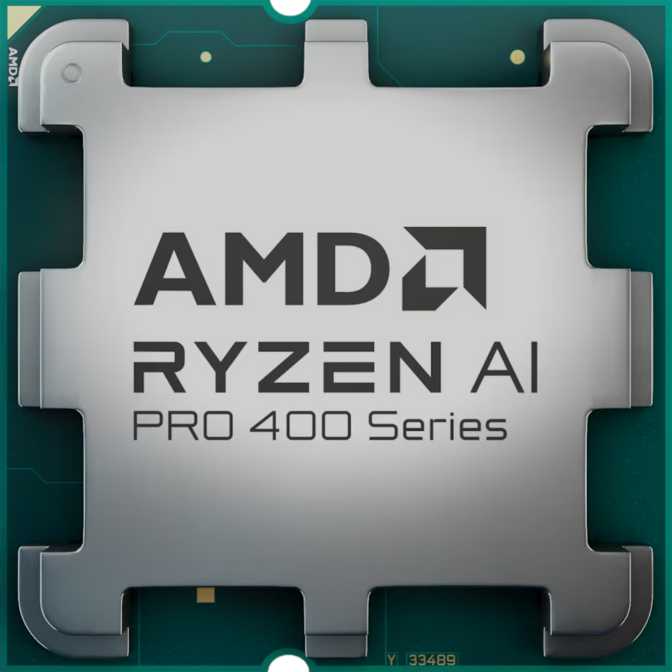
AMD Ryzen AI 5 Pro 440G Review: A Business CPU Built for What's Next
CPUsA Professional Desktop CPU That Earns Its "Pro" Badge
The AMD Ryzen AI 5 Pro 440G is a purpose-built business processor. It trades raw benchmark dominance for ECC memory integrity, dedicated AI inference hardware, and platform longevity on AMD's current AM5 socket. For the right buyer, that trade is not a compromise — it's the entire point.
Specifications at a Glance
What the Ryzen AI 5 Pro 440G Actually Is — And Why It Matters
There is a specific kind of PC buyer who has been underserved for years: the professional who needs a compact, capable, energy-efficient desktop that handles real work without a discrete GPU, tolerates demanding software environments, and remains relevant as AI-assisted tools become standard in the workplace. The AMD Ryzen AI 5 Pro 440G was built for that person.
This is not a gaming chip. It is not a content creator's powerhouse. It is a thoughtfully engineered business-class desktop processor that combines a modern CPU architecture, capable onboard graphics, hardware-level AI acceleration, and enterprise-grade memory support — all within a disciplined 65-watt power envelope.
Understanding what it prioritizes, and what it deliberately leaves on the table, is the key to knowing whether it belongs in your next build.
Platform Design: Built on AMD's AM5 Foundation
The 440G uses AMD's AM5 socket — the same foundation used by the highest-end Ryzen 7000 and 9000 series chips. Building on AM5 today means your motherboard investment carries a credible upgrade path, rather than landing on a platform already approaching end-of-life.
Compatible Chipsets
The processor works across a broad range of AM5 motherboards: B840, B850, B650, X670, and X870. An affordable B840 or B650 board provides everything this processor needs — no features are gated behind a more expensive chipset unless additional connectivity is a specific build requirement.
Budget Chipsets (B840 / B650)
Provide complete access to every feature this processor supports. Best value pairing for most business builds and compact workstations where no premium connectivity is required.
Premium Chipsets (X670 / X870)
Add extra PCIe lanes, USB bandwidth, and connectivity headroom. Worthwhile only for builds with specific expansion requirements that genuinely demand those additional resources.
4nm Process Node
The 440G is fabbed on AMD's 4-nanometer process — a leading-edge manufacturing tier that delivers more transistors per unit area and measurably better power efficiency. For a business machine running eight or more hours daily, this efficiency advantage compounds meaningfully into lower electricity costs and reduced thermal output over time.
Core Performance: Six Cores, Twelve Threads, Done Right
Core and Thread Count in Context
Six physical cores with simultaneous multithreading — presenting twelve logical processors to the operating system — is the configuration. For the vast majority of professional workloads including office productivity, video conferencing, light data analysis, coding, and general multitasking, twelve threads is genuinely comfortable headroom for everything the job demands.
Unlike AMD's consumer chips that may use hybrid architectures with mixed core types, the 440G uses a uniform core layout. Every core is equal in capability — no "efficiency cores" handling background tasks in unpredictable ways. In a managed business environment, that predictability is a feature, not a limitation.
Clock Speeds and Burst Performance
The chip operates at a conservative base frequency designed to remain within its 65-watt thermal budget under sustained all-core loads. When tasks demand it — opening applications, compiling code, exporting a document — the processor bursts to 4.8 GHz, which is where day-to-day responsiveness lives for typical office software.
Cache Architecture
Cache is often more critical to everyday snappiness than raw clock speed. The 440G carries three layers of cache that reduce how often the processor must reach out to slower main RAM — directly influencing application launch times, browser responsiveness, and compilation speeds.
| Cache Level | Total Size | Per Core | Primary Role |
|---|---|---|---|
| L1 | 480 KB | 80 KB | Fastest instruction and data staging |
| L2 | 6 MB | 1 MB | Mid-tier working set storage |
| L3 | 16 MB | ~2.67 MB shared | Shared pool — biggest impact on responsiveness |
The multiplier is locked on this processor — overclocking is not possible. For enterprise deployments and managed fleets, this is often preferred for long-term system stability and warranty compliance.
Integrated Graphics: A Genuine Workhorse, Not an Afterthought
The integrated GPU boosts to 2,900 MHz — a notably high ceiling for onboard graphics. This is not the barely-functional integrated graphics of processors from several generations ago. The graphics solution built into the 440G is designed for real productivity use, and for most professional users it is all they will ever need.
What It Handles Well
- Driving dual 4K displays simultaneously for a multi-monitor workstation
- Hardware-accelerated video playback including high-bitrate footage
- Background video encoding and decoding for standard formats
- Casual, non-demanding 3D work at modest resolutions
Where It Has a Clear Ceiling
- Demanding 3D rendering or GPU compute workloads at professional scale
- Gaming above low-to-medium settings at any resolution
- GPU-accelerated machine learning training pipelines
For the user who wants a clean desk without a discrete card drawing power and generating heat, the 440G's integrated graphics are a legitimate complete solution. Adding a discrete GPU via PCIe 4.0 remains an open option at any time if requirements change.
Memory System: DDR5, ECC, and Why Both Matter
DDR5 at Up to 5600 MHz
The 440G runs DDR5 memory exclusively across a dual-channel interface that supports speeds up to 5600 MHz. Running two matched sticks in dual-channel configuration effectively doubles the memory bandwidth available to both the CPU cores and the integrated GPU — directly impacting graphics responsiveness and overall system throughput.
Maximum supported memory reaches 256 GB. Most business builds will install 16 or 32 GB and remain within comfortable headroom, with the knowledge that the platform scales gracefully for virtualization workloads and large dataset processing if requirements grow.
ECC Memory — The Enterprise Differentiator
ECC (Error-Correcting Code) memory automatically detects and corrects single-bit memory errors — the kind of silent data corruption that can damage files or cause subtle calculation errors that remain invisible until they cause a real, costly problem.
Consumer processors almost universally skip ECC support. The 440G includes it. For environments handling financial records, medical data, legal documents, or any workload where data integrity is non-negotiable, ECC support is a professional requirement, not a luxury.
AI Capabilities: What the "AI" in the Name Actually Means
The "Ryzen AI" designation signals the presence of dedicated neural processing hardware — a separate processing block designed to accelerate AI inference tasks without taxing the CPU or GPU. As AI integration deepens across business software, this hardware ensures those features run efficiently without degrading the performance available for your primary work.
The software ecosystem for AI PC features is still maturing, but the hardware required to run it is already present. Investing now means this machine grows more capable as AI-integrated business software expands — rather than requiring a hardware upgrade to catch up.
Instruction Set Support: Software Compatibility That Runs Deep
The 440G supports a comprehensive set of CPU instruction extensions. For most users, these operate invisibly — but they have concrete consequences for software performance, compatibility, and security overhead.
Encryption and decryption — VPNs, BitLocker, secure file transfers — run at near-zero CPU overhead rather than consuming meaningful processing capacity under normal use.
Required by a growing number of professional applications — simulation software, scientific tools, and certain media applications use faster code paths specifically because AVX2 is available.
Improve throughput for floating-point-intensive workloads including AI inference operations and numerical computing tasks that rely on half-precision and fused multiply-add operations.
Thermal and Power Behavior: 65W Done Efficiently
A 65-watt TDP places the 440G well removed from the 105W–170W range of high-performance desktop processors. In a standard mid-tower or small-form-factor build with even a modest cooler, this chip runs comfortably and quietly under typical business workloads throughout a full working day.
In practice, a well-cooled system will sit comfortably below the 95°C ceiling — 70–80°C under sustained all-core load is typical with a basic air cooler. For compact chassis with restricted airflow, a quality low-profile aftermarket cooler is a worthwhile investment to keep boost clocks sustained and acoustics controlled.
For business environments running dozens of machines continuously, the 65W ceiling translates directly to lower electricity costs and reduced HVAC demand — a financial benefit that compounds meaningfully across a managed fleet over time.
PCIe 4.0: Connectivity That Scales With You
The processor natively supports PCIe Generation 4 across both storage and expansion slots. For storage, this enables NVMe SSDs that deliver sequential read and write speeds making even large file operations feel near-instant compared to older SATA-based drives — virtual machine images, database stores, and large project files all benefit from this bandwidth floor.
For graphics expansion, a discrete GPU added later operates at full PCIe 4.0 x16 bandwidth, sufficient for all current consumer and professional cards. PCIe 4.0 also covers faster networking adapters, capture hardware, and specialty expansion devices — giving builds that start lean room to grow purposefully rather than requiring a platform replacement later.
Who Should Buy the Ryzen AI 5 Pro 440G
Excellent Fit For
- Business and enterprise deployments where ECC support, platform stability, and long-term parts availability are requirements rather than nice-to-haves.
- Small business and home office builds where a discrete GPU is unnecessary and integrated graphics cover all display and media needs.
- Compact and silent PC builds where the 65W budget enables small chassis and quiet cooling without performance compromise.
- IT professionals building managed fleet machines who value ECC support and the Pro SKU's platform guarantees and availability commitments.
- Developers and power users who need a responsive daily driver without the cost and complexity of a discrete GPU in the mix.
- Forward-looking buyers who want AI-capable hardware before that capability becomes a baseline workplace requirement.
Not the Right Choice For
- Gamers seeking competitive frame rates — a consumer chip paired with a dedicated GPU will significantly outperform this processor where gaming performance counts.
- Video editors and 3D artists processing large projects — six locked cores will bottleneck rendering pipelines that scale well from 8 to 16 cores.
- Overclocking enthusiasts — the locked multiplier makes manual overclocking impossible by design, with no exceptions.
- Strictly personal budget builds where ECC and dedicated AI hardware add no value — a consumer Ryzen may deliver better raw performance per dollar for purely personal use.
How It Compares to the Alternatives
The 440G occupies a distinct lane. It does not compete on raw multi-core throughput with unlocked consumer chips. It competes on platform reliability, data integrity, AI readiness, and enterprise manageability — priorities that consumer-tier parts are simply not designed around.
| Feature | Ryzen AI 5 Pro 440G | Consumer Ryzen 5 (AM5) | Intel Core i5 (Equiv. Tier) |
|---|---|---|---|
| ECC Memory Support | Yes | No | Rarely — select models only |
| Dedicated AI Hardware | Yes | Varies by generation | Varies by generation |
| Overclockable | No | Some models yes | Some models yes |
| Thermal Design Power | 65W | 65–105W | 65–125W |
| Memory Standard | DDR5 | DDR5 | DDR5 |
| Integrated Graphics | Yes | Yes (varies by model) | Yes |
| Platform Longevity | AM5 — Long-Term | AM5 — Long-Term | LGA 1851 — Current Gen |
Honest Assessment: Strengths and Limitations
The Case For
The strongest arguments for the 440G are also the most honest ones. ECC support on a mainstream desktop chip is genuinely unusual and genuinely valuable for anyone handling data where silent corruption is an unacceptable risk. The dedicated AI processing hardware is a real differentiator — most chips at this category still offload inference entirely to CPU cores, competing for the same resources as your actual work.
The 4nm fabrication and 65W power budget make this processor well-suited for compact, efficient builds that run all day without the thermal noise and electricity cost of higher-wattage alternatives. The AM5 platform provides upgrade flexibility that older socket platforms cannot match — your board investment remains relevant well beyond this initial purchase.
The integrated GPU is capable enough that most professional users will never feel a need for a dedicated card. That keeps system cost, power draw, and cable clutter all in check simultaneously — a meaningful quality-of-life win for office and desk setups.
The Case Against
Six cores with a locked multiplier is not the configuration you choose when maximum sustained throughput is the priority. Workloads that scale with core count — video rendering, large simulation jobs, heavy compilation — will reach this processor's ceiling earlier than an 8 or 12-core alternative at a comparable price point.
The conservative base frequency means that in a poorly cooled compact build, extended all-core loads may trigger thermal throttling. This is not a design flaw, but it demands proper attention to cooling during build planning — particularly for small-form-factor configurations where airflow is inherently restricted.
The Pro SKU carries a modest price premium over equivalent consumer parts. That premium is entirely justified if ECC memory and AI hardware align with your actual use case — and entirely unjustified if they don't. Knowing which camp you're in before purchasing is the most important research you can do.
Common Questions Answered Before You Buy
Built for Its Purpose — and Delivers on It
The AMD Ryzen AI 5 Pro 440G is exactly what its name says it is: a professional-class desktop processor with genuine AI hardware, built on a current-generation platform that respects your investment. It is not trying to win benchmark competitions. It is trying to be the most sensible, forward-compatible, enterprise-ready mid-range chip on the AM5 platform — and by those criteria, it succeeds clearly.
The Bottom Line
Buy it if you are building a business machine where ECC memory integrity matters, if you want capable integrated graphics without a separate GPU, or if you are preparing a workstation for AI-augmented software workflows before they become a standard workplace requirement. Skip it if your priority is maximum raw performance per dollar, or if gaming is any part of your requirements.
The right build — a B650 board, 32 GB of DDR5, and a fast NVMe SSD — produces a machine that handles professional workloads confidently, runs quietly and efficiently, and remains relevant for years on a platform with genuine longevity. That is a promise most chips at this tier cannot make.