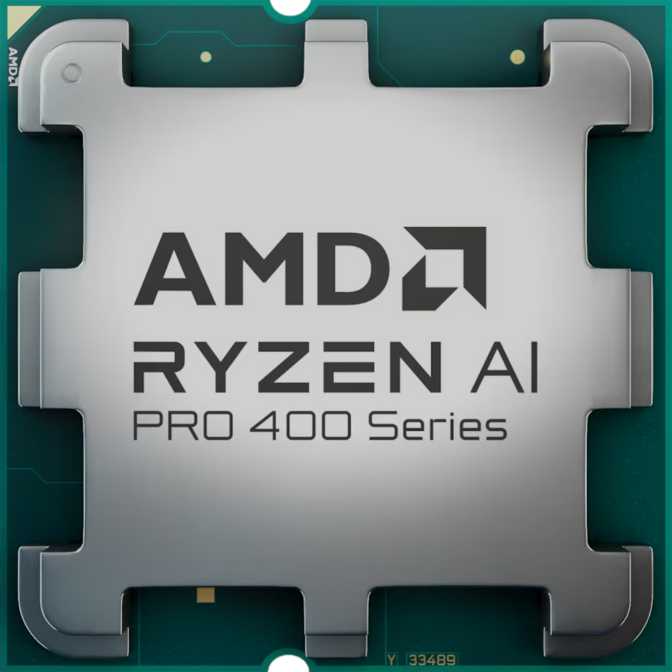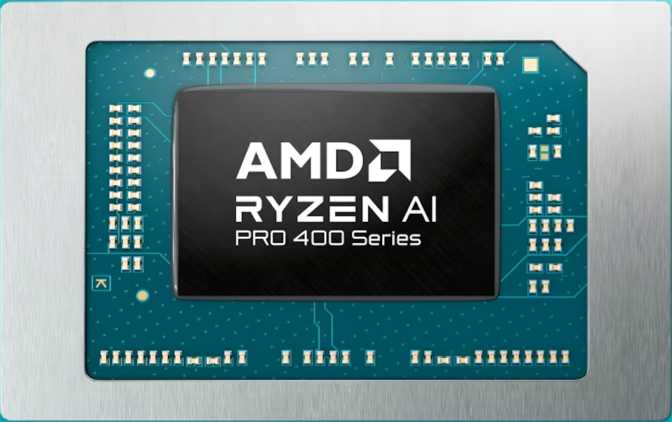
AMD Ryzen AI 5 Pro 440 Review: A Professional Chip Built for Business
CPUsNot every processor is built for raw speed records. Some are built for dependability, sustained productivity, and the kind of daily reliability that matters in professional environments where failure is not an option. The AMD Ryzen AI 5 Pro 440 falls squarely in that second category — a mid-tier professional chip designed for business laptops and compact desktops where efficiency, memory headroom, and platform stability take priority over benchmark bragging rights.
If you are a content creator chasing 3D render speed, this is not your chip. But if you are an IT manager specifying fleet hardware, a developer who needs a reliable daily workstation, or a professional who wants capable integrated graphics without a discrete GPU, the Ryzen AI 5 Pro 440 deserves a serious look.
- Ideal for business and enterprise use
- 256 GB DDR5 memory headroom
- ECC support for data integrity
- Four-display iGPU, no discrete GPU needed
- Not suitable for gaming or 3D rendering
- Locked multiplier — no overclocking
Design & Manufacturing: What 4nm Actually Means for You
The Ryzen AI 5 Pro 440 is manufactured on a 4-nanometer process node — which, for those less familiar with chip fabrication, refers to the size of the transistors packed onto the silicon die. Smaller transistors mean more of them can fit in the same physical space, which translates directly into better power efficiency and lower heat generation compared to older manufacturing nodes.
In practical terms, this 4nm foundation is the key reason the chip operates within a 28-watt thermal envelope. That is a moderate power budget — low enough to fit into thin-and-light business laptops without demanding bulky cooling systems, yet high enough to sustain meaningful performance during extended workloads. It is not the ultra-low-power territory of fanless ultrabooks, nor the high-wattage zone of performance-first mobile workstations.
The chip's rated maximum operating temperature sits at 100°C, which is within normal parameters for modern laptop processors. Throttling behavior under sustained loads will depend on the system integrator's cooling design, but the thermal ceiling itself is not a concern under typical use.
Core Architecture: Six Cores, Two Speeds, One Smart Strategy
Hybrid design • 12 threads • 4.8 GHz turbo • 22 MB total cache
Hybrid Core Design
The Ryzen AI 5 Pro 440 uses a hybrid core architecture with six physical cores split into two groups. Three cores are optimized for heavier, performance-intensive tasks while the other three prioritize efficiency for lighter background work. Together they expose 12 threads to the operating system through simultaneous multithreading.
When you are on a video call with a browser open and a spreadsheet in the background, the chip intelligently routes lightweight tasks to efficiency cores and keeps the performance cores ready for when you actually need them. Battery life benefits significantly from this arrangement.
Clock Speeds in Context
The base clock speed of 2 GHz is modest by enthusiast standards — deliberately so. The chip does not run all cores at full throttle all the time. The turbo frequency reaches 4.8 GHz, which is where single-threaded tasks — opening applications, rendering webpage elements, compiling individual files — actually run.
The multiplier is locked, which means overclocking is not possible. For the target professional market, this is entirely appropriate — predictability and stability matter more than peak overclocked performance in managed IT environments.
Cache: The Chip's Working Memory
Think of cache as the chip's short-term memory — data stored there is accessed far faster than data fetched from RAM. The processor carries both L2 and L3 cache pools, with the larger L3 sufficient for typical office productivity and development workloads.
Core Configuration at a Glance
Performance Cores (3x)
Efficiency Cores (3x)
- P-Cores handle demanding tasks, turboing up to 4.8 GHz
- E-Cores run background tasks at lower power draw
- 12 Threads visible to the OS for parallel execution
- Hybrid Scheduling routes tasks intelligently in real time
Integrated Graphics: Radeon 840M Does More Than You'd Expect
4 display outputs • 2,900 MHz boost • DirectX 12 • OpenGL 4.6 • OpenCL 2.1
Display Capability
The Radeon 840M can drive up to four independent displays simultaneously — a capability that, until recently, required a discrete graphics card in most business setups. Finance professionals, developers, or anyone running a multi-monitor workstation can do so straight out of the box, with no add-in card required.
Graphics API Support
DirectX 12 support keeps the system compatible with modern software. OpenGL 4.6 matters for engineering applications — tools like AutoCAD, MATLAB, and scientific visualization packages commonly rely on it rather than DirectX. OpenCL 2.1 enables GPU-accelerated computing tasks including image processing and data analysis pipelines.
Honest GPU Limitations
The Radeon 840M's 2,900 MHz boost is impressive for integrated graphics. Light gaming — esports titles and older games — is plausible at moderate settings. What it will not do: play demanding modern titles at high settings, handle real-time 3D rendering at professional quality levels, or compete with any discrete GPU, even entry-level ones. Set expectations accordingly.
Memory: A Specification Sheet That Belongs on a Workstation
DDR5-8533 • Dual-channel • 256 GB maximum • ECC support
DDR5 and Memory Bandwidth
The chip supports DDR5 running at speeds up to 8,533 MHz — well above what many systems ship with. In real-world terms, faster memory meaningfully improves integrated graphics performance, since the Radeon 840M shares system RAM rather than having its own dedicated pool.
Using two memory sticks in dual-channel configuration doubles the effective memory bandwidth available to both the CPU and the integrated GPU. Anyone configuring a system around this chip should prioritize a dual-channel setup — the performance difference for GPU-accelerated tasks is tangible.
256 GB Maximum Capacity
The processor supports up to 256 GB of RAM — a figure that would have been workstation-exclusive territory not long ago. For most office users, 16 or 32 GB is perfectly sufficient. But for developers running multiple virtual machines, data analysts working with large in-memory datasets, or professionals in scientific computing, the ability to scale memory to 256 GB in a laptop or compact desktop is a genuine differentiator that consumer chips at this price range simply do not offer.
ECC — Error-Correcting Code — memory can detect and automatically correct certain types of memory errors that would otherwise cause data corruption or system instability. This is critical in financial systems, healthcare data processing, and scientific research where data integrity is non-negotiable.
Consumer chips almost universally do not support ECC. The Ryzen AI 5 Pro 440's ECC compatibility is a clear signal of its professional pedigree and makes it a viable choice for organizations with strict data integrity requirements.
Pro Platform FeaturePlatform Features: PCIe 4 and Instruction Set Depth
PCI Express 4.0
The chip connects to storage and peripherals via PCIe 4.0, which provides roughly twice the bandwidth of PCIe 3.0. This matters most for high-end NVMe SSDs — the fastest drives on the market use PCIe 4.0 to achieve sequential read speeds that make storage bottlenecks essentially irrelevant for most workloads.
In practical terms, application load times, large file transfers, and virtual machine boot times all benefit from pairing this chip with a PCIe 4.0 NVMe drive. It is a meaningful real-world upgrade path for anyone coming from an older platform.
Instruction Set Support
The Ryzen AI 5 Pro 440 supports a comprehensive set of CPU instructions. For most users these are entirely transparent — software uses them automatically without any configuration required.
- AES Hardware Acceleration
- Full-disk encryption and VPN tunnels run with negligible CPU overhead — enterprise-grade security without the performance penalty.
- AVX2 & FMA3
- Scientific computing, simulation, audio processing, and ML inference workloads run significantly faster when software targets these instructions.
- NX Bit
- Hardware-level security preventing certain classes of malicious code from executing — a requirement for many enterprise security frameworks.
Real-World Usage Scenarios
- Business & Enterprise Laptop UsersRunning productivity suites, communication tools, ERP applications, and browser-based software. Pro-class driver support and platform stability benefit managed IT environments.
- Developers & Software EngineersRunning local databases, containers, development servers, and code compilation alongside a browser-heavy workflow. The 12 threads and 256 GB ceiling support even VM-heavy environments comfortably.
- Data & Finance ProfessionalsWorking with large spreadsheets, Python/R data analysis pipelines, and in-memory datasets where DDR5 bandwidth and ECC integrity assurance genuinely matter.
- Compact Desktop DeploymentsPoint-of-sale systems, medical workstations, or thin client replacements. Four-display support and ECC capability in a small form-factor machine is a rare combination at this price tier.
- GamersDemanding modern titles at anything above minimum settings are outside the Radeon 840M's comfort zone. The iGPU handles light and older games only.
- Video Editors & 3D ArtistsAnyone needing real-time preview performance and fast render times will require a discrete GPU. The integrated graphics cannot fill that role at a professional level.
- Overclockers & Power TweakersThe locked multiplier is a hard stop. No performance customization through overclocking is possible on this chip — it is not designed for that audience.
- High Single-Threaded Performance SeekersThose prioritizing raw speed for audio plugin processing or certain simulation software will find faster options in Intel's Core Ultra lineup or AMD's Ryzen 9 HX mobile chips.
Competitive Positioning
How the Ryzen AI 5 Pro 440 stacks up against comparable platforms in the same market tier
| Feature | Ryzen AI 5 Pro 440 | Consumer Mid-Range CPU | Business-Class Competitor |
|---|---|---|---|
| Process Node | 4 nm | 4–5 nm | 4–7 nm |
| Cores / Threads | 6C / 12T | 6–10C / 12–16T | 6–8C / 12–16T |
| Max Memory | 256 GB | 64–128 GB | 128–256 GB |
| ECC Support | Yes | No | Varies |
| iGPU Display Outputs | 4 | 2–3 | 2–4 |
| DDR Generation | DDR5 | DDR5 | DDR5 |
| Thermal Envelope | 28W | 15–45W | 15–28W |
Indicates a category where the Ryzen AI 5 Pro 440 holds a notable advantage over similarly priced consumer alternatives.
Honest Assessment: Strengths and Weaknesses
The 4nm efficiency means the Ryzen AI 5 Pro 440 can sustain useful performance within a thin-and-light thermal budget without the fan noise and heat output of higher-wattage alternatives. This is a meaningful quality-of-life benefit for anyone who spends long hours at a laptop in quiet office environments.
The Radeon 840M's four-display support and solid API compatibility make it a legitimately useful integrated GPU for professional use — not just a checkbox feature. This alone justifies the platform choice for multi-monitor business setups that previously required a discrete add-in card.
The memory platform is where it genuinely punches above its weight. DDR5 at high speeds, dual-channel bandwidth, ECC support, and a 256 GB ceiling together constitute a memory subsystem that most desktop workstations could not match a few years ago. For the intended professional market, this combination is compelling at a mid-tier price.
The base clock speed is low — users running sustained all-core workloads in thermally constrained laptops may see the chip spending considerable time below its turbo frequencies. The locked multiplier closes the door entirely on any performance customization, which will frustrate anyone with an enthusiast mindset.
The integrated GPU, while capable for professional tasks, will hit its ceiling quickly for anyone with serious graphical workload needs. This is not a chip for video editing, 3D rendering, or even casual gaming beyond older or lightweight titles.
The chip occupies a middle ground that can feel awkward in practice. It does not have the sheer thread count of higher-end mobile workstation chips, nor the ultra-low power draw of entry-level business chips. It is a deliberate compromise — and like all compromises, it only lands well when the use case matches exactly.
Questions Buyers Are Actually Asking
Recommended for Professional Use
The AMD Ryzen AI 5 Pro 440 is a chip that knows exactly what it is. It does not pretend to be a performance flagship, and it is not trying to be — that clarity of purpose is part of what makes it compelling for the right buyer.
For individual professionals, small business deployments, and enterprise procurement teams building out a reliable and manageable fleet of business machines, it is a compelling option — particularly where ECC support or multi-display integrated graphics are requirements rather than nice-to-haves. The memory platform, ECC capability, and 256 GB ceiling together constitute a subsystem most consumer chips at this tier simply do not offer.
For personal users prioritizing performance per dollar without professional platform requirements, the consumer Ryzen AI 5 equivalents or competing consumer chips will likely offer better raw value.
Your workload matches its strengths — professional efficiency, deep memory support, ECC data integrity, and multi-display flexibility within a sensible power budget.
Look elsewhere if:You need maximum clock-for-clock speed, overclocking headroom, or serious graphical performance for gaming or creative production work.