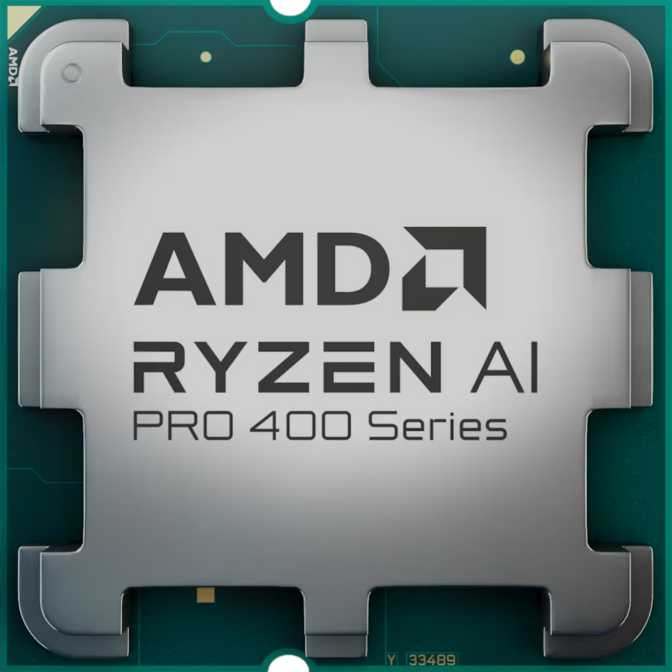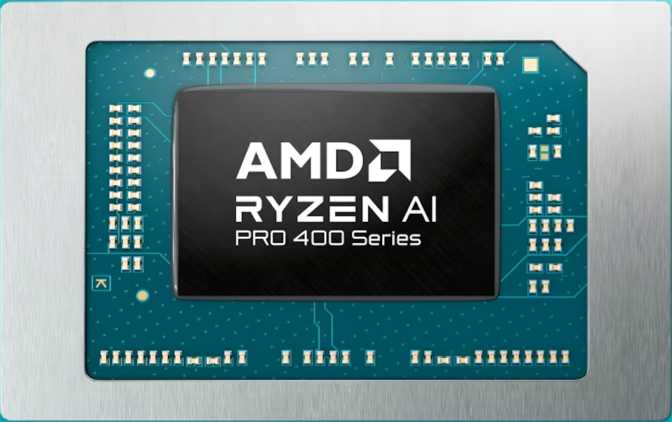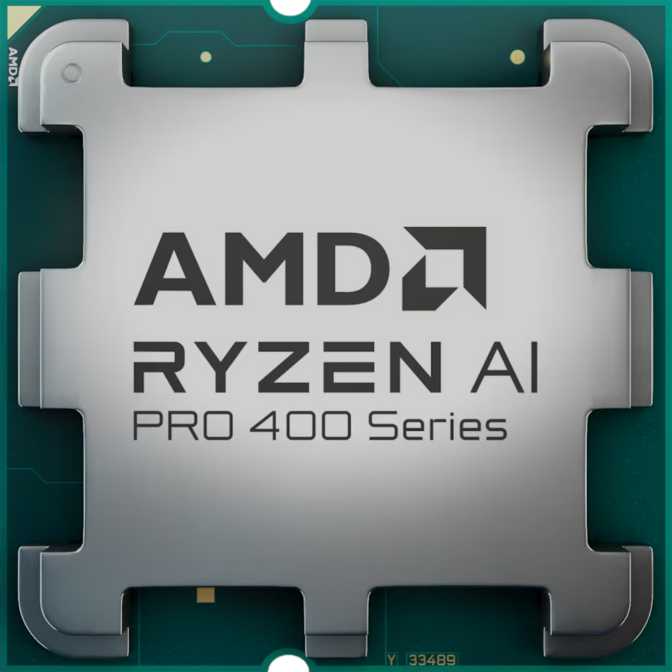
AMD Ryzen AI 5 Pro 440GE: Full Review of an Efficient 35W Desktop CPU

AMD Ryzen AI 5 Pro 440GE: Full Review of an Efficient 35W Desktop CPU

CPUs

Processor at a Glance

Six specifications — decoded into real-world meaning

6 / 12 Cores / Threads
4.8 GHz Peak Turbo
35 W TDP
Radeon 840M Integrated GPU
DDR5 Up to 5600 MHz
ECC Ready Pro Memory

Most desktop processors make a straightforward trade: consume more power, deliver more performance. The AMD Ryzen AI 5 Pro 440GE rejects that bargain entirely. Built around a 35-watt power envelope — less than a single incandescent light bulb — this processor targets a specific kind of builder: someone who needs a capable, always-on desktop workstation without the electricity bill, the noise, or the bulk that typically comes with it. The "Pro" designation and "GE" suffix are not marketing decoration; they signal a chip engineered for professional reliability and exceptional efficiency, not raw speed competition. If you're building a compact office machine, a media server, or a whisper-quiet workstation, this CPU deserves your full attention. If you're chasing gaming frame rates or video encoding records, it will disappoint you — and this review will tell you exactly why.

The "Pro" Designation

Signals enterprise-grade feature support — ECC memory compatibility, longer commercial availability cycles, and validation against professional software environments. Not marketing decoration.

The "GE" Designation

AMD's lowest-power desktop variant flag. Where standard Ryzen chips consume 65 watts at load, the GE is permanently engineered to 35 watts — not a restriction to unlock, but a deliberate design target.

The "AI" Designation

Refers to a dedicated neural processing unit built into the chip alongside the CPU and GPU cores, enabling AI inference acceleration in compatible applications without taxing main compute resources.

Design Philosophy: Built for Efficiency, Not the Spotlight

The GE Suffix: Deliberate Power Constraints

AMD uses the "GE" designation to identify their lowest-power desktop variants. The 440GE is governed to 35 watts by design — not as a feature to be unlocked, but as an intentional engineering target that makes it ideal for small form factor cases, mini-ITX motherboards, and passive or near-passive cooling builds where thermal headroom is physically constrained.

The "Pro" layer adds business-grade feature support: enterprise memory compatibility, enhanced platform stability, and positioning within AMD's commercial product stack — which typically implies longer product availability windows and validated compatibility with professional software environments.
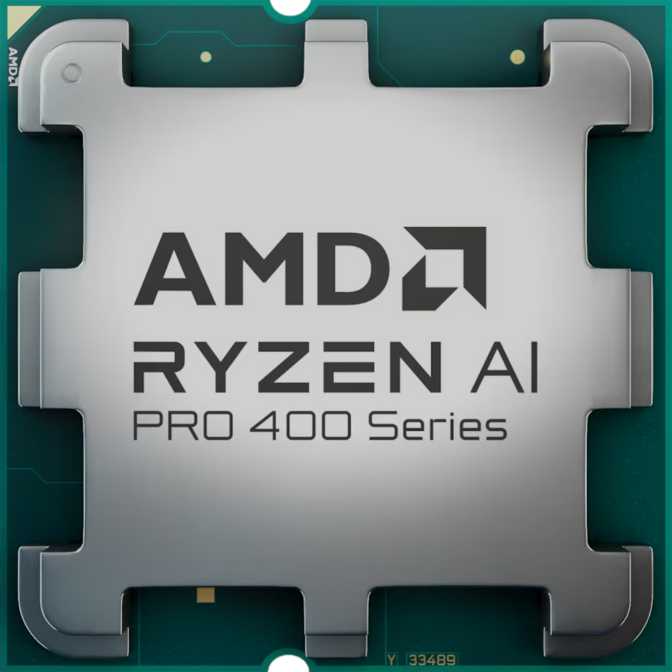
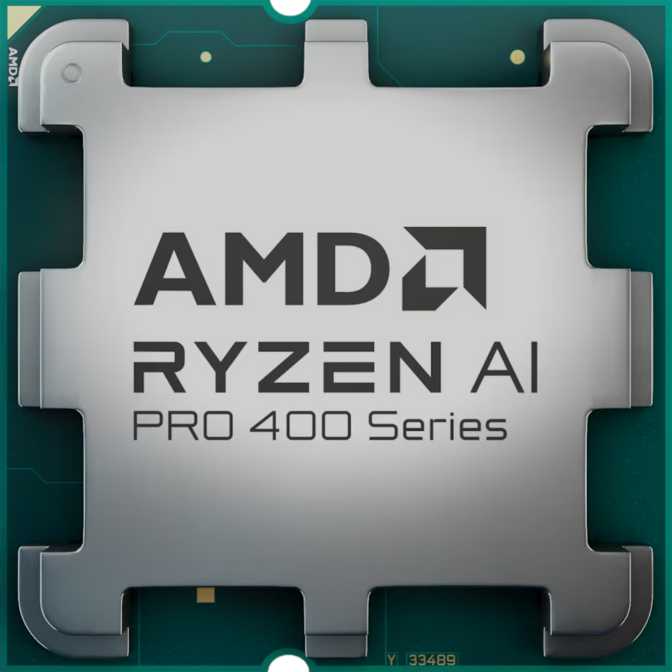
Platform Fit: The AM5 Socket Advantage

Despite its efficiency focus, the 440GE sits on AMD's AM5 socket — the same physical platform as AMD's highest-end desktop processors. This is a genuinely modern, forward-compatible foundation with PCIe 4.0 connectivity, DDR5 memory, and broad motherboard chipset support.

A builder could pair this processor with an affordable B650 board for a lean workstation, or drop it into a premium X670 platform if future expansion is a priority. The AM5 ecosystem is well-established, meaning cooler compatibility, case support, and component availability are all in good shape.

Compatible AM5 Chipsets X670 B650 X870 B840 B850

Core Performance: What Six Cores at 35 Watts Actually Delivers

Clock Speed Architecture

The 440GE runs six physical cores with simultaneous multithreading, yielding twelve logical threads. Under sustained workloads it climbs to a peak of 4.8 GHz — a ceiling that holds up credibly for single-threaded tasks like office applications, web browsing, spreadsheet work, and light software compilation.

The base frequency is notably conservative, which is the natural consequence of operating within a 35-watt constraint. In practice, everyday tasks — document editing, video calls, email, coding in lighter IDEs, browser-based tools — will rarely push the processor to its limits. Most users will never notice the conservative base clock because they never trigger it.

Manufacturing Process and Longevity

The 440GE is built on a 4-nanometer fabrication process — the same modern node found in high-end mobile and enthusiast desktop processors. The tight transistor density allows AMD to pack capable compute logic into a chip that stays cool and draws minimal power.

The processor's maximum safe operating temperature of 95 °C provides meaningful thermal headroom even in compact enclosures. In a 35-watt chip, reaching that ceiling under normal operation would indicate a serious cooling problem rather than typical sustained load behavior.

Cache Hierarchy

Cache stores frequently used data close to the processor cores, dramatically reducing wait times. Larger caches mean fewer costly trips to slower system memory.

L1 Cache — Fastest, Per-Core 480 KB
L2 Cache — 1 MB per Core 6 MB
L3 Cache — Shared Pool 16 MB

The 16 MB shared L3 pool is large enough to hold frequently accessed data sets for most productivity and development workloads, reducing how often the processor must wait on slower system memory.

Integrated Graphics: The Radeon 840M

A GPU that goes well beyond the "placeholder" category many integrated solutions occupy

More Than a Placeholder

Based on AMD's RDNA 3 graphics architecture and operating at up to 2,900 MHz, the Radeon 840M is one of the more capable integrated GPU solutions in the desktop efficiency segment. It handles 4K display output, hardware-accelerated video decode for streaming and media playback, and light creative tasks without requiring any discrete GPU hardware.

Gaming: Honest Expectations

Integrated graphics cannot replace a dedicated GPU for gaming. The 840M handles older and less demanding titles at moderate settings and outperforms competing efficiency-class integrated solutions by a visible margin.

Anyone planning to run modern AAA games should treat the 840M as temporary and budget for a discrete card. The PCIe 4.0 slot this chip provides makes adding one straightforward whenever the time comes.

AI Acceleration

The "AI" in the product name reflects a dedicated neural processing unit integrated alongside the CPU and GPU. In practical terms, this delivers better performance in applications leveraging AI-assisted features — real-time background processing in video calls, AI-enhanced image editing, and emerging productivity software — without taxing the main CPU cores or the Radeon 840M's compute resources.

Memory: DDR5 Platform, Professional Depth

Why DDR5 Matters Here

The 440GE is DDR5-native, supporting speeds up to 5,600 MHz in dual-channel configuration. DDR5 delivers substantially higher memory bandwidth than its predecessor — and that bandwidth directly benefits the integrated Radeon 840M, which draws on system RAM rather than dedicated video memory.

Populating both memory slots in dual-channel configuration is a practical recommendation, not optional. The bandwidth difference between single- and dual-channel operation is significant and user-visible in graphical tasks.

ECC: A Professional Differentiator

ECC (Error-Correcting Code) memory detects and corrects single-bit memory errors in real time. Consumer-grade processors typically omit this capability entirely. The 440GE's Pro designation includes full ECC support, which matters in environments where data integrity is non-negotiable.

This separates the 440GE from consumer alternatives for financial workstations, medical data processing, development servers, and NAS builds where a silent memory error could corrupt data or crash a critical system.

256 GB Maximum Ceiling

The platform supports up to 256 GB of total installed RAM — far beyond what any productivity workstation requires today, but highly relevant for users running memory-intensive virtual machine environments, large in-memory databases, or data processing workloads.

Most builds will use 16–64 GB in practice. The practical sweet spot for a workstation is 32 GB in a dual-channel configuration. The expanded ceiling matters for long-term deployments where requirements may grow.

Instruction Set Support

For developers and IT administrators — the low-level features that shape real-world software performance and security

MMX AVX AVX2 FMA3 AES F16C SSE 4.1 SSE 4.2
Hardware AES Acceleration Critical for fast disk encryption and VPN throughput. Operations that would otherwise consume significant CPU cycles become near-transparent at the hardware level — important for encrypted storage and secure remote access.
AVX2 Support Important for scientific computing, certain compiler optimizations, and machine learning workloads. Processes wider data blocks per instruction cycle, improving throughput on compatible software.
F16C — Half-Precision Floating Point Increasingly relevant for AI inference tasks. Enables efficient processing of 16-bit floating point data — the standard numeric format for most neural network inference workloads — directly complementing the chip's NPU.
NX Bit Hardware Security Hardware-enforced memory protection that blocks certain classes of software exploits. A baseline expectation for any modern business machine and a compliance requirement in many enterprise environments.

The 440GE uses a uniform six-core architecture with no big.LITTLE-style efficiency-core split. All six cores are identical in capability, which simplifies thermal and scheduling behavior — tending to benefit sustained, predictable workloads over bursty consumer tasks.

Who This Processor Is For — and Who Should Look Elsewhere

Getting this match right is the most important part of any purchasing decision for an efficiency-class processor.

Excellent Fit

  • Compact Office / Home Office WorkstationSilent, efficient, and more than capable for all-day productivity — document editing, video calls, spreadsheets, and browser-based tools.
  • Always-On Home Server or NAS35W draw keeps electricity costs low over continuous operation. ECC memory support protects data integrity where it matters most.
  • Media Center / HTPC BuildHardware-accelerated 4K decode and the Radeon 840M handle media playback without any discrete GPU hardware required.
  • Light Development WorkstationAdequate for coding, running local services, and moderate build and test workloads in lighter IDEs and development environments.
  • Professional Deployments Requiring ECCFinancial, medical, and compliance-sensitive environments where memory reliability is non-negotiable will find the Pro's ECC support decisive.
  • Passive or Near-Passive Cooling BuildsThe low thermal output makes quiet and fanless configurations genuinely achievable without exotic cooling solutions.

Poor Fit

  • Gaming Beyond Casual or Older TitlesThe 840M iGPU cannot match a discrete card. Modern AAA titles will hit a hard ceiling on integrated graphics, full stop.
  • Video Editing and Rendering at ScaleExtended encoding pipelines will expose the 35W power limit and the 6-core ceiling quickly in sustained production workloads.
  • 3D Rendering or CAD with Real-Time ViewportCompute-intensive 3D workloads require far more sustained throughput than this chip's power envelope permits.
  • High-Core-Count Parallel WorkloadsScientific computing or heavy compilation that benefits from 8, 12, or 16+ cores will outgrow this chip immediately.
  • Overclocking BuildsThe multiplier is permanently locked. There is no frequency overclocking path available on this model, by design and without exception.

Competitive Positioning

How the 440GE compares to higher-TDP alternatives within the same AM5 desktop platform

Consideration Ryzen AI 5 Pro 440GE Higher-TDP AM5 Alternatives
Power Consumption 35W — Very Low 65W – 125W+
Cooling Requirements Minimal Moderate to Significant
Overclocking Not Available Available on X-Series
Integrated GPU Quality Radeon 840M — Strong 890M or better on higher tiers
ECC Memory Support Yes Varies by model
Platform Foundation AM5 — Modern AM5 — Same platform
Noise in SFF Builds Very Low Higher at full load

Against Intel's efficiency-class competition, the Radeon 840M holds a consistent advantage in iGPU-sensitive tasks. The DDR5-native memory subsystem also future-proofs the platform in a way that older DDR4-based alternatives cannot match.

Honest Strengths and Weaknesses

Where It Excels

The 440GE's greatest strength is coherence: it is a processor that knows exactly what it is and delivers on that identity with precision. The combination of a modern 4nm process, a capable integrated GPU, ECC memory support, and the platform-forward AM5 socket makes it one of the most complete efficiency-class desktop options available.

  • Modern 4nm fabrication keeps the chip power-efficient, thermally manageable, and future-relevant within the established AM5 platform.
  • The Radeon 840M iGPU punches notably above the integrated graphics category's historical baseline — usable for real display work and light creative tasks without any discrete card.
  • ECC memory support is a genuine professional differentiator that most consumer-tier desktop processors do not offer, regardless of price point.
  • DDR5 memory support ensures the memory subsystem won't become a performance bottleneck — and directly boosts integrated GPU bandwidth in ways DDR4 cannot.
  • At 35 watts, this chip is genuinely practical for always-on deployments where electricity cost over months and years is a real operational consideration.

Where It Falls Short

The weaknesses are equally coherent — and come directly from the same engineering choices that produce its strengths. Understanding them upfront prevents buyer's remorse in the wrong application.

  • Six cores and a 35-watt limit will not satisfy users who need to push workloads hard. Sustained multi-threaded loads stabilize well below the 4.8 GHz peak as the chip respects its power boundary.
  • The conservative base clock is the price of low power consumption. In heavily threaded workloads like rendering or encoding, sustained clock rates will be noticeably below the advertised peak.
  • The locked multiplier means there is no overclocking path whatsoever. Enthusiast-market builders expecting frequency flexibility will find this non-negotiable in the wrong direction.
  • The Radeon 840M, while capable for its category, cannot support demanding gaming or GPU-accelerated professional workloads — a discrete card is required for those use cases.
  • Content creators working with video editing pipelines, 3D animation, or large-scale compilation jobs will quickly feel the ceiling that makes this chip excellent for its actual target user.

Frequently Asked Questions

Answers to the questions real buyers search for before committing to a purchase

No. The Radeon 840M integrated graphics handle display output, hardware-accelerated video playback, and everyday visual workloads without any additional GPU hardware. A discrete card can be added via the PCIe 4.0 slot at any time if expanded graphical capability becomes necessary down the line.

Any AM5 motherboard based on the B650, B840, B850, X670, or X870 chipsets supports this processor. For an efficiency-focused build, a B650 or B850 board is typically the most cost-appropriate pairing. Premium X670 or X870 boards add connectivity and expansion features that the 440GE's target users are unlikely to need in practice.

It is an excellent choice for this role. The 35-watt power draw keeps electricity costs low across continuous operation. ECC memory support protects data integrity against silent memory errors. The AM5 platform provides modern connectivity. Together, these qualities make the 440GE one of the stronger processor options for a capable, low-footprint home server build.

No. The multiplier is locked and AMD does not support CPU frequency overclocking on this model by design. Memory behavior at speeds above the rated maximum will depend on the motherboard's XMP/EXPO support and is not guaranteed. Buyers looking for overclocking headroom should look at AMD's non-GE, non-locked desktop offerings on the same AM5 platform.

For a workstation, 32 GB in a dual-channel configuration — two 16 GB sticks — is the practical sweet spot. Dual-channel doubles the memory bandwidth available to the Radeon 840M with a user-visible effect on graphical tasks. 16 GB works for light use. 64 GB or more suits virtualization or in-memory database workloads. The platform supports up to 256 GB total.

Yes. The processor meets all hardware requirements for Windows 11 — 64-bit architecture, NX bit hardware security support, and a modern security-capable AM5 platform. Operating system compatibility is not a concern on this hardware. It also runs all current Linux distributions without issue.

Final Verdict

A Deliberate Processor That Delivers on Its Promise

The AMD Ryzen AI 5 Pro 440GE is a deliberate, well-executed processor for a clearly defined buyer. If you are building a compact, efficient, always-on workstation — one that needs to run quietly, draw minimal power, and support professional-grade memory reliability — this chip delivers that promise with genuine competence.

The Radeon 840M makes it genuinely usable without a graphics card. DDR5 support keeps the platform current. ECC compatibility separates it from consumer-grade alternatives in business and professional deployments. The 4nm manufacturing process ensures it will not feel obsolete within the AM5 platform's lifespan.

It is not the right choice for performance-chasing builds, gaming rigs, or workloads that demand sustained multi-threaded throughput. For those use cases, higher-TDP alternatives on the same AM5 platform will serve better. For the buyer who values efficiency, reliability, and quiet operation over peak speed — this is not a compromise. It is the correct tool for the job.

Recommended

Efficiency Champion

  • Best for: Quiet Workstations
  • Best for: Home Servers & NAS
  • Best for: ECC-Required Builds
  • Best for: Media Center Builds
  • Skip if: Raw power is the goal
Björn Aasen Trondheim, Norway

CPU Cooling & Thermal Solutions Reviewer

Thermal engineer and cooling hardware reviewer who tests air coolers, all-in-one liquid coolers, and custom loop components. Measures delta-T performance, pump noise floors, and long-term coolant degradation to help builders keep temperatures — and noise — in check.

CPU Coolers Liquid Cooling Thermal Management Fan Acoustics PC Building
  • BSc in Mechanical Engineering
  • Thermal Design Power Analyst Certificate
View Full Profile