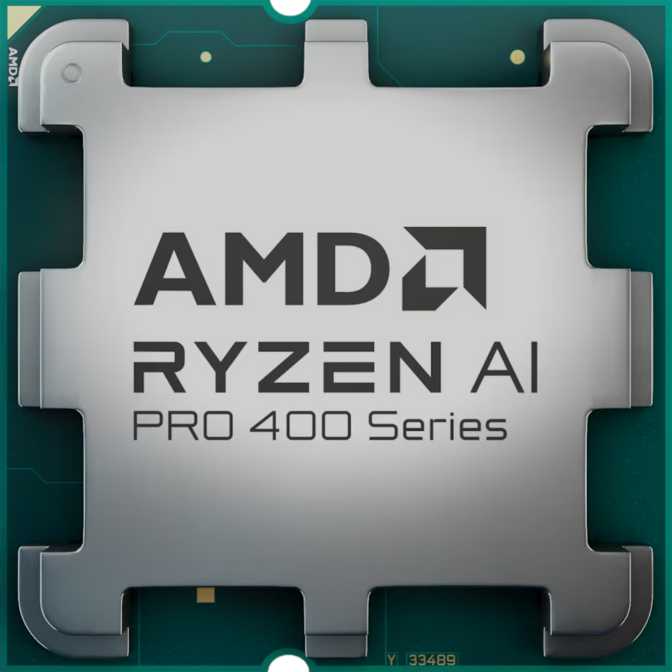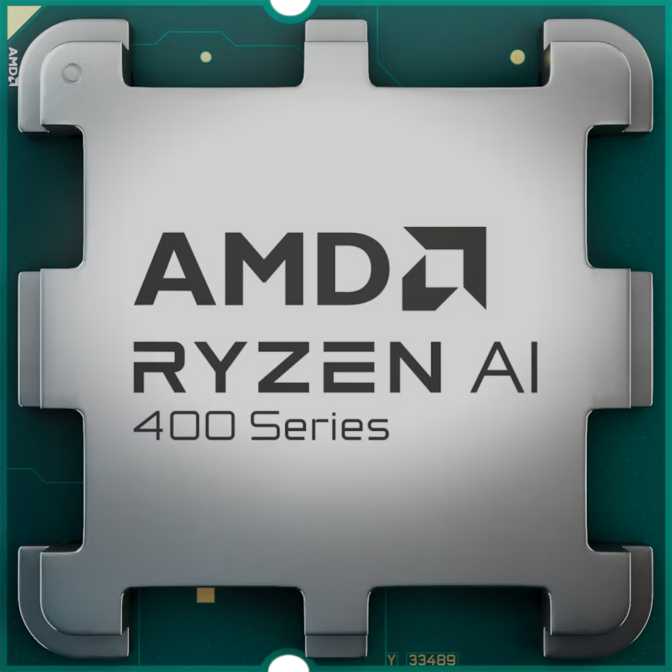
AMD Ryzen AI 5 440G Review: AM5 Value With Built-In Graphics
CPUsAt a Glance: Key Specifications That Matter
The AMD Ryzen AI 5 440G is a six-core AM5 desktop processor with Radeon 840M integrated graphics, DDR5-5600 memory support, and a 65W power envelope. Here is what each figure actually means before the full analysis.
Platform and Build Context: Why AM5 Matters
The 440G lands on AMD's AM5 platform — the same socket used by processors several tiers above it. AM5 supports DDR5 memory exclusively, brings PCIe 4.0 connectivity, and is backed by motherboards spanning budget B650 and B840 boards all the way to enthusiast-class X670 and X870 options.
Choosing this chip does not trap you in a dead-end ecosystem. If you build a system around the 440G today and decide to upgrade to a more powerful processor later, your motherboard investment remains valid. That upgrade headroom has real dollar value, and it is a meaningful reason to choose an AM5 chip over a cheaper platform with a shorter lifespan.
Performance Deep Dive
Core Count and Threading Reality
Six physical cores and twelve processing threads handle real-world concurrency without the slowdowns that four-thread or eight-thread chips produce under load. The 440G does not use a hybrid architecture — all six cores are equal, which simplifies scheduling and makes performance behavior predictable. For users who dislike the occasional quirks that big/little designs introduce on Windows, that consistency is a quiet advantage.
Twelve threads covers the workflows most desktop users actually run daily: spreadsheets, document editing, web browsing, video calls, light photo editing, and casual multitasking. It is not a chip for rendering 3D scenes or compiling very large codebases under time pressure, but for everyday productivity it covers the ground well.
Clock Speeds: Base, Boost, and What They Mean
The processor operates at a 2 GHz base clock across all six cores and reaches 4.8 GHz at peak boost under single-threaded or lightly-threaded workloads. At idle and under light load, the chip runs cool and quiet; when you launch an application or run a calculation, boost behavior kicks in rapidly, pushing individual cores to deliver snappy response times.
Efficient all-core operation at sustained load — keeps power draw and heat low during everyday and multi-core tasks.
Peak single-core speed for application launches, web rendering, and tasks that depend on fast sequential execution.
Bars shown relative to a 5.0 GHz reference — illustrative of the clock range spread for this processor tier.
Cache Architecture: The Hidden Performance Driver
Cache is frequently ignored in buyer discussions but directly determines how quickly a processor accesses frequently used data. Each core gets 1 MB of dedicated L2 cache, keeping per-core working data close and fast. The shared 16 MB L3 pool across all six cores stages data that multiple cores need, reducing slower trips to system RAM. The L1 layer handles the fastest, smallest data movements within each core.
| Cache Level | Total Size | Per Core | Primary Role |
|---|---|---|---|
| L1 | 480 KB | 80 KB | Fastest in-core instruction and data access |
| L2 | 6 MB | 1 MB | Per-core working data buffer — reduces L3 pressure |
| L3 | 16 MB | 2.67 MB | Shared cross-core staging — limits expensive memory fetches |
Integrated Graphics: The Radeon 840M Explained
The Radeon 840M is the most consequential differentiator between this chip and a comparable processor without onboard graphics. It runs at a peak GPU clock of 2,900 MHz — a high frequency for integrated silicon, reflecting AMD's RDNA architecture rather than older legacy designs. Most integrated solutions from even a few years ago operated well under 2,000 MHz; the 840M's higher clock rate and modern shader architecture enable tasks that entry-level discrete cards would have monopolized not long ago.
- 4K desktop output for media, productivity, and multi-monitor setups without a discrete card
- Light-to-moderate 1080p gaming in non-demanding titles at playable frame rates
- Hardware-accelerated video decode for streaming, playback, and video conferencing
- Multiple simultaneous display outputs from a supported motherboard
- Day-one system functionality with no graphics card spending required
- Not a substitute for a dedicated GPU in graphically demanding games at medium or high settings
- Insufficient for 3D rendering or high-volume professional video transcoding at speed
- Machine learning inference at scale exceeds its capability
- Draws on system memory bandwidth rather than dedicated VRAM — fast DDR5 is essential
Memory: DDR5 Performance and Capacity
The 440G is a DDR5-only processor, supporting speeds up to 5,600 MHz across a dual-channel configuration. Two matched sticks installed in the correct paired slots deliver the full dual-channel bandwidth the chip is designed to use. That bandwidth improvement over DDR4 benefits both the CPU cores and the Radeon 840M — integrated graphics draw on system memory, so faster memory directly translates to better iGPU performance.
The chip supports up to 256 GB of total installed RAM — well beyond any mainstream user's needs, but it signals genuine suitability for workstation contexts: small business servers, development machines, and environments where large datasets must reside in memory. ECC memory support reinforces this professional angle. ECC (Error-Correcting Code) RAM detects and corrects single-bit memory errors automatically — a feature most consumer chips omit. Its presence here expands the 440G's legitimate use cases into professional and near-enterprise environments where data integrity failures carry real consequences.
Power, Thermals, and Cooling
At 65 watts TDP, the Ryzen AI 5 440G sits in a well-managed thermal class. A quality mid-range air cooler handles it without effort, and it will not heat a small room or require aggressive fan curves. The chip is rated to operate safely up to 95°C junction temperature — in practice, a well-cooled build should never approach that ceiling under normal workloads.
This power profile makes the 440G a strong candidate for smaller form-factor builds — Mini-ITX or Micro-ATX cases where airflow is constrained. A quality 65–85W tower air cooler is sufficient, which saves money and complexity compared to builds requiring large cooling solutions.
The 4-nanometer manufacturing process is responsible for this efficiency. Smaller transistors switch faster, run cooler at the same clock speeds, and allow more compute density per watt. This is a current-generation process node — not aging manufacturing — and it shows in the chip's performance-per-watt characteristics throughout daily use.
Instruction Set Support and Future-Readiness
The 440G supports a full modern instruction set library. These are not marketing features — they are the low-level operations that software uses to run specific workloads at maximum efficiency, and they matter for long-term software compatibility on a platform you expect to keep for years.
Hardware-speed encryption and decryption — covers VPN connections, HTTPS traffic handling, and encrypted storage without burdening the general-purpose cores.
256-bit operations for media encoders, scientific tools, and data processing apps — effectively doubling throughput versus narrower alternatives on compatible workloads.
Hardware memory execution prevention — ensures full compatibility with modern operating systems and enterprise security policies, including Windows 11.
Fused multiply-add and 16-bit float conversion for machine learning inference, signal processing, and graphics-adjacent compute workloads.
Real-World Usage: Who Should Buy This Processor?
- Home Office and Productivity Users
Browsers with multiple tabs, video calls, word processors, and spreadsheets all running simultaneously — twelve threads at 4.8 GHz turbo handles this without effort.
- Budget and Mid-Range Builders
Integrated graphics, AM5 platform, and DDR5 support in one chip means a complete, display-capable PC without a discrete graphics card purchase from day one.
- Light Gamers
Older titles, indie games, and esports games — Minecraft, Rocket League, Valorant at lower settings — are viable on the Radeon 840M. Not a chip for demanding titles at high frame rates.
- Small Workstation and Professional Users
ECC memory support and a 256 GB RAM ceiling make this legitimate for environments where reliability and data integrity outweigh raw peak performance.
- Builders Planning a Future GPU Upgrade
Build a functional system now, add a discrete GPU later. PCIe 4.0 on AM5 ensures compatibility with current and near-future graphics cards.
- Dedicated Gaming Performance
If gaming is your primary goal and you plan to install a discrete GPU regardless, a processor without integrated graphics that allocates its budget to more cores or higher clocks may be the better fit.
- Heavy Content Creation
Video editors working with 4K footage at professional volume, 3D artists rendering complex scenes, or developers compiling very large projects will outgrow six cores faster than a higher-count chip on the same platform.
- Maximum Single-Threaded Performance
The 4.8 GHz turbo ceiling is competitive but not class-leading. Workflows that depend almost entirely on single-threaded speed — certain legacy software, some audio production scenarios — will find the ceiling limiting.
Competitive Positioning
How the Ryzen AI 5 440G compares against logical alternatives in the same price range — each column represents a different build approach, not a specific competing product.
| Feature | AMD Ryzen AI 5 440G | Entry Discrete GPU + iGPU-less CPU | Higher-Core Ryzen AM5 |
|---|---|---|---|
| Graphics Without Extra Spend | Radeon 840M Included | Separate Purchase Required | Varies by Model |
| Platform Longevity | AM5 Current Gen | Depends on Chipset | AM5 Current Gen |
| System Power Draw | 65W CPU Only | CPU + GPU Combined Draw | 65–170W+ by Model |
| ECC Memory Support | Yes | Rarely at This Tier | Select Models Only |
| Overclocking Flexibility | Unlocked Multiplier | Depends on CPU Choice | Varies by Model |
| Core Count for Heavy Work | 6 Cores / 12 Threads | Can Scale Higher | More Options Available |
Honest Assessment: Strengths and Limitations
Where the 440G Gets It Right
The AM5 platform choice means this chip is not a dead-end purchase — it is an investment in an ecosystem that will remain relevant for years. The Radeon 840M represents a genuine step forward from previous iGPU generations; it is functional for a real range of tasks, not just a placeholder. DDR5 memory support, with its bandwidth benefits for integrated graphics, gives the system a noticeable edge over older-platform alternatives.
ECC support at this tier is uncommon and genuinely valuable for specific users. The unlocked multiplier offers flexibility for enthusiasts. The 4nm process node delivers current-generation performance-per-watt characteristics. The absence of a hybrid core architecture eliminates scheduling complexity that some users experience with big/little designs on competing platforms.
Where the 440G Falls Short
Six cores are enough for the majority of users but will feel constraining under CPU-intensive creative work or highly parallel compute tasks. The 2 GHz base clock is low — in sustained all-core workloads, performance will not match the headline turbo speed, and users accustomed to high-base-clock chips may notice the difference under continuous load.
The Radeon 840M cannot replace a discrete graphics card for serious gaming or GPU-accelerated creative work. There are no efficiency cores, which means you do not get the idle efficiency benefits that such architectures provide on competing platforms — a real trade-off for power-conscious users in always-on environments.
Questions Real Buyers Ask
Final Verdict
RecommendedThe AMD Ryzen AI 5 440G is a well-considered chip for a specific kind of buyer: someone who wants a modern, platform-secure desktop build with capable integrated graphics, professional-grade memory support, and enough threading headroom for real multitasking — without paying for cores they will never fully use.
The bottom line: For what it is designed to do, the Ryzen AI 5 440G does it competently, efficiently, and with a platform pedigree that justifies the investment. It earns its place as a strong recommendation for home office systems, compact builds, and any build where a discrete GPU is either unnecessary today or on the roadmap for later.