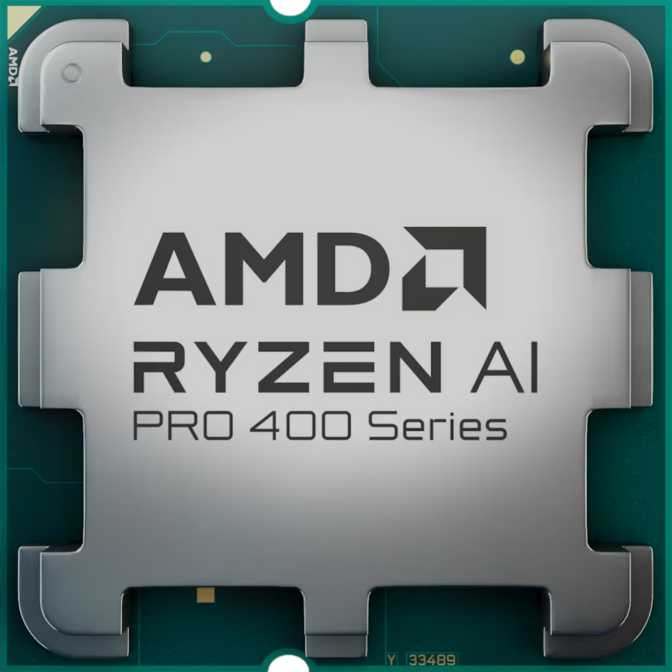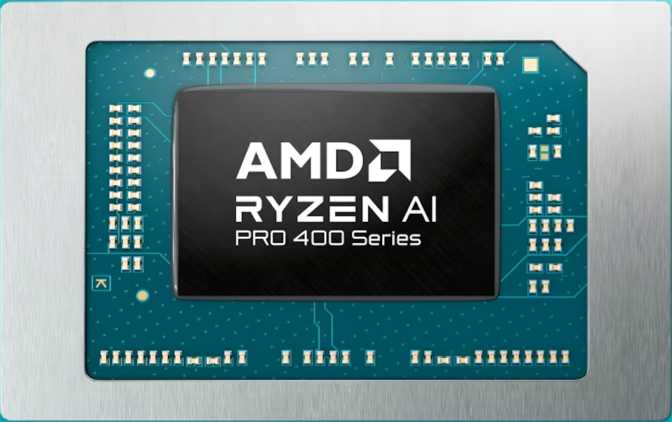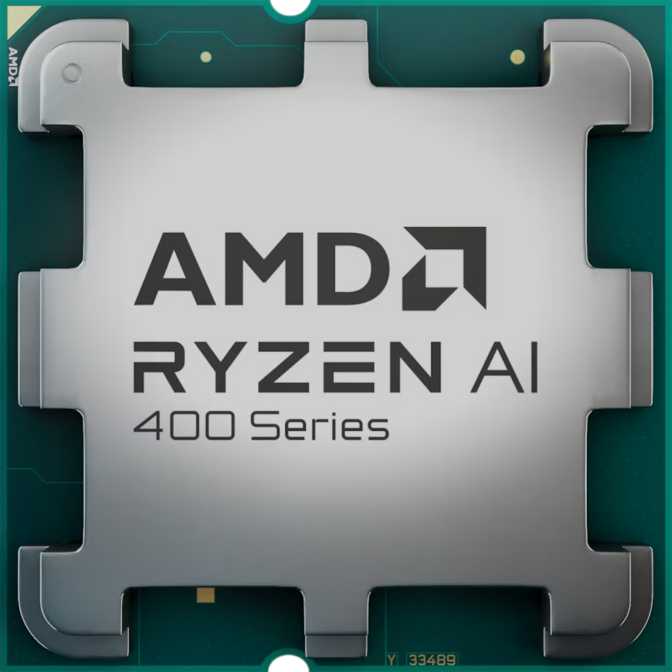
AMD Ryzen AI 5 435GE Review: A 35W Desktop CPU Built for Efficiency
CPUsMost desktop processors are built around a single premise: deliver maximum performance and let the cooling system deal with the heat. The AMD Ryzen AI 5 435GE takes a deliberately different path. It is a six-core desktop chip engineered to run within a 35-watt thermal envelope — roughly half the power draw of a standard desktop CPU — while connecting to AMD's current AM5 platform and supporting the full breadth of modern features, including integrated graphics capable of light gaming and media work.
That combination is unusual. Low-power desktop chips typically mean compromises across the board. The 435GE makes a more specific argument: that for compact builds, home theater PCs, always-on workstations, and efficiency-first setups, a chip that runs cool and quiet without sacrificing platform modernity is worth serious consideration. Whether that argument holds up depends entirely on what you are asking of it.
Key Specifications at a Glance
| Specification | Value | What It Means |
|---|---|---|
| Socket | AM5 | Current-gen AMD desktop platform |
| TDP | 35W | Half the draw of a standard desktop CPU |
| Process Node | 4 nm | Modern efficiency-class fabrication |
| Cores / Threads | 6 Cores / 12 Threads | Ample for multitasking and productivity |
| Turbo Clock | 4.5 GHz | Competitive burst speed for short workloads |
| L2 Cache | 6 MB (1 MB/core) | Generous per-core allocation |
| L3 Cache | 8 MB | Shared pool for multi-core data access |
| Integrated GPU | Radeon 840M | RDNA 3 architecture, up to 2800 MHz |
| Memory | DDR5 up to 5600 MHz | Dual-channel, 256 GB max |
| ECC Support | Yes | Workstation-grade memory reliability |
| Unlocked Multiplier | Yes | Manual tuning headroom |
| PCIe Version | 4.0 | Compatible with current storage and GPUs |
| Max CPU Temp | 95 °C | Standard safe operating ceiling |
Design Identity: The GE Advantage in Context
The "GE" designation in AMD's naming convention signals a low-TDP processor — in this case, a sustained thermal limit of 35 watts. To put that in perspective, a typical full-power desktop processor in the same performance tier draws between 65 and 105 watts under load. The 435GE cuts that figure dramatically, which carries real consequences for the kind of system it enables.
Smaller Coolers
Fanless or near-silent cooling solutions become viable. Small form factor cases that cannot accommodate large cooling towers are legitimate options.
Lower Electricity Cost
System-wide power consumption stays low enough to matter on an electricity bill if the machine runs continuously — ideal for always-on builds.
AM5 Platform Longevity
The same foundation used by AMD's highest-end desktop processors. Compatible boards — B650, B840, B850, X670, and X870 — support AMD's full current lineup.
Forward Roadmap
AM5 has a committed platform roadmap. Buyers are not locked into a dead-end ecosystem — future CPU upgrades remain possible on the same board.
Core Performance: What Six Cores at 35W Actually Deliver
Processing Headroom
The 435GE is built on a 4-nanometer manufacturing process — the same node class used in high-efficiency mobile and premium desktop silicon. Smaller transistors mean more computing logic fits in less physical space, and the same workload can be handled with less heat generated. This is a significant reason the chip can hit 35 watts without sacrificing its feature set.
Six physical cores with simultaneous multithreading presents twelve logical threads to the operating system. For most everyday workloads — productivity applications, web browsing, media playback, light content creation, and background tasks running in parallel — twelve threads provide meaningful headroom. The chip will not bottleneck a typical office or home workflow.
Turbo vs. Sustained Performance: The turbo ceiling reaches 4.5 GHz on active cores — competitive with full-power chips from two to three generations ago. Short bursts of demanding work will feel responsive. Sustained heavy workloads like long video renders will be more constrained, as maintaining high frequencies across all cores would exceed the 35-watt budget.
Cache Architecture
The memory subsystem includes a three-tier cache structure. Each core receives a dedicated 1 MB of L2 fast memory — a generous per-core figure that helps the processor handle complex workloads without waiting on slower system RAM. The shared 8 MB L3 pool adds further capacity for data that multiple cores access frequently. This cache configuration reflects current-generation CPU design thinking, not cost-cutting.
Overclocking Flexibility
An unlocked multiplier is a notable inclusion on a 35-watt processor. The clock speed ceiling is not enforced by the chip itself — the platform and cooling solution become the governing limits. In practice, meaningful overclocking is constrained by thermals, and pushing aggressively defeats the purpose of choosing a 35-watt design. Still, for enthusiasts who want to fine-tune behavior — perhaps raising the turbo ceiling slightly on a well-cooled compact system — the option is there.
Integrated Graphics: The Radeon 840M Explained
The 435GE includes AMD's Radeon 840M integrated GPU, built on RDNA 3 architecture — the same generation found in dedicated budget GPUs and AMD's premium laptop chips. This is not legacy integrated graphics. The GPU operates at up to 2800 MHz peak clock speed, among the higher turbo frequencies seen in integrated graphics of this class.
What the Radeon 840M Can Do
- Smooth 1080p playback of high-bitrate video with hardware-accelerated decoding of modern formats
- Light gaming at 1080p medium settings in older titles and esports games
- Driving multiple displays simultaneously for productivity setups
- Complete display output with no dedicated GPU needed, keeping system cost and power draw lower
Where It Has Limits
- Cannot replace a discrete GPU for 3D-intensive games at high settings
- Not suited for GPU-accelerated creative work like rendering or machine learning inference
- Shares system RAM rather than using dedicated VRAM — memory bandwidth becomes a factor
Memory Platform: DDR5 With Room to Grow
The 435GE runs exclusively on DDR5 memory, the current-generation standard that offers substantially higher bandwidth than its predecessor. It supports dual-channel operation and officially validates speeds up to 5600 MHz — the upper range of mainstream DDR5 kits available today.
Dual-channel matters here: The Radeon 840M draws on system RAM rather than dedicated VRAM. Faster, dual-channel memory directly improves graphics throughput. Always install two matched sticks rather than a single larger module.
ECC Memory Support
Error-correcting code memory is a feature associated with workstation and server hardware. It continuously detects and corrects single-bit memory errors that would otherwise cause crashes or silent data corruption. For a machine running as a home server, NAS companion, or handling important files continuously, ECC support is a meaningful reliability advantage that most consumer desktop chips do not offer.
Memory Capacity Ceiling
The platform officially supports up to 256 GB of total installed RAM — a ceiling that far exceeds any practical desktop need for years to come. Paired with dual-channel DDR5 at 5600 MHz, this keeps the memory subsystem from becoming a bottleneck even in memory-intensive professional tasks.
The "AI" in the Name: What It Actually Signals
The Ryzen AI branding indicates that this processor family includes a dedicated neural processing unit — hardware specifically designed to accelerate AI inference workloads that operating systems and applications increasingly offload from the CPU and GPU. This includes features like real-time background removal in video calls, AI-assisted noise cancellation, on-device language model inference, and intelligent task scheduling.
What the branding confirms is that this chip is positioned within AMD's AI-capable processor lineup, not as a stripped-down legacy part. As operating systems and productivity software continue expanding AI-assisted features, having hardware designed to handle those tasks efficiently — rather than taxing the CPU or requiring a dedicated card — is a forward-looking inclusion that benefits users progressively over the chip's usable lifetime.
Instruction Sets, Security, and Software Compatibility
The 435GE supports a full complement of modern instruction sets. For most users, this is invisible infrastructure that ensures software compatibility and optimized execution paths. For developers and power users, it matters in specific contexts.
- AES Acceleration
- Encryption and decryption operations — used constantly in secure web connections, encrypted storage, and VPN traffic — execute with minimal CPU overhead.
- AVX2 Support
- Compatible applications — including video editors, scientific software, and certain games — can process wider chunks of data per clock cycle, improving throughput meaningfully in those workflows.
- FMA3 & F16C
- Benefits applications performing floating-point arithmetic at high volume — relevant in data analysis, machine learning preprocessing, and simulation workloads.
- NX Bit
- A hardware security feature that prevents malicious code from executing in memory regions designated for data storage — a foundational protection modern operating systems rely on, and a requirement for Windows 11 compatibility.
Who Should Buy the Ryzen AI 5 435GE
The Right Buyer
-
Compact system builders
A modern capable processor that fits small enclosures with modest coolers that would be impractical with higher-TDP chips.
-
Home server and always-on workstation users
Low power consumption, ECC memory support, and AM5 platform stability make it ideal for machines left running around the clock.
-
Home theater PC builders
Capable integrated graphics for 4K video playback, a quiet thermal profile, and a proper desktop platform — no discrete GPU required.
-
Quiet office and productivity users
Documentation, communication, and web-based work run well within this chip's ceiling, with a noise floor close to zero when paired with a quality low-profile cooler.
Who Should Look Elsewhere
-
Gamers expecting modern 3D titles
The integrated Radeon 840M is limiting for medium-to-high settings in modern games. Adding a discrete GPU partially defeats the purpose of this design.
-
Content creators and video editors
Long-form exports, high-resolution footage, and complex effects timelines will encounter the limits of a 35-watt power budget during sustained rendering.
-
Buyers needing maximum throughput
Full-power AM5 processors deliver more headroom for the same or similar price. The 435GE trades peak performance for thermal efficiency — the wrong product if raw speed is the primary goal.
Competitive Positioning
The 435GE occupies a narrow but real niche. Very few desktop processors combine a current-generation AM5 platform, sub-40-watt thermal design, capable integrated graphics, and ECC compatibility. Here is how it compares to its logical alternatives.
| Feature | AMD Ryzen AI 5 435GE | Typical 65W Desktop CPU | Equivalent Laptop CPU |
|---|---|---|---|
| TDP | 35W | 65W | 15–28W |
| Socket / Upgradeable | AM5 | AM5 / AM4 | Soldered |
| ECC Memory | Yes | Rarely | No |
| Max RAM | 256 GB | 128–192 GB | 32–64 GB |
| Unlocked Multiplier | Yes | Often locked | No |
| Integrated GPU | Radeon 840M (RDNA 3) | Varies widely | Varies |
| Platform Roadmap | AM5 committed | Varies | N/A |
Honest Assessment: Strengths and Limitations
What It Does Well
The 4nm process puts the 435GE on modern fabrication footing alongside chips in much higher power brackets. The AM5 socket guarantees access to the best available DDR5 memory and a platform with genuine forward momentum.
ECC memory support is an unusually practical reliability feature for a mainstream-positioned chip. The Radeon 840M is the best integrated graphics AMD has shipped in this power bracket. And the unlocked multiplier gives technically inclined builders a degree of flexibility uncommon at this TDP level.
Where It Falls Short
The conservative base frequency means latency-sensitive operations under light, bursty loads can feel slower than a higher-clocked chip with a bigger thermal budget. Sustained multithreaded workloads hit a ceiling that full-power desktop processors clear comfortably.
The "AI" branding, while substantive, benefits users more in the medium term as software catches up with on-device AI acceleration than it does today for most buyers. The 35-watt limit is simultaneously the chip's greatest asset and its most important constraint.
Common Buyer Questions Answered
Final Recommendation
The AMD Ryzen AI 5 435GE is a well-defined product that does exactly what its specifications describe — and that specificity is both its strength and its filter. The AM5 platform, DDR5 memory support, RDNA 3 integrated graphics, and ECC compatibility are not concessions to the low-power design — they are full-featured inclusions on a chip that happens to run at 35 watts.
You are building a compact, quiet, or always-on system and want a current-generation AM5 platform without compromise on features like ECC support or RDNA 3 graphics.
Sustained heavy workloads, serious gaming, or maximum processing speed are your primary goals. A standard 65W AM5 processor delivers more headroom for a similar investment.
If you have already decided that thermal efficiency, system silence, and platform quality matter more than peak throughput — this is a rare and well-executed option in a segment with very few direct competitors.