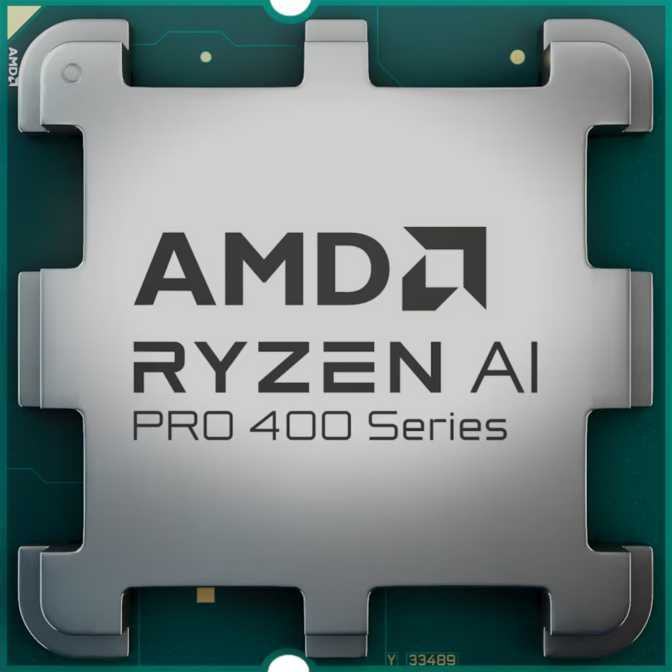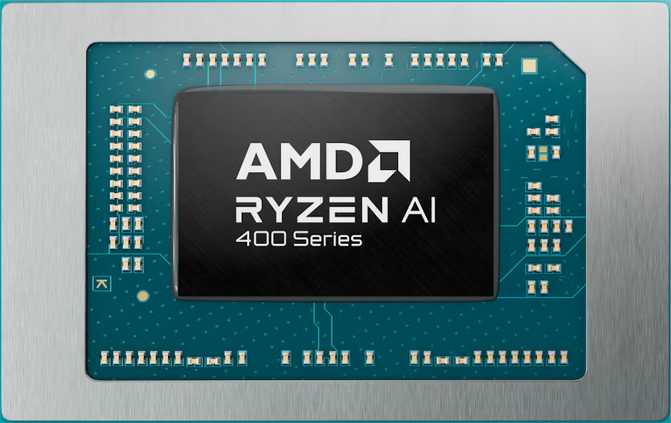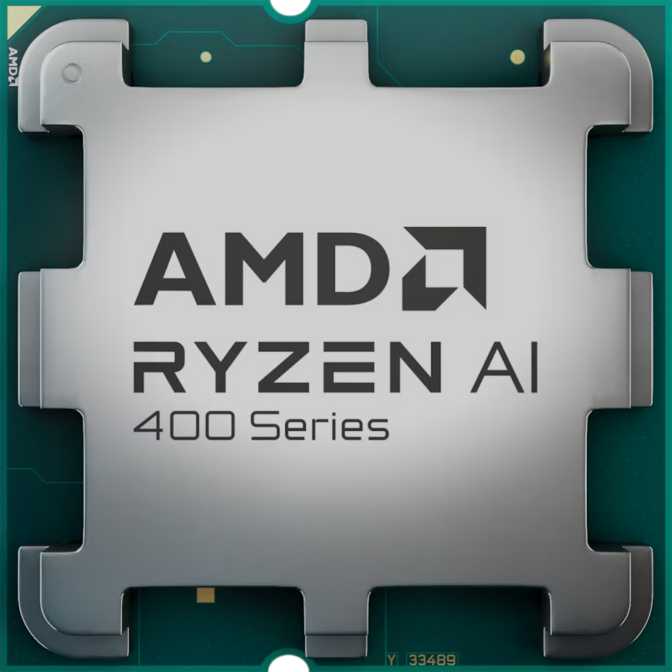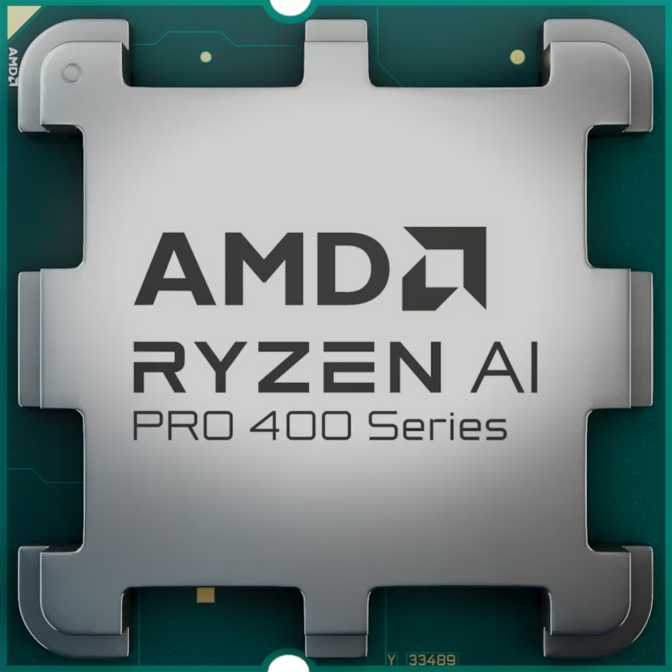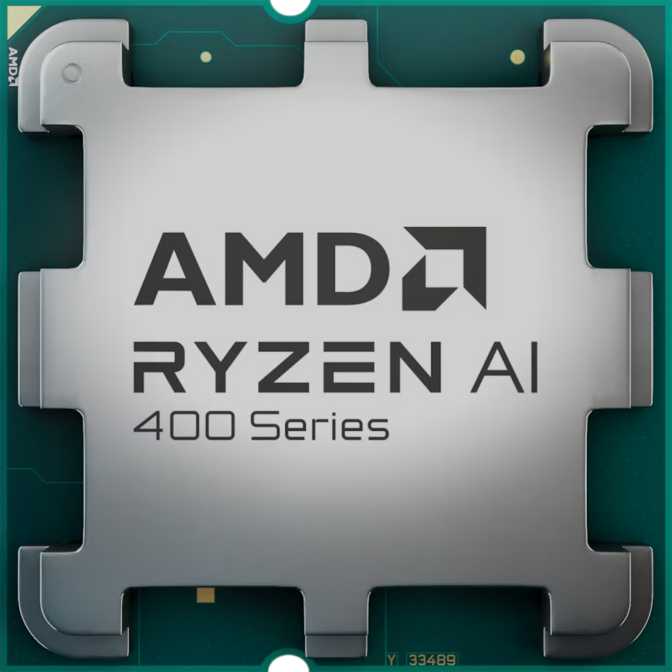
What Makes the Ryzen AI 7 450G Different
There's a specific kind of buyer the AMD Ryzen AI 7 450G was built for — someone who wants a capable, compact desktop build without dropping an extra few hundred dollars on a discrete graphics card. Whether that's a budget-conscious gamer, a home office builder, a small form factor enthusiast, or an IT manager rolling out workstations at scale, this processor makes a strong case that integrated graphics have finally grown up. But how far does that case actually hold? That's what this review breaks down — spec by meaningful spec, scenario by real-world scenario.
Platform: AM5 • Process Node: 4nm • Socket compatibility with B650, B840, B850, X670, X870 chipsets
Review Verdict
- Best-in-class integrated GPU
- DDR5 with ECC memory support
- Unlocked multiplier included
- Not for high-settings AAA gaming
Design and Platform: What You're Building Into
The Ryzen AI 7 450G slots into AMD's AM5 platform, which means it uses the same socket as AMD's high-end desktop lineup. That matters for two reasons: AM5 motherboards are widely available at various price points, and the platform has forward compatibility headroom that older AMD sockets no longer offer.
The processor is built on a 4-nanometer manufacturing process. To put that in plain terms: a smaller manufacturing node generally means the chip runs cooler and more efficiently at a given performance level compared to older 7nm or 12nm chips. This isn't just a spec bragging point — it directly affects thermals, power draw, and how long your system stays quiet under load.
The thermal ceiling sits at 95°C, which is standard for modern Ryzen desktop processors. A decent mid-tower air cooler is all you need — exotic cooling is not required to keep this chip operating at its best.
Compatible Motherboard Chipsets
This chipset flexibility matters when budgeting a build. B650 and B840 boards offer solid value entry points. X670 and X870 boards unlock additional PCIe lanes and overclocking-focused power delivery for enthusiasts who want that headroom.
Core Performance: Eight Cores, Sixteen Threads, Room to Push
Uniform core architecture — no performance/efficiency tier split. Multiplier unlocked.
Core and Thread Count
Eight physical cores with simultaneous multithreading means the processor presents sixteen logical threads to your operating system. For daily computing, this is comfortably beyond what most workloads will ever saturate. For content creators running video exports, developers compiling code, or anyone running virtual machines alongside a normal workflow, the headroom is genuinely useful.
The clock multiplier is unlocked — meaning on a compatible overclocking-capable motherboard, you can push frequencies beyond factory settings without purchasing a separate "X" variant of the chip. That's a meaningful value-add for enthusiasts who want more performance without paying more.
Clock Speeds in Context
The base frequency is modest by design — the chip conserves power at idle and scales aggressively when work arrives, reaching up to 5.1 GHz on its fastest cores. That turbo ceiling is competitive with processors in significantly higher price brackets, and it means single-threaded tasks — which still govern the feel of most everyday computing — respond quickly and snappily.
Unlike some processors that split cores into separate performance and efficiency tiers with different capabilities, the Ryzen AI 7 450G uses a uniform core architecture. Every core operates equivalently, making workload scheduling predictable and ensuring software written before hybrid architectures behaves exactly as expected.
Cache Architecture: The Speed Layer Between CPU and Memory
Handles the most time-critical, frequently reused data. The smallest and closest layer to the processor cores — extremely fast, virtually zero latency.
1 MB per core. A middle-tier buffer that catches data spilling from L1, preventing frequent trips to the larger but slower L3 layer.
Shared across all eight cores (2 MB per core). Holds larger working datasets to avoid costly RAM fetches. Tighter per-core allocation than some workstation-class rivals.
Integrated Graphics: The Radeon 860M Is the Real Story
The Radeon 860M is not the kind of integrated graphics that struggles to play a YouTube video at 1080p. It's a capable, modern GPU engine built directly into the chip, and its specifications tell a compelling story about how far AMD's integrated graphics have come.
Comparable to entry-level discrete cards. Capable of 1080p gaming at medium settings on many popular titles — far beyond basic display output.
A notably high boost clock for integrated graphics. The GPU scales from a quiet idle up to full sprint when games or applications demand it.
The highest tier of Microsoft's graphics API. Hardware ray tracing, variable-rate shading, and mesh shaders — the same API set as premium discrete GPUs.
Full GPU Rendering and API Specifications
| Specification | Value | Real-World Meaning |
|---|---|---|
| Texture Mapping Units | 32 TMUs | Governs how quickly textures are applied to 3D geometry. More TMUs mean faster texture rendering at higher resolutions without quality degradation. |
| Render Output Units | 16 ROPs | Writes final pixel values to the frame buffer. Well-suited to 1080p output; becomes a constraint above that resolution when anti-aliasing is active. |
| OpenGL Version | 4.6 | Full compliance with the current OpenGL standard — important for professional visualization, CAD, and cross-platform applications that rely on it. |
| OpenCL Version | 2.1 | Enables GPU-accelerated compute without a discrete card — video transcoding, machine learning inference, and scientific simulations all benefit directly. |
Memory: DDR5 at Its Best Without Overspending
Why DDR5 Bandwidth Matters Here
The Ryzen AI 7 450G is a DDR5-only platform. DDR5 is the current generation of system memory, and this processor supports it at up to 5,600 MHz in a dual-channel configuration. That high memory bandwidth is especially relevant for integrated graphics, which don't have dedicated video RAM — the GPU borrows directly from system memory. Faster memory translates directly into better GPU frame rates, not just better CPU performance.
Running two matched memory sticks in dual-channel mode is strongly recommended. It effectively doubles the memory bandwidth available compared to a single-stick configuration, and for integrated graphics workloads, that difference can determine whether a game runs smoothly or doesn't.
The processor can address up to 256 GB of RAM — far beyond any home user's needs, but relevant for workstation deployments. More practically, the platform doesn't artificially cap you at lower capacities the way many consumer chips do.
Memory Specifications
- DDR Version
- DDR5 only
- Maximum Speed
- 5,600 MHz
- Memory Channels
- Dual-channel
- Maximum Capacity
- 256 GB
- ECC Support
- Yes
ECC Memory Supported
Error-correcting memory detects and fixes single-bit memory errors in real time — a feature stripped from most consumer chips. It's essential for data-critical professional environments and always-on workstations where silent corruption is unacceptable.
65W Power Envelope: Built for Lean Builds
A 65W thermal design power rating tells you two things at once: the processor is designed for mainstream cooling solutions, and it won't demand a high-end power supply. You don't need a 360mm liquid cooler or a 1000W PSU to build around this chip. A quality tower air cooler is sufficient.
The 65W figure also means this processor is realistic in smaller cases — including compact mini-ITX or micro-ATX builds — without creating thermal management headaches, provided the case has reasonable airflow. The 4nm process node does significant work keeping the chip efficient under sustained loads.
PCIe 4.0: Fast Storage and Ready for Expansion
The processor uses PCIe 4.0, which doubles the bandwidth of the previous PCIe 3.0 generation. For NVMe SSDs, this means you can take full advantage of the fastest Gen 4 drives on the market — sequential read speeds above 5,000 MB/s — making large file transfers and application loading noticeably quicker than older storage platforms.
For users who eventually want to add a dedicated graphics card, PCIe 4.0 provides ample bandwidth that won't bottleneck current-generation cards. The platform doesn't hold you back if your needs evolve over time.
64-bit support — full compatibility with all modern operating systems and software.
AM5 socket — standard installation process, widely understood by builders at all experience levels.
Instruction Set Support: Under the Hood for Power Users
For most users, instruction set extensions are invisible — software simply runs faster because it can use optimized code paths. For developers and IT administrators, confirming their presence matters when evaluating whether software runs correctly and at its intended performance level.
| Instruction Set | What It Enables | Benefit Area |
|---|---|---|
| AVX / AVX2 | Wide-register math allowing the CPU to process more data per clock cycle — accelerates scientific computing, image processing, and machine learning frameworks significantly | Professional |
| FMA3 | Fused multiply-add operations that reduce instruction count for mathematically intensive code — critical for neural network inference and signal processing workloads | AI / ML |
| AES | Hardware-accelerated encryption and decryption — makes full-disk encryption, VPN tunnels, and secure connections dramatically faster with negligible CPU overhead | Security |
| F16C | Half-precision floating-point conversion — reduces memory overhead in AI and machine learning workloads, improving inference throughput on tasks that don't require full-precision math | AI / ML |
| SSE 4.1 / 4.2 | Optimized media processing, database operations, and string handling — ensures strong performance across a broad range of everyday and enterprise applications | Universal |
| MMX | Legacy multimedia extension ensuring backward compatibility with a wide range of older software that relies on this foundational instruction set | Compatibility |
The NX (No-Execute) bit is also present — a hardware security feature that protects against certain classes of memory-based exploits. A non-negotiable checkbox for enterprise and security-sensitive deployments.
Who This Processor Is Built For
- Building without a dedicated GPU — whether saving money now with a plan to add a card later, or because integrated graphics genuinely meet your day-to-day needs
- Assembling a compact or small form factor desktop — the 65W ceiling and broad chipset compatibility make this manageable in tight spaces without thermal drama
- A light-to-moderate gamer — esports titles, indie games, and less demanding AAA games at 1080p medium settings are genuinely within reach
- An IT professional or small business deploying workstations — ECC support, a modern platform, and reasonable power draw make this a smart fleet processor
- A creator or developer — 8 cores and 16 threads handle video exports, code compilation, and multitasking workloads without complaint
- A dedicated PC gamer focused on demanding AAA titles at high settings — integrated graphics have real ceilings; a dedicated GPU paired with a different processor better serves that goal
- Chasing maximum single-core performance above everything else — processors with higher sustained turbo clocks and deeper per-core cache hierarchies exist if raw single-threaded speed is your sole priority
- Planning to always use a discrete GPU from day one — you'd be paying for integrated GPU silicon you'll never use; a locked non-APU chip at the same tier may better serve that build
Competitive Positioning
How the Ryzen AI 7 450G stacks up against the most logical alternatives a buyer in this category would seriously consider.
| Comparison | AMD Ryzen AI 7 450G | The Alternative | Takeaway |
|---|---|---|---|
| vs. Entry-Level Discrete GPU Build Budget non-APU processor + budget dGPU |
Simpler one-component build, lower power draw, forward-compatible AM5 platform — the GPU is integrated and always available | Higher raw GPU performance possible at similar total cost, but more complexity, higher power consumption, and a larger physical footprint | APU winson simplicity and efficiency; discrete wins on raw gaming output |
| vs. Intel Integrated Graphics Options Intel Arc iGPU processors |
512 shaders, 3,100 MHz boost clock, strong OpenCL compute performance, and access to AMD's ROCm ecosystem | Competitive integrated GPU; performance depends heavily on the workload; Intel holds advantages in certain specific compute scenarios | AMD advantagein GPU compute; Intel competitive depending on exact workload |
| vs. Previous-Gen AMD APUs AM4 era — Ryzen 5600G and equivalents |
4nm process, DDR5 at 5,600 MHz, substantially more powerful GPU architecture — every dimension relevant to APU performance has improved | Older 7nm process, DDR4 memory bandwidth ceiling, weaker integrated GPU — still functional but clearly outclassed on the metrics that matter most for APU builds | Clear upgradea meaningful generational leap, not just an incremental step |
Honest Assessment: Strengths and Limitations
The Ryzen AI 7 450G earns its place through genuine versatility. The combination of a modern 4nm chip, a 16-thread processor, a meaningfully powerful integrated GPU, DDR5 memory support, ECC compatibility, and an unlocked multiplier is difficult to match in a single package at a mainstream price point.
It makes the case for APU-based desktop builds more convincingly than any AMD integrated graphics processor before it. The Radeon 860M's shader count and boost clock, paired with DDR5's raw bandwidth, create a GPU experience that genuinely competes with entry-level discrete cards across several real use categories — and that's a significant shift from where integrated graphics stood just one generation ago.
Sixteen megabytes of L3 cache across eight cores means per-core allocation is leaner than some workstation-class competitors, and that will show in specific cache-sensitive benchmarks — certain database operations or compressed media decoding may reveal the constraint.
The integrated GPU, while impressive for its category, operates within the fundamental constraint of sharing memory bandwidth with the CPU — no matter how fast the DDR5 is. The 5.1 GHz single-core turbo is solid, but doesn't reach the absolute ceiling of the desktop frequency charts. Importantly, none of these are design failures — they are deliberate trade-offs in service of a coherent, well-executed product vision.
Common Buyer Questions Answered
Final Verdict
The AMD Ryzen AI 7 450G is the strongest argument AMD has yet made for the APU form factor in desktop computing. It brings together a genuinely modern processor core count, a competent integrated GPU, DDR5 memory support, ECC compatibility, an unlocked multiplier, and a manageable 65W power profile — all on a current-generation AM5 platform with real longevity ahead of it.
If your goal is a capable, power-efficient desktop build that doesn't require a dedicated GPU to be usable — whether for everyday productivity, light gaming, professional applications, or a compact workstation — this processor delivers without forcing significant compromises anywhere that matters.
For the large overlap of users who want a complete, flexible, modern desktop processor that handles graphics on its own terms, the Ryzen AI 7 450G earns a clear recommendation.