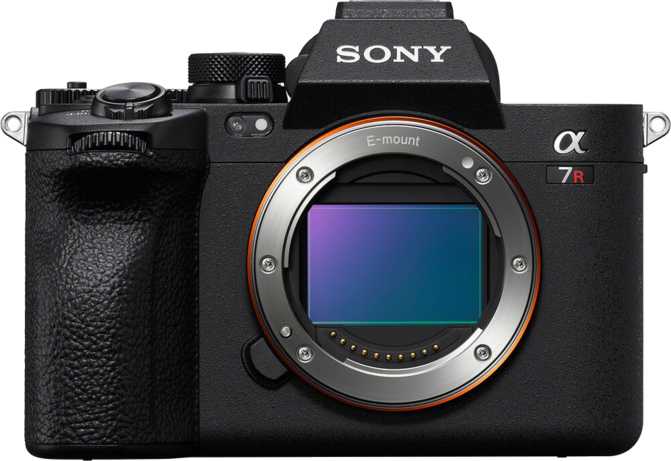
Sony a7R V Full Review: The High-Resolution Mirrorless Benchmark
CamerasMost cameras ask you to compromise. You trade megapixels for speed, or dynamic range for low-light performance, or video capability for still-image quality. The Sony a7R V is built around a different philosophy: refuse the trade-off. It stacks a 61-megapixel sensor onto an AI-accelerated autofocus system, an 8-stop image stabilization engine, and genuine 8K video recording — all inside a weather-sealed body that weighs less than a kilogram. This is a camera that demands serious consideration, and equally serious scrutiny. At this level, every decision matters — and not every photographer needs what the a7R V delivers.
Key Specifications at a Glance
Build Quality and Physical Design
A body built for extended professional work
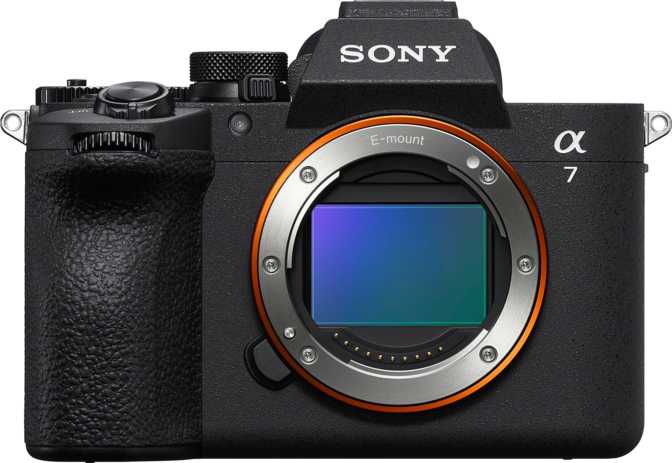
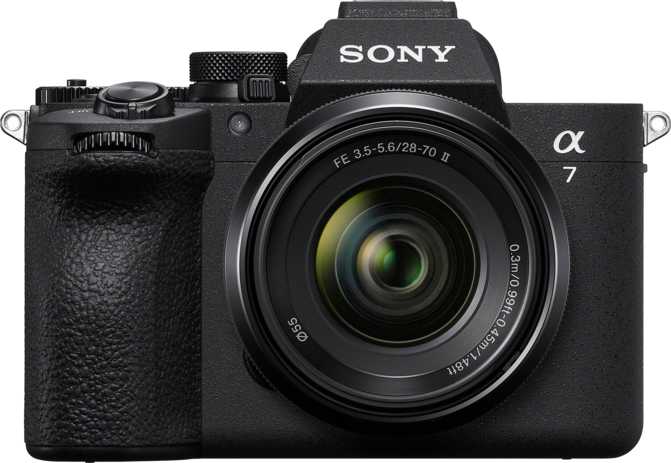
The a7R V measures 131mm wide, 97mm tall, and 82mm deep — dimensions that place it firmly in the professional mirrorless category rather than the compact travel bracket. At 723 grams body-only, it has meaningful heft. That weight reflects a chassis constructed with weather sealing throughout, meaning dust and moisture resistance is built into every seam, button, and dial. For photographers shooting in variable or demanding conditions — outdoor editorial, environmental portraiture, landscape work in changing weather — that protection is not a luxury.
The 3.2-inch rear touchscreen resolves at 2,100,000 dots — sharp enough that images look genuinely accurate rather than flattering. Crucially, it flips out fully, allowing comfortable low-angle and overhead framing without contorting yourself. Touch response extends to autofocus point selection, menu navigation, and shutter actuation, all of which reduces dependence on physical controls during deliberate, careful shooting.
The EVF provides 100% scene coverage, meaning what you frame is exactly what you capture — with no clipping at the edges. For precise composition work, especially in architectural, fine art, or commercial photography, this matters more than it might seem. The EVF is not a tilting design, which is a minor limitation for certain shooting angles, but the flip screen compensates in most practical scenarios.
| Type | Mirrorless, Weather-Sealed |
| Dimensions | 131 × 97 × 82 mm |
| Weight | 723 g (body only) |
| Screen | 3.2″, 2,100k dots, Flip-out Touch |
| Viewfinder | EVF, 100% Coverage |
| Mount | Sony E (Full-Frame) |
| Op. Temperature | 0°C to 40°C |
No built-in GPS. Location tagging requires a paired smartphone via Bluetooth or an external accessory through the hot shoe.
The 61-Megapixel Sensor: What That Number Actually Means
Resolution with consequences — and extraordinary capability
Sixty-one megapixels is not simply a large number — it is a workflow commitment. A single uncompressed RAW file from this camera carries extraordinary detail, which means larger storage requirements, longer write times to card, more RAM needed during editing, and a greater demand on your computer's processing capability. If you are shooting casual travel photography or social media content, this level of resolution is genuinely excessive. If you are shooting for large-format print, commercial licensing, billboard output, or ultra-detailed architectural documentation, this resolution is transformative.
The practical upshot: you can crop an image dramatically and still have a commercially usable file. A 50% crop still yields more resolution than a dedicated 15MP camera. That flexibility changes how you can shoot — and how close you need to be to your subject.
The sensor uses a back-illuminated CMOS architecture (BSI), meaning the light-gathering circuitry is arranged to maximize photon capture efficiency. DxOMark's standardized hardware-based evaluation awarded this sensor a perfect score of 100 — the highest in their database at time of testing.
Scores sourced from DxOMark standardized hardware testing.
Dynamic Range
14.8 EV
Captures deep shadows and bright highlights simultaneously. Roughly double the tonal latitude of cameras in the 12 EV range — critical for landscape and commercial work.
Color Accuracy
26.1 Bits
Finely distinguishes subtle color gradations — critical for product photography, commercial portraiture, and work where nuanced color reproduction is non-negotiable.
Low-Light Ceiling
~3,200 ISO
Respectable for a 61MP sensor, but not class-leading. Dense pixel packing makes noise more visible at high sensitivities than lower-resolution alternatives.
Autofocus: AI-Driven and Seriously Capable
693 phase-detection points backed by the Bionz XR processor
The autofocus system uses 693 phase-detection points distributed across the frame, paired with the Bionz XR processor's AI-based subject recognition. Phase-detection autofocus works by evaluating whether the subject is in front of or behind the focal plane — a fundamentally faster method than contrast detection alone, which can only tell you whether focus is improving or worsening.
AF tracking keeps a subject locked as it moves across the frame, with subject recognition that can distinguish between human eyes, faces, bodies, animals, birds, and vehicles — adjusting tracking behavior accordingly. The camera does not require you to manually reposition an AF point as your subject moves.
Touch autofocus allows point selection directly on the rear screen — useful for tripod work, macro photography, and any situation where precise, deliberate focus placement matters more than speed.
- Phase-Detection AF — for stills and video recording
- 693 AF Points — dense, full-frame coverage
- AI Subject Recognition — eyes, faces, animals, birds, vehicles
- Continuous AF Tracking — in both stills and video modes
- Touch AF — direct point selection on rear screen
- 10fps Burst — with full AF/AE tracking active
Burst context: At 10fps, the a7R V is solid for editorial and moderate action work — but photographers requiring 20fps+ for dedicated sports should consider purpose-built lower-resolution bodies.
In-Body Stabilization: Why 8 Stops Is Critical Here
The feature that makes 61 megapixels practical outside the studio
The sensor-shift image stabilization system carries an 8-stop CIPA rating. Without stabilization, a sharp handheld image at 1/100s is roughly the lower limit for most photographers. With 8 stops of compensation, the same photographer should theoretically achieve sharp images at shutter speeds approaching a full second under ideal conditions. Real-world results consistently deliver 5–6 stops of practical benefit.
For the a7R V specifically, this is critically important. At 61 megapixels, camera shake that would be invisible on a lower-resolution sensor becomes apparent in pixel-level inspection. Stabilization strong enough to counteract that at handheld shutter speeds is what makes this resolution practical outside of tripod-only use.
The system also supports combined stabilization — coordinating the in-body mechanism with optically stabilized lenses for additional benefit at longer focal lengths.
At longer focal lengths (100–200mm), the 8-stop IBAS advantage is most dramatic, enabling handheld shots previously requiring a tripod.
Video Capability: Genuine Hybrid Territory
8K at 600 Mbps — not a specification stunt
The a7R V records video at up to 8K resolution at 24 frames per second, at a maximum bitrate of 600 Mbps. This is not a performative specification — 600 Mbps delivers files with exceptional detail and considerable post-production flexibility, including the ability to reframe, apply digital stabilization, or extract individual frames for still use at high resolution.
Phase-detection autofocus operates during video recording, and continuous AF keeps the system active throughout a take. This makes the a7R V genuinely usable for solo videography without requiring a dedicated operator to manage focus manually.
A built-in stereo microphone pair provides basic audio capture. More importantly, the 3.5mm microphone input supports an external condenser or shotgun microphone — the standard for any serious production. The headphone output allows real-time audio monitoring during recording, which is essential for professional video work. A 24fps cinema mode is present for footage matching theatrical or streaming delivery standards.
| Max Resolution | 8K (4320p) at 24fps |
| Max Bitrate | 600 Mbps |
| AF During Video | Phase-Detection, Continuous |
| Cinema Mode | 24p |
| Slow Motion | Supported |
| Mic Input | 3.5mm Jack |
| Headphone Out | 3.5mm Jack |
| Built-in Mic | Stereo (2 microphones) |
| Timelapse | Yes |
| HDMI Output | Yes (external monitoring) |
Video-first filmmakers needing RAW internal recording or 4K/120p should evaluate dedicated cinema alternatives alongside this body.
Battery Life: Honest Expectations
Adequate for careful shooters — plan ahead for heavy professional sessions
The removable battery is rated at 530 shots per charge under CIPA testing conditions. CIPA ratings are standardized but conservative — they cycle the camera through standby periods, AF operations, and review playback that reflects casual use rather than sustained shooting. Many photographers report higher numbers during focused sessions; conversely, heavy EVF use, sustained video recording, or cold weather reduce that figure.
For a full day of heavy professional shooting — weddings, events, commercial sessions — two batteries is a practical minimum, three is comfortable. The USB Type-C connection allows charging from external power banks or laptop ports, providing flexibility without carrying a dedicated wall charger.
Battery Planning Guide
- Landscape / Studio Sessions:
1 battery typically sufficient for a deliberate, tripod-heavy day.
- Editorial / Portrait Days:
2 batteries recommended as a safe minimum for 6–8 hour shoots.
- Events / Weddings:
3 batteries minimum; USB-C charging from a power bank adds flexible backup.
- Existing Sony Alpha Users:
Battery form factor is consistent across Sony's professional Alpha range — your existing stock carries forward.
Pixel Shift: When 61MP Is Not Enough
Pixel shift mode repurposes the sensor-shift stabilization mechanism for a different purpose: it moves the sensor by precise increments between exposures, then composites the results into a single image with dramatically higher effective resolution and color accuracy. The resulting files capture full-color data at every pixel position rather than interpolating color from a Bayer mosaic filter pattern — eliminating the color rendering compromise that is inherent in every standard single-exposure image.
The practical limitation is absolute: a completely stationary subject and a tripod are required. Any motion during the capture sequence produces artifacts. This feature is designed for product photography, museum archiving, fine art reproduction, and controlled studio work — not documentary or outdoor shooting.
Ideal Pixel Shift Use Cases
- Product and commercial photography
- Museum and archival digitization
- Fine art reproduction work
- Controlled studio still life
- High-end architectural interiors
Connectivity and Workflow
Professional infrastructure for professional output
Wi-Fi 5
Fast wireless transfer to computer or smartphone — substantially faster than older 2.4GHz-only cameras.
Bluetooth 5
Persistent low-energy smartphone link for remote control, location tagging, and automatic image transfer.
Dual Card Slots
Primary/backup redundancy or simultaneous RAW+JPEG capture across two cards. Standard at this tier.
USB 3.2 Type-C
Fast tethered shooting and efficient file transfer when moving large RAW files. Supports in-body charging.
Who This Camera Is For — and Who It Is Not
Matching the tool to the photographer, honestly
- Commercial and advertising photographers — files capable of large-format print, heavy retouching, and maximum-resolution client delivery.
- Landscape and fine art photographers — the dynamic range ceiling and tonal accuracy to capture complex natural light.
- Studio photographers — portrait, product, or fashion work where controlled conditions let resolution deliver fully.
- Hybrid shooters — professionals needing one body that handles high-resolution stills and professional video without significant compromise.
- Wildlife and nature photographers who prioritize image quality and AF accuracy over burst speed, and benefit from dramatic crop flexibility.
- Sports and fast-action photographers — 20fps+ burst rates and best-in-class high-ISO performance require a dedicated sports body.
- Travel photographers seeking the smallest, lightest possible kit — 723 grams before a lens is not a compact travel system.
- New photographers not yet shooting RAW and post-processing regularly — the resolution advantage only materializes in editing, not JPEGs.
- Video-first filmmakers needing 4K at high frame rates, LOG profiles, and internal RAW recording — purpose-built cinema cameras suit that workflow better.
How It Compares to the Alternatives
Positioned at the intersection of maximum quality and practical usability
| Feature | Sony a7R V | High-Res Alternative | Sports / Action Alt. |
|---|---|---|---|
| Resolution | 61 MP | ~45–50 MP | 24–33 MP |
| Dynamic Range | 14.8 EV | ~14.5 EV | ~13.5–14 EV |
| Max Burst Rate | 10 fps | 7–8 fps | 20–30 fps |
| IBAS Rating | 8 stops | 5–6 stops | 6–8 stops |
| Max Video Res. | 8K / 24p | 4K / 60p | 4K / 120p |
| Body Weight | 723 g | 650–740 g | 730–900 g |
| DxO Sensor Score | 100 / 100 | 95–98 | 85–92 |
Comparison figures represent typical competing full-frame mirrorless alternatives in each category. Specific models vary.
Strengths and Weaknesses
A balanced assessment — because credibility comes from honesty
The sensor's dynamic range and color accuracy are measurably beyond competing full-frame sensors. The DxOMark perfect-100 score is not marketing — it reflects a genuine hardware benchmark that stands up under standardized testing conditions.
The 8-stop stabilization makes extreme resolution genuinely practical in real-world handheld conditions — a problem that hampered earlier high-resolution bodies. At 100mm and beyond, the benefit is transformative.
The autofocus system, when it locks, is confident and accurate across a wide variety of subject types. The AI subject recognition adds meaningful real-world utility rather than acting as a checkbox feature.
The 8K video capability with 600 Mbps recording makes this a serious hybrid tool. It is not a stills camera with video bolted on as an afterthought — it is genuinely capable on both fronts.
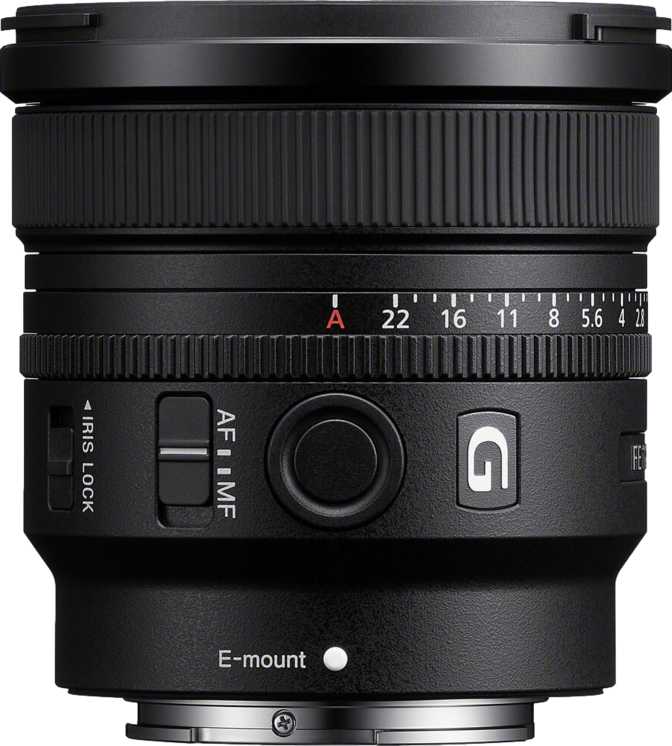
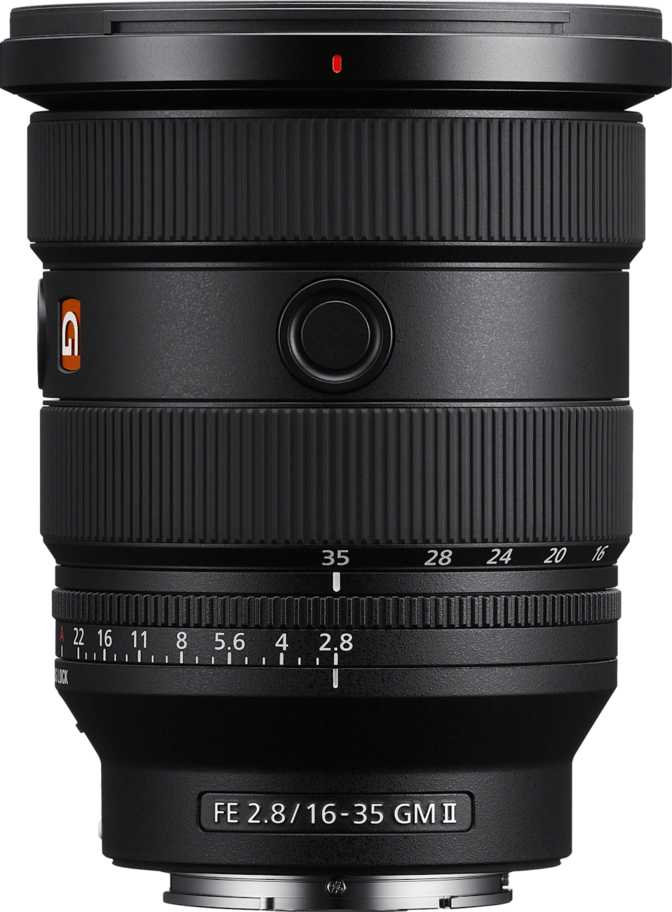
The body is not small, and the E-mount lenses required to fully exploit 61 megapixels are neither small nor inexpensive. Users who value portability will find this ecosystem expensive to optimize.
Battery life, while adequate for careful and deliberate shooters, requires active planning for sustained professional use. A two- or three-battery approach is not optional for full-day events.
The high-ISO performance is respectable but will not satisfy photographers working primarily in dark environments. Dense pixel packing means noise is more visually apparent than on lower-resolution alternatives.
The absence of a stacked sensor architecture limits the electronic shutter's burst performance relative to newer sports-focused bodies. There is no built-in GPS, and no built-in HDR mode. File sizes demand a capable editing workstation — casual post-processing setups will struggle.
Questions Buyers Ask Before Purchasing
Straight answers to the searches that led you here
Final Verdict
The Sony a7R V is the clearest expression of what a high-resolution professional mirrorless system can be. It does not pretend to be a sports camera, and it does not position itself as a compact travel companion. What it offers is the most capable full-frame sensor currently available in a mirrorless form factor, paired with autofocus that handles real professional demands, stabilization that makes extreme resolution practical, and video capability that satisfies hybrid shooters without requiring a second camera.
If your photography lives in controlled to moderate conditions, demands maximum image quality at the pixel level, and sends final files to large prints, licensed archives, or discerning commercial clients — the a7R V justifies its position at the top of the resolution hierarchy. For photographers who need speed over resolution, or who work primarily in darkness, the trade-offs are real enough to redirect the budget.
For the right photographer, there is currently nothing better. That verdict is worth taking seriously.