SJCAM C110 Plus Review: A Lightweight 4K Camera With Clear Trade-Offs
Action CamerasFirst Look: A Tiny Camera With Serious Intentions
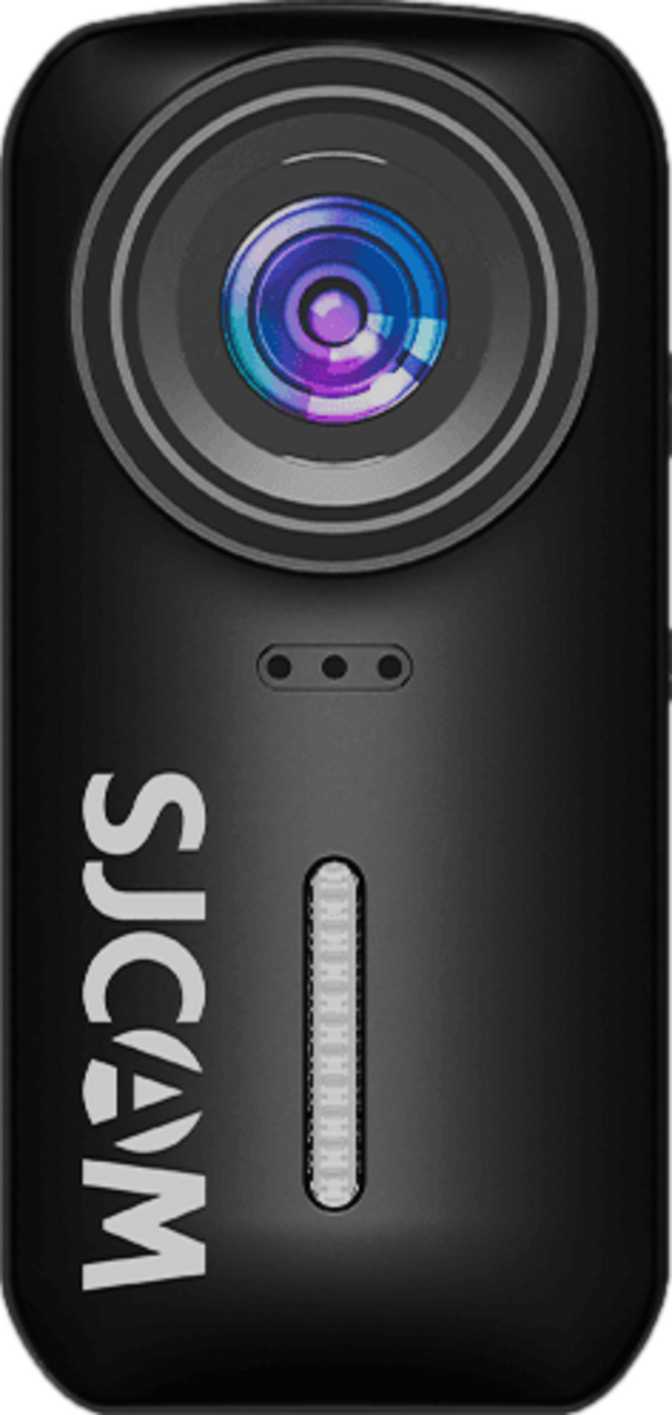
Most action cameras ask you to notice them. They strap to chests, mount to helmets, and announce themselves with chunky bodies and blinking status lights. The SJCAM C110 Plus takes the opposite position. At 79 grams and roughly the footprint of a lighter, this is a camera designed to disappear — onto a shirt collar, a helmet strap, a bag buckle — and quietly record everything in front of it in 4K.
That proposition sounds simple. The reality involves a deliberate set of trade-offs that will suit some buyers perfectly and frustrate others completely. Understanding which side of that line you fall on is the whole point of this review.
Design and Build: When Small Is the Point
The C110 Plus measures 31 millimeters wide and 64 millimeters tall — shorter than most TV remote controls, narrower than the average thumb. At 32.5 millimeters deep, it has just enough body to house its optics and battery without feeling like a compromise. The overall volume comes in under 65 cubic centimeters, a genuinely impressive engineering outcome for a camera recording at 4K resolution.
The 79-gram weight is the specification that earns the most real-world appreciation. You can wear this camera for an entire day without it registering physically. It puts minimal stress on clothing clips, adhesive mounts, or helmet brackets. For comparison, a typical mid-range action camera with a built-in display weighs between 120 and 160 grams — not heavy in absolute terms, but noticeably more present on your body or gear.
The USB Type-C port modernizes the daily charging experience — the same cable that powers your phone or laptop works here. There is one important nuance: the connector's physical format is USB-C, but the underlying data protocol is an older standard. That difference is invisible during charging but very significant when transferring footage — addressed fully in the storage section below.
The Screenless Experience: What It Means Day-to-Day
There is no display on the SJCAM C110 Plus — not a rear LCD, not a front-facing selfie screen, not a status indicator. This single design choice shapes everything about how you use this camera, and it demands honest examination before purchase.
Smartphone as Viewfinder
When you need to preview a shot, review footage, or adjust settings in the field, the Wi-Fi companion app on your iOS or Android phone is the only path. It works — but it requires your phone to be nearby and charged. If your phone battery is flat, framing and settings control become guesswork.
For body-worn or fixed-mount filming — the scenarios this camera is clearly built around — the absence of a screen is a reasonable architectural choice. You are not composing cinematic shots; you are capturing what happens in front of you as it happens. The 170-degree field of view handles the framing work.
Buyers from dashcam or professional body camera backgrounds will find this arrangement familiar. Buyers used to standalone cameras with screens will need a period of adjustment.
The 170-Degree Lens: Seeing More Than Your Eyes Do
A 170-degree field of view is extreme by any photographic standard. The human eye perceives roughly 180 degrees of total visual field, but only about 60 degrees with sharp central clarity. The C110 Plus captures more of your surrounding environment in a single frame than most cameras at any price point.
Ultra-Wide Coverage
The extreme wide angle captures far more of the scene than typical action cameras. For body-worn use where precise aiming is impossible, the important moment stays in frame regardless of how the camera shifts.
20-Megapixel Sensor
The 20MP sensor provides enough resolution for large-format prints, aggressive cropping in post-production, and detailed still captures. For action and documentation contexts, that pixel count is more than adequate.
Barrel Distortion at 170°
At this focal width, visible edge curvature appears in the frame — a physical property of ultra-wide optics, not a defect. Common video editing software can apply lens correction in post. For raw documentation and action footage, it is rarely a practical concern in everyday viewing.
There is no flash on this camera. In dim environments, you are entirely reliant on ambient light. Low-light performance limitations are worth factoring in for any evening or indoor shooting plans.
Video Performance: 4K Recording, Slow Motion, and Timelapse
4K at 30 Frames Per Second
The primary video output is genuine 4K — 3840 by 2160 pixels — captured at 30 frames per second. Broadcast-standard resolution, fully compatible with 4K displays, editing platforms, and streaming services. At 30fps, motion appears natural for walking footage, vehicle-mounted shots, outdoor activity, and event documentation. Buyers who need 60fps — for maximum motion smoothness or professional slow-motion post-production workflows — should note this camera operates at 30fps at its maximum resolution mode.
Slow Motion
Slow-motion recording is available and functional. As with compact action cameras at this tier, it operates at a reduced resolution in exchange for the higher frame rate needed to produce decelerated playback. For highlight clips, dramatic moments, and stylized sequences, it delivers real creative value.
Timelapse
The timelapse function is a genuinely useful addition that suits the camera's physical strengths. A 79-gram body is easy to leave mounted for hours — on a hiking trail, a building site, a window. This mode transforms a six-hour cloud formation or a three-hour cityscape into a watchable, compressed sequence.
Smartphone Control: The Camera's Primary Interface
Wi-Fi is built into the C110 Plus and serves as the main communication layer between the camera and the outside world. Through a companion application on your Android or iOS device, you gain access to what the camera itself cannot display: a live preview, recording controls, playback, and settings.
The companion app works with both Apple and Android devices. Regardless of which phone ecosystem you use, remote preview and control are available without additional hardware or subscriptions.
Mount the camera out of direct reach — on a bike frame, a hard hat, above a doorway — and still start, stop, and manage it from your pocket. For documentary-style recording or situational awareness setups, this adds real practical value.
No Physical Remote Included
There is no dedicated remote control in the box. Wireless operation is smartphone-only. If you need to operate the camera at distance without your phone, you are limited to whatever physical buttons the camera provides directly on the body.
Audio: An Honest Assessment of Real Limitations
The C110 Plus records ambient sound through its built-in microphone. What it cannot do is accept any external audio source or output audio for monitoring. There are no audio jacks of any kind on this camera.
No External Microphone Input
You cannot plug in a lapel clip, shotgun mic, or any other microphone. The built-in microphone is the only audio input, and its quality cannot be upgraded after purchase.
No Headphone Monitoring
There is no 3.5mm output. You cannot monitor audio playback in the field — review requires either the companion smartphone app or a separate device after recording.
Audio Quality Is a Fixed Ceiling
For action footage, outdoor recording, or documentation where audio serves as context, the internal microphone is adequate. For interviews, instructional content, or any scenario where clean, controlled audio matters creatively, the lack of an external microphone option is a permanent limitation. Factor this in carefully if audio quality is a deciding criterion for your purchase.
Battery Life: Planning Your Sessions Honestly
The C110 Plus delivers approximately two hours of continuous recording on a full charge. That is enough for the majority of defined activities — a road cycling stage, a hiking circuit, a live set, a daily commute with intermittent clips. It is not enough for all-day coverage or extended documentary shooting without a charger nearby.
What Two Hours Covers
- A single cycling descent or trail run (30–90 min)
- A concert set or live event (45–90 min)
- A daily commute or city walk (under 60 min)
- All-day hiking or extended outdoor coverage
- Full-shift documentation without a charger
The Battery Is Not Removable
Unlike competitors that accept spare battery packs — enabling instant field swaps — the C110 Plus stops filming when the battery runs out. A USB-C power bank can extend sessions if cable routing is possible in your setup, but there is no hot-swap option available.
Storage: The Memory Card Is Not Optional
There is no internal storage on the SJCAM C110 Plus. The camera will not record without a memory card installed. Before it is useful, a card purchase is necessary — this is a prerequisite, not an optional accessory.
4K footage consumes storage quickly. High-bitrate 4K recording can fill a 64GB card in roughly two to three hours of continuous use. A 128GB card provides a comfortable full-day buffer for most usage patterns. Choose cards rated UHS Speed Class 3 (U3) or Video Speed Class 30 (V30) at minimum — a slow card creates bottlenecks during high-resolution recording and may cause dropped frames.
Slow USB Data Transfer
The protocol operating through the USB-C connector is a legacy standard — not the fast USB 3.x generation found in modern computing devices. Transferring large volumes of 4K footage via USB cable is very slow, slow enough to make cable-based offloading impractical for regular use.
Use a Card Reader Instead
Remove the memory card and insert it into a USB 3.0 card reader connected to your computer. Transfer speeds jump dramatically. A quality card reader costs very little and eliminates the transfer speed problem entirely. Build this into your workflow before you are waiting an hour to offload a session's footage.
Who Should Buy This Camera — and Who Should Not
This Camera Makes Sense For
- Cyclists, runners, hikers, and outdoor enthusiasts who want ultra-light 4K footage without the bulk of a full-sized action camera
- Security-conscious individuals and professionals who need wearable documentation in a discreet, compact package
- Travelers who want a lightweight secondary camera or wide-angle B-roll option without adding meaningful pack weight
- Content creators who need a fixed wide-angle perspective for secondary footage angles or dashcam-style coverage
- Beginners entering the action camera space who want modern video resolution without significant financial risk
Not the Right Choice For
- Anyone who needs all-day battery life without access to a charging source nearby
- Creators for whom audio quality is a content priority — no external microphone support is a hard ceiling
- Users who want a fully self-contained camera experience that does not require smartphone management
- Videographers who need 4K at 60fps or high-frame-rate slow motion for professional editing workflows
- Low-light shooters who need a built-in flash or supplemental video lighting capability
How It Compares to the Alternatives
Spend more and accept more weight, and you typically gain a screen, a swappable battery, better audio connectivity, and faster data transfer. The C110 Plus wins on compactness and price. Mid-range competitors offer more complete feature sets — at the cost of greater bulk and higher outlay. If those trade-offs align with your priorities, the C110 Plus competes directly.
| Consideration | SJCAM C110 Plus | Typical Mid-Range Competitor |
|---|---|---|
| Top Video Quality | 4K / 30fps | 4K / 60fps common |
| Weight | 79g | 120–160g typical |
| Built-in Display | None — smartphone required | Rear LCD standard |
| Battery Replacement | Fixed, non-removable | Removable on many models |
| Wide-Angle Coverage | 170° | 120°–170° range |
| External Microphone | Not supported | 3.5mm input on many |
| Headphone Monitoring | Not supported | Sometimes available |
| Data Transfer via USB | Legacy protocol speed | USB 3.x on most |
Strengths and Weaknesses: The Full Picture
The C110 Plus earns its strongest marks where it commits most deliberately. The portability is not marketing language — 79 grams is genuinely feather-light in a category where most serious cameras weigh twice as much. The form factor is small enough to disappear into daily life, which is the prerequisite for a camera meant to be worn rather than carried. Paired with the 170-degree optics, it covers a scene comprehensively without asking the user to aim or frame consciously.
The 4K video capability is the other genuine strength. This is not a vague gesture toward high resolution — it records actual 4K footage that holds up on modern displays and in editing timelines. Adding timelapse and slow motion gives the C110 Plus a creative toolkit wider than its price point implies.
The weaknesses are equally real and should not be minimized. The absence of any display creates a genuine operational dependency on your smartphone. For a beginner who just wants to hit record and go, this is initially disorienting. For anyone filming in a situation where the phone is inaccessible, it creates a genuine capability gap.
The fixed battery is the second constraint worth taking seriously. Two hours is workable; non-replaceability is the issue. A camera with swappable batteries can run indefinitely with preparation — the C110 Plus cannot be field-extended by carrying a spare cell.
The USB transfer speed is a friction point that does not affect recording quality but affects every footage offload session. A card reader resolves it completely, but that resolution requires advance knowledge. Buyers who discover it after purchase — expecting fast file transfer — will be caught off guard.
The audio ceiling is fixed and cannot be upgraded. The built-in microphone records; nothing external can be added. For most action and outdoor footage, this is fine. For dialogue-dependent or audio-conscious content, it is a permanent limitation.
Questions Real Buyers Ask Before Purchase
The Verdict: Direct, Honest, Specific
The SJCAM C110 Plus makes a specific promise — extreme portability, 4K video, and wearable convenience — and keeps it. It does not attempt to be a universal action camera. Every trade-off it carries reflects a deliberate design decision in favor of making the camera as light and small as possible.
For the buyer who needs exactly that — a featherweight 4K camera that attaches to a body or mount, covers a wide scene, and gets out of the way — the C110 Plus is a competitive choice that punches above its price. For the buyer who needs a self-contained camera with a display, exchangeable batteries, external audio, or 4K at 60fps, those features genuinely do not exist on this camera.
Buy It If
- You value minimal weight and small size above all else
- You film sessions that run under two hours typically
- You are comfortable managing the camera through a smartphone app
Skip It If
- You need all-day power independence from a charging source
- Professional audio input or 4K at 60fps are requirements
- You want a fully standalone camera with no smartphone dependency