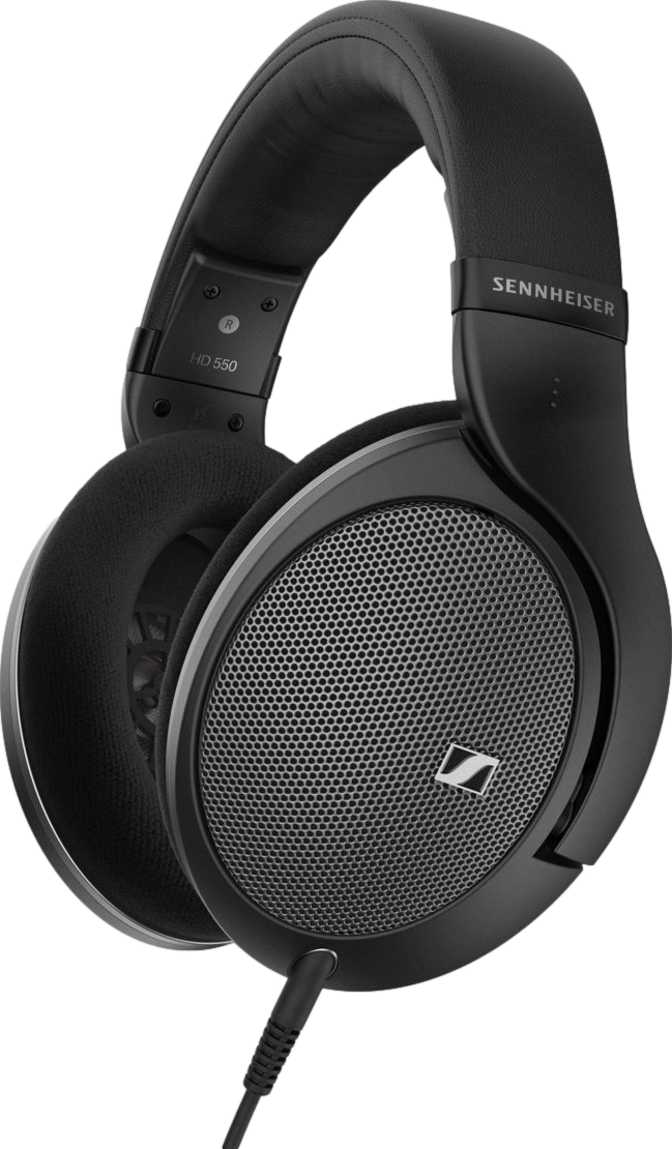
Sennheiser HD 550 Review: A Home Audiophile's Open-Back Headphone
HeadphonesA Headphone That Demands Your Full Attention
There is a specific kind of listener this headphone was made for. Not someone running errands, not someone commuting with their eyes closed, and definitely not someone who needs to answer calls between songs. The Sennheiser HD 550 is a statement about how seriously you take the act of listening — a wired, open-back, home-use headphone that strips away every modern convenience in pursuit of something less fashionable and more rewarding: pure sound.
At a time when the market tilts heavily toward wireless earbuds, active noise cancellation, and ambient sound modes, the HD 550 takes the opposite position entirely. It has no Bluetooth, no noise cancellation, no microphone, no in-line controls, and no intention of leaving your listening room. If that sounds like a limitation, read on — because for the right listener, it is a liberation.
Quick Reference
- Fit & Design Over-Ear, Open-Back
- Connection Type Wired Only
- Weight 237 g
- Cable Length 1.8 m (Fixed)
- Detachable Cable No
- Noise Isolation None
- ANC / Wireless No
Design and Build
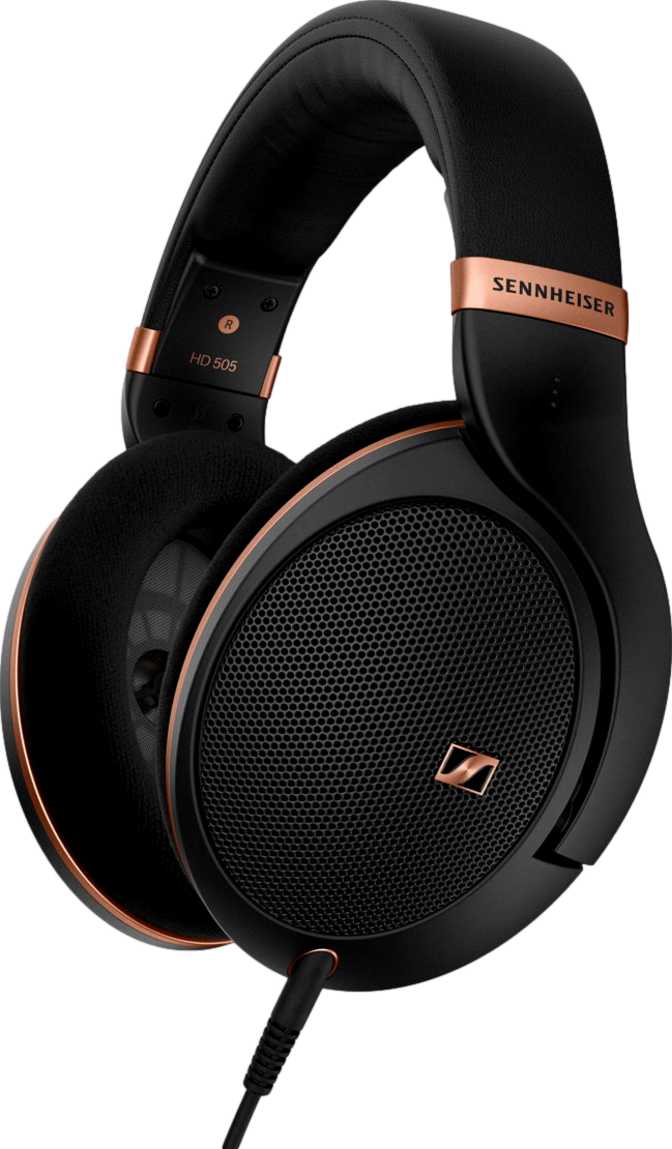
Purposefully plain, surprisingly comfortable — the physical experience of the HD 550
Build Highlights
-
Over-Ear Fit for Extended Sessions
The ear cups enclose your ears entirely rather than pressing against cartilage — a crucial distinction for two- or three-hour listening sessions without physical fatigue.
-
Light Enough to Forget You Are Wearing It
At 237 grams, the HD 550 sits toward the lighter end of the over-ear audiophile category. Heavier alternatives can become a physical commitment after an hour. The HD 550 largely disappears from awareness once settled on the head.
-
Tangle-Resistant Cable, Right Length for the Desk
The 1.8-metre cable has a treated surface that resists tangling. It reaches a desk-mounted amplifier or PC without pooling on the floor — precisely calibrated for seated desktop listening.
-
No Portability Pretensions
The HD 550 does not fold and includes no carry case. This is a deliberate positioning choice — it is a home listening headphone, designed to live permanently at your desk.
The Cable Trade-Off
The cable on the HD 550 is fixed — it cannot be detached at the ear cup. This is the single most significant build trade-off, and it deserves unambiguous acknowledgment.
Cables fail through normal use. They fray at the joint, kink at the connector, and eventually fail from repeated flexing near the plug. On headphones with detachable cables, this means a low-cost replacement. On the HD 550, it means the entire headphone may become non-functional unless you pursue a DIY repair involving opening the cup and soldering at the driver.
For a headphone positioned as a long-term listening investment, this is a legitimate concern that should factor clearly into your purchase decision.
Open-Back Design: The Core of What the HD 550 Is
Understanding the acoustic philosophy and what it means in practice
If you have only used closed-back or sealed earphones, the open-back design of the HD 550 will feel like a different category of product entirely. That is because it is.
In a conventional closed-back headphone, the driver sits inside a sealed cup. Sound reflects inside that chamber, pressure builds and releases somewhat unnaturally, and the result — however technically capable — often sounds like audio coming from inside your head rather than from a space around you. Open-back headphones remove the sealed rear enclosure entirely. The driver breathes freely. Sound radiates both toward your ear and outward through the grille behind the cup.
The result is a soundstage — the perceived three-dimensional space of a recording — that presents itself more like a room than a container. Instruments separate more naturally. The left-right positioning of sounds takes on a greater sense of physical reality. For any form of critical listening, this distinction is not subtle.
Open-Back Advantages
- Natural, room-like soundstage presentation
- More realistic instrument separation
- No reflective pressure buildup from sealed chamber
- Preferred format for critical listening and mix reference
Inherent Trade-Offs
- No passive noise isolation of any kind
- Audio leaks outward — nearby people will hear it
- Unsuitable for shared spaces or public use
Sound Performance: What the Specifications Actually Mean
Translating technical measurements into real-world listening insight
Sub-Bass Depth Into Physical Sensation
The HD 550 reaches down into frequencies below what the human auditory system registers as conventional pitch. At those depths, audio stops being a tone you identify and becomes physical presence — the chest-weight of a kick drum, the resonant body of a double bass, the subterranean rumble that gives certain orchestral recordings their scale.
Most consumer headphones cut off substantially higher in the bass register. The HD 550 does not, and in bass-rich music or film audio, that extension is audible as texture and depth simply absent on more restricted drivers.
High-Frequency Extension and the Question of "Air"
At the upper boundary, the HD 550 extends to frequencies well beyond what the human auditory system processes as recognizable pitch. In those upper registers of real recordings sits something harder to name: harmonic overtones, spatial decay, the shimmering quality around cymbal strikes and bowed strings that distinguishes a live recording from a flat approximation.
A driver designed with this level of extension tends to avoid the veiled, slightly muffled quality that caps otherwise capable headphones.
Sensitivity and Source Compatibility
The HD 550's sensitivity level places it firmly among headphones that do not demand a dedicated amplifier. A laptop or smartphone can drive it to comfortable listening volumes without additional hardware.
That said, the resolution of an open-back headphone at this level reveals source quality readily. A quality DAC and amplifier will produce a genuinely audible improvement — the HD 550 does not require them, but will clearly reward them.
Sound Characteristic Overview
Bass Extension
Exceptional — reaches below the threshold of audible pitch into felt sensation
Treble Extension
Exceptional — extends twice beyond the standard upper limit of human hearing
Ease of Driving
Good — works from most consumer sources without dedicated amplification
The Driver Technology
The HD 550 uses a driver construction that does not rely on neodymium magnets — the rare-earth material found in most modern miniaturized speaker drivers for their exceptional power density. This is an unusual specification at this performance level, implying a deliberately different approach to transducer engineering. Whether this represents a ferrite-based magnetic circuit or another construction philosophy, the practical implications are best evaluated through the headphone's measured frequency and sensitivity figures rather than inferred from the magnet material alone.
What the HD 550 Doesn't Have — Deliberately
For this headphone, the absent features tell you as much about its character as the present ones.
No Wireless Connection
No Bluetooth, no codecs, no transmission compression. The audio path from source to ear is entirely analog and wired — the signal arrives without any digital conversion loss.
No Noise Cancellation
ANC requires microphones, digital signal processing, and onboard power — each adding complexity that alters acoustic character. The HD 550 has none of this infrastructure.
No In-Line Controls
No volume slider, play button, or microphone on the cable. No control hardware between source and driver — just the cable and the transducer, nothing else.
No Audio Processing
No spatial modes, no ambient passthrough, no auto-pause. The HD 550 plays your signal as faithfully as its drivers allow — nothing more, nothing less.
Who Should Buy the HD 550 — and Who Shouldn't
Honest guidance on the right and wrong audience for this headphone
The Right Buyer
- Home listeners who treat music as a serious pursuit — people who sit down with an album, not beside it.
- Desktop listeners building or already owning a DAC and amplifier setup, whether entry-level or dedicated.
- Earbud upgraders discovering, for the first time, what an open soundstage actually sounds like.
- Home studio enthusiasts who want a reference pair for mix evaluation alongside their main monitors.
- Gamers who prioritize positional audio and want to stay aware of their room environment simultaneously.
The Wrong Buyer
- Commuters and travellers — no isolation, no wireless, no carry case, not foldable.
- Open-plan office workers — sound leaks outward; colleagues within range will hear your audio.
- Gym and sports users — no water resistance, not foldable, and the cable is a constraint during movement.
- Call-heavy users — no microphone, no in-line remote, no mute capability of any kind.
- Buyers who want one headphone for everything — the HD 550 excels at one scenario only; it is not a multipurpose solution.
How the HD 550 Positions in Its Category
Comparing headphone types across the attributes that matter most at this level
| Attribute | HD 550 Open-Back, Wired |
Closed-Back Wired Category Average |
Wireless ANC Category Average |
|---|---|---|---|
| Soundstage | Excellent | Good | Good |
| Noise Isolation | None | Good | Excellent |
| Audio Path Purity | Fully Analog | Fully Analog | Digitally Processed |
| Source Compatibility | Broad | Broad | Battery Required |
| Portability | None | Limited | Excellent |
| Amplifier Required | Not Required | Varies | Not Required |
| Detachable Cable | No | Varies | N/A |
| Long-Session Comfort | Excellent | Good | Good |
Within the open-back wired segment, the HD 550's sensitivity gives it a practical advantage over higher-impedance competitors that require a dedicated high-current amplifier to perform correctly. The non-detachable cable, however, is a point where some competitors at similar and lower price points make a different decision — one that experienced, long-term headphone owners will weigh carefully against the rest of the package.
Honest Assessment
Strengths and the one real limitation — an unfiltered evaluation
Where It Excels
The HD 550's case rests on its acoustic fundamentals. Frequency range extending far beyond conventional limits at both ends, an open-back soundstage that is the defining characteristic of serious listening, and a sensitivity calibration that allows broad source compatibility — these are the specifications experienced listeners prioritize when choosing a reference-grade home headphone, and the HD 550 positions itself credibly in that conversation.
The weight earns specific recognition. At 237 grams, this is a headphone that disappears from physical awareness relatively quickly. For listening sessions measured in hours rather than minutes — the primary use case this headphone is built for — this matters more than most specifications, and it is not universally achieved in this category.
The signal path is also a genuine strength. No digital processing, no wireless compression, no layers of intervention between the recording and the driver. For a listener who has spent time with heavily processed wireless headphones, the directness of a wired analog connection is often the most immediate and surprising difference.
Where It Falls Short
The non-detachable cable is the one decision that qualifies an otherwise strong recommendation. This is not a theoretical concern — cable failure from normal use is among the most common failure modes across all headphone categories. The cable frays, the plug fatigues, and eventually the connection fails. On most headphones, this means a simple, low-cost replacement. On the HD 550, it means either a DIY repair involving opening the cup and soldering at the driver, or a non-functional device.
For a headphone that positions itself as a long-term listening companion, this is a meaningful design compromise that deserves honest disclosure rather than minimization.
The complete absence of portability accommodation — no case, no folding mechanism, no compact storage option — means the HD 550 requires a permanent home. Buyers should plan for dedicated storage from the outset, as Sennheiser does not provide it.
Questions Real Buyers Ask
Direct answers to what people search for most before purchasing
Final Verdict
The honest purchase recommendation
The Sennheiser HD 550 is a deliberate, focused product. It makes no attempt to compete with wireless convenience, noise-canceling practicality, or the portable utility that defines the majority of headphones sold today. Instead, it offers something narrower and more specific: the experience of hearing your music the way the recording intended, from a comfortable chair, with nothing unnecessary standing between the source and your ears.
That experience has a real and specific audience — home listeners who prioritize acoustic quality over portability and regard a listening session as something worth giving full attention to. For them, the HD 550's open-back design, exceptional frequency extension, sensitive driver, and genuinely comfortable long-wear weight make it a strong and considered choice.
The non-detachable cable is the one decision that qualifies the recommendation. It is a genuine long-term liability for an otherwise excellent headphone. Buyers who accept that trade-off — or who are comfortable with occasional repair work — will find the HD 550 to be a headphone that rewards sustained ownership and becomes more familiar, rather than more forgettable, with time.
Buy It If
You listen to music at home, in a quiet space, on a proper listening setup, and want the most direct and unprocessed acoustic experience this category offers.
Hold Off If
You need portability, noise isolation, wireless connectivity, a microphone, or a headphone whose cable you can replace the moment it begins to wear.