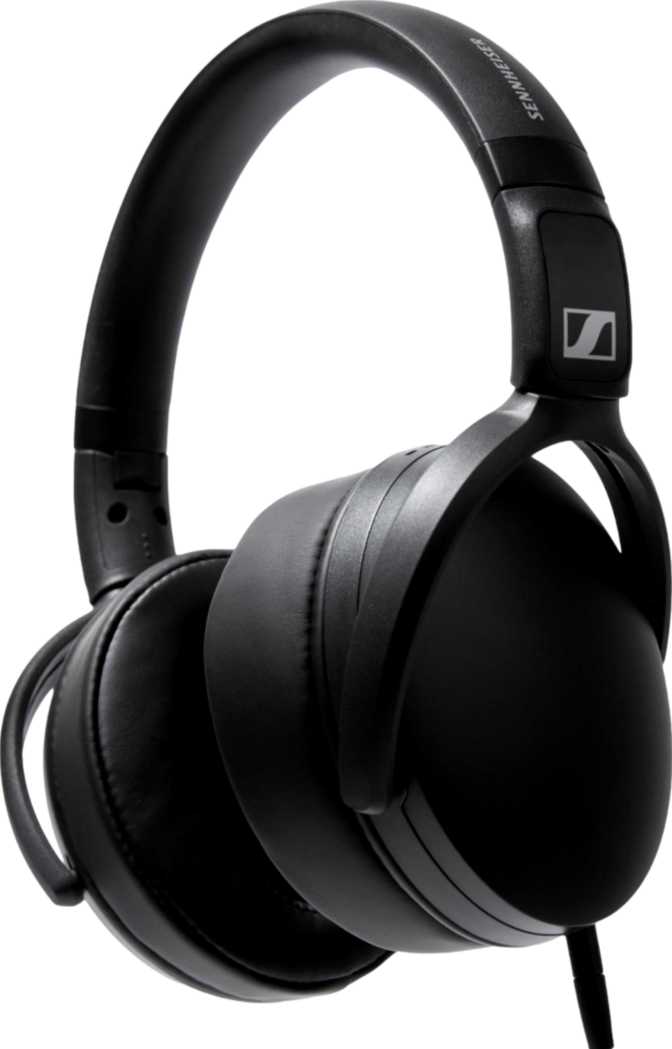
Sennheiser HD 400U Review: A Professional USB-C Headset Built for Work
HeadphonesThe "U" designation tells the story. Most people searching for a Sennheiser headphone at this price expect a music-first experience. The HD 400U offers something more specific and, for the right buyer, considerably more valuable: a wired USB-C headset engineered around voice clarity, long desk sessions, and the demands of communication-heavy work. Every design choice here makes sense once you understand that framing.
At a Glance
out of 5
Editorial score — professional desk use context
Recommended for ProfessionalsPerformance by Category
Design and Build Quality
Purposeful, not flashy — every physical decision serves the professional context this headset was made for.
Physical Construction
The HD 400U wears the understated aesthetic Sennheiser reserves for its professional and semi-professional lines. There is no aggressive angular styling, no RGB lighting, and no attempt to signal status. What you get instead is a clean, functional design that looks appropriate in a home office, a corporate open-plan environment, or a broadcast booth without drawing attention either way.
At 217 grams, the headset sits in a sensible middle ground — noticeably lighter than heavy audiophile cans, but with enough heft to feel substantial rather than cheap. This is a weight most people can comfortably wear through a full working day without the fatigue that accumulates with heavier over-ear designs. Prolonged calls and back-to-back video meetings are precisely the scenario this weight budget was designed for.
The over-ear fit means the ear cups fully surround the ears rather than resting on them. This matters for two reasons: comfort over hours-long sessions, and passive sound isolation. The ear pads create a physical seal that reduces ambient intrusion — background conversation, office HVAC noise, and keyboard clatter are all attenuated without requiring any electronics to do the work.
Cable and Connection
Why a detachable cable matters long-term
Cables are the most failure-prone part of any wired headset. A detachable design means a worn or damaged cable is a minor inconvenience rather than a reason to replace the entire unit — a detail that pays real dividends over the product's lifespan.
The 1.4-metre cable length is calibrated for desk use — long enough to reach a laptop or desktop port without creating a tangled mess across your workspace, but not so long that it drapes awkwardly over a chair.
Connectivity is handled entirely over USB Type-C. There is no 3.5mm analogue option. The headset draws its signal and power directly from the USB connection, which means audio quality is not subject to the variable output of laptop headphone jacks — a real advantage on ultrabooks and business laptops where the internal audio hardware is an afterthought.
What It Does Not Include — And Why That Is Acceptable
The HD 400U does not fold for compact storage. It does not ship with a travel pouch or carry case. There is no water resistance rating. None of this is surprising or problematic given the product's purpose — this is a desk headset, not a travel companion. If you need something that collapses into a pocket or survives a gym bag, this is the wrong category entirely.
Sound Performance
Clarity engineered for voice, with a frequency response covering the full audible spectrum.
Frequency Response
The HD 400U covers a range that reaches deep into sub-bass territory at the low end and extends to the full ceiling of human hearing at the top. In practical terms, this means the headset handles both music and voice with genuine fidelity across the entire audible spectrum.
For voice communication — where speech intelligibility depends on accurate reproduction of a specific frequency band — the HD 400U's wide coverage means its drivers are never being pushed to their limits simply to reproduce a human voice.
Driver Size & Sensitivity
The 32-millimetre drivers are modest by audiophile standards — dedicated music headphones often use larger drivers that move more air and produce deeper bass extension. The trade-off is that smaller, lighter drivers respond faster to transient signals, contributing to voice clarity. For a communication headset, this is a defensible engineering choice.
The very high sensitivity rating means the HD 400U reaches comfortable listening volumes without demanding much power — exactly right for a USB-powered device where available current is constrained by the port specification rather than a dedicated amplifier.
Low-Impedance Design
At 18 ohms, the electrical resistance is intentionally low. High-impedance headphones — those at 150 ohms or above — require powerful amplifiers to reach adequate volume and sound underpowered from standard USB outputs. The HD 400U's low impedance is matched precisely to what a USB Type-C port can deliver, ensuring consistent, predictable performance across laptops, desktops, hubs, and docking stations alike.
Passive Noise Isolation
Without active noise cancellation electronics, the HD 400U relies on physical design to reduce ambient intrusion. The over-ear closed-back construction acts as a barrier — the ear cushions and cup structure attenuate steady ambient noise like air conditioning or background conversations effectively.
One significant advantage passive isolation holds over active cancellation: no audio processing enters the signal path, no battery is consumed, and there is no latency. What you hear is the source signal, unaltered by noise-compensation algorithms — something active systems cannot offer.
Microphone and Communication Features
The HD 400U is fundamentally a communication device — here is what that means in daily use.
The Microphone Setup
A single integrated microphone handles voice capture. For a headset of this type, microphone quality is arguably more important than acoustic performance on the listening side — a call headset is only as useful as its ability to transmit your voice clearly to the other party.
The microphone is supported by an in-line control panel on the cable, putting physical controls within easy reach without requiring you to touch the ear cups or reach for your computer. During calls where adjustments need to happen quickly and without fumbling, this placement is a meaningful practical detail.
Single-Cable USB-C Operation
The HD 400U handles both playback and microphone input through a single USB-C connection. You plug in one cable and your computer recognises both a speaker and a microphone device simultaneously. No additional adapters, no separate microphone arm, no audio interface required.
USB audio class devices of this type are recognised natively by modern operating systems, making them compatible with virtually all conferencing software — Zoom, Microsoft Teams, Google Meet, Webex, and any softphone application that routes through the OS audio system — without driver installation on current hardware.
Who This Headset Is For
Understanding the HD 400U's intended use separates a confident purchase from a disappointing one.
- A remote worker or hybrid professional who spends significant time on video calls, voice calls, or softphone systems. The combination of passive isolation, voice-tuned drivers, and single-cable USB-C setup removes friction from communication-heavy workflows.
- An open-plan office worker who needs a physical barrier against ambient noise without the latency and battery management that comes with active noise cancellation hardware.
- A content creator or streamer needing a reliable, low-latency wired monitoring option with an integrated microphone — particularly on USB-C-equipped laptops or desktop setups.
- Someone frustrated by inconsistent laptop audio quality who wants output that bypasses internal audio hardware entirely via a dedicated USB audio path.
- A headset for commuting or travel. The lack of folding design and absence of a carry case make the HD 400U impractical anywhere outside a fixed desk environment.
- Music-first listening with maximum bass weight, acoustic character, or wide soundstage. Dedicated audiophile headphones with larger drivers and proper amplification outperform this in those dimensions.
- Wireless freedom. There is no Bluetooth option here — this is a committed wired product with no wireless variant in this line.
- Active noise cancellation for very loud environments such as flights, loud cafes, or construction-adjacent workspaces. Passive isolation alone may not provide sufficient attenuation under those conditions.
How It Compares to Alternatives
Where the HD 400U sits relative to ANC and wireless headsets clarifies whether it is the right tool for your setup.
| Feature | Sennheiser HD 400U | Typical ANC Headset | Typical Wireless Headset |
|---|---|---|---|
| Connection | USB-C wired | USB / 3.5mm wired | Bluetooth wireless |
| Noise Reduction | Passive (physical) | Active (electronic) | Active (electronic) |
| Audio Latency | Negligible | Low (minor DSP) | Moderate (codec) |
| Battery Required | No | Sometimes | Yes |
| Audio Processing | None | ANC algorithms | Codec compression |
| Portability | Desk-focused | Moderate | High |
| Primary Failure Point | Cable (replaceable) | Battery + electronics | Battery + electronics |
The HD 400U makes the opposite bet from feature-heavy competitors: fewer electronics, better fundamental hardware. Whether that trade-off works depends entirely on what you value.
Honest Assessment
Strengths worth knowing, and limitations worth considering — both stated plainly.
Genuine Strengths
The HD 400U's strongest argument is simplicity of implementation and reliability of performance. A wired USB-C headset has no battery to deplete, no pairing to manage, no firmware to update, and no latency to introduce. In professional environments where a failed connection or dead battery during an important call is genuinely costly, this matters more than any spec sheet figure.
The detachable cable design extends the product's serviceable life by removing what is statistically the most likely point of failure. Where a non-detachable cable means replacing the entire unit, here you replace the cable alone — a fraction of the cost and effort.
The low impedance and high sensitivity translate to consistent volume performance across different USB host devices. Bring this to a new laptop, a desktop, a USB hub, or a docking station and it behaves predictably every time. That consistency is a genuine professional-grade quality that feature-heavy alternatives cannot always claim.
Real Limitations
The absence of a dedicated mute button on the headset itself is a gap worth acknowledging. Many competing headsets at this level include a physical mute control directly on the ear cup. During calls, muting through software or the in-line control requires an additional step — for some communication-heavy workflows this is a genuine inconvenience that accumulates over the day.
The 32mm driver size will not reproduce bass with the authority of larger drivers. For voice and general audio it is more than adequate, but music listeners who prioritise bass weight and sub-bass presence will find considerably more in that dimension from a purpose-built music headphone.
Passive isolation alone may not be sufficient in particularly loud environments. If your workspace regularly exceeds typical office noise levels — shared industrial spaces, open-plan areas adjacent to loud machinery — active cancellation is likely to serve you better.
Common Questions Answered
The questions real buyers search before purchasing — answered directly.
Final Verdict
The Sennheiser HD 400U is a focused, well-engineered USB-C headset that does its intended job with minimal compromise. It is not trying to be an audiophile headphone, a wireless lifestyle product, or a feature-packed smart device. It is a professional communication tool with Sennheiser's acoustic fundamentals applied to a category — USB desk headsets — that often underinvests in audio quality.
Buy this if your priority is a reliable, zero-latency wired headset for a communication-intensive workflow, particularly if you have been frustrated by variable laptop audio, battery-dependent wireless products, or the sonic artefacts introduced by active noise cancellation. The detachable cable alone justifies the purchase for long-term users who have experienced the frustration of a fraying cable rendering an otherwise functional headset unusable.
Do not buy this if you primarily want a music headphone, need wireless freedom, require aggressive noise cancellation for loud environments, or plan to use it on the move. For those use cases, the specification is genuinely not aligned with what you need — and no amount of brand reputation changes that.
Best For
- Remote & hybrid professionals
- Open-plan office workers
- USB-C laptop users
- Content creators & streamers
Not Ideal For
- Music-first listeners
- Travel or mobile use
- Very loud environments