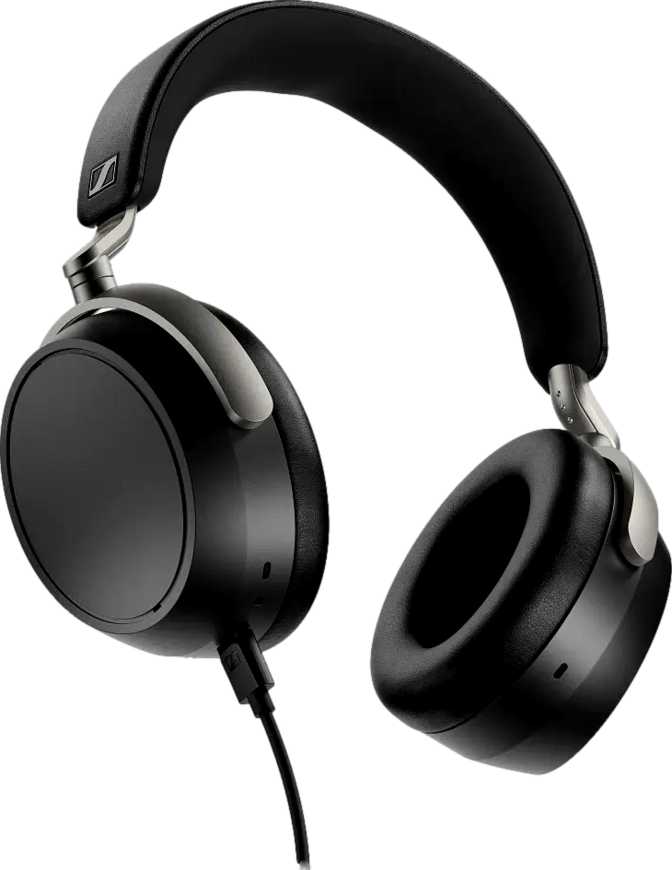
Sennheiser HDB 630 Review: Built for Audiophiles, Not Everyone
Headphones60 hrs
Battery Life
480 Ω
Driver Impedance
aptX Adaptive
Flagship Codec
6–22k Hz
Frequency Range
Design and Build Quality
Physical Form • Materials • Portability
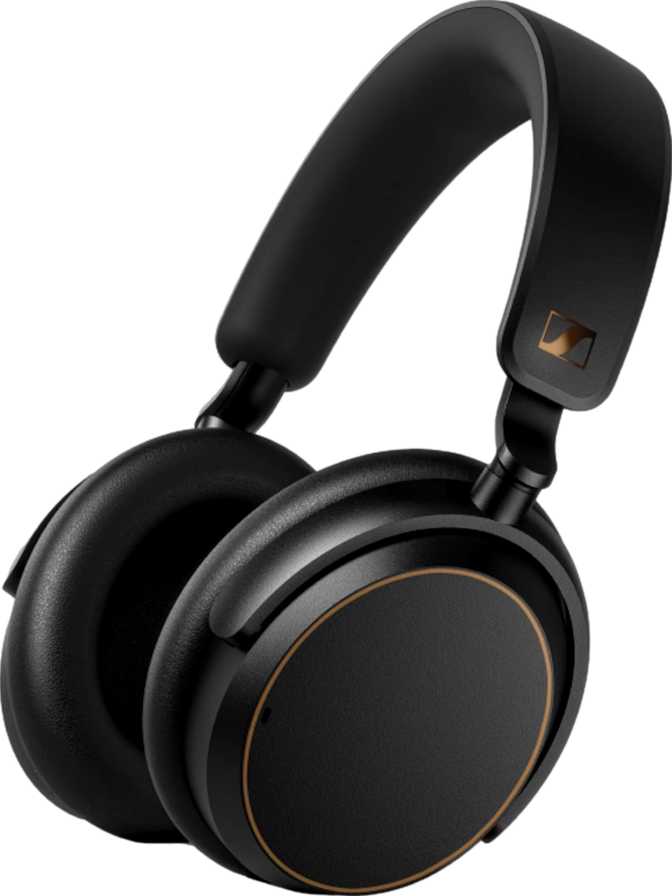
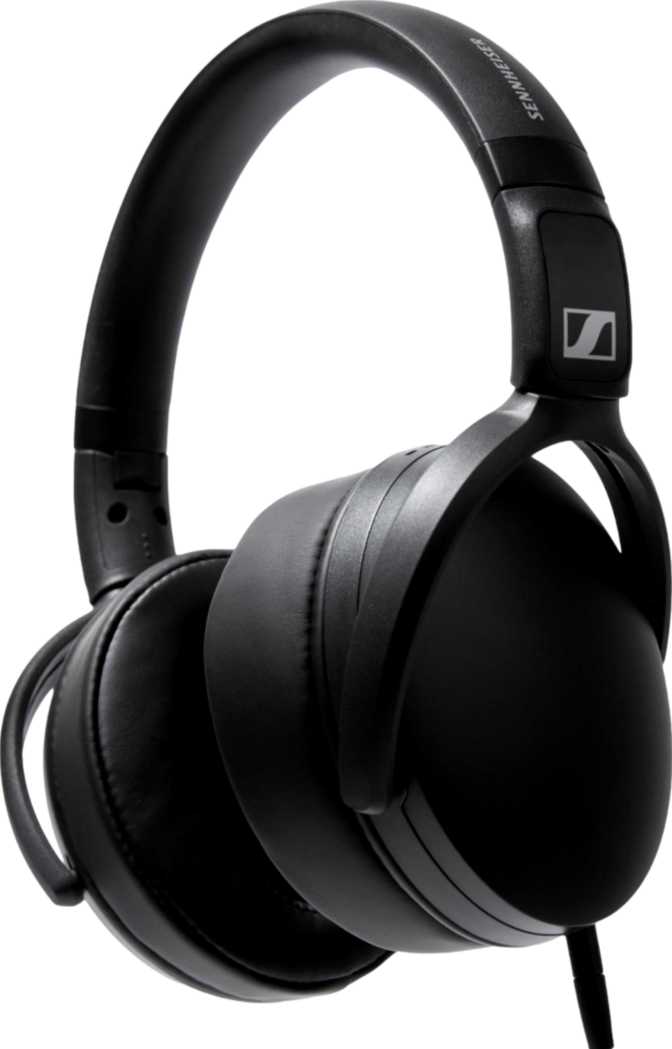
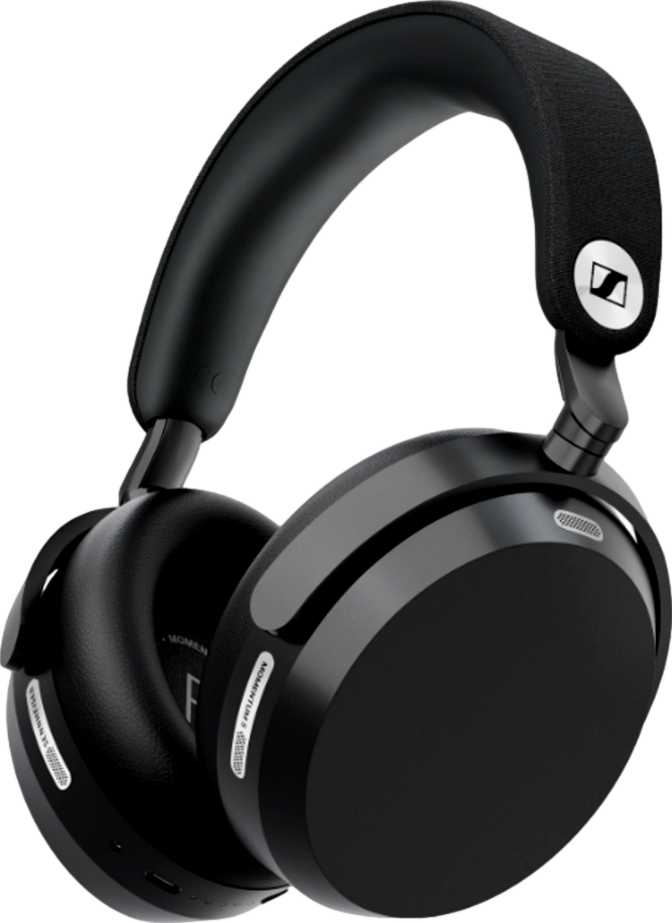
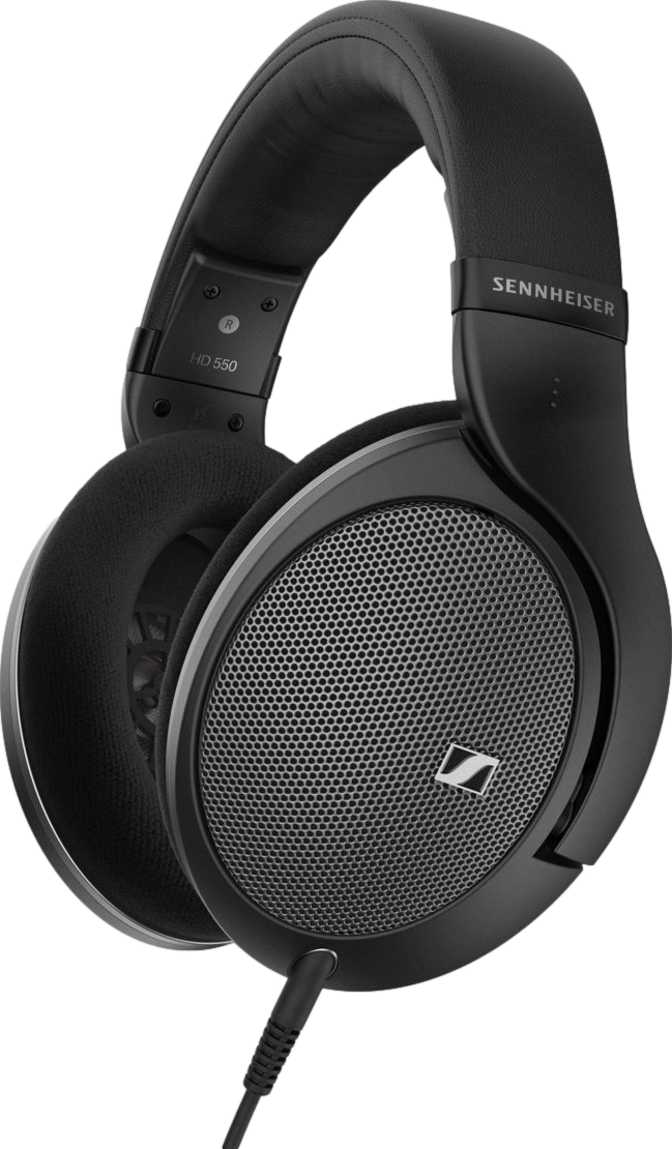
The HDB 630 is a foldable, over-ear closed-back headphone, and those two qualities together reveal its intended purpose. Over-ear means the ear cups fully encircle the ear rather than resting on top of it, creating a better acoustic seal, more passive isolation, and greater comfort during long sessions compared to on-ear alternatives. The foldable construction makes genuine portability possible — it collapses into a compact form that fits into the included travel bag, a meaningful inclusion at this tier.
At 311 grams, the weight sits in a moderate range for over-ear headphones — lighter than many professional monitoring models, heavier than some ultralight consumer designs. Distributed across a headband and ear cups, this weight is unlikely to cause fatigue during typical listening sessions, though extended wear beyond two or three hours may require adjustment breaks depending on individual head geometry and headband pressure distribution.
The cable is detachable and tangle-resistant, measuring 1.2 metres. Detachability matters because it converts the most common point of headphone failure — cable stress at the connector — from a costly defect into a replaceable accessory. One limitation to state plainly: there is no water or sweat resistance of any kind. This is a headphone engineered for controlled indoor environments, not for exercise or outdoor use in inclement weather.
Build Snapshot
- Over-ear closed-back — full ear enclosure with passive seal
- Foldable design — collapses into included travel bag
- Detachable, tangle-resistant 1.2m cable
- Stereo drivers with headset microphone capability
- No water or sweat resistance — indoor use only
The Impedance Question: Why 480 Ohms Changes Everything
The Specification That Defines This Headphone
Impedance describes how much electrical resistance a headphone driver presents to the audio signal feeding it. Most consumer headphones are designed at 16 to 32 ohms — low enough for smartphones and laptops to drive comfortably without a second thought. The HDB 630 sits at 480 ohms, a level normally reserved for professional studio monitoring equipment and dedicated audiophile gear. This single figure defines nearly everything about how this headphone behaves in the real world, and understanding it is the most important step in deciding whether it belongs in your setup.
Connecting the HDB 630 to a standard smartphone headphone adapter or a laptop's built-in audio output will produce noticeably quiet, dynamically compressed sound. These devices are engineered for low-impedance headphones and cannot supply the voltage these drivers demand. To use the HDB 630 in wired mode properly, a dedicated headphone amplifier or quality DAC/amplifier combination is effectively required. This is not a headphone you wire into a phone and walk out the door with.
Bluetooth listening sidesteps the impedance challenge entirely. The built-in amplifier is matched to these specific drivers and handles signal levels internally without any external equipment. Wireless users never need to think about this specification in daily use — the HDB 630 behaves as simply as any other Bluetooth headphone. Pair it, wear it, and listen.
Impedance in Context: Where 480 Ω Sits
Standard smartphones and portable devices are built for 16–32 Ω headphones. Enthusiast home equipment comfortably handles up to roughly 300 Ω. The HDB 630 at 480 Ω sits at the upper end of this spectrum — the territory where dedicated amplification is not optional, but expected as part of the system.
Driver Size, Sensitivity, and Magnet Design
The 42mm driver is a well-proven diameter for over-ear headphones — wide enough to reproduce low frequencies with physical authority, compact enough for practical ear cup dimensions. The sensitivity rating indicates efficient conversion of input power to output volume once the driver receives the voltage it requires. The frequency response extends from a sub-audible lower boundary to beyond the upper limit of typical human hearing, meaning the drivers can reproduce the physical sensation of very deep bass as well as fine high-frequency detail. Notably, these drivers do not use neodymium magnets — an uncommon design choice at this tier associated with a more linear, controlled frequency response character, rather than the enhanced low-frequency impact neodymium structures can sometimes produce.
Wireless Sound Quality: Codecs and Real-World Performance
Bluetooth 5.2 • aptX Adaptive • AAC • 10m Range
The HDB 630 uses Bluetooth 5.2, a current-generation standard delivering stable connections, lower energy consumption compared to older versions, and reliable performance in environments with moderate wireless interference. The stated wireless range is 10 metres — sufficient for in-room freedom of movement, but walls and interference will further reduce this in practice. This is a focused, stay-close-to-source wireless headphone, not a wander-across-the-building device.
The codec stack is the most meaningful wireless audio specification here. The presence of aptX Adaptive is the headline: when paired with a compatible source device — primarily Qualcomm Snapdragon-based Android smartphones and qualifying laptops — the HDB 630 can receive wireless audio at resolutions equivalent to or exceeding standard CD quality, with dynamic bitrate adjustment maintaining stability under real-world conditions.
Connection Quick Facts
- Bluetooth 5.2
- Wireless & wired dual mode
- 10m wireless range
- No NFC or fast pairing
- No aptX Low Latency
| Codec | Supported | What It Means for You |
|---|---|---|
| aptX Adaptive | Qualcomm's flagship codec; up to 24-bit/96kHz with adaptive bitrate. Best wireless quality on this headphone — requires a compatible Qualcomm Android device. | |
| aptX HD | High-resolution wireless audio up to 24-bit/48kHz. A strong fallback when Adaptive is unavailable on the source device. | |
| aptX | Standard Qualcomm codec. Reliable quality on a wide range of Android and Windows devices. | |
| AAC | Apple's preferred codec. iPhone users receive better-than-baseline Bluetooth audio quality; iOS implements AAC particularly well. | |
| LDAC | Sony's high-resolution codec. Not supported here — Sony ecosystem users who rely on LDAC will need to look at alternatives. | |
| aptX Low Latency | Not supported. Wireless video will experience noticeable audio-video sync delay — a real limitation for video content watchers. | |
| Bluetooth LE Audio | Next-generation low-energy audio standard. Not included in this model. |
Battery Life: A Genuine Strength
60-Hour Endurance • USB-C Charging • Battery Indicator
Sixty hours of wireless playback is a substantial figure — among the highest available in the wireless over-ear category. A listener who uses headphones for three hours per day would need to charge the HDB 630 roughly once every three weeks. Frequent travellers could complete transcontinental flights on a full charge with hours to spare on arrival.
Charging uses USB-C, which shares a cable with most modern laptops and Android phones. A battery level indicator is built in, providing visible feedback on remaining charge without requiring a companion app. There is no wireless charging — the headphone must be physically cabled to recharge. Given the endurance on offer, this is rarely a meaningful inconvenience for most listeners.
Wireless Endurance Comparison
Passive Noise Isolation: A Deliberate Choice
No ANC • Closed-Back Physical Seal • No Ambient Mode
The HDB 630 does not include active noise cancellation. ANC works electronically: microphones sample ambient sound and opposing signals cancel it out. It is effective against consistent low-frequency noise like engine hum or air conditioning, but it adds processing layers, can introduce subtle colouration into the audio signal, and increases power consumption.
The HDB 630 instead relies entirely on passive isolation — the physical seal created by its closed-back ear cups pressing against the head. This approach meaningfully reduces mid-to-high frequency environmental noise, with the actual degree of isolation varying by head shape, ear pad material, and the nature of surrounding sound. For listeners who prioritise audio signal purity and find ANC processing artefacts objectionable — a common view among audiophile listeners — this passive-only approach is a deliberate feature, not an oversight.
There is no ambient sound or transparency mode. The HDB 630 provides no way to pass environmental audio through while listening. When these are on your ears, you are acoustically separated from your surroundings.
What This Means in Practice
- Good reduction of mid/high-frequency ambient noise
- Audio signal untouched by ANC processing
- No electronic cancellation of deep mechanical noise
- No ambient or transparency mode
Features and Daily Use
Headset Capability • Controls • Notable Omissions
Headset Capability
The HDB 630 includes microphone capability, allowing it to function as a headset for calls and voice input. There is no in-line control panel on the cable, however, so call management relies on the connected device. There is also no dedicated microphone mute button. For occasional calls this arrangement is workable; for users who manage heavy call volumes throughout the day, the absence of onboard controls is a genuine friction point that this headphone does not resolve.
What Is Absent
These features are standard at this price tier on competing models and are not present on the HDB 630:
- In-ear detection — no auto-pause on removal
- Dedicated microphone mute button
- In-line cable controls
- NFC pairing
- Fast pairing / quick connect
Who This Headphone Is For — and Who It Is Not
Target Audience • Use Cases • Buyer Fit
- Home audiophiles with existing amplification — a dedicated listening setup with a headphone amp unlocks the full wired capability while the wireless mode adds freedom to move.
- Hi-res library owners on Android — listeners with lossless files on aptX Adaptive-compatible devices will benefit from the codec stack on offer.
- Long-haul travellers averse to frequent charging — the battery endurance removes charging anxiety from extended trips entirely.
- Listeners who prefer passive over active noise management — those who distrust ANC colouration will find this approach aligned with their values.
- Gym users, runners, or outdoor commuters — no moisture resistance means physical activity and outdoor use carry genuine risk of damage.
- Casual wired smartphone listeners — the impedance demands make wired use with standard portable devices underwhelming without supporting amplification.
- Video streaming enthusiasts — the lack of aptX Low Latency makes wireless audio-video synchronisation unreliable.
- Feature-forward buyers — auto-pause, ambient mode, NFC, and inline controls are all absent here. Competitors deliver these at this price tier.
Competitive Positioning
How the HDB 630 Compares to Its Logical Alternatives
The HDB 630 occupies a narrow but real niche. Its competition comes from two directions: mainstream premium ANC wireless headphones at a comparable price tier, and high-impedance wired audiophile headphones in its sonic class. Neither is a like-for-like alternative — each makes a different set of trade-offs.
| Comparison Point | Sennheiser HDB 630 | Premium ANC Wireless | High-Impedance Wired |
|---|---|---|---|
| Wireless audio quality ceiling | High — aptX Adaptive | High (LDAC or aptX Adaptive, varies by model) | N/A — wired only |
| Wired usability without amplifier | Poor — 480 Ω demands amplification | Good — standard low impedance | Poor — also high impedance |
| Active noise cancellation | None | Core feature | None |
| Battery life | 60 hours | Typically 20–40 hours | N/A |
| Primary use-case focus | Audiophile home listening | Commuting, travel, versatile | Stationary desktop listening |
| Passive noise isolation | Yes (closed-back) | Yes + ANC augmentation | Varies by model |
Honest Assessment: Where It Excels and Where It Frustrates
Strengths • Trade-offs • Real-World Buyer Considerations
Where It Earns Respect
The HDB 630 earns genuine respect for its commitment to audio engineering over feature accumulation. The driver specification, impedance design, and codec support are consistent with a headphone built to sound as good as the wireless medium allows — not one built to win a feature checklist. That clarity of purpose is increasingly rare.
The aptX Adaptive and aptX HD stack represents one of the stronger wireless audio codec combinations available for Qualcomm-compatible devices. Listeners who own compatible source equipment and a high-resolution library will access wireless audio at resolutions that were, until recently, achievable only over cables.
The sixty-hour battery endurance is a standout real-world advantage. It removes charging from the daily equation for most listeners and materially outperforms the competitive field. For frequent travellers and long-session listeners, this alone is a compelling differentiator.
Where It Frustrates
The 480-ohm impedance is a genuine barrier for buyers who expect plug-and-play wired flexibility. Most buyers do not think to check this specification, and discovering that a premium headphone delivers underwhelming volume from a laptop jack is a frustrating and expensive surprise. This review exists, in part, to prevent that outcome.
The 10-metre Bluetooth range is modest. Walls and wireless interference further compress it in practice, making the HDB 630 a stay-close-to-your-source device. The absence of aptX Low Latency makes wireless video a compromised use case without a workaround.
The missing convenience features — auto-pause, ambient mode, NFC pairing, inline controls — are now standard at this price tier from competing manufacturers. Their absence reflects a deliberate philosophy, but buyers accustomed to these on previous headphones will notice immediately and should factor that adjustment into their decision.
Common Buyer Questions
Answers to What Real Buyers Search for Before Purchasing
Final Verdict
FOR HOME AUDIOPHILES SEEKING WIRELESS CONVENIENCE
The Sennheiser HDB 630 is a deliberately narrow product that will be exactly right for a specific buyer and actively wrong for many others. If you have a dedicated listening setup, own a headphone amplifier or quality DAC, care about wireless audio resolution, and want a headphone that can run for weeks between charges — this makes a compelling case.
If you want an ANC commuter headphone, a workout companion, a wireless video tool, or a plug-into-anything portable headphone, look elsewhere. The HDB 630 has no interest in being those things, and forcing it into those roles will disappoint.
Best For
- Home audiophile desktop listening
- High-resolution wireless audio
- Extended travel with minimal charging
- Amplifier-equipped listening setups
Not For
- Exercise or outdoor use
- Wired use without an amplifier
- Wireless video watching
- Feature-heavy daily commuting