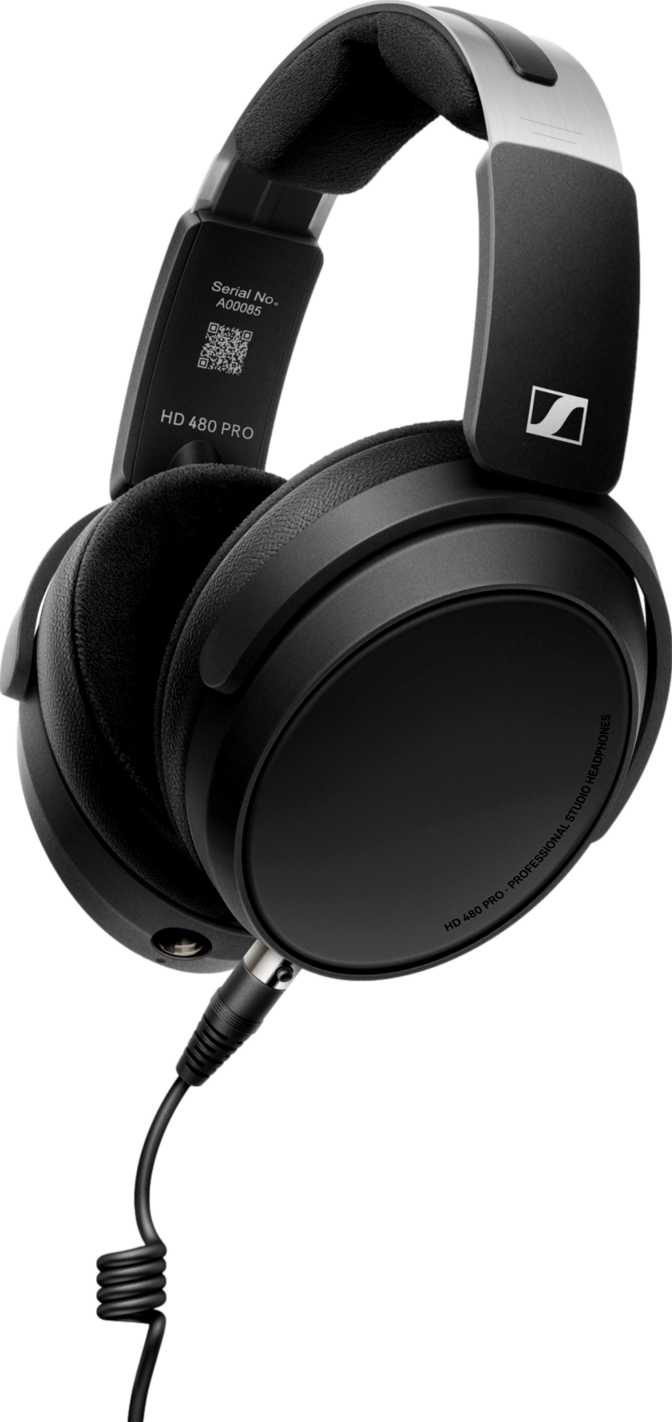
Sennheiser HD 480 Pro: Full Review of a Closed-Back Studio Monitor
HeadphonesThe Sennheiser HD 480 Pro strips away everything that does not serve accurate audio monitoring — no wireless, no noise-canceling circuitry, no microphone. What remains is a closed-back professional studio headphone built to reproduce sound without flattery. Here is exactly what you are getting and whether it belongs in your setup.
Editorial Score
Outstanding for professional studio monitoring. Requires dedicated amplification to perform.
Design, Build Quality, and Physical Experience
Physical Construction and Weight
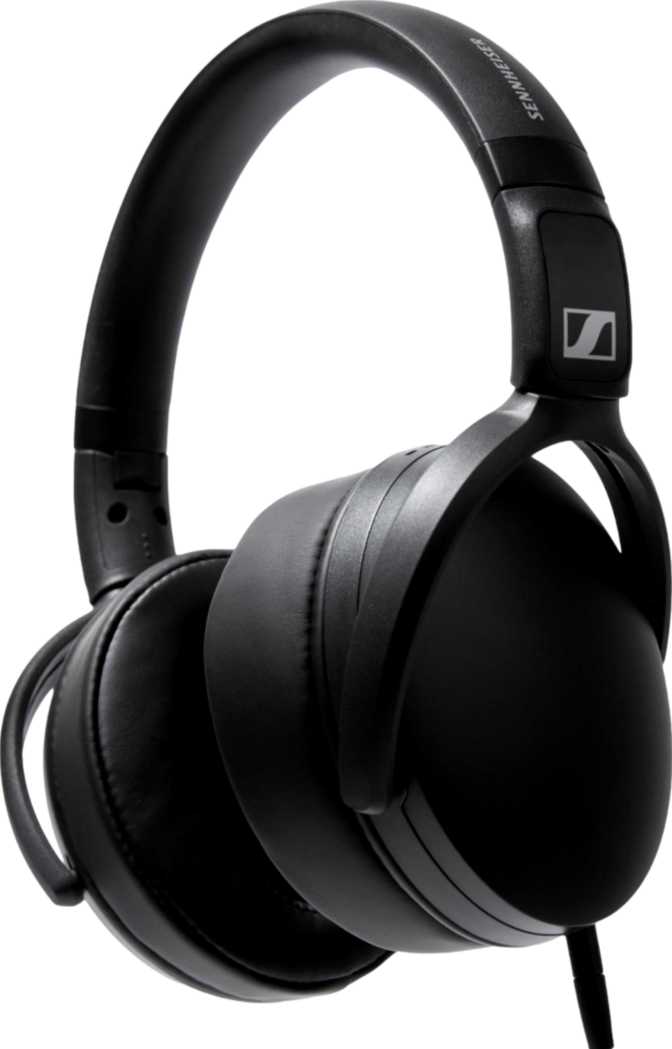
At 272 grams, the HD 480 Pro sits in a comfortable middle range for professional over-ear headphones. That weight is low enough to wear through a long recording or mixing session without the fatigue that heavier studio cans can cause, yet substantial enough that the build never feels cheap or fragile. The materials feel considered rather than lavish — Sennheiser's professional line has always leaned toward functional durability over aesthetic showmanship, and that tradition continues here.
The headphones do not fold flat. This matters if you were hoping to compress them into a bag for travel. They are not designed for that kind of on-the-go use. A carry bag is included in the box, which protects the headphones during transport between fixed locations — a studio, a control room, a home setup. Think of it as a home for the headphones, not a travel accessory for commuting.
The Cable System
The cable is detachable and tangle-resistant — two features that matter more in professional use than most buyers initially realize. In a studio context, cables take abuse. They get wrapped, stretched, stepped on, and swapped between equipment. A detachable cable means you can replace it without replacing the entire headphone if it eventually wears out. The tangle-free construction means when you coil it up at the end of a session and uncoil it next time, you are not spending five minutes untangling knots.
There are no inline controls on the cable — no play/pause button, no volume wheel, no microphone. For a consumer headphone, that would be a frustrating omission. For a studio monitor, it is the right call. Inline controls add electrical components into the signal path that can subtly color the audio. The only controls that exist are on the source device itself.
Closed-Back Design: What It Means for Your Sessions
The HD 480 Pro uses a closed-back enclosure — the rear of each driver cup is sealed. This is a fundamental design choice with significant consequences for how the headphone sounds and how it is used.
Prevents Sound Bleed
Closed-back cups stop sound from leaking into the room. During tracking sessions, this keeps monitor audio out of open microphones — a fundamental requirement for professional recording where mic bleed ruins a take.
Passive Acoustic Isolation
The physical seal around the ear blocks a meaningful amount of external noise without any electronics involved. You can monitor in moderately noisy environments without ambient sound masking what you are hearing.
Sound Performance: What the Specifications Actually Mean
Frequency Response — From the Subsonic to the Ultrasonic
The HD 480 Pro's frequency range extends from 3 Hz at the low end to 28,700 Hz at the top. Human hearing spans roughly 20 Hz to 20,000 Hz — both boundaries of this headphone's range exceed what most people can consciously perceive, and that extension is meaningful for technical reasons.
The extension below 20 Hz into true subsonic territory is not about hearing bass — it keeps the driver operating well within its linear range when reproducing audible bass frequencies. A driver that reaches down to 3 Hz handles a 40 Hz kick drum comfortably, which translates to tighter, more accurate low-frequency reproduction rather than woolly or exaggerated bass. Similarly, the high-frequency extension past 28 kHz ensures the headphone is not rolling off or distorting in the presence and air regions where overtones, cymbals, and vocal sibilance live.
Impedance — This Headphone Needs a Proper Source
Critical Before You Buy: Amplifier Required
At 130 Ohms impedance, the HD 480 Pro requires significantly more voltage to drive than typical consumer headphones, which usually run between 16 and 32 Ohms. Plugged directly into a smartphone or laptop's onboard audio output, it will sound quiet and dynamically flat — that is not the headphone underperforming, it is the source running out of voltage. A dedicated headphone amplifier or audio interface with a proper headphone output is required to hear what these headphones are actually capable of.
In professional studio environments this is a non-issue — mixers, audio interfaces, and standalone headphone amps all drive 130-Ohm loads comfortably. If you already work in that kind of setup, you will not notice the constraint. If your only source is a phone or tablet, these are the wrong headphones for that job.
Sensitivity — Loud and Responsive When Properly Driven
The high sound pressure level rating indicates that once the HD 480 Pro receives the voltage it needs, it is extremely efficient at converting that signal into sound. You will not need to push your amplifier hard to reach loud listening levels. That high sensitivity also points to strong transient response — the drivers react quickly to fast, dynamic audio signals, contributing to the punchy, immediate character that professional monitoring headphones require for accurate critical work.
Key Features Explained in Real-World Terms
Passive Isolation — Zero Signal Processing
Isolation comes entirely from the closed-back construction, not from active noise cancellation circuitry. There is no processing involved in what you hear — no phase artifacts, no pressure sensation, no subtle audio coloration. The sound you receive is unaltered from source to ear.
Detachable Cable — Professional Longevity
In studio use, headphones are often shared or moved between setups. Swapping a worn cable without tools or manufacturer service extends the headphone's life significantly. The tangle-free build saves time at the start of every session.
Dedicated Stereo Drivers
Each ear has its own dedicated driver. The resulting stereo imaging is critical for evaluating mix element placement, checking reverb tail positioning in the soundstage, and identifying mono compatibility issues during critical listening sessions.
No Smart Features — by Design
No in-ear detection sensors, no ambient sound mode, no auto-pause. These omissions are deliberate. Studio monitoring does not involve streaming services or portable devices that respond to those automations — removing them keeps the signal path clean and the design focused.
Who Should — and Should Not — Buy the HD 480 Pro
Ideal Users
-
Recording engineers and producersNeed closed-back headphones for tracking sessions to prevent monitor audio bleeding into open microphones during recording.
-
Home studio owners with an audio interfaceWant reference-quality monitoring without spending on open-back cans that cannot be used during live recording sessions.
-
Broadcast and podcast professionalsMonitor audio during live recording and need passive isolation from room noise without electronic processing artifacts.
-
Audiophiles with a headphone amplifierPrefer closed-back listening for quieter sessions without sacrificing the resolution that consumer headphones cannot provide.
-
DAW users upgrading from consumer headphonesWant to hear mixes accurately rather than through the flattering coloration most consumer headphones add to everything.
Not Suitable For
-
Casual listeners without an amplifierThe 130-Ohm impedance is a hard barrier. Driven by a phone or laptop, these headphones will sound quiet and dynamically flat — a frustrating experience for any buyer expecting plug-and-play performance.
-
Commuters and travelersWired-only, non-folding, and shipped with a carry bag rather than a compact hard case. These headphones do not travel gracefully.
-
Call and conferencing usersThere is no microphone of any kind. The HD 480 Pro cannot function as a headset for video calls, meetings, or voice communication.
-
Wireless-first listenersNo Bluetooth, no wireless option, no USB-C. These headphones live on a cable — with no exceptions and no workarounds.
-
Gaming headset seekersNo spatial audio processing, no microphone, no wireless. The HD 480 Pro is built for a completely different purpose and should not be purchased expecting gaming headset functionality.
How the HD 480 Pro Compares
The HD 480 Pro's closest competition is within the professional studio headphone segment — not consumer products. Here is how it stacks up across the categories that matter most.
| Feature | HD 480 Pro | Closed-Back Studio Alternative | Consumer Wireless ANC |
|---|---|---|---|
| Sound Path | Pure analog, wired | Pure analog, wired | Wireless + DSP processing |
| Noise Isolation | Passive only, no artifacts | Passive only | Active ANC with artifacts |
| Impedance | Amp needed130 Ohm | 80–250 Ohm (varies) | 16–32 Ohm (phone-friendly) |
| Cable | Detachable, tangle-free | Often detachable | Often proprietary or fixed |
| Noise Cancellation | None (intentional) | None | Yes |
| Microphone | None | Usually none | Built-in |
| Foldable | No | Varies by model | Usually yes |
| Primary Use | Studio monitoring | Studio monitoring | Commuting, travel, calls |
Honest Assessment: Strengths and Real Limitations
Where It Genuinely Excels
The HD 480 Pro gets a great deal right for its intended audience. The combination of a genuinely wide frequency response with high driver sensitivity and a closed-back enclosure that provides passive isolation is well-matched to professional use. Sennheiser has clearly not tried to add features that do not belong in this category — there is no attempt to bolt on active noise cancellation, no wireless module adding weight and compromising signal purity, and no microphone that would compromise the headphone's primary function.
The cable ecosystem — detachable and tangle-resistant — reflects real professional use, not just a specification point. The inclusion of a carry bag rather than a hard case is a reasonable decision given that these headphones are more at home on a desk than in an overhead bin. For the studio professional who values signal accuracy above all else, the HD 480 Pro delivers without compromise.
Limitations to Know Before Buying
The 130-Ohm impedance requirement is a genuine barrier. This is not a headphone you can pick up and use with whatever device is in your pocket. If you do not already own a headphone amplifier or an audio interface, you will need to factor that cost into your decision. Buyers frustrated by this requirement should be shopping in the consumer segment instead.
The lack of any microphone functionality means this cannot serve double duty as a conferencing tool or gaming headset. In a world where many buyers want one headphone for everything, that limitation eliminates a significant portion of potential buyers — and that is fine, because those buyers are not the target.
The non-folding design and the absence of wireless connectivity mean the HD 480 Pro does not travel well. If portability is a serious factor in your purchase decision, this is simply not the right headphone for your list.
Questions Buyers Ask Before Purchasing
Final Verdict
The Sennheiser HD 480 Pro is a purpose-built professional monitor headphone that executes its intended function extremely well. It offers a frequency response that extends well beyond normal hearing limits in both directions, high driver sensitivity for responsive and dynamic monitoring, and the passive isolation of a closed-back design — all without introducing any signal processing that might color what you hear.
The conditions of purchase are clear: you need an appropriate amplification source, you need to accept wired-only connectivity, and you need to accept that this headphone has no microphone and no smart features. If those conditions describe your setup and your needs, the HD 480 Pro is a strong choice in the professional closed-back monitoring segment.
If even one of those conditions is a dealbreaker — if you need wireless, if you need a microphone, if your only source is a smartphone — these are the wrong headphones for you, and no amount of brand prestige changes that. The HD 480 Pro earns its recommendation specifically and narrowly: for studio professionals, serious home recording enthusiasts, and experienced audiophiles with proper amplification who want a closed-back reference tool built to last.
Editorial Score