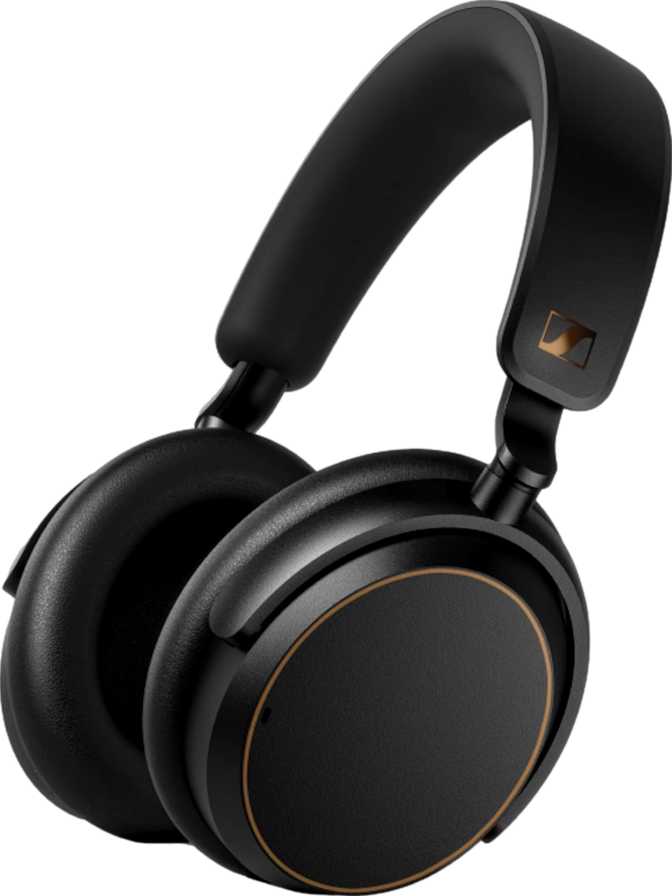
Sennheiser Accentum Wireless SE: An Honest Review
HeadphonesQuick Take: What Matters Most
Most wireless headphones ask you to choose between comfort, sound quality, and stamina. The Sennheiser Accentum Wireless SE is built on the idea that you shouldn't have to. It's positioned as a daily-driver over-ear headphone — something you put on in the morning and don't think about again until you take it off at night. Whether it actually earns that role depends on how its design choices, driver tuning, and battery engineering hold up once you've lived with it through commutes, calls, and long work sessions. That's what this review breaks down.
| What You Care About | What the Accentum Wireless SE Delivers |
|---|---|
| All-day comfort | Lightweight over-ear build that avoids the clamping fatigue common in this category |
| Listening stamina | Enough charge to comfortably outlast a full work week of daily use, ANC included |
| Sound character | A wide, extended frequency range with a large driver built for both bass weight and treble clarity |
| Call quality | Dual microphones with noise-canceling processing for clearer voice pickup |
| Codec flexibility | Strong support for Android's aptX family, with AAC covering Apple devices |
| Where it falls short | Slow charging, no LDAC, no sweat or water resistance, and no auto-pause-on-removal |
Design and Build: Comfort Without the Bulk
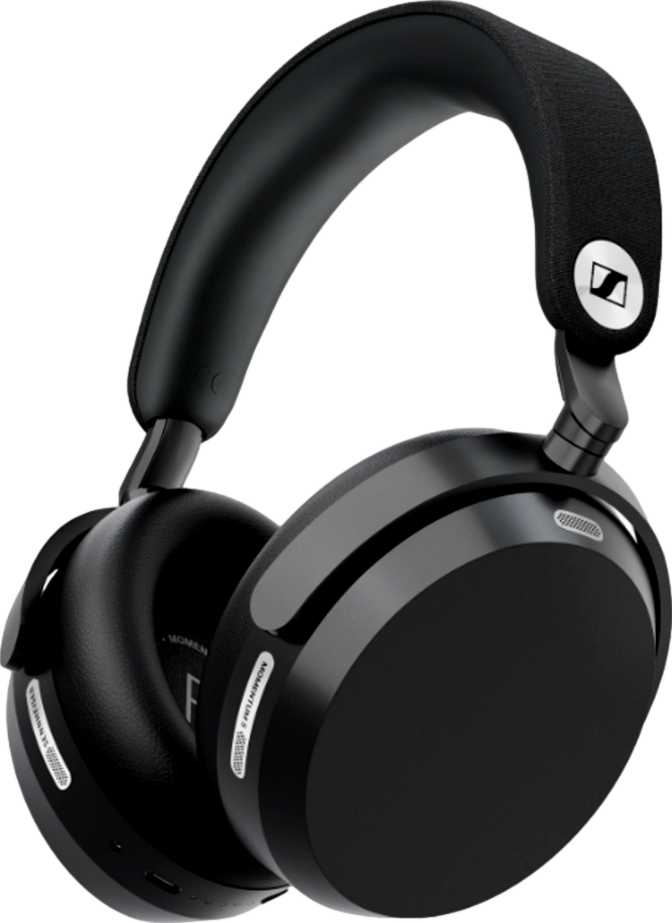
At 222 grams, the Accentum Wireless SE sits on the lighter end of the over-ear ANC category — a category where headphones often start to feel like a weight on your skull after a couple of hours. That lighter build is the single biggest reason this headphone is comfortable for long stretches: a flight, a full workday, or an evening of gaming without the dreaded "I need to take these off" moment.
It's a closed-back, over-ear design, which means the ear cups fully enclose your ears rather than venting sound outward. That matters in two practical ways: you get better passive isolation from outside noise, and people sitting next to you on a train won't hear your music leaking out. The trade-off with closed-back designs is a slightly less airy soundstage compared to open-back headphones — but open-back designs also leak sound and isolate poorly, so for a portable, daily-use headphone, closed-back is the right call.
What's Missing From the Build
A few omissions are worth flagging honestly before you buy:
- No folding hinge. The headphone doesn't collapse down for storage, so it takes up more space in a bag than headphones with a folding mechanism.
- No included travel case or pouch. You'll want to budget for a separate case if you're tossing these into a backpack regularly, since the ear cups and headband are exposed without one.
- No water or sweat resistance rating. This isn't a headphone you want to wear running in the rain or during a sweaty gym session — light indoor use is fine, but treat moisture exposure with caution.
- Not designed for children. The sizing and controls are built for adult use.
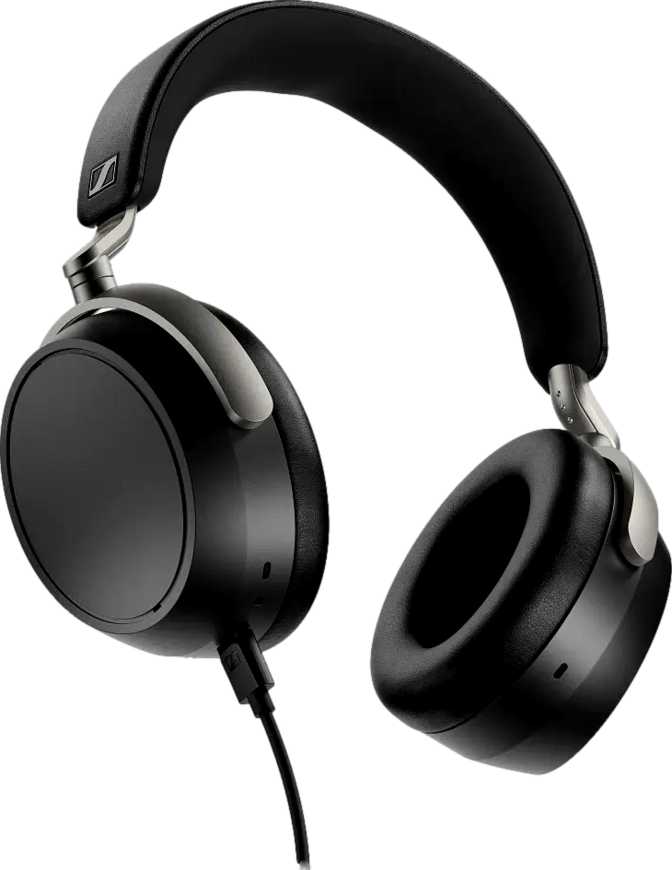
On the positive side, the cable situation is handled well. The Accentum Wireless SE uses a detachable, tangle-free cable, which means two things in practice: first, if the battery ever dies mid-listen, you can plug in and keep going on a wired connection instead of being stranded; second, you won't spend ten minutes untangling a knotted cord every time you pull it out of a bag.
Sound Quality: What the Driver and Frequency Range Actually Deliver
Sennheiser built the Accentum Wireless SE around a 37mm driver, which is on the larger side for headphones in this class. Bigger drivers generally have an easier time producing low-end bass with weight and control, rather than sounding thin or strained when a track gets bass-heavy. Combined with a frequency response that stretches from 10Hz up to 22,000Hz, this headphone is tuned to reproduce both the sub-bass rumble that you feel more than hear, and the upper treble detail — cymbal shimmer, vocal sibilance, fine instrument texture — that gets lost on cheaper drivers.
Loudness won't be an issue. With a sound pressure level rating of 106 dB/mW, the Accentum Wireless SE is efficient enough to get genuinely loud even when plugged into sources with weak amplification — think airplane in-seat entertainment systems or older laptops with underpowered headphone jacks. You won't find yourself maxing out the volume slider and still wanting more.
Spatial Audio and Soundstage
The inclusion of spatial audio support adds a layer most competitors in this range skip. In practical terms, spatial audio processes stereo or compatible multichannel content to create a wider, more enveloping sense of space — useful for movies and certain games where directional audio matters, though the effect is most noticeable with content specifically mixed to take advantage of it rather than every track you play.
Active Noise Cancellation and Ambient Sound: How Quiet Is Quiet?
The Accentum Wireless SE combines active noise cancellation (ANC) with passive noise isolation from the closed-back ear cup seal. This layered approach is how most good ANC headphones work: the physical seal blocks higher-frequency noise like chatter and clatter, while the active electronics target lower-frequency, constant noise like engine hum, HVAC systems, or airplane drone.
50 hours with ANC on. 50 hours with ANC off.
What stands out here is that Sennheiser rates the battery life identically with and without ANC switched on. That's a meaningful detail for anyone who's been burned before by headphones that promise long battery life only to see it drop noticeably once ANC is engaged. It suggests the ANC processing on this model is power-efficient enough that you don't have to ration its use to preserve battery life — leave it on all day without a second thought.
For the opposite use case, an ambient sound mode (sometimes called transparency mode) lets outside sound back in without removing the headphones — useful for hearing announcements, having a quick conversation, or staying aware of your surroundings while walking.
One feature that's notably absent: there's no automatic in/on-ear detection, meaning the headphone won't pause your music automatically when you take it off. You'll need to pause manually every time, which is a small but real convenience gap compared to headphones that handle this automatically.
Battery Life and Charging: The 50-Hour Reality
This is one of the Accentum Wireless SE's clearest strengths. A rated 50 hours of playback — with ANC on or off — translates to roughly a full work week of typical daily listening (call it 6-7 hours a day) on a single charge. For context, that's well above what many wireless ANC headphones in this price range manage, where 20-30 hours with ANC active is common.
What makes that number more impressive is the battery capacity behind it: 800 mAh. That's a relatively modest cell size to be stretching across 50 hours, which points to genuinely efficient power management in how the headphone handles both Bluetooth streaming and ANC processing simultaneously.
Other Power Details
Connectivity and Codec Support: What Pairs Well, and What's Missing
The Accentum Wireless SE runs on Bluetooth 5.2. It's a solid, stable version of the standard, though not the newest revision available on the market — in practice this mostly affects theoretical range and power efficiency rather than everyday connection quality, which should remain reliable for typical use within a room or two.
Codec support is where the picture gets more interesting, and where buyers should pay close attention based on what phone they use:
| Codec | Supported | What It Means for You |
|---|---|---|
| AAC | Best quality streaming on iPhones and most Apple devices | |
| aptX | Solid quality, low-overhead streaming on supporting Android phones | |
| aptX HD | Higher-resolution streaming for Android devices that support it | |
| aptX Adaptive | Dynamically adjusts quality and latency based on conditions and content — Sennheiser's strongest codec inclusion here | |
| LDAC | Sony's hi-res codec is absent — a real consideration for Android users chasing the highest possible streaming resolution | |
| aptX Low Latency | Dedicated low-latency mode isn't included, though aptX Adaptive can reduce lag in supporting scenarios |
In plain terms: if you're on an iPhone, you're getting the best codec Apple's ecosystem allows (AAC), full stop. If you're on Android, you're well covered by the aptX family — aptX Adaptive in particular is a smart inclusion since it balances sound quality and connection stability on the fly. The notable gap is LDAC, which matters specifically to Android users who care about squeezing out the highest possible streaming resolution; if that's you, this is a legitimate reason to look elsewhere.
Two smaller connectivity features are also absent: NFC pairing (tap-to-pair) and Google Fast Pair. Neither is essential — standard Bluetooth pairing through your phone's settings menu still works fine — but they're conveniences some competitors include that you won't find here. There's also no Auracast support, a newer broadcast-audio standard that's still in its early adoption phase across devices, so its absence is a minor future-proofing concern rather than a present-day limitation.
Everyday Features: Calls, Controls, and Convenience
For calls, the Accentum Wireless SE uses two microphones with noise-canceling processing, aimed at isolating your voice from background sound on calls — relevant whether you're taking work calls from a busy café or answering on a windy street. It's fully capable as a headset, meaning calls, voice assistants, and video meetings are all handled through the same device without switching gear.
Controls are placed directly on the ear cup itself rather than on an in-line cable remote, which makes sense given this is a wireless-first headphone — you're not meant to rely on a cord for input. One small gap: there's no dedicated mute function built in, so muting yourself on a call means reaching for software controls on your laptop or phone rather than a physical gesture on the headphone.
Sennheiser backs the Accentum Wireless SE with a standard one-year warranty — in line with typical coverage for headphones at this level.
Who the Accentum Wireless SE Is Really For
- Daily commuters and office workers who want ANC that doesn't need babysitting and battery life that survives a full work week without a charging cable in sight.
- Android users in the aptX ecosystem who want strong, flexible codec support without paying for LDAC they may never fully utilize.
- Frequent flyers who'll appreciate the efficient ANC, the comfortable lightweight build, and the ability to plug in via the detachable cable if the battery ever runs dry mid-flight.
- Anyone prioritizing battery stamina over fast charging — if set it and forget it charging matters more than rapid top-ups, the 50-hour runtime is the headline feature.
Who Should Look Elsewhere
- Gym-goers and runners — the lack of water or sweat resistance makes this a poor match for sweaty workouts or outdoor exercise in unpredictable weather.
- Android audiophiles who specifically want LDAC — if hi-res streaming quality through Sony's codec is non-negotiable, this headphone won't satisfy that requirement.
- Frequent quick-charge users — if you regularly forget to charge overnight and rely on fast top-ups before heading out, the 3-hour charge time will frustrate you.
- Anyone wanting automatic pause-on-removal — without in/ear detection, you'll need to remember to hit pause manually every time you take these off.
How It Stacks Up Against Other Wireless ANC Headphones
Within the broader wireless ANC headphone category, the Accentum Wireless SE's clearest differentiator is battery life that doesn't compromise when ANC is active — a lot of competing headphones quote impressive total battery numbers that quietly shrink once noise cancellation is switched on. Here, that's not a concern.
Where it's more conventional is in build extras: no folding design, no included case, and no water resistance are all areas where some rival headphones in the same price bracket pull ahead — particularly models marketed toward travel or active use. And on the codec front, the absence of LDAC means Android users chasing the absolute highest streaming fidelity have reason to compare carefully against alternatives that include it.
The honest summary: this is a headphone that wins on comfort and endurance, and asks you to give up a few convenience features and one codec option in return.
Strengths and Weaknesses: The Honest Take
Strengths
Sennheiser prioritized comfort and battery endurance, and it shows. At 222 grams with 50 hours of consistent battery life regardless of ANC status, this is a headphone built to disappear into your routine rather than demand attention or maintenance.
- Lightweight, all-day comfortable build
- 50-hour battery life that holds steady with ANC on
- Large 37mm driver with wide frequency response for real sonic substance
- Strong aptX codec coverage for Android, AAC for Apple
Weaknesses
The 3-hour charge time feels slow next to fast-charging competitors, and the absence of LDAC will matter to a specific but vocal segment of Android users. Together, these gaps paint a picture of a headphone optimized for stationary, everyday comfort rather than rugged, do-everything versatility.
- Slow 3-hour full charge, no fast-charge option
- No LDAC for Android hi-res streaming
- No water or sweat resistance
- No folding design or included travel case
Frequently Asked Questions
Final Verdict: Is It Worth It?
Recommended for Comfort & All-Day Battery LifeThe Sennheiser Accentum Wireless SE earns its place as a strong daily-driver headphone for anyone whose priority list starts with comfort and battery stamina. The combination of a lightweight build, a large driver tuned across a wide frequency range, and 50 hours of battery life that doesn't shrink when ANC is active makes it genuinely low-maintenance to live with — you put it on, you forget about charging for most of the week, and the sound holds up across genres thanks to that extended bass and treble range.
It's not the right choice if you need ruggedness for workouts, water exposure, or fast emergency charging, and Android users with their heart set on LDAC should look elsewhere. But for office use, commuting, travel, and general everyday listening, this is a headphone that quietly does its job well without asking much of you in return — and that combination of comfort and endurance is exactly what most buyers in this category are actually shopping for.