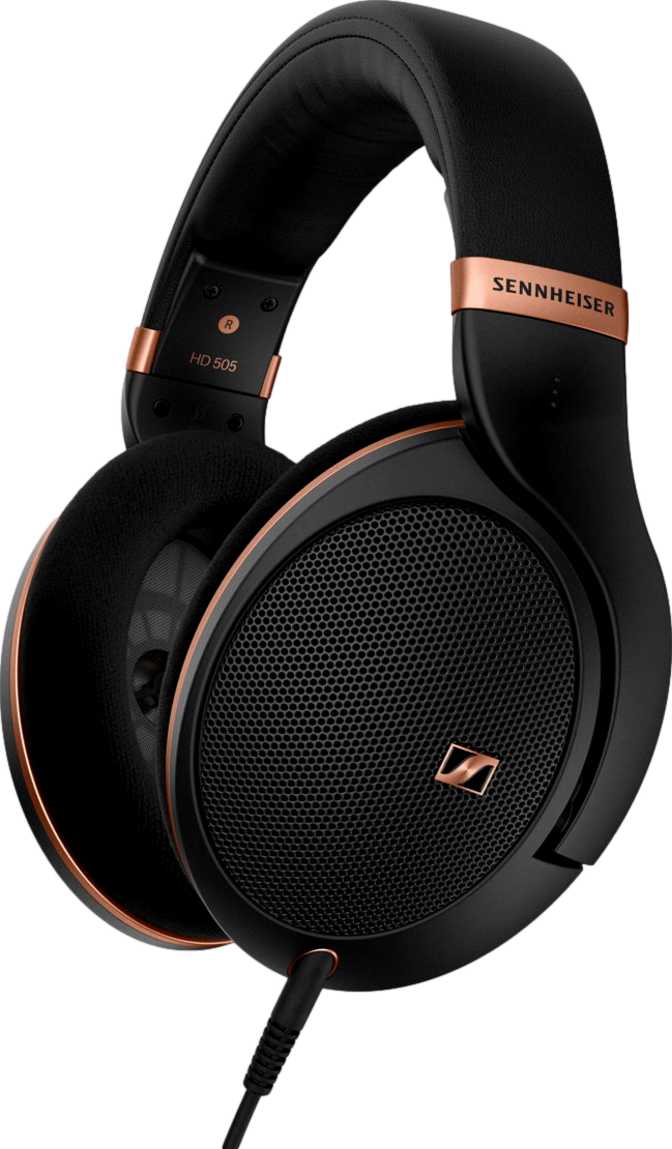
What You're Actually Buying With the Sennheiser HD 505
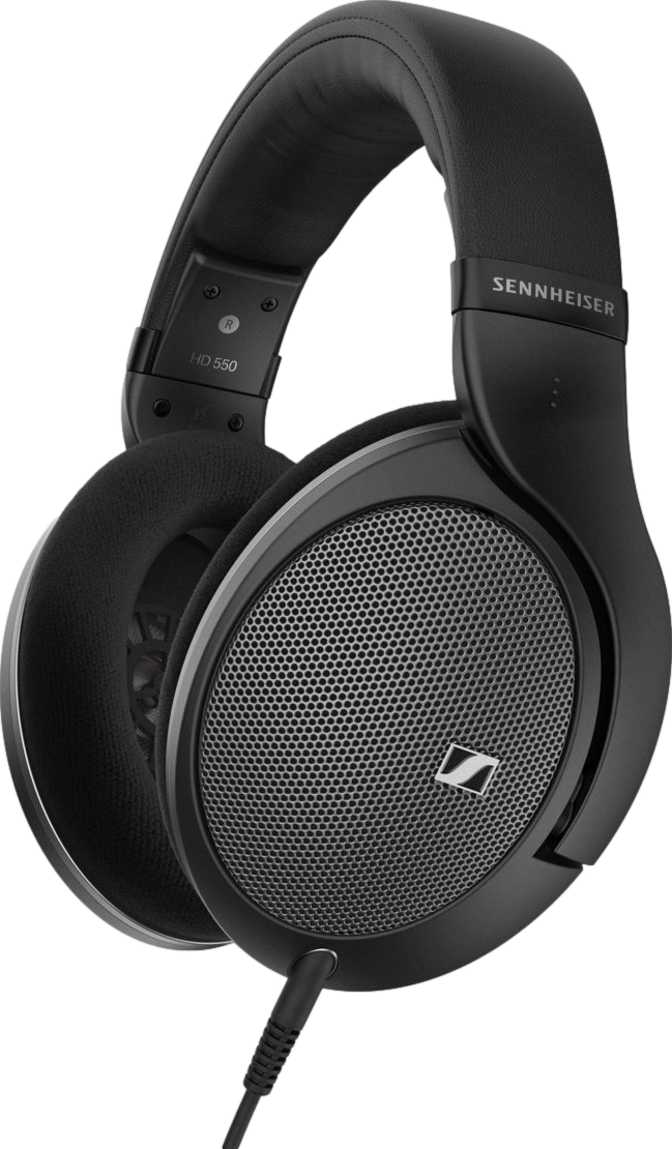
The Sennheiser HD 505 is not trying to be everything to everyone, and that's exactly the point. There's no battery to charge, no app to download, and no Bluetooth pairing screen to fight with. It's a wired, open-back, over-ear headphone built for one job: reproducing music as faithfully and naturally as possible when you're sitting at a desk, a desktop rig, or a home hi-fi setup.
If you've been comparing this against wireless earbuds or noise-cancelling travel headphones, you're comparing two different product categories — and understanding that distinction is the single most important thing before you decide whether the HD 505 belongs in your setup. This review breaks down exactly what that design philosophy means in practice, where the HD 505 shines, where it deliberately holds back, and whether it matches how you actually plan to listen.
Open-Back Design
Wired Connection
No Battery Needed
Built for Desktop Listening
Design and Build: Comfort Built for Long Listening Sessions
The HD 505 uses a full-size, over-ear design rather than on-ear pads, which means the cushions wrap fully around your ears instead of resting on top of them. For anyone who's worn on-ear headphones for more than an hour, the difference is immediately noticeable — over-ear cups distribute clamping pressure across a wider area, which translates into noticeably less ear fatigue during long listening or work sessions.
This is an adult-sized headphone rather than a model scaled down for smaller heads, so households shopping for a child's first headphone should look elsewhere — the fit and weight distribution here are calibrated for grown-up proportions.
A few honest trade-offs come with this build:
No Folding Hinge
The headband doesn't collapse down for storage, so this is a headphone that lives on a stand or a desk rather than one that travels in a bag.
No Carrying Case
No pouch or travel bag is included, reinforcing its stay-at-home design intention.
No Water Resistance
Keep it away from workouts, rain, and humid environments; this is a listening instrument, not gym gear.
1.8m Cable
Enough slack to sit back from a desktop interface or amplifier, though the cable isn't a tangle-resistant design — loose coiling helps it last.
None of this is a flaw so much as a clear statement of intent: the HD 505 wants a permanent spot on your desk, not a slot in your backpack.
The Open-Back Design: What It Means and Why It Matters
The single most defining spec on this headphone is its open-back construction, and if you're new to headphones, this concept is worth slowing down on.
Closed-Back (Most Headphones)
The earcups trap sound inside, which boosts bass and blocks outside noise, but it also creates a sense of sound coming from "inside your head."
Open-Back (Sennheiser HD 505)
The back of each earcup is vented rather than sealed, letting air — and sound — pass through freely.
The practical effects are:
- A wider, more natural soundstage. Instruments and vocals feel like they're positioned around you in space rather than crammed between your ears, which is a major reason open-back designs are favored for critical music listening.
- Less driver resonance and pressure buildup. Because air isn't trapped inside the cup, the diaphragm moves more freely, which typically results in a cleaner, less boxy sound compared to sealed designs at a similar price point.
- Zero isolation in either direction. Outside noise gets in, and your audio leaks out audibly to people nearby. At moderate-to-high volumes, someone sitting next to you will hear what you're listening to.
Sound Performance: Frequency Range, Power Needs, and Clarity
Frequency Range and What It Tells You
12 Hz – 38,500 Hz
Rated Frequency Response
The HD 505 is rated to reproduce frequencies from 12 Hz up to 38,500 Hz. For context, healthy human hearing typically tops out around 20,000 Hz, and most adults lose sensitivity to the upper end of that range over time. So why build a driver that reaches almost double what most ears can consciously detect?
The honest answer is headroom, not magic. Extending well beyond the audible ceiling generally means the driver isn't straining at the edges of its usable range — the frequencies you can actually hear are reproduced with more stability and less distortion. On the low end, reaching down to 12 Hz suggests genuine sub-bass extension rather than bass that's artificially boosted or rolled off early, though open-back designs in general tend to favor accuracy over thumping low-end impact.
Impedance and Amplification: Do You Need an Amp?
120 Ω
Impedance Rating
This is the question that trips up the most buyers, so let's be direct about it. The HD 505 carries a 120-ohm impedance rating — a measure of electrical resistance that determines how much power the headphone needs to reach a comfortable, undistorted volume. For comparison, most phone-bundled earbuds sit somewhere between 16 and 32 ohms, meaning a small device battery can drive them easily. At 120 ohms, the HD 505 needs considerably more voltage to sing properly.
Sensitivity and Volume Headroom
107.9 dB/mW
Sound Pressure Level
Alongside impedance, the HD 505 has a sound pressure level rating of 107.9 dB per milliwatt — essentially how loud the headphone gets for a given amount of power fed into it. On its own, that figure looks reasonably efficient. But because it's paired with the higher 120-ohm impedance, the real-world result is a headphone that rewards a proper amp with plenty of clean, controlled volume headroom, rather than one that gets uncomfortably loud the moment you nudge a volume slider.
Key Features Explained
Spatial Audio Compatibility
The HD 505 is built to faithfully pass through spatial and virtual surround mixes processed by your source device or amplifier. Because it's a passive headphone with no onboard electronics, it isn't doing the spatial processing itself — instead, its strength lies in accurately reproducing whatever signal it's fed, including spatially mixed content, without coloring or smearing the imaging. Combined with the wide soundstage the open-back design naturally provides, this makes it a strong analog partner for spatial audio sources rather than a headphone with its own built-in spatial engine.
Traditional Stereo Configuration
This is a standard two-channel stereo headphone — one driver per ear handling the left and right channels, rather than any kind of multi-driver-per-cup arrangement. That's worth flagging only because some shoppers assume "spatial audio support" implies extra hardware; here, it doesn't. The spatial effect comes from accurate stereo imaging and the open-back acoustics, not from additional drivers.
What's Deliberately Left Out — And Why That's a Feature
The spec sheet shows a long list of things the HD 505 doesn't do. Taken together, this tells a consistent story rather than a list of missing features:
- No Microphone
- This headphone isn't built for calls or as a gaming headset — it's a music-listening tool, full stop.
- No In-Line Control Panel
- Keeps the cable simple and free of extra electronics that could fail or add weight.
- No On-Device Control Panel
- No onboard buttons to learn or accidentally bump during use.
- No In-Ear Detection
- Music keeps playing when you take the headphones off — no surprise interruptions if they shift during use.
Power and Reliability: Why There's No Battery to Worry About
The HD 505 has no battery — not rechargeable, not removable, not solar-assisted, and no battery indicator, because there's simply nothing to indicate. This is a fully passive headphone: every bit of the audio signal and power comes through the wired connection itself.
No Rechargeable Battery
No Removable Battery
No Solar Battery
No Battery Indicator
Connectivity: Wired-Only, and What That Trade-off Buys You
The HD 505 connects exclusively via a wired connection — there's no Bluetooth, no wireless mode, and no companion app. For some buyers in an increasingly wireless world, that might initially read as a step backward. In context, though, it's a deliberate trade-off that comes with genuine benefits:
- No compression. Wireless audio almost always passes through a Bluetooth codec that compresses the signal to some degree. A wired connection skips that step entirely, delivering the source's full analog signal.
- No latency. There's no wireless handshake delay between what's playing and what you hear — relevant for anyone syncing audio to video or using the headphone in a studio or production context.
- No pairing friction. Plug in and listen. No Bluetooth menus, no re-pairing after switching devices, no firmware updates required to keep working.
The cost, of course, is mobility. You're tethered to whatever source you've plugged into, and that source needs to be capable of properly powering a 120-ohm load, as covered above.
Who the HD 505 Is Built For — and Who Should Skip It
Built For
- Desktop and home listeners with a fixed listening spot — a desk, a home studio corner, or a hi-fi chair.
- Music enthusiasts who already own, or are willing to buy, a headphone amp or capable audio interface.
- People sensitive to ear fatigue from clamping on-ear designs, thanks to the over-ear cushion approach.
- Anyone prioritizing accurate, spacious sound over bass impact or isolation.
Look Elsewhere If You Need
- A travel or commuting headphone — no folding design, no case, and no isolation from outside noise.
- A headset for calls or gaming — there is no microphone and no way to add one.
- A phone-only setup without an amp or dongle capable of driving 120 ohms.
- Noise isolation for open offices or shared spaces, or a kid-sized first headphone.
How It Stacks Up Against the Alternatives
Rather than comparing the HD 505 against any single competing model, it's more useful to understand how its category — wired, open-back, passive headphones — stacks up against the other major headphone categories you're likely considering.
| Category | Sound Character | Isolation | Portability | Power Needs |
|---|---|---|---|---|
| Wired Open-Back HD 505's Category | Spacious, natural soundstage, accurate imaging | None — leaks sound both ways | Low — desk-bound, no folding, no case | Needs a capable amp/source for best results |
| Wired Closed-Back | More contained, often bass-forward | Moderate passive isolation | Low-to-moderate | Generally easier to drive |
| Wireless ANC | Convenient, tuned for consistency across volumes | High — built specifically to block outside noise | High — foldable, cased, travel-ready | Battery-dependent, no amp needed |
The takeaway: if isolation, portability, and convenience top your priority list, a wireless ANC headphone will serve you better. If your priority is the most natural, detailed reproduction of music in a fixed listening environment, the open-back wired category — where the HD 505 lives — is built specifically to win on that exact criterion, at the cost of everything the other two categories optimize for.
Strengths and Weaknesses: An Honest Assessment
"The HD 505's biggest strength is also its biggest constraint: total commitment to sound accuracy over convenience."
Strengths
The wide frequency range gives the driver room to breathe rather than strain, the open-back design produces a soundstage that closed designs simply can't replicate at a similar price, and the over-ear comfort means long sessions don't turn into a clamping headache. There's also something quietly reassuring about a headphone with no battery to manage and no software to maintain — it will sound exactly the same in five years as it does on day one, provided the cable and pads are cared for.
Weaknesses
The 120-ohm impedance effectively requires a separate amp purchase for buyers who only have a phone or laptop on hand, which adds cost and complexity that isn't obvious from the headphone's price alone. The complete lack of isolation means this is a poor choice for anyone who doesn't control their listening environment. And the absence of a microphone, folding hinge, or carrying case means this headphone does exactly one job — buyers expecting a do-everything headphone will be disappointed.
Common Questions Before You Buy
Final Verdict
The Sennheiser HD 505 is a purpose-built headphone for a specific kind of listener: someone with a fixed listening space, an appreciation for accurate and spacious sound, and either an existing amp or the willingness to add one. Within that use case, the open-back design, wide frequency extension, and over-ear comfort combine into a genuinely rewarding listening experience that closed-back or wireless alternatives can't fully replicate.
Outside that use case — for commuting, calls, gaming, or any situation requiring isolation or portability — this is the wrong tool for the job, and no amount of sound quality changes that.
Buy it if you have a dedicated listening setup, you're feeding it from a capable amp or audio interface, and you value soundstage and accuracy over bass punch and isolation.
Skip it if you need a headset for calls or gaming, you're shopping for travel or commuting use, or you're only ever going to plug it into a phone without additional amplification.