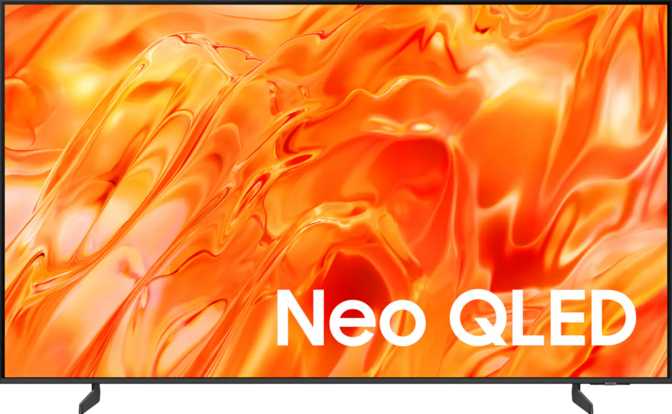
Samsung UN85U8000HFXZA 85-Inch 4K TV: A Full and Honest Review
TVsBest for large-room viewers and casual streamers. Consider alternatives if competitive gaming or Dolby Vision content is a priority.
Buying an 85-inch television is not like buying most electronics. At this size, the screen stops being a screen and starts being a presence — one that shapes the entire room around it. The Samsung UN85U8000HFXZA is not Samsung's flagship, and it doesn't pretend to be. What it offers is a genuinely large, capable 4K LED display with a mature smart platform, positioned to make the most square footage of picture accessible to the widest possible audience. Whether that trade-off works in your living room depends entirely on what you are walking in expecting.
Build Quality and Physical Presence
Scale That Changes a Room
At just under 74.5 inches wide and roughly 42.7 inches tall without the stand, this television demands respect before you even power it on. It weighs close to 64 pounds without the stand, which has two practical implications: delivery day requires two people minimum, and wall mounting warrants proper hardware and ideally a professional installer. The TV supports VESA-standard mounting patterns, so third-party wall mounts are widely compatible — but do not underestimate the wall reinforcement this size requires.
The cabinet depth of about 3 inches is typical for LED-backlit LCD panels of this generation. It won't sit flush against a wall like a thin OLED, but on a media stand or with a low-profile bracket, it reads as surprisingly slim given the sheer diagonal.
Panel Construction Highlights
The panel carries an anti-reflection coating — a feature that matters more at this screen size than at smaller ones. Large screens catch ambient light from a wider angle, and without a coating, afternoon sunlight or overhead lighting can wash out the image significantly. Samsung's treatment here reduces that glare without introducing the hazy, matte appearance that some aggressive coatings produce.
An ambient light sensor automatically adjusts brightness based on room conditions, so the picture doesn't blast at full luminance in a dark room or struggle in bright light — a quietly useful feature for a TV that lives across different lighting conditions throughout the day.
Physical Dimensions
- Width: 1,889.8 mm (~74.4 in)
- Height: 1,084.6 mm (~42.7 in)
- Depth: 76.2 mm (~3 in)
- Weight: 28.9 kg (~63.8 lbs, without stand)
Display Performance: What 4K at 85 Inches Actually Means
Resolution and Pixel Density in Context
The panel resolves 3,840 by 2,160 pixels — the standard 4K UHD specification. At 85 inches, this works out to approximately 52 pixels per inch, which sounds low compared to a smartphone or computer monitor. At realistic living room viewing distances of 10 to 14 feet, however, your eyes cannot resolve individual pixels. The image appears sharp and continuous without any visible grain or screen-door effect.
Where 4K at this size genuinely earns its value is in detail density across a wide field of view. Crowd scenes in sports broadcasts, fine architectural texture in cinematic content, and on-screen text all benefit from having that many pixels spread across a canvas this large.
Color Depth and Gradient Accuracy
The panel operates at 10-bit color depth, enabling over a billion distinct color values. In practical viewing, this means smoother gradients in skies, sunsets, and skin tones, with far less banding — those stepped, unnatural color transitions — that plagued older 8-bit displays. This benefit becomes especially pronounced on HDR content, where the difference between a bright highlight and a midtone shadow requires fine color resolution to render convincingly.
HDR Format Support: What's Included and What Isn't
Three of the four major HDR standards in active use today are covered. Here is what each one means for your viewing library.
HDR10
The baseline standard. Nearly every HDR-capable streaming service, Blu-ray disc, and gaming console delivers at least HDR10. Full compatibility across your entire library is guaranteed.
HDR10+
Dynamic metadata HDR — optimizes brightness and contrast scene by scene rather than applying a single global setting. Amazon Prime Video delivers HDR10+ content natively.
HLG
The broadcast HDR standard for live television. Ensures compatibility with HDR broadcast content as it continues expanding across providers and live events.
Viewing Angles
The 178-degree horizontal and vertical viewing specification indicates a wide-angle panel configuration. Colors and brightness hold up well when viewers are seated off-axis — a meaningful advantage for wide sectional sofas, side seating, or rooms where not everyone sits directly in front of the screen. Traditional LED LCD panels historically suffered significant color shift and contrast loss at angles; this specification suggests Samsung has addressed that at the panel level, though off-axis performance still won't quite match an OLED at equivalent pricing.
The 60Hz Refresh Rate Conversation
The native refresh rate of 60Hz means the panel refreshes 60 times per second. For films, standard broadcast TV, and streaming content, this is entirely sufficient and produces no disadvantage. Where it becomes a meaningful consideration is in competitive gaming and fast-motion sports.
Films, series, and sports broadcasts play natively at 60Hz with zero limitations for the vast majority of viewers.
Current consoles output up to 120fps. This panel caps at 60fps, and the absence of VRR or adaptive sync compounds the limitation for serious gaming use.
Connectivity: Ports, Wireless, and What They Mean Day-to-Day
HDMI: Three Ports, One Standard
Three HDMI ports sounds sufficient until you start counting devices: a streaming stick or cable box, a gaming console, a soundbar. Three fills up fast. All three ports operate on HDMI 2.0, which supports 4K at 60Hz — matching the full resolution of this panel. If you are hoping for HDMI 2.1, which supports 4K at 120Hz and the gaming-oriented VRR features, this TV does not offer that.
One HDMI port supports both ARC and eARC — Audio Return Channel and its enhanced successor. This means a single HDMI cable carries audio from the TV back to a connected soundbar or AV receiver, without needing a separate optical cable. eARC specifically supports high-bandwidth audio formats including uncompressed Dolby TrueHD and DTS-HD Master Audio. If you are planning a soundbar upgrade, eARC support here gives you room to grow without changing your cable setup.
Wireless Display and Smart Home
Miracast support enables direct screen mirroring from Android phones and Windows laptops without apps or additional hardware. AirPlay extends the same convenience to iPhones, iPads, and Macs. Note that this is AirPlay connectivity — not full HomeKit integration. The TV does not appear natively in the Apple Home app as a controllable device.
Google Assistant and Amazon Alexa both operate as full voice command platforms, either through the TV's built-in system or through external smart speakers on your network. Voice control for volume, input switching, content search, and smart home device control is fully functional through both ecosystems.
Network, USB, and Wireless
A physical Ethernet port provides wired network connectivity for those who prefer a stable, interference-free connection for 4K streaming — a wise choice in households where Wi-Fi is congested. Wireless connectivity covers both Wi-Fi 4 and Wi-Fi 5, giving solid throughput on both older and newer routers. Bluetooth 5.3 handles wireless audio accessories and remote communication with low latency and strong connection stability. There is no 3.5mm headphone jack and no memory card slot.
Full Port and Wireless Summary
- HDMI3 × HDMI 2.0 (incl. ARC + eARC)
- USB1 × (recording supported)
- Ethernet1 × RJ45
- Wi-FiWi-Fi 4 + Wi-Fi 5 (802.11ac)
- Bluetooth5.3
- Headphone JackNot included
- Memory Card SlotNot included
- Screen MirroringAirPlay + Miracast
- Voice AssistantsGoogle + Alexa
Audio Performance
Built-In Sound: Set Realistic Expectations
The built-in speaker system delivers 20 watts of total stereo output — two 10-watt channels. For a television of this size, that is workable for casual daytime viewing and news, but it will feel undersized in a large room with any background noise. The cabinet has no dedicated subwoofer, so bass extension is limited. Dolby Audio processing is present, which helps the built-in system manage clarity and spatial impression better than raw wattage suggests — but the physics of thin TV cabinets impose real limits.
Dolby Atmos, the object-based surround format that creates height channels in compatible systems, is not supported by the built-in speakers. For buyers pairing a Dolby Atmos-capable soundbar via the eARC port, the soundbar itself handles Atmos decoding independently of the TV — so the TV's lack of native Atmos does not prevent an Atmos experience from a connected soundbar.
Audio Specifications
- Output Power2 × 10W (20W total)
- ConfigurationStereo
- Dolby AudioIncluded
- Dolby AtmosNot supported
- SubwooferNot included
- HDMI ARCIncluded
- HDMI eARCIncluded
Smart TV Platform and Daily Usability
Samsung's Tizen-based smart TV platform is one of the most mature in the market. The built-in browser, sleep timer, child lock, and voice command capabilities cover the functional baseline that most households expect. The TV supports remote smartphone control, so your phone can substitute for the physical remote if it is misplaced or if you prefer an app-based interface. The remote itself requires standard batteries — it is not solar-charging like Samsung's higher-tier models, though most remotes last months per battery set in normal use.
Included Smart Features
- Built-in smart TV (Tizen OS)
- Google Assistant voice control
- Amazon Alexa voice control
- AirPlay (Apple device mirroring)
- Miracast (Android and PC mirroring)
- Smartphone remote control
- USB content recording
- Built-in web browser
- Sleep timer and child lock
- 0.5W ultra-low standby consumption
Notable Omissions
- No Apple HomeKit or Siri native integration
- No Chromecast built-in
- No rechargeable remote control
- No optical digital audio output
AirPlay works well for Apple media casting and mirroring, but households running HomeKit automation will find the TV doesn't appear as a native controllable device in the Apple Home app. This is an important distinction for Apple-centric smart homes.
Who This TV Is For — and Who Should Look Elsewhere
The Right Buyer
- Households that want maximum screen size without crossing into premium-tier pricing
- Family rooms where multiple people watch from different angles — wide viewing angles hold up well off-axis
- Casual and moderate streamers using Netflix, Prime Video, YouTube, and broadcast TV as their primary sources
- Home theater setups where a separate soundbar or AV receiver handles audio — the eARC port is ready for any budget level
- Households already embedded in Google or Amazon smart home ecosystems where dual voice assistant support adds real daily value
Consider Alternatives If...
- You game competitively on a PS5 or Xbox Series X — the 60Hz ceiling and absence of VRR are meaningful gaps for those platforms
- Your home runs Apple HomeKit — AirPlay works for media but the TV won't appear as a native HomeKit-controlled device
- Dolby Vision content is a priority — heavy Apple TV+ or Netflix subscribers who care about format purity will see fallbacks on some titles
- You routinely connect four or more HDMI devices — three ports fills up quickly in a fully equipped media room
How It Compares to the Competition
The clearest trade-off this TV makes relative to premium alternatives in a smaller diagonal: you are exchanging screen real estate for feature depth. Against true entry-level 85-inch competitors, it holds up well. Against smaller premium models, the feature gap becomes real and specific.
| Feature | Samsung UN85U8000HFXZA This TV | Typical 85" Entry-Level LED | Typical 75" Premium 4K LED |
|---|---|---|---|
| Screen Size | 84.6" | 85" | 75" |
| Native Refresh Rate | 60Hz | 60Hz | 120Hz |
| HDR Formats | HDR10, HDR10+, HLG | HDR10 only | HDR10, Dolby Vision, HLG |
| Adaptive Sync (VRR) | None | None | Often Included |
| HDMI Ports | 3 × HDMI 2.0 | 2–3 × HDMI 2.0 | 4 × HDMI 2.1 |
| Dolby Atmos | Often Included | ||
| AirPlay | Rarely | ||
| HDMI eARC | Rarely | ||
| Bluetooth Version | 5.3 | 4.2–5.0 | 5.0–5.3 |
Strengths and Honest Limitations
Where It Excels
The screen size advantage is genuine and difficult to overstate. A properly set up 85-inch 4K display at the right viewing distance creates an immersive quality that no 65 or 75-inch panel can replicate — it fundamentally changes the experience of watching sports, films, or shared family content. The scale alone justifies serious consideration for anyone who spends meaningful time in front of a television.
The anti-reflection coating and ambient light sensor make this TV livable across different times of day without constant manual adjustment. This is a practical benefit that never appears in spec comparisons but matters every single day. HDR10+ adds real scene-level intelligence to HDR rendering beyond what basic HDR10 provides, and the eARC port future-proofs the audio chain for soundbar upgrades at any budget level.
Wide viewing angles, AirPlay compatibility, Bluetooth 5.3 for wireless accessories, USB recording capability, and dual voice assistant support through both Google and Amazon consistently outpunch entry-level 85-inch competition in the areas that matter most to non-gaming households.
Where It Falls Short
The 60Hz native panel and absence of adaptive sync are legitimate limitations — not dealbreakers for non-gamers, but genuine constraints for gaming households. Both the PS5 and Xbox Series X are built to leverage 120Hz output and adaptive sync for smoother gameplay, and this TV cannot deliver either. Choosing it for a gaming-primary setup involves a real and ongoing compromise.
The single USB port is tight if you want both recording and media playback running simultaneously. The built-in audio, while functional, requires external reinforcement for serious movie or music use. Dolby Vision's absence will occasionally mean a format fallback on certain streaming platforms, and Dolby Atmos is entirely absent from the built-in speaker system.
The one-year warranty is industry standard — not generous — for a display this large. Extended protection is worth factoring into total cost. The non-rechargeable remote is a minor but genuine step backward compared to what Samsung's higher-tier models offer.
Answers to the Questions Buyers Actually Search For
Final Verdict
The Samsung UN85U8000HFXZA earns its place as an accessible entry point into large-format 4K television. It does the core job — a massive, genuinely sharp 4K image with solid HDR coverage and a mature smart platform — without inflating the price with features that a significant portion of buyers won't use. For families, casual streamers, and sports viewers who want the most screen they can get at a given budget, this TV makes a strong case.
The limitations are real and deserve clear acknowledgment: 60Hz is a ceiling that matters for gaming households, Dolby Vision's absence is a format gap for certain streaming subscribers, and the built-in audio is a starting point rather than a destination. If any of those limitations are central to how you watch television, you are better served by either a premium Samsung from a higher tier or a smaller panel from a brand that prioritizes feature completeness over screen size.
For the buyer who ranks the biggest possible picture at the top of their priority list and has no specific gaming, Dolby Vision, or advanced audio requirements — this Samsung delivers that mandate honestly and at scale.