The Case for Going Big
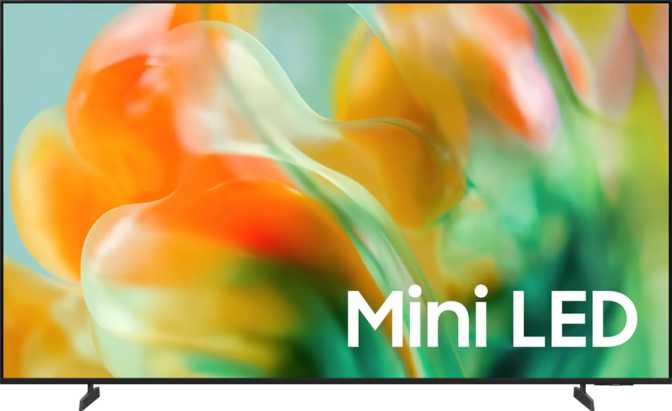
There is a moment when a television stops being furniture and starts being an experience. The Samsung QN85QN70HAFXZA sits squarely in that territory. At 85 inches measured diagonally — an actual panel face of roughly 74 inches wide by 42 inches tall — this is not a TV you buy to fill a wall; it is a TV you reorganize a room around.
For anyone debating whether to step up from a 65 or 75-inch screen, the jump to this size is more dramatic than the numbers suggest. Field of view, perceived detail, and the sense of physical presence in the room all shift in ways that smaller screens simply cannot replicate.
This review covers the full picture: what the screen actually delivers, where the technology succeeds, where it compromises, and whether this specific Samsung model earns its place among the serious options at this screen size.
Editor's Rating
4.0 / 5.0
Strong for cinema & sport; limited for gaming
Display Technology: QLED Plus Mini-LED
How the panel stack works — and what it means for picture quality every day.
How the Panel Works
The QN70 series uses a layered approach to picture quality. The underlying panel is a standard LCD, but two enhancement layers set it well apart. The first is quantum dot technology — a thin film of nano-sized semiconductor particles that converts the backlight's output into a far wider and more saturated color spectrum than conventional LCD phosphors produce. This is why the panel can reproduce over one billion distinct color values at 10-bit color depth.
That 10-bit figure matters because it produces smooth gradients without banding in skies, skin tones, and sunsets — the kind of subtle quality difference that separates a good television from a great one. The second enhancement is Mini-LED backlighting: a far denser array of smaller LEDs gives the processor more localized control over brightness, resulting in deeper perceived black levels and better highlight separation than a standard LED backlight achieves.
Resolution at This Screen Size
The panel resolves 3,840 by 2,160 pixels — the standard 4K Ultra HD specification. At 85 inches, those pixels spread across a larger physical surface, which brings pixel density to approximately 52 pixels per inch. A 55-inch 4K screen runs closer to 80 pixels per inch by comparison.
This is a physical reality of large-format displays, not a Samsung-specific shortcoming. At normal living room seating distances of eight to twelve feet, individual pixels are invisible to the naked eye and the image reads as sharp and detailed. Only viewers seated fewer than five feet away would perceive any softness — an unrealistic scenario at this screen size for virtually any household.
HDR Support: What's Included and What Isn't
This TV supports three HDR formats. HDR10 is the baseline standard that virtually all HDR content — streaming, Blu-ray, gaming — supports. HDR10+ adds dynamic metadata so brightness can be optimized scene-by-scene rather than set once for an entire film. HLG is designed for broadcast content, including live sports delivered with HDR signals.
What this TV does not support is Dolby Vision. For most viewers this will not matter — the majority of HDR content on YouTube, Amazon Prime, and Apple TV+ is available in HDR10 or HDR10+. However, Netflix's highest-quality HDR tier is delivered exclusively in Dolby Vision, and some premium Blu-ray releases carry no other HDR encoding. If Netflix is your primary platform or you collect premium discs, this omission is worth factoring in carefully.
| HDR Format | Supported | Best Used For |
|---|---|---|
| HDR10 | Streaming, gaming, Blu-ray | |
| HDR10+ | Premium streaming & Samsung content | |
| HLG | Broadcast TV & live events | |
| Dolby Vision | Not supported |
Refresh Rate: 60Hz Explained
The native refresh rate is 60Hz — the screen redraws the image 60 times per second. For film content at 24fps, television at 30fps, and most streaming video, 60Hz is entirely adequate. Motion is smooth and judder is manageable across everyday viewing scenarios.
Where 60Hz becomes a real limitation is gaming. PlayStation 5 and Xbox Series X are optimized for 120fps output, and those consoles cannot send a 120fps signal to a 60Hz panel. The TV will display those games at 60fps regardless of console settings.
Gamer Alert
If gaming — particularly competitive or fast-paced titles — is a significant use case, the 60Hz ceiling is the single most meaningful specification trade-off on this entire spec sheet.
Viewing Angles and Ambient Light Performance
The panel's viewing angles of 178 degrees in both horizontal and vertical directions are wide-angle figures typical of VA and IPS LCD construction at this tier. In practice, for anyone seated within a reasonable arc of the center axis, image quality holds well. Colors remain accurate and contrast is preserved for viewers seated off to the sides — important in living rooms where the seating rarely forms a perfect straight line directly in front of the screen.
The anti-reflection coating is a practical asset in rooms with windows opposite the television or overhead lighting that cannot be fully controlled. Samsung's coating diffuses reflections rather than eliminating them entirely, keeping the image readable in bright conditions without requiring blackout curtains to enjoy the picture.
The built-in ambient light sensor automatically adjusts screen brightness to match the room's lighting level — a convenience that prevents the TV from appearing washed out in daylight or uncomfortably bright in a darkened room late at night.
178° Horizontal
Wide seating coverage with minimal color shift off-axis
Anti-Reflection Coating
Diffuses room light for better daytime usability
Ambient Light Sensor
Auto-adjusts brightness to match room conditions
Size, Weight, and Physical Installation
Measure your space before you order — the physical reality of 85 inches surprises many buyers.
74.8″
Panel Width
42.8″
Panel Height
1.1″
Panel Depth
91lb
Total Weight
Planning for the Physical Reality
The QN85QN70HAFXZA measures approximately 1,900mm across and just under 1,090mm tall. Before ordering, measure your intended space with those numbers — not the 85-inch diagonal figure. Many buyers are caught off guard by the width when a TV this size arrives at the door.
At just under 27mm in depth, the panel is genuinely slim for its size. When wall-mounted, it sits close to the surface and looks intentional rather than intrusive. The TV supports VESA mounting, which is the industry-standard bolt pattern used by virtually all third-party wall brackets. Confirm the specific VESA pattern matches your intended bracket before purchasing.
Operating Environment
The TV is rated to operate between 10°C and 40°C (50°F to 104°F). For standard indoor use in a climate-controlled home this covers all realistic conditions. It is relevant only if you plan to use this in an environment that sees unusually cold or hot temperatures — a garage cinema setup in winter, for example, may fall outside this range.
Installation Warning
At approximately 91 pounds, this is not a one-person installation. Wall mounting in particular requires hardware rated for this weight and, ideally, two adults comfortable working with heavy panels above head height.
The wall structure and stud locations must be verified before mounting hardware of this size. If in doubt, professional installation is strongly recommended — the cost is minor relative to the risk of improper mounting.
Verify VESA bolt pattern compatibility with your wall bracket before purchasing either component.
Audio Performance: A Capable Foundation
The built-in speakers work well for everyday use — but serious listeners will want to plan ahead for external audio.
The built-in speaker system delivers 20 watts of total output through a stereo two-channel configuration. At this screen size, that output is sufficient for dialogue clarity and everyday listening at moderate volumes. In a standard living room at conversational-level television watching, the speakers hold their own without strain.
What they cannot fully replicate is the low-frequency weight and physical impact that film soundtracks and music mixing rely on. Without a dedicated subwoofer driver, bass is present but limited in depth. For news, talk content, and drama series, this will not bother most viewers. For action films, sports with crowd atmosphere, and music concerts, you will feel the absence of the low end.
The practical solution is built into the TV's hardware: the inclusion of both HDMI ARC and HDMI eARC makes connecting a soundbar or AV receiver straightforward and high quality. HDMI eARC specifically supports lossless audio formats — Dolby TrueHD, DTS-HD Master Audio — that compressed audio formats cannot carry. If audio quality matters to you, budget for external speakers; the TV's port selection makes that integration easy and clean.
Audio Connectivity
- HDMI ARC — Standard audio return channel for soundbar connection
- HDMI eARC — Lossless audio passthrough for full surround formats
- Digital Out — Optical connection to legacy receivers
- Bluetooth 5.3 — Wireless headphones for private listening
- No 3.5mm jack — Wired headphone users need an adapter or Bluetooth
Connectivity: A Full Ecosystem of Ports
Three HDMI 2.1 ports, Ethernet, Wi-Fi 5, and Bluetooth 5.3 cover all realistic input scenarios without adapter juggling.
Wired Connections
3× HDMI 2.1
Supports bandwidth up to 48 Gbps — sufficient for all 4K HDR sources. Connect a gaming console, streaming device, and Blu-ray player simultaneously without swapping cables. Note: the panel's 60Hz ceiling means the gaming benefit of HDMI 2.1's 120fps capacity is partially locked out.
2× USB Ports
Accommodate external drives for USB recording, local video file playback, and accessory power. No memory card slot is included.
Ethernet (RJ45)
Always the preferred connection for 4K HDR streaming where network stability matters more than cable management convenience. One port is included.
Wireless Connectivity
Wi-Fi 5 (802.11ac)
Covers both 2.4GHz and 5GHz bands. Wi-Fi 5 on the 5GHz band provides enough throughput for 4K HDR streaming without buffering on any competent modern home router.
Bluetooth 5.3
A current-generation Bluetooth standard enabling reliable, low-latency connections with headphones, soundbars, and keyboards. Ideal for private listening without disturbing others in the household.
Miracast
Enables wireless screen mirroring from Android devices and Windows PCs without any additional apps or hardware — useful for sharing a laptop screen or phone directly on the big display.
Smart TV Features: The Tizen Ecosystem
A mature smart platform with broad voice assistant support and useful AirPlay integration for Apple households.
Voice Control and Smart Home
This TV integrates with both Google Assistant and Amazon Alexa, which covers the two most widely used smart home ecosystems. Controlling playback, adjusting volume, searching for content, and querying smart home devices can all be handled by voice. Samsung's own Bixby voice assistant is also part of the platform, offering on-device processing for common commands.
AirPlay 2 support allows direct streaming from iPhones, iPads, and Macs without needing an Apple TV device — a meaningful convenience for households with Apple devices. However, full Apple HomeKit integration for smart home automation is not present, meaning this TV will not appear as a native HomeKit accessory in the Apple Home app. Siri voice control through HomeKit is therefore unavailable.
Practical Smart Features
- USB Recording — Record live broadcast TV to an external drive without a DVR
- Built-in Browser — Web access directly from the TV
- Sleep Timer — Automatically powers off on a schedule
- Child Lock — Content controls for family households
- Smartphone Remote — Full control via Samsung SmartThings app
- No Rechargeable Remote — Standard batteries required
- No Apple HomeKit — Siri and HomeKit automation not available
Power Consumption: Running Costs at Scale
A television this large draws more power than smaller screens — here's how to think about the long-term cost.
234W
Typical Operating Draw
0.5W
Standby Power Draw
At typical operating levels, this TV draws approximately 234 watts — meaningfully more than a 65-inch set pulling around 150 watts, but proportionate for the screen size category and competitive with other 85-inch televisions in this class.
At average U.S. electricity rates, running this TV for five hours daily adds up to roughly $40–$50 per year in energy costs — less than most people spend on a single streaming subscription. For most households, the power draw is a non-issue in practical terms.
The standby figure of just 0.5 watts is genuinely efficient. Leaving the TV in standby overnight adds almost nothing to your electricity bill, so leaving it plugged in with no sleep timer is a reasonable choice without meaningful waste.
Who This TV Is For — and Who Should Look Elsewhere
Matching the right TV to the right household matters more at this price point than almost any other decision.
The Ideal Buyer
- Households wanting a cinematic living room experience for film, sports, and streaming, where scale of image is the primary draw.
- Families where multiple people watch from different seating positions and wide viewing angles matter.
- Smart home users invested in Google or Amazon ecosystems who want the TV to integrate with voice routines.
- Anyone upgrading from a basic LED or older 4K TV who wants a meaningful jump in color volume and contrast without moving to OLED pricing.
- Apple device users who want AirPlay convenience without purchasing a separate Apple TV box.
- Viewers in bright living rooms where OLED's contrast advantage is negated and peak brightness matters more.
Who Should Look Elsewhere
- Serious console gamers wanting 120fps output at 4K will be constrained by the 60Hz panel ceiling. Dedicated gamers should prioritize a 120Hz native panel.
- Heavy Netflix subscribers or Dolby Vision Blu-ray collectors will sacrifice HDR coverage compared to sets supporting all four major HDR formats.
- Audio-first buyers who expect the built-in speakers to carry a full film soundtrack. Budget for external audio alongside the TV purchase.
- Anyone in a tight or constrained space — an 85-inch television requires real room planning. If the room needs significant rearrangement, the installation becomes complicated before performance even matters.
- Dedicated home theater rooms with full light control, where an OLED's pixel-perfect black levels would be visible and impactful every session.
Competitive Context
How the QN70 sits within the 85-inch category — against both lower-cost QLED alternatives and OLED competition.
| Feature | Samsung QN85QN70HAFXZA | Typical 85″ Entry QLED | Typical 85″ Premium OLED |
|---|---|---|---|
| Backlight Type | Mini-LED | Full-array LED | Self-emissive |
| Native Refresh Rate | 60Hz | 60Hz | 120Hz |
| Dolby Vision | Usually | ||
| HDR10+ | Sometimes | Sometimes | |
| Absolute Black Levels | Good | Moderate | Best in Class |
| Peak Brightness | High | Moderate | Moderate |
| Price Tier | Mid-Premium | Entry | Premium |
Against OLED at comparable sizes, this Samsung wins on peak brightness — especially useful in bright rooms. In a dedicated darkened home theater, OLED's pixel-level black control becomes more apparent. Against entry-level QLED sets, the Mini-LED advantage is immediately visible in shadow detail and local contrast.
Honest Strengths and Real Weaknesses
A complete picture requires equal attention to both sides of the ledger.
Where It Excels
The QN85QN70HAFXZA is a confident performer in its intended context. The combination of Mini-LED backlighting and quantum dot color produces a picture that is genuinely striking — especially in HDR content where the high peak brightness and expanded color gamut show what the technology is capable of. Color accuracy is one of this TV's strongest qualities, and the anti-reflection coating makes daytime viewing practical without constantly managing ambient light.
The smart platform is mature and capable. The port selection covers most use cases without requiring adapters. The physical build quality at this screen size reflects Samsung's experience producing large-format displays, and the slim depth makes wall mounting look intentional and clean.
For its price tier, the step up from basic LED performance is real and immediately visible. Anyone who has lived with a standard 4K LED television will notice the difference in both color volume and local contrast within the first few minutes of viewing HDR content.
Where It Asks for Compromise
The 60Hz panel is a real constraint for current-generation gaming and for buyers who want future-proofing as content production standards evolve. This is not a Samsung-specific weakness — the QN70 series is positioned below the higher-tier QN90 and QN95 models that carry 120Hz panels — but it is an honest limitation that meaningfully narrows the audience for this specific set.
The absence of Dolby Vision means a small but real gap in format coverage. It will not affect most viewers most of the time, but for households where Netflix is the primary entertainment platform or where premium disc collecting is a genuine hobby, it is a specification that this television cannot overcome regardless of viewing settings.
The built-in audio, while not embarrassing, is best treated as a bridge to an external solution rather than a long-term endpoint. The speakers cover the practical basics — dialogue, standard programming — but fall short of the immersive low-end impact that the scale of the screen invites you to expect.
Frequently Asked Questions
The questions real buyers search for before committing to a purchase at this price and size.
A Confident Recommendation — With One Clear Caveat
The Samsung QN85QN70HAFXZA 85-inch television earns its place for a specific buyer.
The picture quality — particularly the color volume that quantum dot technology produces alongside Mini-LED's improved contrast — delivers a visual experience noticeably above what basic LED sets at this price range can offer. Color accuracy is one of the standout qualities of this panel, and the anti-reflection coating makes daytime viewing practical without managing ambient light around every viewing session. The smart platform is comprehensive, the port selection is practical, and the physical build quality looks intentional once installed.
The 60Hz panel is the one specification that genuinely narrows the audience. If gaming is central to how your household uses a television, this model asks you to accept a real trade-off that cannot be resolved by any setting or firmware update. For everyone else — the family room audience, the sports viewer, the film enthusiast who wants screen scale above all — the QN70 at 85 inches delivers a convincing case for why size, color, and brightness are the variables that matter most in a well-lit living room.
Buy It If
You prioritize picture scale, color quality, and streaming performance over gaming or Dolby Vision coverage
Skip It If
Gaming at 120fps or Dolby Vision coverage are non-negotiable requirements for your household
Great For
Large family rooms, sports fans, film enthusiasts, and multi-viewer households who sit at varied angles
Not Ideal For
Dedicated dark home theaters, competitive gamers, or audio-first buyers without a soundbar budget
Overall Score
4.0 / 5.0