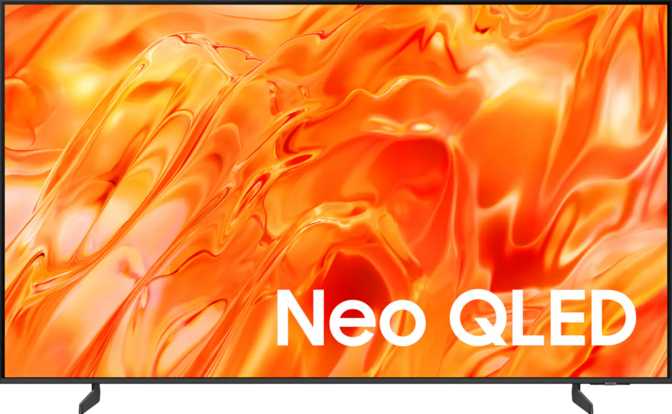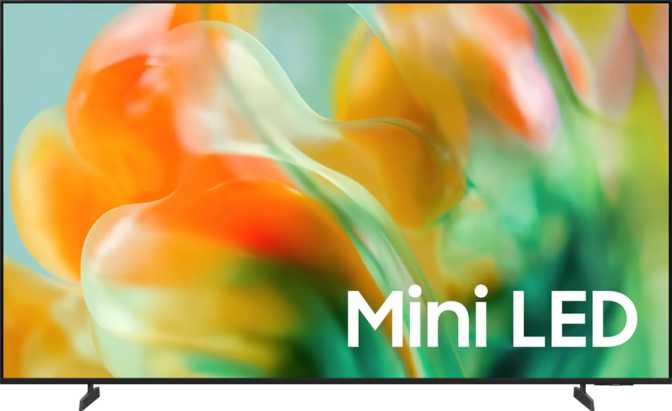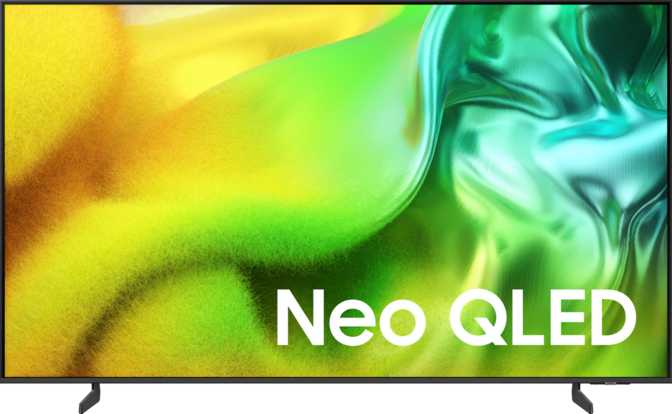
Samsung QN85LS03HWFXZA 85-Inch Mini-LED QLED TV: Full Review
TVsThere's a particular kind of television that sits at the intersection of serious home cinema and thoughtful interior design — and the Samsung QN85LS03HWFXZA lands squarely in that space. At 85 inches, this isn't a casual purchase. It's a commitment to an experience that reshapes a wall, anchors a room, and changes how you consume everything from films to late-night gaming sessions. What makes this model worth scrutinizing is the technology underneath the lifestyle branding: Mini-LED backlighting paired with Samsung's Quantum dot color system, a panel that refreshes 144 times per second, and a connectivity suite that speaks to how people genuinely use televisions today.
Overall Verdict
4.5 / 5
Exceptional display & connectivity.
One meaningful omission to weigh.
85"
Screen
144Hz
Refresh
4K
Resolution
Design and Physical Presence
Build quality, dimensions, and what to expect before it arrives at your door
Living With 85 Inches
The numbers alone tell part of the story: this panel stretches nearly 1,903 mm across and stands just under 1,090 mm tall. Before ordering, measure twice. This is a screen that changes the architecture of a room — not just adds to it. At roughly 42 kilograms, installation requires at least two people and, if wall-mounting, a stud-rated bracket rated for that load.
Samsung has done considerable work to make the physical object feel intentional rather than imposing. The depth of just under 28 mm — less than the thickness of three stacked smartphones — means the panel sits close to the wall and reads as a design element rather than a bulky appliance. This matters enormously in rooms where aesthetics are non-negotiable.
Build Quality and Mounting
The cabinet construction reflects the premium positioning of the LS03 lineage — clean, minimal framing with visual restraint throughout. Wall-mounting is supported via a standard VESA pattern, which is the preferred installation at this size. The standing feet work, but they demand a deeply substantial piece of furniture underneath.
One honest note: There is no 3.5mm audio output on this unit. If you have legacy headphones or a stereo system relying on an analog connection, plan for that before installation day — not after.
Physical Specifications
- Width
- 1,902.5 mm (approx. 74.9 in)
- Height
- 1,089.7 mm (approx. 42.9 in)
- Depth
- 27.9 mm (approx. 1.1 in)
- Weight
- 42.1 kg (approx. 92.8 lb)
- VESA Mount
- Supported
- Operating Temperature
- 10°C – 40°C
Display Technology: What Mini-LED QLED Actually Means
3840×2160 · 10-bit · 1.07 billion colors · 52 ppi · Anti-reflection coating · 178° viewing angles
The Panel Architecture
LCD televisions share a single backlight across the entire image — bright and dark scenes must coexist using the same light source. This causes "blooming," where bright elements bleed light into surrounding dark areas. Mini-LED replaces a small number of large LED zones with thousands of much smaller LEDs grouped into far more precise dimming zones. The result: highlights blaze without contaminating the shadows immediately beside them.
Quantum Dot Color
Quantum dots are microscopic semiconductor particles that convert backlight into extremely pure red, green, and blue wavelengths. The practical result is color volume — accuracy maintained at both high and low brightness — that ordinary LCD panels cannot match. Colors remain vivid even in scenes where the screen is pushing significant brightness, rather than washing out as standard LCDs do under load.
4K at 85 Inches
At 52 pixels per inch, viewed from the 2.5–3.5 meter distances typical for a screen this size, the image is completely smooth and grain-free. Individual pixels are imperceptible from any sensible seating position.
1.07 Billion Colors
The 10-bit color pipeline renders over one billion distinct colors — versus approximately 16.7 million on a standard 8-bit display. Gradients in sky tones, skin in shadow, and subtle scene lighting render cleanly without the banding that reveals lesser panels.
144Hz Motion
Faster than virtually any mainstream television, the 144Hz panel provides headroom for advanced motion processing in sports and fast action, while fully accommodating gaming devices that output 4K at 120fps without any artificial performance cap.
HDR Support: The Full Picture
HDR — High Dynamic Range — instructs a TV to display a far wider tonal range from deepest black to brightest white than standard video allows.
HDR10
The universal baseline standard. Used by virtually all 4K streaming services, Blu-ray titles, and game consoles. Full compatibility is guaranteed across every source you're likely to connect.
HDR10+
Samsung's dynamic metadata standard, available on Amazon Prime Video and an expanding Blu-ray library. Tone mapping updates scene by scene — or frame by frame — rather than applying one fixed setting to an entire film.
HLG
Hybrid Log-Gamma: the broadcast HDR standard. Relevant for over-the-air HDR content and some streaming services. A practical addition for antenna-connected viewers.
Dolby Vision Is Not Supported — and It Matters to Some Buyers
Dolby Vision is a competing dynamic HDR standard used as the premium tier by Netflix, Apple TV+, and Disney+. If you watch heavily on these platforms, content falls back to HDR10 rather than Dolby Vision — still quality HDR, but not the absolute peak those platforms can deliver.
Whether this affects you depends entirely on your content habits. HDR10+ covers Amazon Prime Video and Samsung TV Plus fully. For Apple TV+ and Netflix in their highest-quality mode, the gap is real and daily.
The Gaming Case: AMD FreeSync and HDMI 2.1
For households where gaming is serious — not peripheral
Why FreeSync Premium Pro Matters
Variable refresh rate technology synchronizes the TV's refresh rate to the frame output of a connected gaming device in real time. When a game drops from 80fps to 65fps during a demanding scene, the screen updates at exactly that rate rather than producing visible stutter or tearing. The result is smooth gameplay regardless of whether frame output is perfectly consistent.
FreeSync Premium Pro is AMD's highest tier. It adds specific requirements for HDR performance during VRR operation — ensuring that low-framerate compensation and HDR display work together correctly. On cheaper VRR implementations, enabling VRR can actively degrade HDR quality. That problem doesn't exist here.
Five HDMI 2.1 Ports
Five full HDMI 2.1 ports is genuinely unusual and practically valuable. HDMI 2.1 supports the bandwidth required for 4K at 120fps with HDR — the performance ceiling current-generation consoles are targeting. A setup with a PlayStation, an Xbox, a PC, a streaming device, and a cable box can all remain connected simultaneously without any cable swapping.
Most competitors at this tier offer two or three HDMI 2.1 ports — enough for a focused setup, genuinely limiting in a full living room ecosystem. Five is where compromises stop.
144
Hz Refresh Rate
5×
HDMI 2.1 Ports
120
fps at 4K
VRR
FreeSync Premium Pro
Audio Performance
Dolby Atmos · Dolby Digital Plus · Built-in subwoofer · HDMI ARC & eARC
The integrated audio system includes stereo speakers and a built-in subwoofer — a configuration that positions it well above the thin, rear-firing speakers typical of slim televisions. Dolby Atmos processing is supported, meaning compatible content can produce a more enveloping, spatially dimensional sound stage than standard stereo output can achieve.
For a screen of this size in a living room, the built-in audio will satisfy casual and moderate viewers without supplementation. The subwoofer adds genuine low-frequency weight to action sequences and film soundtracks that flat-speaker televisions simply cannot replicate.
Anyone building a proper home theater will still benefit from an external soundbar or surround system. That connection is handled via the eARC port: Enhanced Audio Return Channel sends high-quality audio — including object-based Dolby Atmos — back to a connected soundbar over the same HDMI cable used for picture, preserving full lossless quality without a separate optical cable.
Audio Feature Checklist
- Dolby Atmos processing
- Dolby Digital Plus passthrough
- Dolby Audio support
- Built-in subwoofer
- Stereo speaker configuration
- HDMI ARC and eARC
- Digital audio output
- No 3.5mm headphone jack
Smart TV Platform and Voice Integration
Tizen OS · Chromecast built-in · AirPlay 2 · Google Assistant · Alexa · Wi-Fi 6E · Bluetooth 5.3
Connectivity and Device Control
The platform runs on Samsung's Tizen-based Smart TV environment. Chromecast is built in, meaning any Chromecast-capable app on a phone, tablet, or laptop casts directly to the screen without an external dongle. AirPlay 2 is also supported — content from Safari, Photos, or any AirPlay-compatible app streams wirelessly from iPhone or Mac.
Miracast support extends wireless display mirroring to Android devices — useful for sharing photos or presentations without a cable. USB recording allows live and scheduled broadcasts to be captured to a connected drive for later playback.
Voice Assistants and Wireless Specs
Both Google Assistant and Amazon Alexa are supported for hands-free control through the TV's built-in microphone. Volume adjustment, input switching, content search, and smart home device management all work without an external speaker.
Wi-Fi 6E sits at the current peak of home wireless standards. In environments with Wi-Fi 6E routers, the TV connects to the 6 GHz band — reduced interference and higher throughput than congested 2.4 GHz or 5 GHz bands. A physical Gigabit Ethernet port is also present. Bluetooth 5.3 handles wireless peripherals with improvements in range, power efficiency, and connection stability over earlier generations.
Google Assistant
Built-in
Amazon Alexa
Built-in
Chromecast
Built-in
AirPlay 2
Supported
Tuner, Broadcast Support, and USB Recording
Free-to-air, cable, and satellite reception — with built-in recording capability
The built-in tuner covers the full range of broadcast standards in current deployment. DVB-T and DVB-T2 handle terrestrial antenna reception — including the higher-capacity T2 standard used by Freeview HD and similar high-definition free-to-air services across Europe. DVB-C handles cable television signals, while DVB-S and DVB-S2 add satellite reception, making this television self-contained for broadcast viewing without a separate set-top box in most markets.
USB recording is supported: live or scheduled programs can be captured to a connected USB storage drive and played back later, functioning as a basic personal video recorder without a subscription. This is a feature that increasingly disappears from premium television specifications as manufacturers push toward streaming-only ecosystems. Having it here is a genuine practical convenience.
Supported Standards
- DVB-T / DVB-T2 — HD terrestrial antenna
- DVB-C — Cable television
- DVB-S / DVB-S2 — Satellite reception
- USB Recording — Live & scheduled
- Sleep Timer — Built-in scheduling
Power and Practicality
Operational realities worth understanding before and after installation
Running at full output, this television draws 250 watts — consistent with a large, high-brightness Mini-LED display doing serious work. Over a year of average viewing at roughly four hours per day, this represents a meaningful electricity cost worth factoring into total cost of ownership, particularly in regions with high electricity rates.
In standby, consumption drops to essentially nothing at 0.5 watts — well within modern energy regulation thresholds, and practically free from a power cost perspective. Leaving it on standby overnight costs nothing measurable.
The operating temperature range — a minimum of 10°C and a maximum of 40°C — covers all typical residential and commercial indoor environments. This is not a screen for a garage, a workshop, or any space subject to cold drafts below 10°C. Standard heated living spaces in any climate are well within range.
250W
Operating Power
0.5W
Standby Power
Who Should Buy the Samsung QN85LS03HWFXZA
And equally important — who should look elsewhere
This TV Is Right For You If…
-
You want a living room anchor screen that handles high-fidelity film viewing and everyday television without compromise — at a size that genuinely transforms the room.
-
Your household includes serious gamers with current-generation consoles or a gaming PC. The combination of 144Hz, five HDMI 2.1 ports, and FreeSync Premium Pro covers every performance scenario those devices support.
-
You have a bright room that cannot be fully darkened. Mini-LED's significant brightness advantage over OLED means HDR performance holds up even with ambient light or nearby windows.
-
You use a mix of Apple and Android devices — both AirPlay 2 and Chromecast built-in are covered, alongside Google Assistant and Amazon Alexa.
-
You're starting a home theater build from a high baseline. The display technology will justify a quality soundbar or surround system alongside it.
Consider Something Else If…
-
You consume most content via Netflix, Apple TV+, or Disney+ and want the absolute peak those platforms offer. Dolby Vision content falls back to HDR10 — still quality HDR, but not the platform's highest tier.
-
Your room is smaller than roughly 3–4 meters wide. At 85 inches, viewing distances under 2 meters produce a physically overwhelming experience most people find fatiguing rather than immersive.
-
You primarily need a screen for casual daily viewing without gaming, cinematic HDR, or a multi-device ecosystem. A smaller or simpler panel delivers equivalent results for light use at significantly lower cost.
-
You rely on Apple HomeKit for whole-home smart control. AirPlay 2 is supported, but this TV will not appear as a controllable device in the Apple Home app.
Competitive Context: Mini-LED QLED vs OLED
At 85 inches, the fundamental choice is between brightness and perfect black. Neither wins outright — but understanding the trade-offs makes the decision clear.
| Feature | This Panel Mini-LED QLED (QN85LS03HWFXZA) |
OLED at Similar Size Typical 85″ OLED competitor |
|---|---|---|
| Peak Brightness | Significantly Higher | Lower ceiling |
| Black Level | Very good (zone dimming) | Absolute (pixel-level) |
| Blooming Risk | Minor in complex scenes | None |
| Dolby Vision | Not Supported | Typically Supported |
| Screen Burn-In Risk | None | Present with static content |
| Color Volume | Excellent | Very good |
| HDMI 2.1 Ports | 5 Ports | Typically 2–3 ports |
| Gaming VRR | FreeSync Premium Pro | Varies by model |
Mini-LED wins on raw luminance — crucial for bright rooms and HDR specular highlights. OLED wins on infinite contrast. The right choice depends on the room and the content mix. Neither is categorically better.
Strengths and Honest Weaknesses
Every strength is real. Every weakness is stated plainly.
Where It Excels
The Mini-LED backlighting delivers on its headline promise. Bright specular highlights — stadium lights in a sports broadcast, sunlight in an outdoor scene — appear with a dimension standard LCD panels cannot replicate. Color is equally strong: the Quantum dot filter produces a gamut that makes the average streaming catalogue look noticeably more vivid and accurate, particularly in HDR content.
The five HDMI 2.1 ports are a genuine differentiator that will age well. Most living rooms with a full device ecosystem exhaust three or four ports quickly. Having five means no compromises, no cable swapping, and no need for an external switcher — now or for the foreseeable future.
The 144Hz panel paired with FreeSync Premium Pro makes a compelling case to any household where gaming is central. The anti-reflection coating and peak brightness headroom further cement its standing as one of the stronger options for rooms that cannot be fully darkened — a real-world condition for most buyers.
Where It Falls Short
The missing Dolby Vision support is a real limitation, not a footnote. HDR10+ covers the Amazon and Samsung content ecosystems well — dynamic metadata HDR is present. But a non-trivial share of premium streaming content delivers its best quality exclusively through Dolby Vision. Buyers who watch primarily via Apple TV+ or Netflix in their top-quality modes will feel this absence on a daily basis.
The one-year warranty is unremarkable for a screen at this investment level. Many competitors in adjacent categories offer longer or more inclusive coverage. Understanding the local service terms before installation day is well worth the effort.
The absence of a 3.5mm audio output is a minor but real inconvenience for anyone with legacy analog equipment they planned to retain. It's a small issue — but one worth solving before the screen arrives, not after.
Questions Real Buyers Ask Before Purchasing
Answers grounded in the actual specifications of this television
Final Verdict
A High-Performance Screen That Earns Its Place — With One Clear Caveat
The Samsung QN85LS03HWFXZA delivers meaningfully on its core technology promise. The Mini-LED backlight and Quantum dot color system produce images that justify the upgrade from standard LCD — particularly in bright viewing environments and for HDR content. Five HDMI 2.1 ports, 144Hz, and FreeSync Premium Pro collectively make it one of the most capable televisions available at this screen size for gaming-focused households.
Best for: Bright-room viewing, dedicated gamers, households with multiple HDMI devices, and buyers who want a future-ready 85-inch screen without moving into OLED pricing territory.
Watch out for: Dolby Vision is absent — a genuine daily consideration if Netflix, Apple TV+, or Disney+ is your primary platform. HDR10+ is excellent, but it is not a substitute on those services.
For buyers who want the largest credible living room screen available without the burn-in considerations of OLED — and who value gaming capability, bright-room resilience, and a connectivity suite that won't need upgrading for years — this is a screen that earns serious consideration. The Dolby Vision gap is the only reason it doesn't sit at the very top of its category.