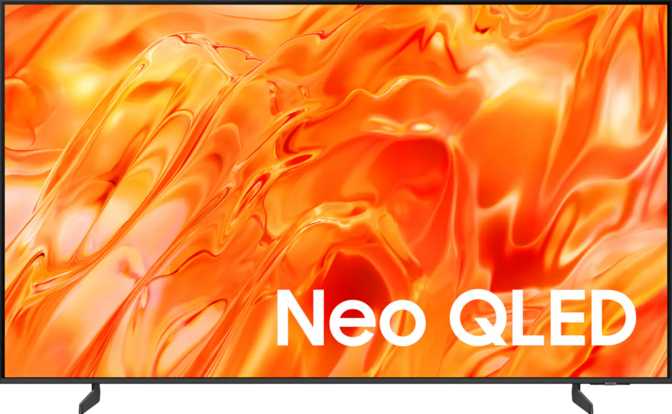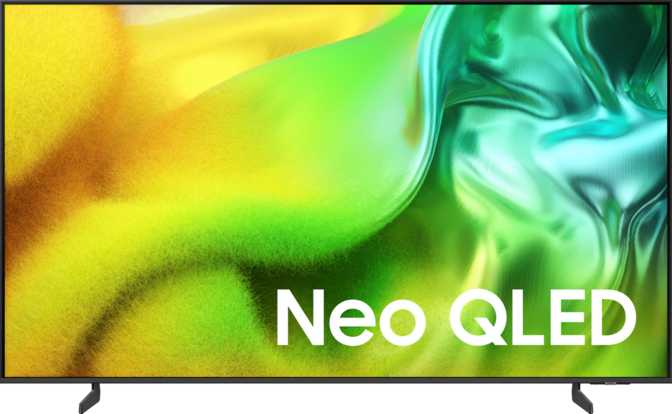
There are televisions that anchor a living room, and then there are televisions that become the living room. The Samsung QN85LS03HEFXZA occupies a category most 85-inch panels never attempt to enter — one where the screen’s presence when it is off matters just as much as what it delivers when switched on. At this size and price tier, buyers are making a long-term decision. Getting it wrong is expensive. This review breaks down exactly what the QN85LS03HEFXZA delivers, where it earns its asking price, and where expectations need calibrating before committing.
Quick Verdict & Category Scores
Overall Score
Gaming-Grade Refresh
Native 144Hz with FreeSync Premium eliminates tearing across PC and multi-console gaming setups.
Four HDMI 2.1b Ports
Every input supports 4K at 120fps — no bandwidth compromise across any connected device.
Art Mode Aesthetics
Displays artwork when idle — a nearly 31mm thin panel that lives on your wall as decor.
Design & Build: When a Television Pretends to Be Art
Physical experience, materials, wall integration, and the Art Mode concept
The most immediately striking thing about this television is what it does when no content is playing. Rather than going dark and becoming a glossy black void, it displays artwork, photography, or personal images through Samsung’s Art Mode. The ultra-slim profile — just under 31mm deep — allows the set to sit nearly flush against a wall, reading less like a consumer electronics product and more like a framed canvas.
The physical footprint is substantial, as expected: just over 1.9 meters wide and nearly 1.1 meters tall. Actual usable screen area measures 84.6 inches diagonally — a rounding note worth knowing if you are measuring a tight space. Weight comes in at approximately 42 kilograms without a stand, so professional wall installation is not optional. This is a two-person minimum job regardless of mounting expertise.
VESA mount compatibility means you are not locked into Samsung’s own mounting ecosystem. Third-party mounts rated for this weight class work without issue. The ambient light sensor reads room brightness and adjusts panel output automatically — in a room that shifts from bright afternoon sun to evening dimness, that calibration makes a tangible difference to both picture quality and energy draw without requiring manual intervention.
The anti-reflection coating on the panel surface deserves specific attention. At 85 inches, glare is a picture-quality destroyer. Samsung’s coating meaningfully reduces specular reflections without the haze that cheaper matte treatments introduce. It handles typical living room lighting conditions competently, though it is not as aggressive as some competing implementations.
Physical Specifications
- Screen Size
- 84.6 in (diagonal)
- Width
- 1,905 mm / 75.0″
- Height
- 1,084.6 mm / 42.7″
- Depth
- 30.5 mm / 1.2″
- Weight (no stand)
- ~42 kg / 92.6 lbs
- VESA Compatible
- Yes
- Anti-Reflection
- Yes
- Ambient Sensor
- Yes
- Operating Temp
- 10°C – 40°C
- Standby Draw
- 0.5W
Picture Quality: Inside the QLED Panel
Display technology, color science, HDR formats, resolution, and motion analysis
The Core Technology Explained
This television uses Quantum LED technology — QLED in Samsung’s terminology. It is an LCD panel with LED backlighting, where light passes through a layer of quantum dot material before reaching your eyes. Those quantum dots convert light wavelengths with high precision, producing colors that standard LED-LCD panels simply cannot match. The result is a color volume — the range of colors reproducible across different brightness levels — that significantly exceeds conventional LCD televisions.
The 10-bit color pipeline enables over 1.07 billion displayable colors. Standard 8-bit panels produce around 16.7 million. That leap is the difference between smooth gradients and visible banding in subtle transitions like sunsets, skin tones, and underwater scenes. The LCD construction also means there is categorically no burn-in risk — a meaningful advantage over OLED competition at this price tier for any household with static on-screen elements.
Resolution and Pixel Density
The native 4K resolution — 3,840 pixels wide by 2,160 pixels tall — at 85 inches yields approximately 52 pixels per inch. At typical viewing distances an 85-inch television demands (roughly 10 to 14 feet), individual pixels are invisible. Content looks cinematic and natural, not digitally sharpened. Below-4K content, including many streaming services delivering 1080p or 1440p, is upscaled by the panel’s processor. Samsung’s upscaling pipeline has historically been among the more capable in the industry.
HDR Format Support
HDR10
The universal HDR standard. Supported by every streaming service, Blu-ray disc, and game console that outputs HDR.
HDR10+
Dynamic metadata adjusts brightness and contrast frame-by-frame, rather than applying a single static setting to an entire film.
Dolby Vision
Not supported. Content from Apple TV+, Netflix, and Disney+ falls back to HDR10 or HDR10+ automatically.
Viewing Angles and Refresh Rate
Both horizontal and vertical viewing angles extend to 178 degrees — as close to “every seat in the room” as an LED-backlit LCD panel achieves. Picture quality holds well across a wide couch arrangement or family seating configuration, which is particularly relevant at a screen size inherently designed for group viewing.
The 144Hz native refresh rate exceeds what most living room televisions offer. For traditional viewing at 24, 30, or 60 frames per second, the extra headroom powers motion interpolation for smoother sports and action sequences. Buyers who dislike the artificial “soap opera effect” that heavy interpolation produces will want to dial back the motion settings. The deeper story of 144Hz, however, belongs in gaming — addressed in full detail below.
Gaming Performance: Living Room Scale, Monitor-Grade Specs
144Hz, FreeSync Premium, and HDMI 2.1b — what these specifications mean in real use
144Hz and FreeSync Premium Explained
The 144Hz refresh rate paired with AMD FreeSync Premium adaptive sync places this television in direct competition with dedicated gaming monitors — at 85 inches. FreeSync Premium means the television and a compatible source synchronize their output rates dynamically. When a game runs at 73 frames per second in one moment and 119 in the next, the TV adjusts to match rather than producing screen tearing or the judder that fixed-sync displays introduce. The result is smooth, artifact-free motion that feels dramatically better than playing on a fixed refresh rate display.
For PC gamers connecting a rig with a compatible AMD graphics card, this combination at 85 inches creates a level of immersion that no gaming monitor can rival simply by virtue of scale.
HDMI 2.1b and Console Gaming
All four HDMI ports operate at HDMI 2.1b — the bandwidth specification required to deliver 4K content at 120 frames per second, the maximum output of PlayStation 5 and Xbox Series X. Having all four ports at this specification means every current-generation console connected simultaneously runs at its full performance ceiling. No port juggling, no bandwidth compromise, no choosing which system gets the capable input.
This is a hardware configuration that many televisions in this category do not offer uniformly. Some restrict high-bandwidth capability to one or two inputs. This set makes no such compromise on any port.
Gaming Capability at a Glance
Connectivity: A Complete Modern Ecosystem
Every port, wireless standard, and connection type explained with practical context
Wireless Networking
Wi-Fi 6E support places this television at the current leading edge of home networking. Operating across the 2.4GHz, 5GHz, and 6GHz bands, the 6GHz band is largely uncongested in most households, delivering lower latency and more consistent throughput for 4K streaming and smart features. If your router supports Wi-Fi 6E, every connected function will feel snappier. The television is fully backward-compatible with older Wi-Fi standards for households with legacy equipment.
Bluetooth 5.3 supports wireless headphones, soundbars, and accessories with improved stability and lower energy consumption compared to older generations of the standard.
Wired Connections and Ports
The dedicated Ethernet port deserves attention from any buyer who values streaming reliability. For 4K content, a wired network connection eliminates the variability of Wi-Fi entirely. Two USB ports support media playback and, notably, live broadcast recording directly to a connected drive — no separate recording device required.
There is no 3.5mm headphone jack and no external memory card slot. For most buyers this is inconsequential, as Bluetooth handles headphone connectivity and USB handles media storage — but worth noting if either physical port is part of your expected setup.
| Interface | Standard | Quantity | Practical Significance |
|---|---|---|---|
| HDMI | HDMI 2.1b | 4 ports | All ports full-bandwidth; one carries ARC & eARC for soundbar audio passthrough |
| USB | USB-A | 2 ports | Media playback and USB recording of live broadcast content to a connected drive |
| Ethernet | RJ-45 | 1 port | Recommended over Wi-Fi for 4K streaming reliability and lowest possible latency |
| Wi-Fi | Wi-Fi 6E (802.11ax) | Built-in | 6GHz band available; backward-compatible with Wi-Fi 4 and Wi-Fi 5 |
| Bluetooth | Bluetooth 5.3 | Built-in | Stable, low-energy connection for headphones, soundbars, and accessories |
| Screen Mirror | AirPlay 2, Miracast | Built-in | Apple devices via AirPlay 2; Android devices via Miracast — no extra hardware |
Smart TV Platform: Voice Control & Ecosystem Compatibility
Voice assistants, smart home integration, and the honest limits of each ecosystem
The built-in smart TV platform includes a web browser, sleep timer, child lock, and full voice command capability. Both Google Assistant and Amazon Alexa are natively compatible — whichever smart home ecosystem you already use, this television integrates without requiring a separate streaming stick or hub. AirPlay 2 support allows iPhones, iPads, and Macs to wirelessly stream or mirror content directly. Miracast handles Android device mirroring.
Ecosystem Compatibility
- Google AssistantFull native compatibility — ideal for households already in the Google ecosystem
- Amazon AlexaNative integration for Alexa-based smart home setups without additional hardware
- AirPlay 2Wireless streaming and screen mirroring from iPhones, iPads, and Macs built in
- MiracastAndroid screen mirroring support included without extra hardware
- Apple HomeKit / SiriNot supported — this TV will not appear in the Apple Home app or respond to Siri
Additional Platform Features
- Smartphone Remote ControlSamsung’s SmartThings app turns your phone into a full remote — practical for a screen where the physical remote can get lost
- USB RecordingLive broadcast content records directly to a connected USB drive without any separate device
- Built-In Web BrowserFull web browsing without a connected external device
- Sleep Timer & Child LockStandard household management and parental control features included
Audio: An Honest Assessment
Built-in speaker output, Dolby processing support, and the soundbar upgrade path
Two 10-watt drivers deliver the built-in audio, supported by Dolby Atmos, Dolby Digital Plus, and Dolby Audio processing. For a television this physically large, 20 watts of total output is modest — but the Dolby Atmos virtualization processing means audio is handled intelligently rather than simply passed through raw.
For dialogue, background content, and casual viewing, the built-in speakers are perfectly adequate. They will not fill a large room with impact, and the absence of a dedicated subwoofer means bass extension is limited. Action films, sports, and music will expose those limitations clearly. This is not a failure of engineering — it is a physical reality of 20 watts at this screen size and viewing distance.
The HDMI eARC port — enhanced Audio Return Channel — is the real audio story for this television. eARC allows a connected soundbar or AV receiver to receive high-bandwidth, uncompressed audio including full Dolby Atmos object-based data over a single HDMI cable. Connect a quality soundbar with eARC support, and the audio experience transforms entirely. At the price tier this television occupies, pairing with an external soundbar is the expected and recommended configuration. Digital audio output is also included for legacy soundbar connections.
Audio Specifications
- Total Power
- 20W (2×10W)
- Dolby Atmos
- Yes
- Dolby Digital Plus
- Yes
- Stereo Speakers
- Yes
- Subwoofer
- None
- HDMI eARC
- Yes
- Digital Output
- Yes
- 3.5mm Jack
- None
Real-World Usage: Who This Television Is Built For
Practical buyer guidance — honest about both the ideal audience and who should look elsewhere
Ideal Buyers
Home Theater Enthusiasts
With a dedicated room or large living space where 85 inches is proportionate, this panel’s QLED color performance and HDR support reward a proper viewing environment. Anti-reflection coating and the ambient sensor extend usability across both daylight and evening conditions.
Multi-Platform Gamers
Running current-generation consoles alongside a gaming PC, the four HDMI 2.1b ports with 144Hz and FreeSync Premium accommodates serious multi-device setups without any port or bandwidth compromise whatsoever.
Design-Conscious Households
Where a large black screen is an aesthetic problem, Art Mode transforms the panel into displayed artwork during idle periods. For open-plan living spaces where the television is visible all day, this is one of the most practical differentiators available at this size.
Google & Amazon Smart Home Users
Both ecosystems integrate natively. Deep voice control and smart home compatibility are built in without workarounds or extra hardware of any kind.
Consider Alternatives If You…
Require Dolby Vision
Streaming primarily through Apple TV+, Netflix, or Disney+ where Dolby Vision is non-negotiable means content will display in HDR10+. Still excellent — but not Dolby Vision. This is an explicit, deliberate gap worth knowing before purchasing.
Use Apple HomeKit
This television does not appear in the Apple Home app. AirPlay 2 works. Siri voice control and HomeKit automation do not. If HomeKit integration is essential to your setup, this is a genuine blocker.
Have a Small Room
At 85 inches, rooms under roughly 4 meters deep will feel overwhelmed. The minimum recommended viewing distance of around 10 feet requires real floor space. Measure carefully before purchasing.
Plan to Skip External Speakers
The 20-watt built-in system is functional but underpowered for this screen size at any serious listening level. Without a soundbar, the audio will not match the visual experience this panel delivers.
Competitive Positioning: How It Stacks Up
The QN85LS03HEFXZA against typical 85-inch OLED and standard QLED alternatives
| Feature | Samsung QN85LS03HEFXZA | Typical 85″ OLED | Standard 85″ QLED |
|---|---|---|---|
| Panel Technology | QLED (LED-LCD) | OLED | QLED (LED-LCD) |
| Max Refresh Rate | 144Hz | 120Hz (most) | 60–120Hz |
| Adaptive Sync | FreeSync Premium | Varies by model | Often absent |
| HDMI Ports | 4× HDMI 2.1b (all) | 4× HDMI 2.1 (typical) | 2–4× varies |
| HDR Formats | HDR10, HDR10+, HLG | HDR10, HDR10+, Dolby Vision | HDR10 typically |
| Art Mode / Gallery | Yes | No | No |
| Wi-Fi Standard | Wi-Fi 6E | Wi-Fi 6 (typical) | Wi-Fi 5 typically |
| Burn-In Risk | None (LCD) | Present over time | None (LCD) |
| Peak Brightness | Very High | Moderate–High | High |
| Dolby Vision | Not Supported | Supported | Varies |
Comparison reflects typical category specifications. Individual model performance varies. Intended as a category guide, not a specific model-to-model benchmark.
Honest Strengths & Real Weaknesses
A balanced assessment — credibility requires naming both sides clearly
Where It Earns Its Price
Specification Breadth Without Sacrifice
Most televisions at this size make compromises. This set threads multiple needles simultaneously — QLED picture quality, true gaming-grade refresh with adaptive sync, Wi-Fi 6E, and Art Mode aesthetics. It is rare to find all of these in the same package at any price.
An HDMI Configuration That Respects Multi-Device Households
Four ports, all at HDMI 2.1b, is unusual at this screen size and eliminates an entire category of frustration. Multi-device households will appreciate this specification quietly and consistently for years after purchase.
Zero Burn-In Risk at Any Usage Pattern
The LCD construction is categorically immune to static-image burn-in. For heavy gamers with persistent HUDs, news watchers with persistent tickers, or anyone who does not want to manage display risk on a premium purchase, this provides genuine long-term reassurance.
Art Mode Is a Genuine Design Solution
In open-plan homes where the television is visible throughout the day, Art Mode replaces an intrusive black void with displayed artwork. This is a considered design response to how people actually live with large televisions, not a marketing novelty.
Where It Falls Short
Dolby Vision Is a Real, Not Minor, Omission
Samsung has historically chosen its own HDR10+ standard over licensing Dolby Vision. While HDR10+ is technically capable, Dolby Vision’s reach through Apple, Netflix, and Paramount+ means a meaningful portion of high-quality HDR content cannot engage this panel’s best format. Buyers who care about format completeness will feel this gap.
Built-In Audio Requires a Partner to Shine
Twenty watts across two drivers is not enough for this screen size and viewing distance. The eARC support creates a clear upgrade path — but that path costs additional money. Budget for a soundbar from the outset, not as an afterthought.
No Apple HomeKit Integration
Households whose smart home runs through HomeKit will find this television absent from the Home app. AirPlay 2 and Google/Alexa voice control work well — but Siri and HomeKit automation do not apply to this set.
One-Year Warranty Is Below Category Expectations
For an 85-inch television involving professional installation and non-trivial replacement logistics, a single year of manufacturer coverage is shorter than many competitors offer at this tier. Extended retailer warranty plans deserve serious consideration.
Questions Real Buyers Search Before Purchasing
Direct answers to the pre-purchase questions that matter most
A Television That Knows Exactly Who It Is For
The Samsung QN85LS03HEFXZA is a television that builds its entire specification around a specific kind of household — and does so with unusual precision. It is not trying to win every benchmark category. It is trying to be the best large-format option for households that genuinely use their living spaces throughout the day, care about how a screen looks when it is not playing content, run multiple gaming platforms simultaneously, and expect smart home integrations to work without friction.
The 144Hz refresh rate with FreeSync Premium at 85 inches is a combination no gaming monitor can rival in sheer immersive scale. Four HDMI 2.1b ports accommodate every current-generation device at full performance simultaneously. QLED picture quality delivers excellent brightness and color volume without any burn-in risk. Art Mode is a genuine answer to the most common complaint about large televisions in modern living spaces. Wi-Fi 6E and Bluetooth 5.3 represent current-generation wireless that will remain relevant throughout this television’s expected lifespan.
The compromises are real and should be weighed honestly: no Dolby Vision, no Apple HomeKit support, modest built-in audio that demands a soundbar partner, and a one-year warranty shorter than the category norm. None of these are dealbreakers for the buyer this television is designed for — but each matters to a specific purchaser, and clarity before buying is better than disappointment afterward.
Buy It If
You want premium gaming, Art Mode aesthetics, and current-generation connectivity unified in one coherent package
Budget for a Soundbar
The eARC connection makes the audio upgrade path technically complete — plan total system cost from the start
Add Extended Warranty
The 1-year manufacturer coverage is shorter than many competitors — retailer extensions are worth it at this investment level
Bottom Line: If you need an 85-inch television that handles gaming at the highest current specifications, looks intentional on your wall rather than intrusive, and integrates cleanly into a Google or Amazon smart home — the QN85LS03HEFXZA is one of the most coherent large-format options available. Budget for a soundbar, accept the Dolby Vision trade-off with eyes open, and this television will reward you across every use case it was designed to serve.