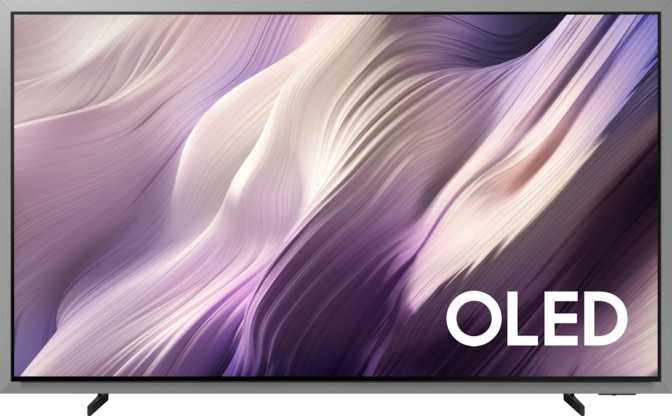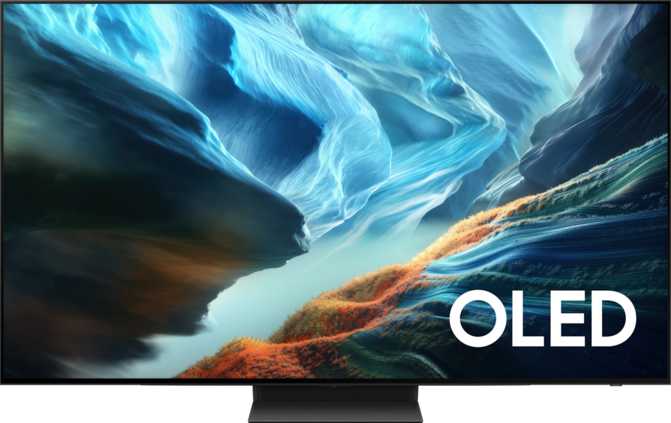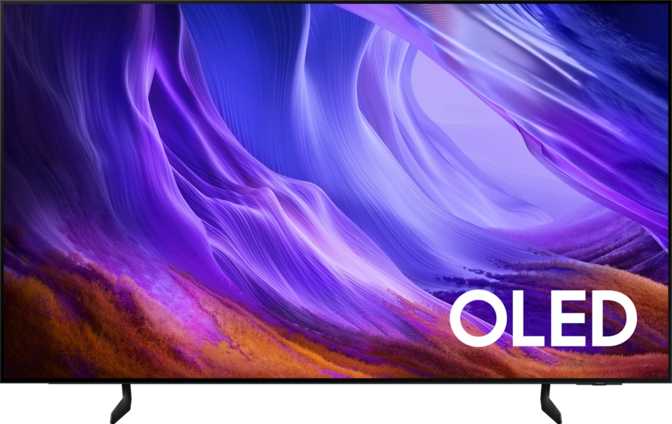
Samsung QN83S85HAEXZA 83-Inch OLED TV: Full Review & Honest Analysis
TVsThere's a specific moment in any serious TV search when the buyer stops comparing specs and starts asking a different question: how much screen can I actually live with? The Samsung QN83S85HAEXZA is built for the person who answered that question with "as much as possible" — and then decided it had to be OLED. At 83 inches of self-emitting panel technology wrapped in Samsung's current smart platform, this television sits at a convergence point that few sets occupy: genuinely cinematic scale, without conceding on picture science. This is not a TV you audition lightly. It demands the right room, the right use case, and a buyer who understands what they're actually paying for.
Panel Technology: What OLED Actually Means at This Scale
OLED — Organic Light-Emitting Diode — is fundamentally different from the LED-backlit LCD panels that make up the majority of televisions sold. Every pixel in this display generates its own light and can switch off completely and independently. There is no backlight to bleed through or bloom around bright objects on dark backgrounds. Black is achieved by turning pixels off entirely, not by dimming a light source behind them.
At 83 inches, this matters more than it does at 55. The larger the screen, the more visible any local dimming failure or backlight uniformity issue becomes. Because the QN83S85HAEXZA has no backlight at all, those failure modes simply don't exist in the same way. A night sky scene, a candlelit room, the opening crawl of a film in a darkened home theater — each renders with a depth that LCD panels at any price struggle to match.
The pixel count lands at 3840 × 2160 — the full 4K Ultra HD standard. At 83 inches viewed from a typical living room distance, individual pixels are not resolvable by the human eye. What you perceive instead is a continuous image, and that continuity is where OLED's per-pixel precision becomes the visible differentiator.
Display Performance: HDR, Color, and Motion
High Dynamic Range: What's Supported and What Isn't
| HDR Format | Support | Real-World Meaning |
|---|---|---|
| HDR10 | Universal baseline — works with all 4K HDR content from streaming, Blu-ray, and consoles | |
| HDR10+ | Dynamic metadata optimizes brightness and contrast on a scene-by-scene or frame-by-frame basis | |
| HLG | Broadcast HDR standard for live sports and over-antenna or satellite HDR content | |
| Dolby Vision | Not supported — a real gap for buyers invested in the Dolby Vision content ecosystem |
Color Depth and Accuracy
The display supports 10-bit color depth and renders over a billion distinct color values. In practical terms, this means gradients — think a sunset fading from deep orange to pale sky blue — transition smoothly without visible banding. Content mastered for wide color gamuts is displayed with appropriate saturation and precision, rather than being crushed or clipped at the extreme ends of the range.
Motion and Refresh Rate
The 120Hz native refresh rate means the panel redraws its image 120 times per second. For broadcast content at 30 or 60 frames per second, this provides overhead for motion handling. For gaming, it means the television can display up to 120 frames per second natively — a specification that becomes particularly meaningful given the gaming-oriented features discussed below.
Viewing Angle and Anti-Reflection
One of OLED's structural advantages is its viewing angle performance. This panel maintains accurate color and contrast at up to 178 degrees horizontally and vertically — essentially straight off to the side. For households where seating isn't centered directly in front of the screen, this means no color shift or contrast collapse from off-axis positions. The anti-reflection coating reduces the impact of ambient light sources, and an ambient light sensor automatically adjusts picture settings as room brightness changes throughout the day.
Gaming Performance: A Serious Contender for Large-Screen Play
The connectivity and display specifications on this TV tell a clear story about its gaming credentials.
Every HDMI input supports 4K at 120fps at full bandwidth. Connect a PS5, Xbox Series X, gaming PC, and streaming device simultaneously without sacrificing capability on any port.
When a game's frame rate fluctuates, the TV's refresh rate synchronizes to match — eliminating screen tearing and stutter. Works with Nvidia GPUs, AMD GPUs, and PlayStation 5.
The per-pixel nature of the display means response is extremely fast at the hardware level. Fast-paced and competitive titles benefit from OLED's inherent responsiveness over any LCD alternative.
At this screen size, open-world environments and cinematic games deliver an experience that smaller panels simply cannot replicate from a living room couch distance.
OLED panels can exhibit temporary image retention from static on-screen elements displayed for extended periods — game HUDs, channel logos, news tickers. Modern sets include mitigation features and the technology has improved significantly. For varied, cinematic gaming and console play, this is not a meaningful concern. Extended PC desktop use or games with persistent fixed HUDs warrant more consideration before committing.
Sound System: What the Built-In Audio Can and Cannot Do
What's included
- Stereo speakers: 2 channels at 10W each — 20W total output
- Dolby Atmos decoding and Dolby Digital Plus processing
- HDMI ARC and eARC for audio passthrough to external systems
- Digital optical output as an alternative audio connection path
Honest expectations
Twenty watts across two channels from built-in television speakers will not replicate the spatial immersion that a dedicated soundbar or home theater system delivers. Dolby Atmos through the built-in speakers produces a processed virtual surround effect rather than true multi-directional audio.
For casual viewing, news, and daytime use, the built-in audio is adequate. For cinematic use — the primary reason someone buys an 83-inch OLED — a sound system upgrade is worth serious consideration. The eARC port passes lossless Dolby TrueHD Atmos to a compatible soundbar or AV receiver through a single HDMI cable. Plan for it; the infrastructure is already there.
Smart TV Platform and Ecosystem
Samsung's Tizen-based smart platform is one of the more mature operating systems in the television space. The interface is fast, the app library is comprehensive, and the major streaming services are present. Voice control, wireless casting, and ecosystem compatibility cover most of what buyers expect from a current-generation smart television.
AirPlay works and iPhone or iPad users can cast video without friction. However, this television does not integrate as a HomeKit device — it won't appear in the Apple Home app, and Siri cannot control it. For households that want their television inside a HomeKit automation system, this is a genuine limitation worth weighing before purchase.
Connectivity: Every Port and Wireless Standard
| Connection Type | Specification & Notes |
|---|---|
| HDMI | 4 ports — all HDMI 2.1 (full bandwidth on every input) |
| USB | 2 ports — also supports direct USB recording of broadcast content |
| Ethernet | 1 × RJ45 for wired network connection |
| Wi-Fi | Wi-Fi 4, 5, 6, and 6E — includes 6 GHz band for reduced congestion |
| Bluetooth | Version 5.3 — current generation with improved range and efficiency |
| Optical Audio Out | Digital optical output available — secondary audio path for older equipment |
| 3.5mm Jack | Not included — wired headphone users must use Bluetooth or a connected audio device |
Wi-Fi 6E support gives this television access to the 6 GHz wireless band — significantly less congested than the 2.4 GHz and 5 GHz bands that most devices compete for. In dense apartment buildings or homes with many connected devices, this can make a tangible difference in streaming reliability and peak throughput.
Physical Dimensions and Installation Realities
At roughly 185 cm wide and just over a meter tall, this is a substantial object in any room. Plan the installation carefully — measure the wall, verify the viewing distance, and plan the cable run — before purchase, not after.
The approximately 34 kg weight makes this a two-person installation at a minimum. The slim OLED profile — under 35 mm at its deepest point — sits close to the wall for a clean result, though actual cable management depends on the specific mount configuration used.
Who This Television Is For — and Who It Isn't
The right buyer
- Building or upgrading a dedicated home theater where picture quality is the defining priority
- Watches significant volumes of films, prestige television, or nature documentaries in HDR and controlled lighting
- A serious console gamer who wants maximum screen size with full next-gen support across all four inputs simultaneously
- Has a large room with sufficient viewing distance — at least three meters from screen to primary seating
Look elsewhere if...
- Your room is small — under three meters from screen to seating, 83 inches strains rather than immerses
- Your primary viewing environment is bright and sunlit without window treatments — OLED peak brightness historically trails the brightest LCD panels
- You're a strict Apple HomeKit household where TV integration into home automation is a firm requirement
- Dolby Vision support is non-negotiable for your content library or viewing setup
Competitive Context: How It Sits in Its Category
The 83-inch OLED market is not crowded. The primary alternatives come from LG and Sony, both of whom offer large-format OLED panels at this size. Core OLED panel technology is strong across all three manufacturers — the differentiation lands in processing approach, smart platforms, and feature priorities.
| Differentiator | Samsung QN83S85HAEXZA | LG 83" OLED | Sony 83" OLED |
|---|---|---|---|
| Smart Platform | Tizen | webOS | — |
| Dolby Vision | — | ||
| HDR10+ | — | — | |
| Adaptive Sync | G-Sync + FreeSync Premium | — | — |
| Wi-Fi Standard | 6E — includes 6 GHz band | — | — |
| Core Strength | Gaming & smart home breadth | Dolby Vision ecosystem | Cinematic calibration |
LG and Sony specific specifications are included for general category context based on published positioning; verify current model specifics before purchasing any alternative.
Common Questions Before You Buy
- OLED picture quality ceiling — true black, per-pixel precision, outstanding contrast at any screen size
- All four HDMI ports deliver full HDMI 2.1 bandwidth — no compromise on any input
- G-Sync and FreeSync Premium adaptive sync covers every gaming platform
- Wi-Fi 6E and Bluetooth 5.3 represent genuinely current wireless standards
- Mature Tizen smart platform covering Alexa, Google Assistant, Chromecast, and AirPlay
- No Dolby Vision — a real consideration depending on your content library and streaming habits
- Built-in audio is a starting point, not a destination — budget for external audio if cinematic use is the priority
- No Apple HomeKit / Siri integration despite AirPlay support
- OLED peak brightness trails the brightest LCD panels in extreme ambient light environments
- Standard one-year warranty — extended coverage deserves serious consideration at this investment level
The Samsung QN83S85HAEXZA makes a compelling case for itself precisely because it doesn't try to be everything. It is a large-format OLED television built for buyers who have prioritized picture integrity, gaming performance, and smart platform breadth over Dolby Vision compatibility and maximum brightness. In the rooms it suits — controlled lighting, generous viewing distances, multi-source setups — it performs at the level the category demands. For the right room and the right user, the answer is unambiguous: yes.