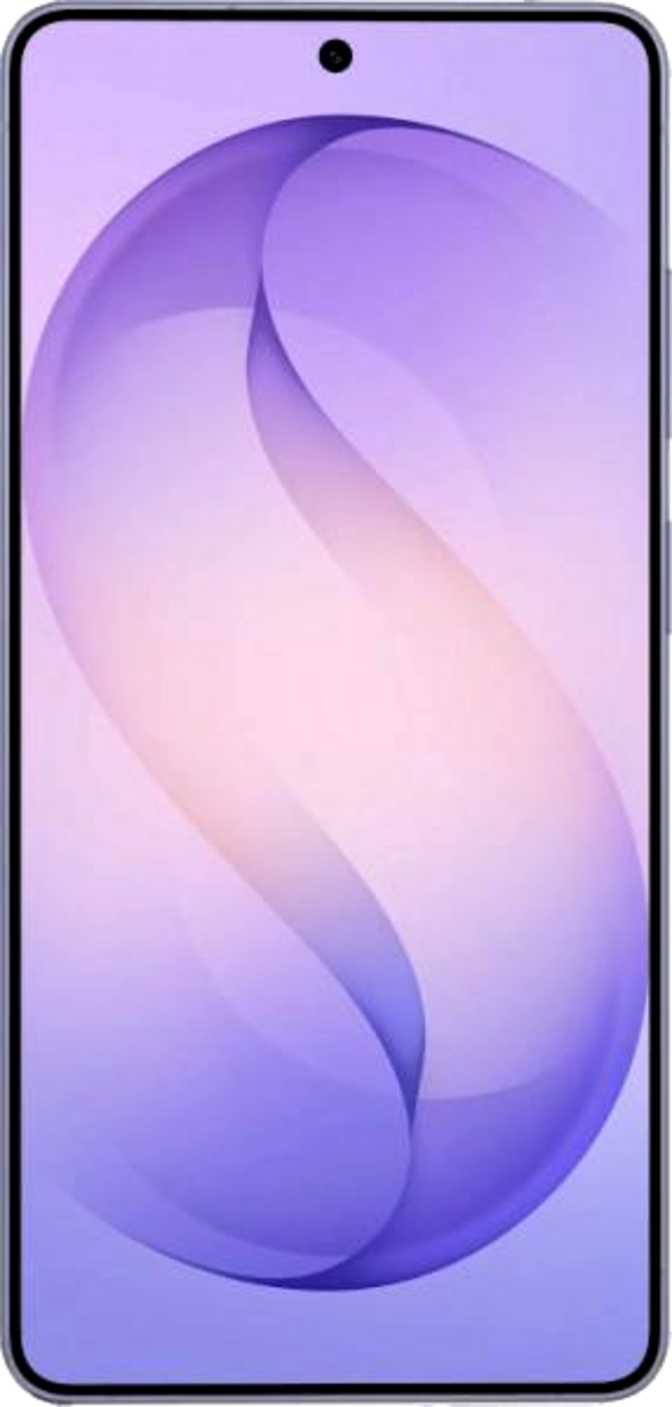
Samsung Galaxy S26 Ultra: A Full Review of Samsung's Ultimate Flagship
SmartphonesEditor's Overall Score
out of 10
Category Ratings
The Samsung Galaxy S26 Ultra arrives at a point where flagship smartphones have largely converged on "good enough." Most top-tier Android phones handle calls, shoot decent photos, and run apps without issue. So why does the S26 Ultra still matter? Because Samsung did not build this for people who want "good enough." This phone targets the buyer who genuinely uses everything their device offers — the mobile photographer, the power user running three apps side by side, the professional who needs a pocket computer that keeps pace with a laptop. If that sounds like you, this review covers everything you need to know before spending your money. If you want a phone primarily for calls and social media, this review will also tell you exactly why you should save it.
Design and Build Quality
Physical experience, dimensions, and long-term durability
Full Water and Dust Protection
French Repairability Index
Slim Profile at This Scale
Dimensions and Feel in Hand
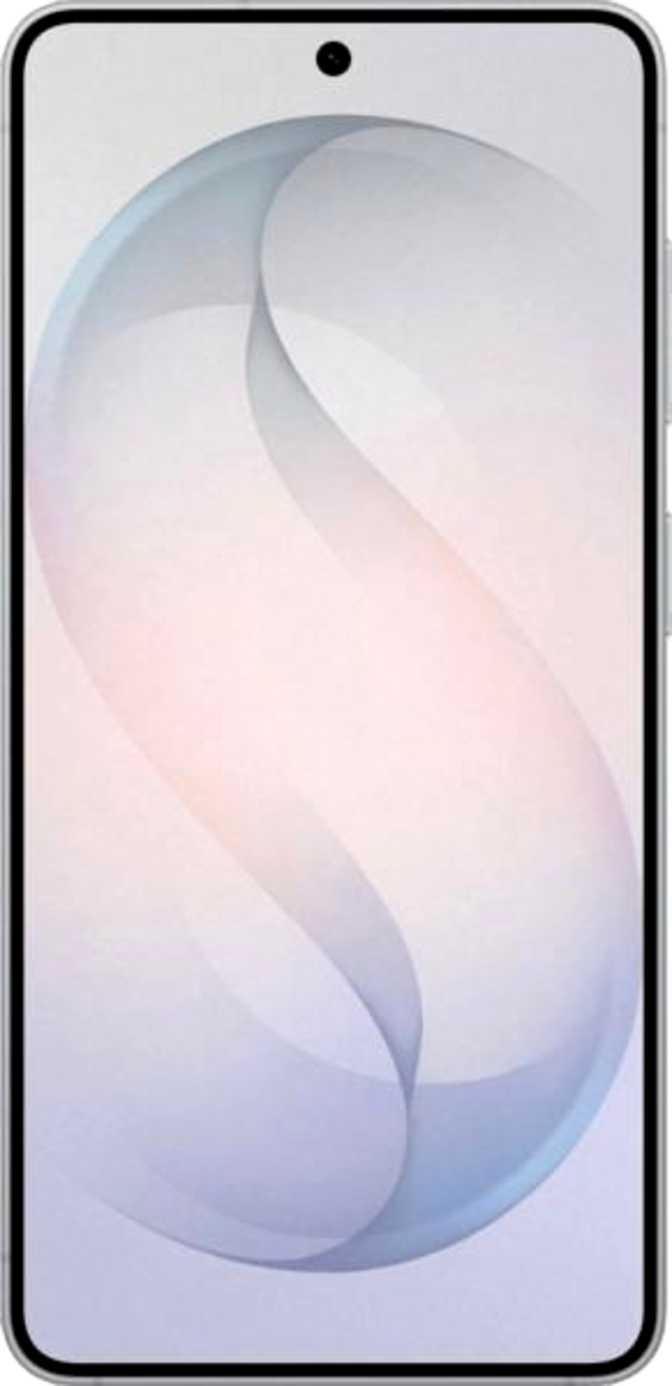
At 163.6mm tall and 78.1mm wide, the S26 Ultra is unambiguously a large device. It will not fit comfortably in every hand, and one-handed use is something you adapt to rather than take for granted. That said, Samsung has managed to keep the thickness at just under 8mm — a genuine engineering achievement for a phone packing this much hardware. The 214g weight sits at the heavier end of the premium segment, but the mass feels intentional rather than sloppy, distributed in a way that reads as substantial rather than cumbersome.
The flat display is a deliberate design choice that benefits anyone who has grown tired of accidental edge touches on curved panels. It also makes the S26 Ultra significantly more practical with the included S Pen stylus, which requires a stable flat surface to write against effectively.
Protection and Long-Term Durability
Gorilla Armor 2 glass covers the display — a proprietary anti-reflective treatment that goes beyond standard scratch resistance to actively reduce glare in outdoor conditions. Combined with an IP68 ingress protection rating, the phone is fully sealed against dust and submersion, comfortably handling rain, poolside accidents, and kitchen mishaps.
The French Repairability Index score of 8.5 out of 10 deserves attention. This government-mandated rating evaluates how easily a device can be repaired — spare parts availability, disassembly complexity, and repair documentation quality. A score this high signals that Samsung has genuinely designed for longevity, which matters significantly for buyers planning to keep this phone for three or four years.
The maximum operating temperature is 35°C. In sustained extreme heat — intensive gaming or 8K video recording in direct sunlight — the phone may reduce performance to stay within safe thermal limits. This is standard behavior across all smartphones, but worth knowing before you commit.
The Built-In S Pen
The stylus ships inside the box and lives inside the phone's body, charging passively when holstered. It provides a fundamentally different input method for note-taking, document annotation, and precision editing. For professionals handling contracts or sketching ideas, this single feature separates the S26 Ultra from every other rectangular flagship in the market. No direct competitor ships with a built-in stylus that integrates this cleanly.
Display: A Screen That Sets the Standard
Size, sharpness, brightness, refresh rate, and HDR
Peak Brightness
OLED Display
Adaptive Refresh Rate
Pixel Density
Size, Sharpness, and Pixel Density
The 6.9-inch OLED panel runs at 500 pixels per inch — high enough that individual pixels are invisible under any normal viewing condition, including when the S Pen is pressed close to the glass. Text is crisp at every size, fine photographic detail is fully resolved, and the 1440 x 3120 resolution means this display renders widescreen streaming content at full native quality. That matters increasingly as more services deliver higher-resolution video.
Brightness That Matters Outdoors
At 2,600 nits of peak brightness, the S26 Ultra operates in a different tier from most competitors. Most indoor displays top out around 500 to 800 nits. Budget phones become difficult to read in direct sunlight. At 2,600 nits, this screen remains fully readable in direct afternoon sun — making outdoor navigation, beach reading, and reviewing shots while shooting genuinely practical rather than an exercise in squinting.
Refresh Rate and Touch Responsiveness
The 120Hz refresh rate produces scrolling that looks more like paper than a screen. More notable is the 240Hz touch sampling rate — the display registers finger position twice as often as it refreshes. For S Pen users and anyone playing fast-paced games, this translates to input that feels nearly instant, with lag between intent and action effectively eliminated.
Dolby Vision is not supported. HDR10+ covers the majority of content on most major streaming platforms, but titles encoded exclusively in Dolby Vision — notably some Apple TV+ content — will not render at their intended quality. If Apple TV+ is central to your media routine, this is worth factoring in.
Performance: What a Flagship Actually Feels Like
Chipset, benchmarks, RAM, storage, and GPU
Chipset
Snapdragon 8 Elite Gen 5
3nm Process Node
Geekbench 6 Multi-Core
Geekbench 6 Single-Core
The Chipset — Built for the Next Several Years
The Qualcomm Snapdragon 8 Elite Gen 5 is built on a 3-nanometer manufacturing process — the most advanced node currently available for smartphone silicon. Smaller transistors pack more processing power into less space while generating less heat and consuming less battery. The chip's architecture uses two high-performance cores running at 4.6GHz for demanding tasks, alongside six efficiency cores at 3.62GHz for lighter workloads. The system is intelligent about which cores activate — scrolling email uses the quiet cores; launching the camera or loading a game wakes the performance cores.
Benchmark Context for Every Type of Buyer
A multi-core result above 10,000 in Geekbench 6 places the S26 Ultra in a tier where "fast" no longer meaningfully describes it — the phone executes tasks faster than your perception can detect. App launches are instant. File exports complete before you have moved your attention elsewhere. For enthusiasts comparing across the Android ecosystem: this result sits at the current ceiling of what any mobile chip produces. For everyone else: this phone will not bottleneck any task you give it for the foreseeable future.
Memory and Storage for Serious Workflows
Sixteen gigabytes of RAM running at 5,300MHz means the phone keeps many apps loaded simultaneously without reloading them when you switch back. Power users running split-screen sessions, desktop-mode workflows, and background processes will genuinely feel this headroom. One terabyte of internal storage holds thousands of RAW photos, hours of 8K footage, and a full offline media library without ever triggering a storage warning.
Memory bandwidth reaches 85.1GB per second — higher than many mid-range laptops operate at. This matters for AI-driven processing pipelines, image editing, and gaming workloads where data throughput is the bottleneck, not raw compute speed.
Graphics Capability
The Adreno 830 GPU, running at 1,200MHz with 1,536 shader units, handles every major graphics API in use today and renders demanding game environments at high frame rates without thermal throttling becoming a visible issue in typical indoor sessions. It also supports two simultaneous display outputs — directly useful for desktop-mode users who want the phone screen active while a second workspace runs on an external monitor.
Camera System: Four Lenses, One Unified Philosophy
Quad-camera rear array, video capabilities, and manual controls
| Lens | Resolution | Aperture | Primary Role |
|---|---|---|---|
| Primary | 200 MP | f/1.4 | Main shooter, low-light specialist, pixel-binned everyday photos |
| Telephoto | 10 MP | f/2.4 | Mid-range zoom, portrait compression |
| Periscope Telephoto | 50 MP | f/2.9 | 5x optical zoom, distant subjects without quality loss |
| Ultrawide | 50 MP | f/1.9 | Landscapes, architecture, group shots in tight spaces |
| Front Camera | 12 MP | f/2.2 | Selfies, video calls, face unlock |
The 200-Megapixel Primary Sensor Explained
The primary sensor uses pixel-binning — combining multiple small pixels into one larger effective pixel — to produce photos with exceptional low-light performance under normal shooting conditions, while retaining the option to shoot at the full 200-megapixel resolution when lighting allows and detail matters above all else. The f/1.4 aperture is among the widest available on any smartphone, meaning more light reaches the sensor in dim conditions. The result is a camera that handles candlelit restaurants, evening street scenes, and challenging indoor environments far better than the headline numbers suggest.
Zoom and Focal Range
Five times optical zoom means the telephoto lens uses actual glass to bring subjects closer — not digital cropping, which degrades quality. The full system covers focal distances from 13mm at the wide end to 67mm at the telephoto end, translating to everything from sweeping landscape shots to portrait-length compression without digital degradation. Beyond 5x, Samsung's computational zoom extends reach further, though at some quality cost at extreme distances.
Video: 8K and Beyond
The S26 Ultra records 8K video at 30 frames per second — four times the pixel count of 4K, itself four times 1080p. For most users, 4K at higher frame rates remains the practical everyday choice. The 8K option exists for professionals who need maximum detail for cropping in post-production or creating archival footage built to last decades. Continuous autofocus operates throughout video recording, keeping subjects locked as they move. HDR10 video recording and slow-motion capture round out a video feature set that overlaps meaningfully with dedicated cameras.
Manual Controls and RAW Capture
The camera app exposes full manual control: shutter speed, ISO, white balance, focus, and exposure are all independently adjustable. RAW file capture gives photographers who process images in Lightroom or Capture One the uncompressed data needed for maximum editing flexibility. This is a feature set that overlapped with dedicated mirrorless cameras only in the professional tier not long ago.
Key Camera Features at a Glance
- Optical Image Stabilization across multiple lenses
- Phase-detection autofocus for still photography
- Laser autofocus for rapid subject lock
- RAW file capture for professional post-processing
- HDR mode with HDR10 video recording
- Slow-motion video recording
- Burst mode for fast-moving subjects
- Timelapse and in-camera panorama
- Full manual control: ISO, shutter, white balance, focus
- Dual-tone LED flash for natural skin tones
- Back-illuminated CMOS sensor for low-light performance
- No front-facing flash — screen light used as fill
Battery Life and Charging
Daily endurance, charging speeds, and what's not in the box
Wired Fast Charging
Wireless Charging Speed
Reverse Wireless Charging
Daily Endurance — Honest Assessment
The battery capacity here is the current standard for flagship-tier Android phones at this screen size. Combined with efficiency improvements from the 3nm chip, moderate users — calls, email, social browsing, and occasional photography — should comfortably reach end of day with charge remaining. Heavy users running navigation continuously, shooting extended video, or gaming for hours may find themselves reaching for a cable before bedtime.
The combination of a power-hungry 6.9-inch high-refresh display and a chip that regularly handles demanding workloads means battery life is better described as "sufficient" than "exceptional." It is competitive within its peer group; it is not a standout. This is the S26 Ultra's most straightforward limitation.
Charging Speeds in Real-World Terms
At 60W wired charging, a significant portion of the battery refills in under an hour. Wireless charging at 25W is fast enough that overnight top-up fills the battery completely with hours to spare — no cables required if you have a compatible pad. Reverse wireless charging at 4.5W lets the S26 Ultra act as a charging surface for compatible accessories like earbuds, useful in a pinch when a cable is not nearby.
No charger is included in the box. Existing Samsung users with a compatible 60W USB-C adapter will not feel this. Buyers switching from a different ecosystem — or purchasing their first Galaxy — should budget for a compatible fast charger separately.
Software: Android 16 with Samsung One UI
Privacy tools, productivity features, and platform-specific gaps
The S26 Ultra ships with Android 16, layered with Samsung's One UI skin. The combination delivers a comprehensive feature set that rewards power users while remaining navigable for newcomers. The privacy toolkit is thorough: granular app tracking controls, camera and microphone access management, clipboard monitoring alerts, and location privacy options give you meaningful control over what each app knows.
Split-screen multitasking is well-implemented here, particularly with the S Pen, where annotation and document comparison become practical desktop-like workflows. Desktop mode — using the phone as a computer when connected to a monitor — extends the device's utility for professionals who prefer to travel without a laptop for lighter trips. On-device machine learning handles text recognition in images, offline voice recognition, and camera scene optimization without sending data to external servers, benefiting both privacy-conscious users and those in areas with unreliable connectivity.
Software Feature Overview
- Split-screen multitasking
- Desktop (PC) mode via USB-C
- On-device machine learning
- Offline voice recognition
- App tracking controls
- Camera and microphone access management
- Clipboard monitoring alerts
- Dynamic theming and dark mode
- Battery health monitoring
- Multi-user support
- Full-page (scrolling) screenshots
- Live Text — read text inside images
- Picture-in-Picture mode
- Play games while they download
- Widget support and customizable notifications
- Child lock for shared device use
- Extra dim mode for nighttime use
- No built-in focus / scheduled notification modes
- No proximity Wi-Fi password sharing
- No Mail Privacy Protection
Audio: Wireless-First, Codec-Complete
Wireless codecs, speaker setup, and the headphone jack situation
The 3.5mm headphone jack is absent — a decision made industry-wide years ago, and the S26 Ultra commits fully to wireless audio. What it offers in return is the most comprehensive wireless codec lineup currently available on any Android device.
High-res wireless audio up to 990kbps — the audiophile standard for Sony and compatible headphones
Bit-perfect audio transmission over Bluetooth — CD quality without a cable
Dynamic quality adjustment for real-world Bluetooth conditions
Broad compatibility baseline — works with the vast majority of wireless headphones
Bluetooth 6 provides the latest protocol improvements for connection stability, range, and multi-device pairing. For anyone who has invested in high-quality wireless headphones from Sony, Sennheiser, or another LDAC or aptX Lossless certified brand, this phone delivers the cleanest Bluetooth signal currently available on Android.
The stereo speaker pair handles casual media playback with adequate separation and volume for a quiet room. The emphasis is clearly on headphone users. Two built-in microphones handle calls and voice recording acceptably across most everyday environments.
Connectivity: Future-Proofed Across Every Standard
Wi-Fi, 5G, SIM flexibility, and USB data
802.11be — Multi-Gigabit Ready
10 Gbps theoretical peak download
Four active lines simultaneously
High-speed data and display output
Wi-Fi 7 — More Than a Spec Checkbox
Wi-Fi 7 delivers multi-gigabit theoretical throughput and significantly improved performance in congested environments — office buildings, apartments, airports — where dozens of devices compete for spectrum. In homes already running Wi-Fi 7 routers, the S26 Ultra will exhaust the router's capacity before it reaches its own ceiling. This matters today for large local network transfers; it matters more in the coming years as Wi-Fi 7 infrastructure becomes the norm rather than the exception.
SIM Flexibility Built for Frequent Travelers
Two physical SIM slots plus two eSIM profiles — four usable lines total — make the S26 Ultra unusually capable for frequent travelers and professionals who keep work and personal numbers separate. Managing two countries' plans simultaneously without physically swapping cards is a genuine practical convenience, not just a spec sheet detail.
USB and Wired Output
USB 3.2 via the Type-C connector enables high-speed file transfers to computers and external drives — directly relevant for photographers moving large RAW files and videographers offloading 8K footage after a shoot. Wired display output to an external monitor is possible via a compatible USB-C to DisplayPort or HDMI adapter, enabling full desktop mode on a larger screen while the phone display remains active as a secondary workspace.
Who Should Buy the Samsung Galaxy S26 Ultra?
This Phone Is For
- Mobile photographers who want the flexibility of a multi-focal-length system in one device, with full manual controls and RAW output
- Power users running intensive multitasking, desktop mode workflows, or relying on the S Pen for professional tasks
- Frequent international travelers who need multiple SIM lines without constantly swapping physical cards
- Users who plan to keep their phone for three or more years and want hardware that stays relevant
- Wireless audio enthusiasts who own LDAC or aptX Lossless certified headphones
This Phone Is Not For
- One-handed users or anyone with smaller hands — the 6.9-inch, 214g form factor is genuinely large and requires adjustment
- Buyers primarily motivated by price — this sits at the premium tier and the feature set is its sole justification
- Users deeply embedded in the Apple ecosystem — Dolby Vision, iMessage equivalents, and AirDrop-style features will require adjustment
- Anyone who needs satellite emergency SOS as a safety feature — Apple's equivalent covers this; the S26 Ultra does not
How It Compares to the Competition
S26 Ultra versus a typical Android flagship and the Apple iPhone Pro Max equivalent
| Feature | Samsung Galaxy S26 Ultra | Typical Android Flagship | Apple iPhone Pro Max Equivalent |
|---|---|---|---|
| Display Size | 6.9 inches | 6.7 – 6.9 inches | 6.9 inches |
| Peak Brightness | 2,600 nits | 1,600 – 2,000 nits | ~2,000 nits |
| Stylus Included | Yes | No | No |
| Wireless Charging | 25W | 10 – 50W (varies) | 25W |
| Wired Charging Speed | 60W | 30 – 120W (varies) | ~27W |
| 8K Video Recording | Yes | Rare | No |
| Wi-Fi Generation | Wi-Fi 7 | Wi-Fi 6E or 7 | Wi-Fi 7 |
| RAW Photo Capture | Yes | Yes (most) | Yes |
| Dolby Vision Display | No | Some models | Yes |
| Headphone Jack | No | Rarely | No |
| Satellite Emergency SOS | No | Some models | Yes |
| Repairability Score | 8.5 / 10 | 4 – 7 / 10 (typical) | Not publicly rated |
Competitor figures represent typical specifications and may vary by specific model and market region. Satellite SOS absence is the most significant gap versus Apple's comparable offering.
The Honest Assessment
Where It Excels
The S26 Ultra executes its core promise without meaningful technical compromise. The processor is the fastest available on Android, executing tasks faster than your perception can detect. The display sets a brightness benchmark for the category — 2,600 nits keeps the screen readable in conditions that render competitors unusable. The quad-camera system covers more focal ground than any direct rival while retaining full manual controls and RAW output that photographers genuinely reach for.
The S Pen remains a true differentiator: no other rectangular flagship ships with a built-in stylus that integrates this cleanly. USB 3.2, Wi-Fi 7, and four-line SIM flexibility complete a connectivity package that will not feel dated for years. And the French Repairability Index score of 8.5 out of 10 shows that long-term ownership was considered in the design, not just the launch experience.
Where It Falls Short
Battery life is the most honest limitation. The standard flagship capacity, combined with a power-hungry 6.9-inch panel and a chip that handles demanding workloads regularly, means heavy users will charge more often than they might with competitors who have prioritized endurance above all else. "Sufficient" and "exceptional" are different things, and this phone delivers the former.
The missing charger in the box is a minor annoyance that has become an industry habit — but it remains an annoyance, particularly for buyers new to Samsung's ecosystem. Dolby Vision's absence limits rendering quality for certain streaming content. Most significantly: there is no satellite emergency SOS. For buyers who spend meaningful time in remote locations, this is a real safety-feature gap that Apple's comparable offering covers and the S26 Ultra does not.
Questions Real Buyers Ask
Common queries answered before you commit
Final Recommendation
The Samsung Galaxy S26 Ultra is the answer to a specific question: what does the best possible Android phone look like right now? The answer is a best-in-class display, the fastest available mobile processor, a quad-camera system with genuine professional utility, and the only flagship that ships with a built-in stylus — all delivered in a phone designed to last, with a repairability score that few competitors approach.
The weaknesses are real but predictable. Battery life is sufficient, not exceptional. No charger is included. Dolby Vision is absent. And satellite emergency SOS — present on Apple's comparable offering — is missing. None of these are deal-breakers. They are trade-offs the S26 Ultra makes in service of its primary mission: being the most capable rectangular phone Samsung builds.
Recommended For
- Mobile photographers and S Pen power users
- Intensive multitaskers and frequent travelers
- Buyers holding their phone for 3+ years
- Those who want the absolute top of Android
Not Recommended For
- Compact form factor and one-handed use seekers
- Budget-conscious buyers
- Users who need satellite emergency safety features
- Those deeply committed to the Apple ecosystem