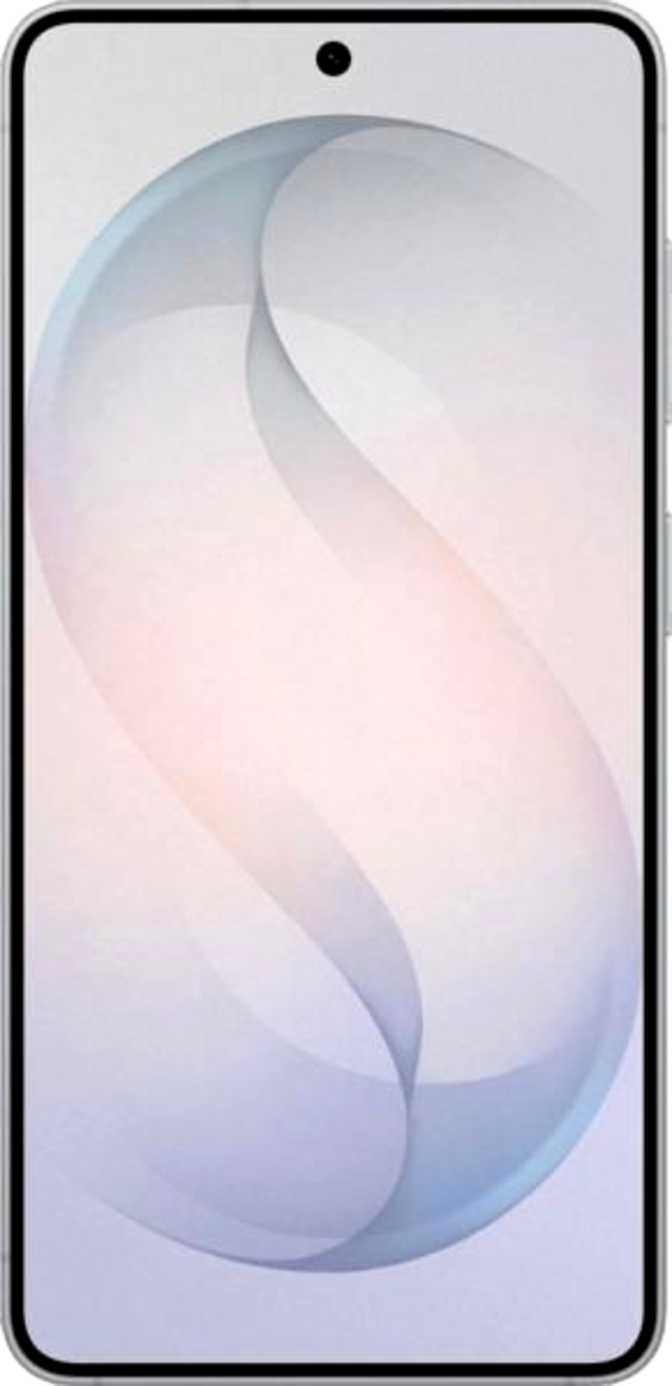
Samsung Galaxy S26 Plus Full Review: The Balanced Flagship Done Right
SmartphonesSamsung's Plus-tier Galaxy S phones occupy a precise and valuable position in the market: more screen real estate and more battery than the base model, but without the price ceiling of the Ultra. The Galaxy S26 Plus refines that formula with meaningful hardware upgrades across nearly every category — from the silicon powering it to the display framing it. For anyone shopping in the premium Android space right now, this is one of the most complete packages available.
Overall Score
Display
Performance
Cameras
Battery
Build Quality
Value
Design and Build Quality
Slim, Polished, and Built to Last
Physical Profile
At 158.4 mm tall, 75.8 mm wide, and just 7.3 mm thin, the Galaxy S26 Plus is among the slimmest flagships in its class. That 7.3 mm thickness is genuinely noticeable in-hand — this is a phone that disappears into a jacket pocket rather than making itself known with a bulge. The 190 g weight strikes the kind of balance that took Samsung several generations to achieve: heavy enough to feel substantial, light enough for comfortable one-handed use over extended periods.
The flat display edges are a deliberate departure from the curved-glass trend that dominated Galaxy S design for years. Flat glass is more practical — screen protectors fit properly, edge touches do not misfire — and it signals Samsung's confidence in letting hardware and software quality speak for themselves.
7.3mm
Thickness
190g
Weight
6.7"
Screen Size
8.5/10
Repairability
Durability and Repairability
IP68 certification means the S26 Plus can survive submersion in up to 1.5 metres of fresh water for 30 minutes. In practical terms: it handles rain, poolside splashes, and the occasional sink accident without hesitation. This is standard-setting protection for a flagship phone, not a bonus feature.
The front glass is Gorilla Armor 2 — a meaningful step beyond standard Gorilla Glass. It combines scratch resistance with anti-reflective properties, which makes a visible difference in daylight outdoor use where lesser displays wash out.
French Repairability Index: 8.5 / 10
This government-standardized score reflects ease of repair — parts availability, disassembly complexity, and documentation access. A score this high is rare among flagship smartphones and carries real long-term value for anyone keeping their phone beyond two years.
Display
One of the Best Screens on Any Android Phone
What the Numbers Mean
The 6.7-inch OLED display runs at a native resolution of 1440 × 3120 pixels, producing a pixel density that clears 516 pixels per inch. At that density, individual pixels are effectively invisible to the naked eye — text is sharp at any size, fine lines in photos are clean, and UI elements look crisp at every zoom level.
The 120Hz adaptive refresh rate keeps scrolling and animations fluid while stepping down intelligently to preserve battery when motion is not needed. The touch sampling rate of 240Hz — the speed at which the screen registers your finger's position — means touch response feels immediate rather than fractionally behind. For gaming, this is a genuine advantage.
Brightness and HDR Performance
A peak brightness of 2,600 nits is exceptional. Most competitors in this range peak between 1,600 and 2,000 nits. At 2,600 nits, the display remains fully readable in direct sunlight — on a beach, at an outdoor café, on a ski slope. This is the kind of difference you notice immediately when switching from a lesser screen.
The panel supports both HDR10 and HDR10+. HDR10+ adds dynamic metadata, meaning the display adjusts its tone mapping scene-by-scene in compatible video content. Dolby Vision is absent, which matters to Apple TV+ subscribers and some Netflix users — it is a genuine gap, though HDR10+ covers a substantial portion of available premium content.
- Panel TypeOLED / AMOLED
- Screen Size6.7 inches
- Resolution1440 × 3120 px
- Pixel Density516 ppi
- Refresh Rate120Hz adaptive
- Touch Sampling240Hz
- Peak Brightness2,600 nits
- Glass ProtectionGorilla Armor 2
- HDR10+ Supported
- Dolby Vision Not Supported
- Always-On Display Yes
- Curved DisplayNo — Flat
Performance
The Exynos 2600 Era Begins
The Chipset
The Samsung Exynos 2600 is built on a 2-nanometre manufacturing process — the most advanced fabrication node currently in mass production for consumer silicon. Smaller transistors mean more processing power fits into the same thermal envelope, translating to better sustained performance and improved efficiency compared to prior-generation chips.
The CPU is arranged in a three-tier cluster: a single high-performance core at 3.8 GHz handles the most demanding single-threaded tasks, three mid-performance cores at 3.25 GHz manage heavy multitasking, and six efficiency cores at 2.75 GHz handle background processes. This architecture, known as big.LITTLE with Heterogeneous Multi-Processing, means the phone always matches its power consumption to the task at hand.
Memory and Storage
12 GB of fast-spec RAM keeps a wide roster of apps warm in memory, meaning returning to apps you used earlier rarely triggers a reload. The 512 GB of internal storage is the configuration reviewed here — more than enough for a large photo library, downloaded streaming playlists, and a generous selection of games. Memory bandwidth of 64 GB/s directly benefits tasks that move large data volumes quickly: high-resolution video processing, loading large game assets, and AI-accelerated photo editing.
There is no microSD slot. The storage you buy is the storage you have. Plan accordingly before purchase.
Benchmark Context
Geekbench 6 Results — Exynos 2600
Governs app launches, UI responsiveness, and individual task speed
Reflects parallel workload handling: video export, AI inference, intensive gaming
GPU: The Xclipse 960
The Xclipse 960 GPU supports DirectX 12 — the same API tier used by PC gaming — and operates at a clock speed that keeps it running at full performance during sustained gaming sessions. For mobile gaming, this means compatibility with demanding titles and headroom for graphically intensive apps that are increasingly common on modern Android.
Process Node
2nm
TDP
6W
RAM Speed
4200MHz
Memory BW
64 GB/s
Camera System
Versatile, Capable, and Honest About Its Limits
Main Camera
50 MP • f/1.8
The workhorse of the system. The wide f/1.8 aperture gathers more light per unit area, directly improving low-light performance. The back-illuminated CMOS sensor extracts detail efficiently even in challenging conditions.
- Phase-detection autofocus
- Optical Image Stabilization
- BSI CMOS sensor
- RAW file capture
- Manual controls (ISO, WB, Shutter)
Ultrawide Camera
12 MP • f/2.2
Covers scenes too broad for the main lens — architecture, landscapes, group shots in tight spaces. The 13 mm minimum equivalent focal length is genuinely wide and opens creative possibilities unavailable on single-lens competitors.
- 13 mm minimum focal length
- Group & architecture shots
- Panorama in-camera
Telephoto Camera
10 MP • f/2.4 • 3x Optical
Delivers true 3x optical zoom, reaching an equivalent focal length around 67 mm — a flattering portrait range that compresses backgrounds naturally. Optical zoom preserves image quality at distance; digital-only zoom cannot match it.
- 3x true optical zoom
- 67 mm portrait equivalent
- Natural background compression
Video Capabilities
The main camera captures video at 8K resolution — 4,320 pixels across the frame — at up to 30 frames per second. 8K video provides a significant crop buffer: you can punch into 8K footage and still deliver a clean 4K output in editing. For most users, 4K at higher frame rates will be the everyday choice, but 8K is there when it counts.
| Feature | Status |
|---|---|
| Maximum video resolution | 8K / 4320p @ 30fps |
| Optical Image Stabilization | Yes |
| HDR10 recording | Yes |
| Dolby Vision recording | No |
| Continuous AF during video | Yes |
| Slow-motion recording | Yes |
| Time-lapse | Yes |
Manual Controls and Front Camera
The camera app exposes full manual controls: ISO, shutter speed, white balance, focus, and exposure. RAW file capture means photographers can process images in tools like Adobe Lightroom Mobile with full latitude. These features are usually the domain of dedicated camera hardware.
The 12 MP front camera at f/2.2 handles selfies and video calls with consistent quality. There is no under-display front camera, which means optical quality is uncompromised — under-display cameras currently produce noticeably softer images. This is the better trade-off for anyone who uses the front camera regularly for video calls or content creation.
Front Camera Specs
- 12 MP sensor
- f/2.2 aperture
- No under-display placement — full optical quality
- No front-facing LED flash
Battery Life and Charging
A Complete Picture
4,900 mAh
Battery Capacity
45W
Wired Charging
25W
Wireless
4.5W
Reverse
Charger not included. Samsung's policy omits a charger from the box. Factor the cost of a 45W USB-C charger into your purchase budget.
Capacity and Real-World Endurance
The 4,900 mAh battery sits at the upper edge of what is typical for a 6.7-inch flagship. Combined with the efficiency gains from 2nm silicon and the adaptive refresh rate reducing display power draw during low-motion use, the S26 Plus comfortably covers a full day of active use — calls, navigation, streaming, and camera work — with charge to spare for most users. Heavy users running intensive apps continuously throughout the day may find themselves reaching for the charger before bed; lighter users can stretch toward a day and a half without stress.
Charging Speed Breakdown
Wired charging at 45W is fast without being the fastest in the class. From a low battery, expect a meaningful charge top-up in around 30 minutes. A full charge from empty takes roughly 60 to 70 minutes under optimal conditions.
Wireless charging at 25W is notably quick for wireless — most competitors cap wireless at 15W. The convenience of a charging pad paired with that speed makes wireless the default for many users' overnight routine.
Reverse wireless charging at 4.5W allows the S26 Plus to act as a charging pad for accessories: Galaxy earbuds, a smartwatch, a friend's phone. The speed is slow by design — it is a convenience feature, not a primary charging solution — but it works reliably for topping up accessories overnight.
Software
Android 16 and Samsung's One UI
Running Android 16, the S26 Plus arrives with the most current version of Google's operating system. Samsung's One UI skin adds a substantial feature layer on top, enabling a desktop-style computing experience through DeX mode when connected to a monitor and keyboard.
The operating system update path does not go directly from Google's servers — Samsung stages and delivers updates, which historically means a delay between Google's patch releases and when they arrive on the phone. This is a consistent Android manufacturer pattern, not unique to Samsung, but worth understanding for security-conscious users.
Offline voice recognition means voice commands and dictation work without an internet connection. On-device machine learning powers features like Live Text (extracting and interacting with text in photos) without sending image data to external servers.
Software Features at a Glance
- Split-screen multitasking
- Picture-in-Picture video
- DeX desktop mode
- Dynamic theming
- Scrolling screenshots
- Granular notification controls
- Always-On Display
- Clipboard access warnings
- Camera & mic permission controls
- App tracking blocker
- Location privacy options
- On-device ML inference
- Offline voice recognition
- Multi-user profile support
Connectivity
Fully Loaded
Wireless
Wi-Fi 7 (802.11be) support means the S26 Plus is ready for the current generation of wireless networking — faster speeds, lower latency, and better performance in congested environments with many connected devices. It also maintains full backward compatibility with all previous Wi-Fi generations.
Bluetooth 6 and support for aptX Adaptive, aptX Lossless, and LDAC make this one of the most capable wireless audio platforms on a smartphone. aptX Lossless delivers CD-quality wireless audio to compatible headphones — a meaningful feature for listeners who care about fidelity. Note that aptX HD is absent, which matters only if you own headphones specifically reliant on that codec without Adaptive or Lossless support.
SIM, Ports, and Sensors
Two physical SIM slots plus two eSIM profiles allow simultaneous management of up to four phone numbers — useful for dual personal/work setups or international travel without swapping physical cards. The USB-C port runs at USB 3.2 speeds, enabling fast file transfers and video output to compatible monitors. There is no 3.5 mm audio jack.
| Connectivity Feature | Detail | Status |
|---|---|---|
| 5G | Sub-6GHz full support | Yes |
| Wi-Fi | Wi-Fi 7 (802.11be) + backwards compatible | Yes |
| Bluetooth | Version 6.0 | Yes |
| NFC | Contactless payments & pairing | Yes |
| USB-C | USB 3.2 — data & video output | Yes |
| SIM | 2x physical SIM + 2x eSIM | Yes |
| GPS / Galileo | Multi-band satellite navigation | Yes |
| ANT+ | Fitness device connectivity | Yes |
| 3.5 mm Jack | — | No |
| Satellite SOS | — | No |
| Infrared Sensor | — | No |
| Fingerprint Scanner | In-display | Yes |
Who the S26 Plus Is For — and Who It Is Not
Real-World Usage Scenarios
This Phone Is a Strong Fit For
- Power users who live on their phones — the memory, processor, and storage configuration handles aggressive multitasking without compromise
- Mobile photographers and videographers — RAW capture, full manual controls, optical zoom, 8K video, and OIS cover serious creative work
- Travelers — dual SIM + dual eSIM, 5G, Wi-Fi 7, IP68, and solid battery make this an excellent road companion
- Productivity-focused users — DeX mode, split-screen, and the full-featured software stack turn this into a portable workstation
- Long-term phone owners — the repairability score and expected software support horizon justify keeping this device for several years
This Phone Probably Is Not Right For
- Budget-conscious buyers — the S26 Plus is priced firmly at the premium end; buyers seeking flagship-adjacent performance at lower cost should consider the base S26
- Dolby Vision video creators or Apple TV+ power users — the absence of Dolby Vision display and recording is a real limitation for this specific workflow
- Users who need expandable storage — fixed internal storage and no microSD slot means planning ahead before you buy
- Anyone expecting a charger in the box — if you do not already have a fast USB-C charger, factor that additional cost into your decision
Competitive Positioning
How the S26 Plus Stacks Up Against Logical Alternatives
| Feature | Samsung Galaxy S26 Plus | Google Pixel 9 Pro | OnePlus 13 |
|---|---|---|---|
| Display Size | 6.7" OLED | 6.3" OLED | 6.82" OLED |
| Peak Brightness | 2,600 nits | ~3,000 nits | ~4,500 nits |
| Chipset Node | 2nm | 4nm | 3nm |
| Optical Zoom | 3x | 5x | 3x |
| Wireless Charging | 25W | 23W | 50W |
| Wired Charging | 45W | 27W | 100W |
| RAM | 12GB | 16GB | 16GB |
| Storage (this config) | 512GB | Up to 256GB | 512GB |
| Wi-Fi Generation | Wi-Fi 7 | Wi-Fi 7 | Wi-Fi 7 |
| IP Rating | IP68 | IP68 | IP69 |
| Repairability (FR Index) | 8.5 / 10 | Not rated | Not rated |
The Pixel 9 Pro offers stronger optical zoom and a sharp computational photography pipeline, but trades screen size and charging speed. The OnePlus 13 leads significantly on charging speed at the cost of a less refined software experience. The S26 Plus offers the most balanced all-round hardware, the strongest connectivity suite, and the most complete software platform of the three.
Strengths and Weaknesses
An Honest Assessment
The 2nm Exynos 2600 is a genuine leap — not an incremental update — and it shows in benchmark performance and the efficiency it enables. The display at 2,600 nits and 516 ppi is among the best in mobile right now, and the flat glass construction is a practical improvement over the curved-edge era.
The camera system is versatile without being gimmick-heavy, and the comprehensive audio codec support — aptX Adaptive, aptX Lossless, LDAC — is quietly excellent for wireless audio enthusiasts who know what they are listening through.
The repairability score of 8.5/10 sets a standard that few competitors meet and deserves more attention than it typically receives. For a device many owners will use daily for three or more years, the ability to repair it carries real long-term value.
The absence of a charger in the box remains a frustrating policy decision that adds real friction and cost for buyers — especially first-time Samsung owners. The lack of Dolby Vision for both display and recording is a noticeable gap for certain content workflows that will not suit everyone at this price level.
The fixed internal storage with no expansion option puts a hard ceiling on users with growing media libraries. Plan for this before committing to a storage tier.
The Exynos chipset, while technically impressive on the 2nm process, carries historical reputational weight from prior generations. The architecture has improved significantly, but users with memory of previous-generation Exynos thermal performance should weigh the evidence from real-world sustained workloads as more data becomes available.
Questions Real Buyers Ask
Answers Before You Spend Your Money
Final Verdict
Should You Buy the Samsung Galaxy S26 Plus?
The Samsung Galaxy S26 Plus is a cohesive, mature flagship that makes intelligent choices across hardware and software without obvious corner-cutting. The 2nm Exynos 2600 delivers performance and efficiency that justify a premium price. The display is exceptional by any comparison at this tier. The camera system is versatile, honest, and capable of serious creative work. And the repairability score signals genuine commitment to longevity rather than planned obsolescence.
The phone is not perfect — no charger in the box, no Dolby Vision, no expandable storage, and premium pricing that demands careful budget consideration. But the weaknesses are specific and known rather than pervasive.
Our Recommendation: Buy Confidently — With Caveats
If you want a large-screen Android flagship that delivers across performance, display quality, cameras, connectivity, and long-term value without the complexity of a foldable or the price of an Ultra, the Samsung Galaxy S26 Plus is the most complete option in this category. Check the base S26 if the screen size feels large; look at the Ultra only if you genuinely need the extra zoom range or the built-in stylus.
Overall Score
9.1
out of 10