Samsung QN100QN80HFXZA 100-Inch QLED: An Honest Full Review
TVsThere is a point at which a television stops being furniture and starts being architecture. The Samsung QN100QN80HFXZA sits decisively on that side of the line. At 100 inches measured diagonally — 99.5 inches in practice — this is not a screen you add to a room. It reshapes the room around itself. Every decision that follows — the wall you choose, the seating distance you plan, the AV equipment you connect — flows from the reality of living with a display this large.
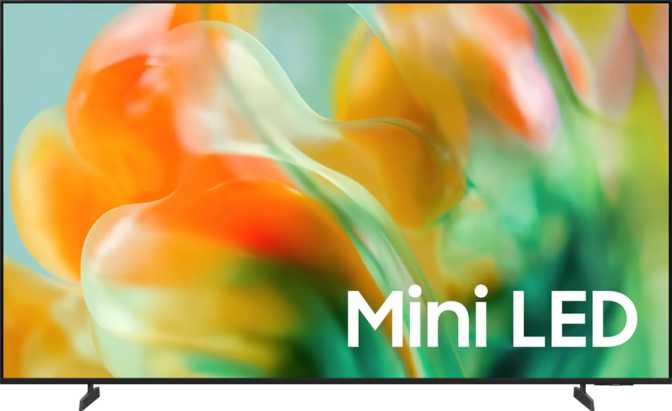
This is a QLED Mini-LED television, meaning Samsung has layered Quantum Dot color enhancement over a Mini-LED backlight system. Traditional LED TVs use relatively few large light zones behind the panel, causing bright areas to bleed into dark ones. Mini-LED replaces those with thousands of much smaller light sources, giving the TV far finer local brightness control. Quantum Dot converts that backlight into vivid, calibrated color. Together, they represent the upper tier of LCD-based display technology — just below OLED in contrast, but often surpassing it in peak brightness and color volume.
- Panel: QLED Mini-LED, 99.5"
- Resolution: 4K UHD — 3840×2160
- Refresh Rate: 144Hz native
- HDMI: 4× HDMI 2.1
- Wireless: Wi-Fi 6E + BT 5.3
- Voice: Google Assistant, Alexa
- Power Draw: ~354W operating
- Warranty: 1-year standard
Build Quality and Physical Presence
Sixty kilograms. That number needs to land before anything else about design is discussed. The QN100QN80HFXZA weighs approximately 133 pounds, and at roughly 2.23 meters wide and 1.27 meters tall, it demands serious structural planning — whether wall-mounted or stand-placed. Professional installation, a reinforced wall anchor, and a second person are not optional considerations. They are baseline requirements.
The chassis depth of just under 58mm is relatively restrained for a screen this size, keeping the profile from becoming unwieldy when wall-mounted. VESA mounting is supported, meaning compatible third-party wall mounts and professional installation hardware are readily available. Confirm the specific VESA pattern with Samsung or a certified installer before purchasing mounting hardware.
Room planning matters enormously before purchase. A 100-inch display calls for a recommended viewing distance of roughly 2.5 to 4 meters for comfortable 4K viewing — closer than most people expect. The immersive effect is genuinely unlike anything a 75- or 85-inch panel produces, but the room needs to accommodate both the screen's physical width and appropriate seating depth.
Physical Dimensions
- Width
- 2,229.9mm (87.8")
- Height
- 1,273.3mm (50.1")
- Depth
- 57.4mm (2.3")
- Weight
- ~60kg (133 lbs)
- VESA Mount
- Supported
- Viewing Distance
- 2.5–4m
Display Performance: What the Panel Delivers
Six performance areas define how this screen looks in practice — from pixel sharpness and color depth to HDR compatibility and gaming refresh capabilities.
4K at 100 Inches
The panel resolves 3,840 by 2,160 pixels across 99.5 inches — around 44 pixels per inch. At typical viewing distances for a screen this size, individual pixels are invisible to the naked eye. The result is a sharp, cinema-quality image with no visible softness despite the panel being larger than most home projector screens.
Mini-LED Backlight
Thousands of microscopic LED zones allow the QN80H to dim dark areas while keeping bright highlights intensely lit — simultaneously. Standard LED TVs cannot do this. While it does not reach OLED's infinite contrast, the gap is narrow and peak brightness output is significantly higher.
Over 1 Billion Colors
10-bit panel processing combined with Quantum Dot enhancement produces over 1.07 billion distinct shades. Ten-bit depth eliminates color banding — streaky transitions visible on lower-tier screens during sunsets, sky gradients, and skin tones. For calibration-focused viewers, this is a meaningful checkpoint.
HDR: Three Formats, One Gap
HDR10, HDR10+, and HLG are all supported, covering the vast majority of streaming and physical media content. HDR10+ adjusts brightness dynamically scene by scene. Dolby Vision is absent — content will play in HDR10 fallback, but the Dolby-graded master version is inaccessible.
144Hz & FreeSync Premium Pro
A native 144Hz panel is uncommon at this screen size — most large-format displays cap at 120Hz. AMD FreeSync Premium Pro synchronizes refresh rate to the source, eliminating screen tearing. Low Framerate Compensation maintains smoothness when frame rates dip. For 4K console gaming at cinematic scale, this outpaces most rivals.
178° Viewing Angles
Both horizontal and vertical viewing angles reach 178 degrees — effectively edge-to-edge coverage with minimal color shift or brightness loss. This matters especially at 100 inches, where guests seated toward the room's sides are proportionally farther off-center than with smaller screens.
A Note on the Dolby Vision Gap
Dolby Vision is present on a significant portion of Netflix, Apple TV+, and Disney+ content. Most Dolby Vision titles also carry HDR10 or HDR10+ as a fallback, so content will still play in high dynamic range — just not in the studio-graded Dolby master. For most viewers, the real-world difference is subtle. For videophiles who care deeply about studio masters, it is a consideration worth weighing before purchase.
Connectivity: Future-Proofed and Practically Complete
Ports and Physical Inputs
Four HDMI inputs, all running the HDMI 2.1 standard, is the correct answer at this price and size tier. HDMI 2.1 carries the bandwidth required for 4K at 144Hz, supports Variable Refresh Rate, and handles eARC for high-quality audio passthrough to external sound systems. One port supports both ARC and eARC for broad soundbar and receiver compatibility.
Two USB ports handle external storage for media playback and live broadcast recording directly to an attached drive. A single Ethernet port provides wired network connectivity for those prioritizing stability over convenience. Miracast is included for Android screen mirroring.
Wireless Connectivity
Wi-Fi 6E operates on the 6GHz band — less congested than the 2.4GHz and 5GHz bands used by most household devices. This delivers more consistent streaming performance, lower latency, and headroom for high-bandwidth 4K HDR content. Backwards compatibility with earlier Wi-Fi standards is maintained. Bluetooth 5.3 handles audio pairing with improved range and connection stability over previous generations.
Port & Interface Summary
| Port / Interface | Qty | Specification |
|---|---|---|
| HDMI | 4 | HDMI 2.1 (incl. ARC + eARC) |
| USB | 2 | Media playback + USB recording |
| Ethernet (RJ45) | 1 | Wired LAN |
| Wi-Fi | 1 | Wi-Fi 6E (802.11ax, 6GHz) |
| Bluetooth | 1 | Version 5.3 |
| 3.5mm Headphone | Not included | |
| Memory Card Slot | Not included |
Audio System: Built-In Sound at Scale
What the Integrated System Includes
The QN100QN80HFXZA includes a built-in stereo speaker configuration with a dedicated subwoofer — uncommon for integrated TV audio. Most televisions at any size rely entirely on edge-mounted drivers for bass reproduction. A discrete subwoofer driver built into the chassis provides more defined low-frequency output for a self-contained audio experience.
Dolby Atmos processing is supported, decoding Atmos-encoded content and presenting a widened, more dimensional soundstage. The TV passes full Atmos bitstreams through HDMI eARC to compatible external systems. Dolby Digital, Dolby Digital Plus, and Dolby Audio provide broad format compatibility across all source types.
No built-in television audio system matches the performance of a dedicated soundbar, let alone a full AV receiver setup. At 100 inches, the visual experience this TV creates will be significantly out-balanced by its integrated sound without an external audio investment.
The built-in system serves adequately for casual viewing. A screen of this scale deserves sound that can fill the same physical space. Budget for external audio accordingly — it is not optional if the visual experience is your priority.
Smart TV Platform and Voice Control
The QN100QN80HFXZA runs Samsung's Tizen-based Smart TV platform, with a full web browser, sleep timer, child lock, and USB media playback built in. Smartphone remote control is supported through the SmartThings app. Broadcast tuner support covers DVB-T, DVB-T2, DVB-C, DVB-S, and DVB-S2 — terrestrial, cable, and satellite reception across standard formats.
Google Assistant and Amazon Alexa are both accessible without an external smart speaker. AirPlay 2 enables wireless streaming from iPhones, iPads, and Macs. USB recording allows live broadcast content to be saved directly to an attached drive — useful for time-shifting without a separate recorder.
Smart Platform Compatibility
- Google Assistant (built-in)
- Amazon Alexa (built-in)
- AirPlay 2 (iOS / macOS)
- Miracast (Android mirroring)
- SmartThings app remote control
- USB recording (live broadcast)
- Built-in web browser
- Apple HomeKit / Siri
Power Consumption and Operating Conditions
Running at full load, this television draws approximately 354 watts. Across a typical viewing session of four to five hours, that represents meaningful ongoing energy consumption — relevant for both electricity costs and environmentally conscious buyers. Standby consumption drops to half a watt, which is negligible.
The operating temperature range of 10°C to 40°C (50°F to 104°F) covers typical indoor environments comfortably. Worth noting for installations in spaces with significant temperature variation — uninsulated rooms, outbuildings, or sun-exposed areas in warm climates — where ambient temperatures may approach the upper limit.
Who This TV Is For — and Who Should Look Elsewhere
This television is purpose-built for a specific use case: a dedicated home theater or large living room where screen size is the primary goal and the budget accommodates a premium large-format purchase.
- Home cinema builders who want the closest residential approximation to a commercial theater experience.
- Console and PC gamers who want cinematic scale with modern credentials: 4K, 144Hz, VRR, and FreeSync Premium Pro.
- Large-room entertainers who host groups for sports, films, or events where screen visibility across the room matters.
- Sports viewers for whom motion clarity at high refresh rates and wide off-axis angles translate directly into picture quality.
This is not the right purchase for everyone with the budget to buy it. Room dimensions and usage priorities matter as much as the spec sheet.
- Small-room buyers with under roughly 20 feet of usable depth will find the screen physically overwhelming rather than immersive. A 75- or 85-inch alternative is the better fit.
- Contrast-first buyers who prioritize absolute black levels above all else should look toward large-format OLED, despite its trade-offs in brightness and burn-in risk.
- Dolby Vision library owners — particularly heavy Apple TV+ subscribers — should carefully evaluate the Dolby Vision omission before committing.
How It Compares to Logical Alternatives
The jump from 85 to 100 inches translates to roughly 38% more screen area — a difference that is immediately dramatic in person. Buyers comparing on paper consistently underestimate it until they experience it firsthand.
| Feature | Samsung QN100QN80HFXZA | Typical 85" QLED | Large-Format OLED |
|---|---|---|---|
| Screen Size | 100 inches | 85 inches | 83–97 inches |
| Backlight Technology | Mini-LED | Standard LED | Self-emissive |
| Peak Brightness | High | Moderate | Moderate-High |
| Black Level Quality | Very Good | Good | Excellent |
| Native Refresh Rate | 144Hz | 120Hz | 120Hz (typical) |
| Dolby Vision | No | Varies | Yes (most) |
| Burn-In Risk | None | None | Low but present |
| Ongoing Power Cost | High | Moderate | Moderate-High |
| Installation Requirement | Professional | DIY possible | Professional |
Strengths and Weaknesses: The Unfiltered View
The combination of Mini-LED backlight precision with Quantum Dot color accuracy produces images that look vibrant and detailed without the oversaturated, artificial quality cheaper TVs exhibit when pushing color. The panel hits the visual mark most home theater setups aspire to.
- 144Hz + FreeSync Premium Pro — rare gaming credentials at 100-inch scale
- Four HDMI 2.1 ports — no connectivity bottleneck for multi-source setups
- Wi-Fi 6E — genuinely future-looking wireless, not a marketing checkbox
- 10-bit color + 1B+ shades — clean gradients with no visible color banding
- 178° viewing angles — no image degradation for off-axis seating positions
The weaknesses deserve equal transparency. None are deal-breakers for the right buyer, but each carries real-world implications worth understanding before committing at this scale.
- No Dolby Vision — a genuine content compatibility gap for some library owners
- One-year warranty — short for this investment level; extended coverage is worth purchasing
- Built-in audio falls short — substantially out-performed by the visual experience; external sound is near-essential
- High power draw — 354W represents meaningful ongoing electricity costs
- Installation cost not included — professional mounting adds real expense beyond the purchase price
Common Buyer Questions Answered
Final Verdict
The Samsung QN100QN80HFXZA is a television for buyers who have decided that scale is the priority and are prepared to build a room and a setup around that decision. It is not an impulse purchase, a casual upgrade, or a product for undecided rooms.
The Mini-LED backlight produces image depth that standard LED TVs cannot replicate. The 144Hz panel with FreeSync Premium Pro brings legitimate gaming credentials to a screen size that usually ignores that audience. Four HDMI 2.1 ports and Wi-Fi 6E are built for the next several years of source device evolution, not just the setup of today.
Buy it if the room is ready, the installation budget is accounted for, and external audio is in the plan. Add an extended warranty. If Dolby Vision is a dealbreaker for your content library, evaluate that before committing. For everything else — the scale, the image quality, the feature depth — this is what 100 inches done properly looks like.
For dedicated home theater setups with proper room dimensions, professional installation, and external audio.