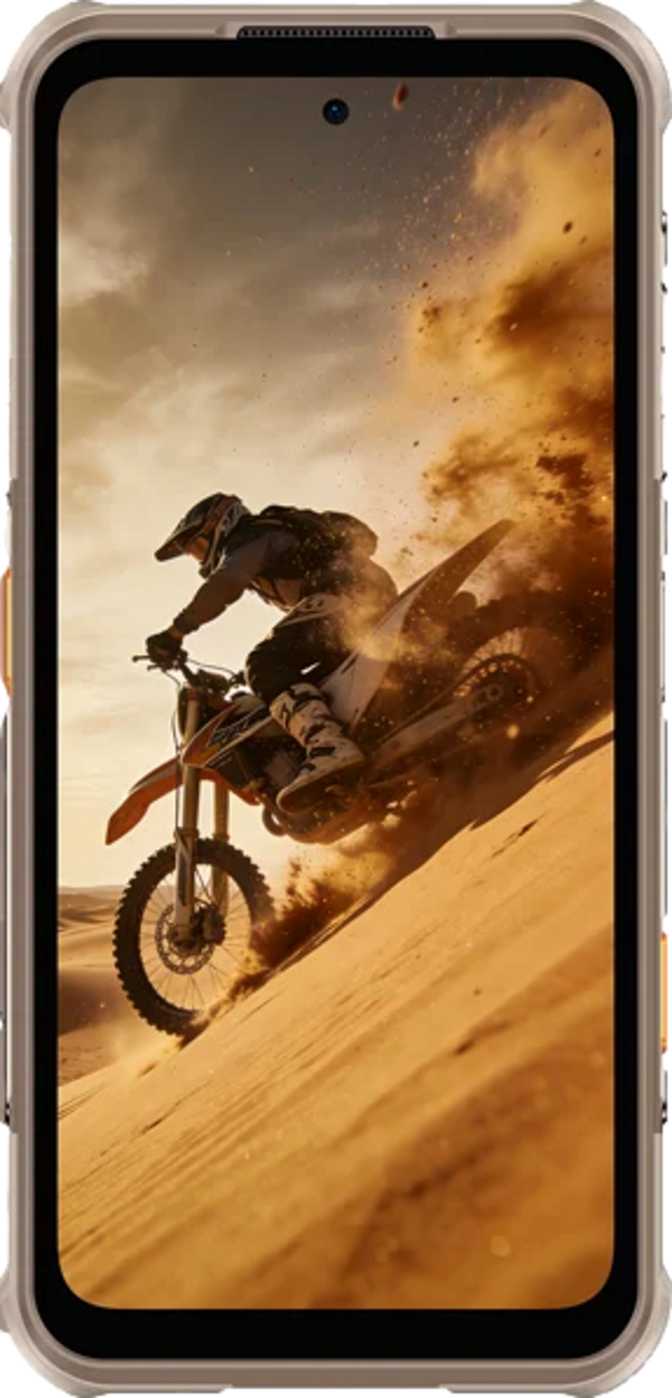
RugOne Xever 8 Review: The Rugged Phone That Refuses to Compromise
SmartphonesMost smartphones are engineered for best-case scenarios — pockets, desks, and careful hands. The RugOne Xever 8 starts from the opposite assumption: that phones get dropped in puddles, left in the rain, sat on at job sites, and used by people whose hands are rarely clean and dry. If you work outdoors, spend time on the water, hike regularly, or simply have a history of destroyed phones, this device is worth your close attention. It is not trying to compete with flagship glass slabs. It is trying to survive where those devices would not.
What makes the Xever 8 genuinely interesting is that it does not ask you to sacrifice too much in exchange for that toughness. A capable chipset, a sharp high-refresh display, a versatile dual-camera setup, and a surprisingly complete feature list come together in a package that can be submerged, abused, and handed to someone working in a quarry. The trade-offs are real — and this review is direct about every one of them.
IP Rating
IP69
Waterproof 2m
Display
6.5" 120Hz
1080×2400 IPS
Battery
4,800 mAh
Removable + 18W
Chipset
Helio G200
8GB RAM · 256GB
RugOne Xever 8 — Editor Assessment
Design and Build Quality
Engineered toughness without apology — the Xever 8 prioritizes protection and longevity over pocket-friendliness.
Physical Dimensions & Feel
Dimensions
168 × 80 × 14 mm — tall, wide, and unmistakably thick
Weight: 320 g
Comparable to a thick deck of cards with presence — heft is a consequence of reinforced construction, not a flaw
Rugged Chassis
Reinforced corners, sealed ports, and an impact-resistant frame designed to absorb knocks that shatter conventional handsets
Corning Gorilla Glass 3
Scratch and minor-impact resistance — handles keys, tool belts, and incidental knocks reliably
Flat Panel Display
Correct engineering choice — curved edges are more vulnerable to impact and harder to protect with a screen film
What IP69 Actually Means
Maximum Industrial Protection
Dust-tight + High-pressure waterproofing
- Rating "6" — full dust ingress protection under any conditions
- Rating "9" — resists high-temperature, high-pressure water jets
- Submersion certified to 2 metres depth
- Covers rivers, rain, construction puddles, and fishing trips
Display: Surprisingly Capable for a Rugged Device
A 120Hz IPS LCD that punches well above the rugged category average — with one clear limitation for the harshest outdoor conditions.
Screen Specifications
- Screen Size
- 6.5 inches
- Technology
- IPS LCD — accurate color, wide viewing angles
- Resolution
- 1080 × 2400 px
- Pixel Density
- 405 ppi — pixels not visible to the naked eye
- Refresh Rate
- 120 Hz
- Peak Brightness
- 570 nits — adequate indoors
- Glass
- Corning Gorilla Glass 3
- Panel Shape
- Flat — optimal for rugged use
- HDR
- Not supported
What 120Hz Means in Daily Use
The display refreshes 120 times per second — twice the speed of most budget and mid-range devices. Scrolling through text, social feeds, and navigation maps feels visibly smoother. Games that support high frame rates become more responsive. For a rugged phone, this is a genuinely modern inclusion; most competitors stick with 60Hz to cut costs, making the Xever 8's screen experience feel current rather than compromised.
Outdoor Brightness: The Honest Limitation
570 nits is comfortable indoors and handles moderate outdoor light well. In direct, harsh sunlight — precisely the conditions where a rugged phone is most likely to be used — this figure sits on the lower side. Flagship phones pushing above 1,000 nits in their peak modes have a visible advantage. Finding shade to read fine text on the brightest days is a real-world compromise worth knowing before you buy.
Performance: A Chipset Built for This Job
A modern 6nm processor paired with 8GB RAM makes the Xever 8 more responsive than most rugged phones regardless of price point.
MediaTek Helio G200
System-on-Chip
6nm Architecture
Modern fabrication — more transistors, lower heat, better battery efficiency than older chip generations
8-Core CPU: 2× 2.2GHz + 6× 2.0GHz
Fast cores handle demanding tasks; efficiency cores manage background activity — intelligent allocation keeps things smooth
Mali G57 GPU — 1,100 MHz
Handles popular mobile games at medium-to-high settings with genuine fluidity
Integrated LTE
On-chip cellular — tighter integration, more efficient power management
Memory & Storage
Enough to keep many apps loaded simultaneously in the background — switching between camera, navigation, and messaging happens without reload delays
Thousands of photos, hundreds of apps, substantial offline media — without careful management
Camera System: Versatile, with Honest Limits
An unusually capable camera setup for the rugged category — though it stops short of professional photography territory in two specific areas.
64 MP
Primary Lens
f/1.8 aperture20 MP
Secondary Lens
f/1.9 aperture- Phase-detection autofocus — fast, accurate stills
- Continuous autofocus during video recording
- Video recording up to 1440p at 30fps
- Slow-motion video support
- Manual ISO, exposure, focus & white balance
- HDR mode for difficult lighting conditions
- No optical image stabilization (OIS)
- No RAW format capture
- No optical zoom — digital only
32 MP
Selfie Camera
f/2.5 apertureA 32-megapixel front camera is exceptional by any standard — particularly remarkable in a rugged handset where front cameras are typically an afterthought. Video calls, face identification, and everyday selfies benefit from this resolution. Adequate indoor lighting handles most scenarios; very low-light front camera performance depends entirely on ambient light since there is no front-facing flash.
Android 16: A Modern Software Foundation
Current software on a rugged device is rarer than it should be. The Xever 8 ships with Android 16 — and a thorough feature set to match.
Privacy Controls
Usability & Productivity
Battery, Charging & Audio
The removable battery alone sets this phone apart from the majority of the rugged category — and the audio package adds further unexpected value.
Battery & Charging
4,800
mAh
18W
Fast Charge
Removable
Full Workday Endurance
Heavy outdoor use — GPS navigation, active camera, calls — and expect to reach end of day with charge to spare
Swappable Spare Battery
Carry a fully charged spare and swap in the field — effectively unlimited operational range without a power outlet
18W Wired Fast Charging
Meaningful recovery during a lunch break — a charger is included in the box
No Wireless Charging
An expected omission — the sealed, waterproof construction makes wireless integration impractical at this build standard
Audio
Stereo Speakers
True spatial width — media, navigation audio, and speaker calls have genuine directional separation
3.5mm Headphone Jack
No adapter, no pairing, no battery — connect any wired earphones or vehicle aux input and it works immediately
FM Radio
Functions without a data connection — genuinely useful in remote areas, emergencies, or when mobile data is being conserved
No Premium Bluetooth Codecs
Bluetooth 5.2 delivers stable standard-quality wireless audio — no aptX or LDAC. Audiophiles will prefer the 3.5mm jack
Connectivity: Capable but with One Clear Gap
Everything field workers and outdoor users genuinely need — with the honest caveat that 5G is not part of the package.
Cellular
4G LTE
No 5G
Wi-Fi
Wi-Fi 4 & 5
802.11n / ac
Bluetooth
Version 5.2
Stable & efficient
NFC
Supported
Contactless payments
Satellite Nav
GPS + Galileo
Multi-constellation
SIM Cards
Dual SIM
Both active at once
Biometrics
Fingerprint
Physical scanner
Charging Port
USB-C
USB 2.0 speed
Who Should Buy the RugOne Xever 8
The right phone for the right person — and it is unusually well-suited to being exactly that phone.
Outdoor & Field Workers
Construction, agriculture, forestry, utilities, oil and gas — a device that survives being hosed down, dropped on concrete, and used through a rainstorm
Hikers, Campers & Adventure Travelers
Days from reliable charging, GPS tracking in remote areas, and zero risk of a destroyed phone mid-expedition
Tradespeople & Blue-Collar Professionals
Modern features, a capable work camera, and reliable connectivity — without a fragile device that needs babying
Water Sports Enthusiasts
Kayakers, surfers, anglers, and shallow-water divers — no separate waterproof case required
Parents Seeking an Indestructible Handset
For teenagers or children who have a demonstrated history of destroying phones
Compact & Lightweight Priorities
At 320g and 80mm wide, this phone requires accepting a physically substantial device — shirt-pocket carry will feel noticeable at all times
Urban 5G Power Users
If next-generation network speeds are a consistent daily priority in a densely covered city, a different category of device is the better fit
Dedicated Camera Enthusiasts
No OIS, no RAW capture — the camera is a capable and versatile work tool, not a standalone reason to choose this phone
Wireless Charging Dependents
Home, car, and office wireless charging pads will not work with the Xever 8 — users who rely on this infrastructure need to adapt
How It Compares
The Xever 8 sits in a well-defined category — and holds its ground where it genuinely counts.
| Feature | RugOne Xever 8 | Typical Rugged Mid-Range | Typical Mainstream Mid-Range |
|---|---|---|---|
| IP Rating | IP69 | IP68 | IP67 or lower |
| Removable Battery | Rare | ||
| Display Refresh Rate | 120Hz | Often 60Hz | 90–120Hz |
| Android Version | Android 16 | Often 2+ years behind | Current |
| 5G Support | Varies | ||
| Weight | 320g | 250–350g | 180–220g |
| 3.5mm Headphone Jack | Often removed | ||
| FM Radio | |||
| Optical Image Stabilization | Flagship tier only |
Honest Assessment
Where the Xever 8 genuinely excels — and where it asks you to accept a trade.
Where It Excels
The Xever 8's most compelling strength is coherence. The protection level is serious, the software is current, the display is genuinely good for the category, and the removable battery addresses the single biggest anxiety rugged phone users carry. Most rugged phones feel like compromised technology wrapped in rubber. The Xever 8 feels like a purposeful product that understood its user.
- IP69 protection — exceeds most flagship smartphones, not just rugged competitors
- 120Hz display — a genuinely unexpected inclusion that makes daily use more enjoyable
- Removable battery — a category-defining differentiator for field and expedition use
- Android 16 — modern privacy and usability features rarely found on rugged handsets
- 32MP front camera — exceptional for any category, remarkable for this one
Trade-offs to Know
The weight is the most honest trade-off to name clearly. 320 grams is substantial, and users who carry their phone in a shirt pocket will notice it at all times. Users who mount it to a vehicle, clip it to a belt, or carry it in a chest pocket on a backpack will care far less. Whether this matters depends entirely on how you carry your phone.
- 320g weight — noticeable in a shirt pocket; manageable in a belt holster or pack
- No 5G — affects urban heavy users far more than the device's intended audience
- 570 nit brightness — comfortable in most conditions, limited in harsh direct sunlight
- No OIS or RAW capture — the camera is a capable work tool, not a creative instrument
- No wireless charging — expected for the design, but worth confirming before purchase
Frequently Asked Questions
The questions real buyers search for before committing.
Final Recommendation
The RugOne Xever 8 is the right phone for the right person — and it is unusually good at being that phone. It does not pretend to compete with flagship photography or ultra-thin design. It competes at being genuinely indestructible, running a current operating system with real features, delivering a sharp and fluid display, and surviving the kinds of days that ruin ordinary handsets.
The removable battery alone sets it apart from most of the rugged field. Combined with a serious IP69 protection rating, a 6nm chipset that runs modern apps without hesitation, a 120Hz display that would not embarrass a mainstream mid-range phone, and a camera system with genuine versatility for field documentation, the Xever 8 is a coherent product that serves its intended audience exceptionally well.
Buy it if your life takes your phone somewhere most phones should not go. You will not find a better-balanced rugged handset at this specification level.
Skip it if 5G connectivity, camera excellence, or carrying a lightweight device are your primary purchase drivers. There are better tools for those specific needs.
Overall Score
RugOne Xever 8
Recommended