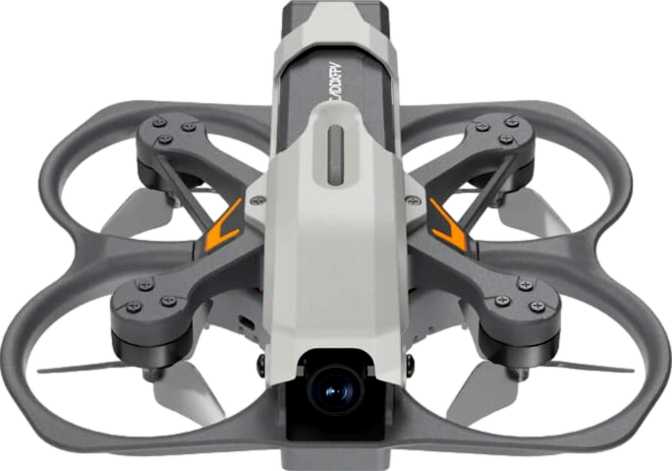
Protos HD 2S F4 12A Review: Real-World Performance Tested
DronesQuick Verdict
A compact mini drone with genuinely capable hardware — F4 flight controller, matched 12A ESCs, obstacle detection, and RTH in a 104-gram frame. The GPS omission is a real trade-off, but for recreational pilots and travelers who fly close, the hardware quality justifies the package.
What the Protos HD 2S F4 12A Actually Is
Mini drones are everywhere, but most of them are either toy-grade machines dressed up in technical language or genuinely capable hardware priced well beyond what casual pilots can justify. The Protos HD 2S F4 12A lands in a more interesting position: a compact, palm-sized platform built around flight controller and ESC hardware more commonly found in dedicated racing and freestyle builds, layered with smart safety features that beginner pilots actively need.
The product name is essentially a component manifest. "2S" identifies the battery cell configuration. "F4" names the class of flight controller at the drone's core. "12A" describes the current rating of the electronic speed controllers managing each motor. For a buyer who knows what those terms mean, the spec headline alone suggests this punches above its size. For a buyer who doesn't, the rest of this review translates every relevant detail into something you can act on.
Build and Physical Experience
A Frame That Goes Anywhere
At 110mm across its widest axis and just over 100mm in depth, the Protos HD 2S F4 12A occupies roughly the footprint of a deck of cards. Its 41mm standing height — closer to the profile of a chunky wristwatch than a traditional drone silhouette — means it sits flat in a bag side pocket without resistance.
The total volume is just under 464 cubic centimeters: slightly smaller than a 500ml water bottle. The weight of 104.4 grams is meaningfully lighter than a mid-range smartphone, and deliberately engineered to stay below the weight thresholds that trigger registration requirements in many jurisdictions worldwide.
Always verify the current aviation authority regulations in your region before flying outdoors. Rules vary by country and change over time.
The F4 Flight Controller Explained
The flight controller is the brain of any drone — the component that reads every sensor input and translates it into motor output in real time. The "F4" designation identifies the processor generation handling that job, and it represents a meaningful step up from the F3-class controllers found in the previous generation of mini drones.
An F4 processor handles sensor loops at higher frequencies and processes stabilization algorithms faster. In practical terms, this means the drone self-corrects more precisely when wind disturbs it, responds more crisply to stick inputs, and runs demanding flight features without degrading core stability.
F4 hardware was, until recently, reserved for dedicated FPV and racing machines. Its appearance in a consumer-accessible package is a substantive engineering decision.
ESC Matching: Where Cheap Drones Often Get It Wrong
The 12-amp electronic speed controllers govern current flow between the battery and each motor. The key detail is not the ampere rating in isolation, but how it pairs with the rest of the electrical architecture. Mismatched ESCs — a common cost-cutting shortcut in budget micro drones — run too hot, throttle motor output under sustained load, and degrade faster than the rest of the airframe.
A 12A rating properly matched to a 2S battery configuration maintains clean, consistent power delivery throughout the flight envelope. The result is motors that spin up predictably, throttle responses that feel linear, and a power system that doesn't become the weakest link.
Performance Analysis
Flight Time: What 8.5 Minutes Buys You
The maximum flight window of approximately 8.5 minutes sits in the upper range of what a well-optimized 2-cell battery configuration can deliver at this weight class. Toy-grade micro drones with brushed motors typically cap out between five and seven minutes. Brushless micro quads running comparable electronics cluster around six to ten minutes — landing near the higher end indicates efficient power management.
What 8.5 minutes looks like in practice:
- A complete beginner training session
- A focused outdoor exploration flight
- Capturing a planned shot sequence
- Extended aerial documentation without spare batteries
Speed and Range in Context
At a ceiling of 10 meters per second — approximately 36 kilometers per hour — this drone moves with genuine urgency and directional responsiveness. That speed is enough to cover ground quickly and feel dynamic in flight. It is not a circuit racing speed, and that's deliberate — it's tuned for controlled recreational flight and smart safety features.
The 3-kilometer maximum operational range sets a ceiling that most pilots will never approach in legal, line-of-sight recreational flight. Aviation authority requirements in virtually every jurisdiction limit pilots to visual range well before the hardware limit kicks in.
Treat the 3km figure as a comfort margin and signal-reliability indicator rather than a daily operating envelope.
At a Glance: Core Performance Specs
Smart Flight Features: The Safety Architecture
Obstacle detection on a drone weighing slightly over 100 grams is genuinely uncommon at this scale and adds meaningful real-world value. The system monitors the flight path for objects in the drone's trajectory and interrupts forward motion before impact occurs — reducing the most common cause of beginner crashes from a near-certainty to a manageable exception.
Works well for:
- Clearly visible obstacles in good lighting
- High-contrast surfaces
- Stationary objects in the flight path
- Everyday beginner error prevention
Limitations to know:
- Thin wires and fishing lines
- Glass and transparent surfaces
- Fast-approaching objects
- Low-contrast or low-light environments
The RTH feature brings the drone back to its takeoff point autonomously when triggered — whether by a low battery warning, signal loss, or manual activation. The notable detail is that this drone achieves RTH without GPS onboard, which warrants an honest explanation.
Without satellite positioning, RTH navigation relies on a combination of barometric altitude hold, compass heading reference, and the flight controller's tracking of directional movement to approximate a return path. This works reliably in calm conditions and at shorter ranges.
RTH performs reliably when:
- Flying in calm wind conditions
- Close to moderate range from takeoff
- Minimal magnetic interference nearby
Less reliable in:
- High-wind outdoor sessions
- Long-range edge-of-envelope flights
- Environments with magnetic interference
The intelligent flight mode suite hands the drone automation for maneuvers that would otherwise require advanced stick control. Intelligent flight modes at this capability level typically include automated orbit paths, subject-tracking behaviors, or defined-point navigation — automated behaviors that produce cinematic results with minimal stick work.
For beginners:
Intelligent modes lower the barrier to capturing interesting footage — producing results that would take months of manual practice to achieve otherwise.
For experienced pilots:
They serve as time-efficient workflow tools when consistent, repeatable movement is more useful than manual expression.
Recording and External Storage
The inclusion of an external memory card slot is a deliberate capability signal. Fixed-capacity internal storage — standard on simpler drones — limits total recording time and requires a cable connection to retrieve footage. Swappable external storage changes both constraints: larger cards extend recording sessions without stopping, and footage extraction is as fast as pulling the card.
The "HD" designation in the product name, combined with the external memory architecture, indicates this platform is designed with video capture as a core function.
Buyers who intend to record footage should verify supported card formats and maximum capacities directly with the manufacturer, as those parameters are not enumerated in the available specification data.
Controller and Onboard Display
The included controller with a built-in display is a detail that understated product descriptions consistently undersell. Smartphone-dependent controllers create real operational friction: sun glare makes outdoor screens unreadable, phone mounts add fragility, and app connections introduce latency and compatibility variables.
A controller with an integrated display eliminates all of those friction points. Flight telemetry, signal status, battery readout, and mode indicators are visible on a purpose-built screen optimized for the environment this drone operates in.
For pilots who fly outdoors regularly, an integrated display is the kind of quality-of-life difference that sounds minor — until you've dealt with its absence.
Who This Drone Is Right For — and Who It Isn't
-
First-time pilots wanting real hardware
The F4 controller and matched ESC hardware provide a foundation that won't be outgrown quickly. A genuine step up from toy-grade brushed motors.
-
Travelers and commuters
Physical footprint is a non-negotiable constraint for this group. At under 105 grams and fitting in a jacket pocket, there is almost no packing sacrifice.
-
Post-crash upgraders
Anyone who has destroyed cheap toy-grade equipment will find meaningful obstacle detection here before stepping up to a larger machine.
-
Hobbyists building manual skill
Intelligent flight modes provide structured practice and early success while transitioning to fully manual flight over time.
-
GPS-precision use cases
Mapping, surveying, or stable long-take aerial cinematography require GPS-assisted position hold. This drone cannot replace that capability.
-
Competitive racing pilots
Speed is capped and the electronics are not tuned for zero-restriction circuit performance. Racing pilots need purpose-built hardware.
-
Extended single-charge session flyers
Anyone expecting more than ~8–10 minutes per charge without carrying spare batteries will be consistently frustrated.
-
Camera-first buyers
Without detailed camera specs to evaluate, this is not the product to choose solely on imaging reputation. Confirm recording specs with the manufacturer first.
How It Stacks Up Against Alternatives
The table below maps the Protos HD 2S F4 12A against the two most likely comparison targets: GPS-equipped mini drones in the same weight class, and the toy-grade brushed mini drones most buyers are upgrading from.
| Criterion | Protos HD 2S F4 12A | GPS Mini Drone (Same weight class) |
Toy-Grade Brushed Mini Drone |
|---|---|---|---|
| Flight Controller | F4 — High-Grade | F3 or proprietary OEM | Basic / no published grade |
| ESC Architecture | 12A Brushless, matched 2S | Varies by model | Brushed, fixed regulation |
| GPS | |||
| Return to Home (RTH) | Yes — Compass/Baro | Yes — GPS-guided | Absent or unreliable |
| Obstacle Detection | Common in segment | ||
| External Memory | Model-dependent | ||
| Controller Display | Yes — Integrated | Varies widely | |
| Approx. Weight | 104g | 80–200g | 40–120g |
| Max Flight Time | ~8.5 min | 10–20 min | 5–7 min |
| Power Configuration | 2S LiPo | 2S–3S depending on model | Single-cell or AA-equivalent |
The core trade-off in plain terms: GPS alternatives deliver more precise hovering and more reliable long-range RTH. In return, the Protos HD 2S F4 12A offers a higher-grade flight controller, better-matched ESC hardware, and a self-contained controller setup that many GPS drones in this segment skip entirely.
Honest Strengths and Real Limitations
Where It Genuinely Excels
- Hardware engineering above its weight
- An F4 flight controller is not a beginner compromise — it is a component found in serious builds. Its presence here reflects a genuine commitment to flight quality over cost-cutting. Paired with 12A ESCs and a 2S configuration, the power system operates with efficiency and responsiveness that cheaper alternatives cannot replicate.
- Safety architecture that actually works
- Obstacle detection and RTH give less experienced pilots a meaningful safety cushion. These aren't marketing-first additions — they represent real hardware that can prevent real crashes during the early stages of learning.
- Controller with integrated display
- A self-contained flying system that works better outdoors than any phone-mount alternative. Setup is simpler, glare is a non-issue, and there's nothing app-related to go wrong mid-flight.
Real Limitations to Weigh Honestly
- No GPS means less precision hovering
- Without satellite positioning, this drone requires more active stick management in outdoor wind than GPS-equipped alternatives. It won't lock to a point and hold position unassisted in a crosswind the way a satellite-guided system would.
- Flight duration demands planning
- Eight and a half minutes is a sortie, not a session. This is the nature of 2S mini drones, not a flaw unique to this product — but it demands spare battery planning from day one rather than as an afterthought.
- Camera specs unverified
- Imaging quality cannot be independently evaluated here. Buyers with specific recording requirements should confirm specifications before purchase — do not choose this drone solely on imaging reputation.
Questions Real Buyers Ask
Final Verdict
Our purchase recommendation for the Protos HD 2S F4 12A
The Protos HD 2S F4 12A is a well-engineered compact drone that earns its keep through honest hardware quality rather than inflated marketing claims. The F4 flight controller and matched 12A ESC setup deliver flight performance that stands above the toy-drone tier without demanding the budget of a prosumer platform. Obstacle detection, RTH, and intelligent flight modes build a safety and usability foundation that genuinely serves new pilots without patronizing experienced ones.
The GPS omission is the most significant specification gap, and buyers should weigh it honestly. If precision hovering, GPS-assisted position hold, or reliable long-range RTH are non-negotiable requirements, a GPS-equipped alternative warrants serious consideration. If those features matter less than portable size, real flight controller hardware, and a self-contained controller setup, the Protos HD 2S F4 12A makes a strong case.
Best For
Recreational pilots, travelers, and beginners upgrading from toy drones
Standout Feature
F4 + 12A hardware tier in a sub-110g, self-contained package
Key Caveat
No GPS — requires more active outdoor stick management in wind
"For recreational flyers, trainers, travel-first pilots, and anyone stepping up from toy-grade hardware for the first time, this is a legitimate purchase backed by substantive engineering. It will reward you with better flight feel than its price point typically delivers."