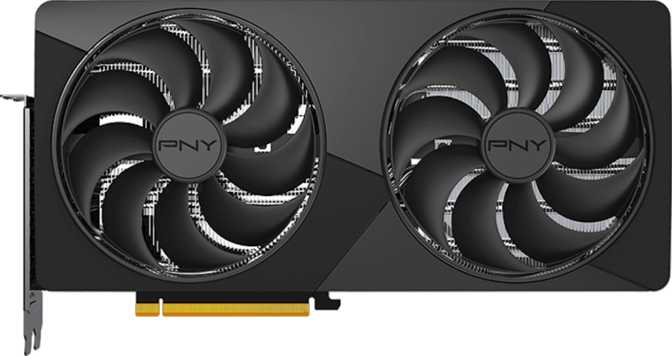
PNY RTX 5080 Slim Dual Fan OC Review: Compact Blackwell at Its Best
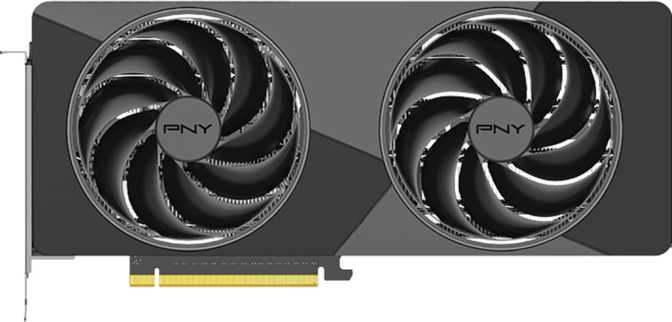
Graphics CardsThe RTX 5080 sits at the top of NVIDIA's consumer lineup, but most versions arrive in massive triple-fan enclosures stretching well beyond 340mm. PNY's Slim Dual Fan OC takes a different approach — the same complete Blackwell silicon, compressed into a 300mm dual-fan card that fits where standard RTX 5080 boards simply cannot.
This isn't a cut-down chip. Every shader, every render output, and the full 16GB GDDR7 frame buffer are present and accounted for. What changes is the cooling enclosure — and understanding that trade-off is the starting point for every purchase decision this review is designed to inform.
This card isn't meant for everyone. It's the answer to a specific architectural challenge, and for the right builder, it's the only answer that exists at this performance tier.
Design and Build: Slim Doesn't Mean Cheap
Physical design, form factor, and build quality
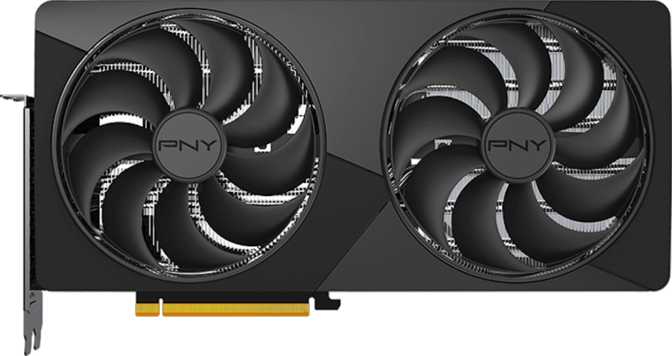
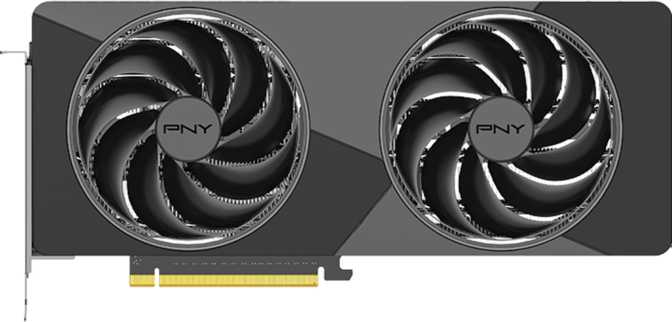
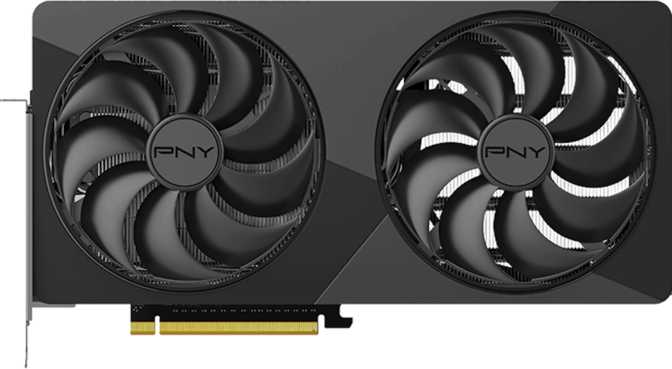
At 300mm long and 150mm tall, the PNY RTX 5080 Slim Dual Fan OC occupies a dual-slot footprint — a rarity in a segment where most competing boards have grown to 2.5 or 3 slots and push past 320mm. For SFF enthusiasts, ITX build owners, and anyone working with a compact mid-tower where clearance is a genuine constraint, this is the specification that immediately catches attention.
The card carries PNY's factory overclock out of the box, pushing the boost clock above NVIDIA's reference specification rather than simply matching it. That overclock is modest enough to avoid instability concerns, but it confirms that PNY isn't using the slim chassis as cover for underclocked performance.
RGB lighting is present, adding visual customization without being overbearing. The aesthetic reads as clean and professional — well suited to the high-end, deliberate builds this card is typically destined for.
The three-year warranty is the baseline expectation at this tier, and PNY meets it without asterisks. For a component at this price level, that coverage matters.
Core Performance: Blackwell Architecture Fully Unleashed
Shader throughput, clock speeds, and rendering capacity explained
The Silicon Behind the Numbers
Built on NVIDIA's Blackwell architecture and manufactured on a 5-nanometer process, the die packs approximately 45.6 billion transistors — a figure that reflects the engineering complexity generating every frame this card renders.
The boost clock sustains 2730 MHz under demanding workloads — notably higher than what previous high-end consumer generations could achieve at peak. Complex scenes, high-resolution rendering, and parallel compute tasks all benefit directly from that faster per-cycle throughput. The base clock of 2295 MHz is itself well above what many prior cards could sustain at their own peaks.
Rendering Throughput
The pixel fill rate exceeds 305 billion pixels per second — the metric that determines how quickly the GPU pushes fully lit, shaded, and post-processed frames to the display. At 4K with demanding visual settings enabled, you need an enormous pixel budget. This card has one.
The texture sampling rate surpasses 917 billion texels per second, keeping complex environments — dense foliage, detailed interiors, layered terrain — sharp at maximum quality settings. With 112 render output units and 336 texture mapping units supporting the pipeline, the card avoids the rendering bottlenecks that compromise high-frequency, high-resolution output.
Memory: Why 16GB GDDR7 at This Speed Matters
Frame buffer capacity, memory bandwidth, and real-world implications
Capacity in Context
At 4K with modern titles, high-resolution texture packs, ray tracing active, and anti-aliasing running, VRAM consumption climbs quickly. The 16GB frame buffer provides a meaningful buffer against the stuttering that occurs when the GPU exhausts on-board memory and must reach for slower system RAM.
This capacity also future-proofs the investment. As games become more demanding over the next several years, VRAM headroom becomes increasingly relevant — and the RTX 5080 Slim enters the field with enough to remain current throughout its practical lifespan.
GDDR7 and the 960 GB/s Bandwidth Figure
GDDR7 enables nearly 960 gigabytes of data to move between the frame buffer and GPU cores every second. Previous-generation high-end cards in this class delivered roughly half that bandwidth — this is a generational leap, not an incremental upgrade.
This bandwidth advantage reduces bottlenecks when processing large textures, handling ray tracing calculations, or managing compute-heavy rendering. The 256-bit memory bus matches what high-end cards have used for several generations, but paired with GDDR7's transfer rates it delivers throughput that previously required wider, more expensive bus designs.
ECC memory support is also present. For gaming it's invisible. For users running ML workloads, scientific compute, or simulation tasks alongside gaming, it signals genuine data integrity protection — unusual for a consumer graphics card at any price.
Feature Set: What the RTX 5080 Platform Gives You
Key capabilities and what they mean for gaming and professional use
DLSS and AI-Accelerated Rendering
DLSS allows the GPU to render at a lower internal resolution and reconstruct a sharper final image using AI inference running on dedicated Tensor Core hardware purpose-built for matrix computation. The practical gain is substantial — dramatically higher frame rates with minimal perceptible quality loss at DLSS Quality mode. At 4K particularly, DLSS is often the deciding factor between a smooth high-frame-rate experience and a choppy one.
Ray Tracing
Ray tracing simulates physically accurate light behaviour — reflections, soft shadows, indirect lighting bouncing off surfaces. Dedicated RT cores handle this in hardware rather than taxing the shader cores. The practical result is that ray tracing at high-resolution settings is genuinely usable in supported titles, not a showcase feature that becomes unplayable the moment it's enabled.
Display Connectivity
One HDMI 2.1b and three DisplayPort outputs support up to four simultaneous displays. HDMI 2.1b connects directly to high-end televisions at very high refresh rates. The three DisplayPort outputs cover the full range of high-resolution gaming and professional monitors. The notable absence is USB-C — users whose monitors or VR headsets rely on it should confirm adapter availability before purchasing.
Power and Thermal Considerations
PSU requirements, cooling capacity, and the dual-fan thermal trade-off
Managing 360 watts through a dual-fan, dual-slot enclosure is the central engineering challenge of this card's design. Removing that much heat through a compact cooler requires the fans to spin harder and the heatsink to be engineered precisely — this is the inherent, known trade-off of the slim format.
PNY's decision to ship this card with an active factory overclock is itself a signal of confidence in the thermal solution. A manufacturer shipping an overclocked card on a marginal cooler would be creating warranty liability. The overclock is present because the cooling is capable — but that capability requires the right environmental conditions to remain so.
In cases with strong intake and exhaust airflow, the slim cooler performs well. In dense, poorly ventilated enclosures, temperatures will run higher than they would on a full-size triple-fan board — and sustained high temperatures trigger thermal throttling, reducing the card's output below its rated specification.
This is an air-cooled card exclusively — no liquid option is included. Users who prioritize the quietest possible all-out performance will be better served by a custom liquid-cooled RTX 5080 variant.
PSU Planning Guide
- Below 750W — Not recommended. Insufficient headroom for a full system at this GPU's power draw.
- 750W–850W — Marginal. Acceptable only with low-power CPUs and minimal additional components.
- 850W–1000W — Solid. Sufficient for most modern high-end CPU and RTX 5080 build configurations.
- 1000W+ — Ideal. Full headroom for any platform configuration, including high-core-count systems.
PCIe 5.0 and Platform Requirements
Motherboard compatibility and the connection standard explained
This card uses PCIe 5.0 — the current-generation interface standard — and requires a motherboard with a PCIe 5.0 x16 slot to operate at full specification. In practice, PCIe 5.0 offers bandwidth well beyond what even this GPU saturates in gaming workloads. The upgrade from PCIe 4.0 to 5.0 produces no measurable gaming performance difference in most scenarios. The value of PCIe 5.0 here is platform readiness for the future, not a day-one performance gain.
The card is backward compatible with PCIe 4.0 and PCIe 3.0 motherboards. There is a theoretical bandwidth reduction in those configurations, but for gaming workloads the real-world impact is negligible in the vast majority of cases. Older-platform owners can install this card without meaningful performance penalty.
Who Should Buy the PNY RTX 5080 Slim Dual Fan OC
Real-world buyer profiles — and the clear cases where this card is the wrong choice
- SFF and compact build enthusiasts — ITX and compact mid-tower builders who need flagship Blackwell performance within a 300mm GPU clearance limit, with no alternative at this tier.
- 4K gamers — users running demanding titles at maximum settings with ray tracing and DLSS who want high, consistent frame rates at 3840x2160.
- Multi-monitor users — anyone running up to four simultaneous displays across gaming, trading, or creative productivity setups from a single card.
- Content creators and compute users — professionals needing GPU compute for video rendering, AI-accelerated workflows, or 3D work who don't want to sacrifice gaming performance to get it.
- Budget-conscious buyers — this is a flagship product at flagship pricing. At 1080p or 1440p on a single screen, a lower-tier GPU delivers better value per dollar spent.
- Buyers with limited PSU headroom — at 360 watts, this card demands a capable power supply. An underpowered platform must be addressed before installing this GPU.
- Users in poorly ventilated cases — the slim dual-fan cooler requires case airflow support. A dense, poorly ventilated chassis will push temperatures into throttling territory.
- Silence-first buyers — under extended full load, the dual fans spin harder than a triple-fan alternative would. A larger-bodied RTX 5080 will be meaningfully quieter at full tilt.
Competitive Positioning
How the PNY RTX 5080 Slim stacks up against logical alternatives
| Card | VRAM | Memory | Bandwidth | TDP | Form Factor |
|---|---|---|---|---|---|
| PNY RTX 5080 Slim Dual Fan OC | 16 GB | GDDR7 | ~960 GB/s | 360 W | Dual-slot, 300mm |
| RTX 5080 Reference / AIB Triple Fan | 16 GB | GDDR7 | ~960 GB/s | 360 W | 2.5–3 slot, 320–340mm |
| RTX 5070 Ti (typical AIB) | 16 GB | GDDR7 | ~896 GB/s | ~285 W | 2.5–3 slot |
| RTX 4090 (previous gen flagship) | 24 GB | GDDR6X | ~1008 GB/s | 450 W | 3 slot, 336mm+ |
vs. Standard RTX 5080
Identical GPU and memory performance. The choice is between physical footprint and cooling comfort — not performance tiers. Standard size wins on acoustics; slim wins on fit.
vs. RTX 5070 Ti
The RTX 5080 brings meaningfully more shader throughput and higher bandwidth. In 4K gaming with ray tracing, those advantages compound into visible frame rate differences in demanding titles.
vs. RTX 4090
The RTX 4090 carries 24GB VRAM but draws significantly more power. The RTX 5080 delivers comparable or superior gaming performance in most scenarios with Blackwell's architectural efficiency gains.
Honest Assessment: Strengths and Weaknesses
A balanced view of where this card earns its price and where it demands compromise
The central strength of this card is precisely the engineering challenge it solves: a complete Blackwell die, running at factory-overclocked frequencies, in a physically compact package that standard RTX 5080 boards cannot match. That is a genuine, specific value proposition — not a marketing claim.
The GDDR7 memory subsystem is a further real advantage. The bandwidth on offer is a generational step above previous high-end cards, and GDDR7's throughput pays dividends in texture-heavy 4K workloads and compute tasks where memory speed is the limiting factor.
Double precision floating point support and ECC memory mark this as a more versatile product than a typical gaming GPU — a credible dual-purpose card for creators and compute users who won't compromise on gaming performance to get workstation-grade reliability.
The dual-fan, slim cooling solution works — but it works harder than a larger cooler would for the same temperature targets. Thermal headroom is tighter than on a full-size board, and acoustic performance under sustained load is a step behind triple-fan alternatives. These are the direct, known costs of the design decision, not hidden weaknesses.
The 360-watt power draw demands genuine respect at the platform level. This isn't a card you pair with an aging 650-watt PSU on a casual upgrade path. A full platform review is necessary before installing this card in an older build.
The absence of USB-C output is a minor inconvenience for most, but a genuine compatibility issue for users whose VR headsets or monitors rely on USB-C connectivity. Confirming this before purchase is important — discovering it afterward is not.
Common Questions Answered
The questions real buyers search for before committing to this purchase
Final Verdict
PNY GeForce RTX 5080 Slim Dual Fan OC
The PNY GeForce RTX 5080 Slim Dual Fan OC is a focused product with a clear mission: deliver flagship Blackwell performance in a form factor that standard RTX 5080 boards cannot match. It succeeds at that mission without meaningful compromise to GPU capability — the chip runs at full specification, the memory is the fastest available, and the factory overclock confirms confidence in the thermal solution.
The trade-offs are real and worth taking seriously. Thermal headroom is tighter than on a full-size board, acoustic performance under sustained load is a step behind triple-fan alternatives, and the 360-watt power draw demands a platform that can support it. These are not hidden weaknesses — they are the direct, known costs of the slim design decision.
For the buyer this card is designed for — the SFF enthusiast, the ITX builder, the person who needs this specific GPU to fit this specific chassis — it is the answer to a problem with no other solution at this performance tier. For everyone else with standard case clearance and no physical footprint constraint, a triple-fan variant will deliver the same performance with more thermal and acoustic comfort. The slim design solves a specific problem exceptionally well. It is only the right purchase when that problem exists.