PNY RTX 5080 Slim Dual Fan Review: Full Power, Compact Footprint
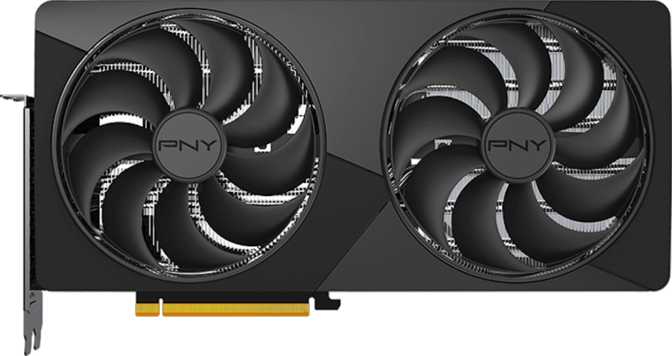
Graphics CardsThe RTX 5080 is already one of the most capable consumer graphics cards on the market — but the PNY GeForce RTX 5080 Slim Dual Fan asks a question most flagship GPU buyers never get to consider: what if all that performance came in a body that actually fits inside a compact or small-form-factor build? At 300mm long and 150mm tall with a dual-fan cooler, this card occupies a genuinely compact footprint for a GPU in this performance class. Whether that trade-off works depends entirely on your priorities — and this review breaks it all down.
Design and Build: Slim Is the Point
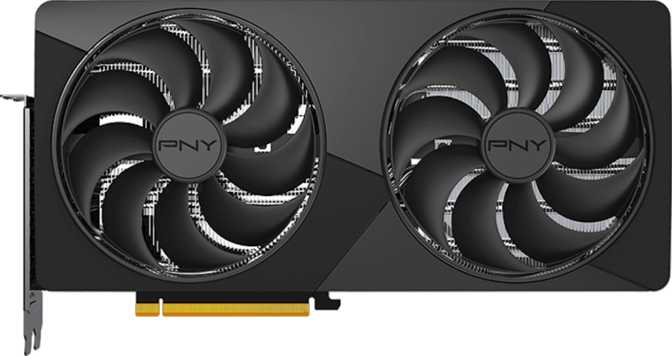
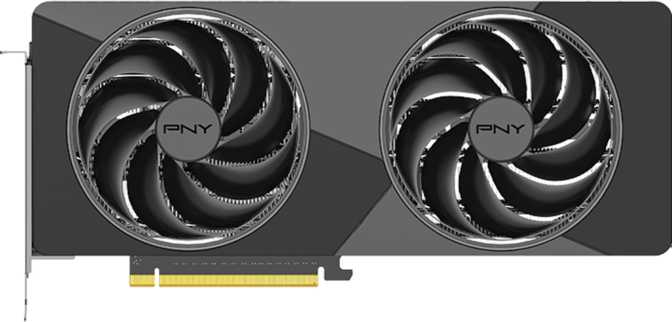
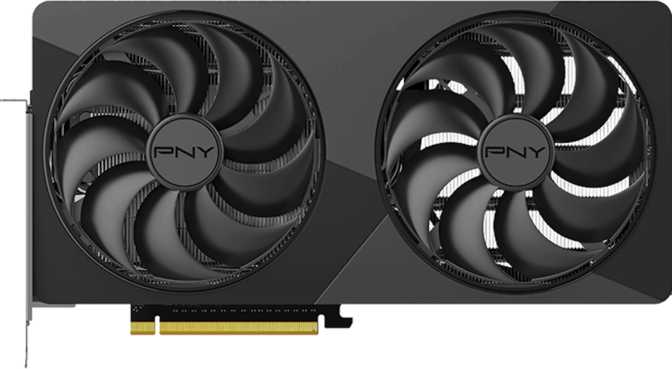
The defining characteristic of this card is its physical restraint. A 150mm card height is notably modest for a GPU drawing this much power — most reference or premium triple-fan RTX 5080 boards push well beyond that in overall slot footprint. PNY has compressed the cooler to fit a dual-fan layout onto a card that, at 300mm long, is meaningfully shorter than the competing triple-slot designs dominating this performance tier.
The dual-fan configuration uses a traditional axial cooler layout. For a GPU with a 360W thermal envelope, this is an engineering challenge PNY has clearly optimized for. The trade-off is that at sustained full load, the fans work harder than they would on a triple-fan version of the same card. In a well-ventilated case, this is manageable. In a cramped enclosure with poor airflow, it becomes a genuine consideration before purchase.
RGB lighting is included and integrates cleanly into a build aesthetic without adding unnecessary bulk. The port layout is modern and deliberate — there are no legacy DVI outputs, no mini DisplayPort connectors, and no USB-C video output. This last omission is worth flagging before purchase; full detail is covered in the connectivity section.
- Card Length
- 300 mm
- Card Height
- 150 mm
- Cooling Solution
- Dual Axial Fan
- RGB Lighting
- Included
- Liquid Cooling
- Air Only
Performance: What Blackwell at 5nm Actually Means
Raw Compute and Rendering Power
Built on NVIDIA's Blackwell architecture at the 5nm process node, the RTX 5080 Slim Dual Fan packs approximately 45.6 billion transistors — a density that directly enables the efficiency and performance gains this generation delivers over its predecessors. The GPU operates at a base clock of 2,295 MHz, rising to 2,617 MHz under sustained boost conditions. That boost figure is the card's real-world operating point during gameplay and rendering workloads; the base clock is a thermal floor, not a typical working state.
At 56.28 TFLOPS of floating-point compute, this card exceeds double what was considered the enthusiast standard just two generations ago. For gaming, this headroom means the card is not compute-limited in any current title at any resolution. For content creators running AI-assisted tools or 3D rendering pipelines, it means jobs complete faster — without approximation or compromise.
Shading, Texture, and Pixel Output
The architecture deploys 10,752 shader processors, 336 texture mapping units, and 112 render output units — a configuration tuned for high resolution and high frame rate simultaneously. Texture throughput reaches 879.3 billion texel operations per second, ensuring complex, multi-layered scenes in modern open-world games resolve cleanly at 4K. The pixel output rate of 293.1 billion pixels per second puts frame rates above 120fps at 4K within genuine reach in well-optimized titles — not just in benchmarks, but in regular gameplay.
Memory: 16GB GDDR7 and Why It Matters
Capacity in Context
Sixteen gigabytes of video memory sits at the higher end of what current games actively use, but below the 24GB ceiling that some professional and enthusiast workflows now demand. For pure gaming — including 4K with maximum texture quality — 16GB covers virtually every current title without compromise. For 3D artists managing very heavy scene files, video editors layering GPU-accelerated effects on high-resolution footage, or machine learning practitioners, 16GB can become a ceiling in specific workflows.
Speed as the True Differentiator
Where this card's memory architecture makes its real statement is speed, not capacity. The GDDR7 modules deliver approximately 960 gigabytes of bandwidth per second — a figure that eliminates memory bottlenecks in almost any scenario. Previous high-end consumer GPUs operated at roughly half this ceiling. This is not an incremental gain; it is a generational shift that benefits gaming, content creation, and compute workloads simultaneously.
The 256-bit memory bus is a sensible pairing for this bandwidth level at GDDR7 speeds. Effective bandwidth — not bus width in isolation — is the metric that matters, and the GDDR7 throughput makes the 256-bit interface more than adequate for this performance tier.
ECC Memory Support
Error-correcting code memory is included. For machine learning training, scientific simulation, or any professional workload where computational accuracy matters, ECC provides meaningful insurance against memory errors. For pure gaming, it operates silently in the background — present, but invisible.
Double Precision Floating Point
DPFP support is included — directly relevant for scientific compute, machine learning model training, and simulation work where double precision accuracy is non-negotiable. Its presence elevates this card beyond a purely consumer device into credible hybrid gaming and workstation territory.
Key Features: What Separates This GPU From a Spec Sheet
DLSS
NVIDIA's AI-driven upscaling uses dedicated hardware to reconstruct high-resolution output from a lower-resolution render. A game that struggles at native 4K may run at 120fps or higher with DLSS enabled — with minimal perceptible quality loss in motion. On Blackwell hardware, DLSS is mature enough to improve image quality beyond native rendering in many titles.
Hardware Ray Tracing
Ray tracing simulates realistic light behavior — accurate reflections, shadows, and global illumination — at a significant performance cost on older hardware. On a GPU of this generation, ray tracing is practical in current titles, not merely possible. You will not be forced to trade ray tracing for a playable frame rate.
4 Simultaneous Displays
This card drives up to four monitors at once, covering multi-screen productivity setups, trading desktops, content creation rigs, and multi-monitor gaming configurations. Each output supports high-resolution and high-refresh-rate operation through the card's modern port selection.
DirectX 12 Ultimate
Full DirectX 12 Ultimate compliance ensures compatibility with every current and near-future game API feature — including variable rate shading, mesh shaders, and sampler feedback. This is the complete modern gaming feature set, with no gaps or exceptions.
Intel Resizable BAR
Resizable BAR allows the CPU to access the full GPU memory pool in a single operation rather than in smaller sequential chunks. In titles that benefit from it, this reduces data transfer overhead and can meaningfully improve frame rates — particularly in scenes with heavy asset streaming.
RGB Lighting
RGB is included and integrates with major lighting control ecosystems. It can be adjusted or disabled entirely through software and adds no meaningful heat or additional power draw to the card's operating profile.
Display Connectivity
The card supports up to four simultaneous outputs via three full-size DisplayPort connectors and one HDMI 2.1b port. HDMI 2.1b enables 4K at up to 240Hz or 8K at 60Hz, covering both high-performance gaming monitors and large-screen displays. The three DisplayPort outputs handle the full range of high-refresh-rate and high-resolution PC monitors on the market.
| Port | Quantity | Specification | Availability |
|---|---|---|---|
| HDMI | 1 | HDMI 2.1b — 4K@240Hz / 8K@60Hz | Available |
| DisplayPort | 3 | Full-size DisplayPort | Available |
| USB-C Video | 0 | Not included on this model | Not Available |
| DVI / Mini DP | 0 | Legacy formats not included | Not Present |
PCIe 5.0 and Platform Compatibility
This card uses the PCIe 5.0 interface standard. On a PCIe 5.0 motherboard, it operates at maximum theoretical interface bandwidth. On a PCIe 4.0 board it remains fully functional — the interface is backward compatible — with only the theoretical ceiling differing. For gaming workloads, PCIe 4.0 is not a meaningful bottleneck. For heavy professional data transfer tasks, a PCIe 5.0 platform is the optimal pairing.
Power Consumption: 360W Demands Respect
PSU Recommendation
An 850W power supply is the sensible minimum for a system built around this card. Pairing it with a high-core-count CPU makes 1000W the more comfortable target. Ensure your PSU carries the correct high-power PCIe connectors before purchasing — this is a non-negotiable compatibility check at this wattage tier.
A 360W thermal design power rating is a serious commitment. The GPU, CPU, storage, cooling, and all peripherals share your power supply's total wattage budget. Undersizing the PSU is among the most common mistakes buyers make when stepping up to a flagship GPU tier.
For the dual-fan form factor specifically, 360W is a meaningful quantity of heat to dissipate through two fans rather than three. PNY has engineered for this constraint, but physics are not negotiable. In a case with strong intake and exhaust airflow, the dual-fan cooler handles sustained loads effectively. In a poorly ventilated enclosure, extended gaming sessions risk thermal throttling — a condition where the GPU deliberately reduces performance to manage temperature. Evaluating your case's airflow honestly is not optional when considering this card. It is the central trade-off of the Slim Dual Fan design, and it should be the central question in your purchase decision.
Who This Card Is For — and Who Should Look Elsewhere
- Small-form-factor and compact mid-tower builders who need RTX 5080-class performance without the bulk of a triple-slot, 340mm+ card
- 4K gamers who want high, stable frame rates in demanding titles without relying on DLSS as a primary crutch
- Hybrid users who game and run AI tools, video editing, or 3D rendering workloads that benefit from GDDR7 bandwidth and compute performance
- Multi-monitor setups requiring four display outputs with modern HDMI 2.1b and DisplayPort standards
- Builders where card height is a hard physical constraint and a triple-fan card simply does not fit
- Users connecting to USB-C monitors or using USB-C for VR headsets — there is no USB-C video output on this model
- Professional workflows requiring more than 16GB of VRAM — heavy 3D scene rendering or large-scale ML model training can hit this ceiling
- Users in poorly ventilated cases — the dual-fan design depends on solid case airflow; weak ventilation puts peak performance at risk
- Buyers who prioritize the lowest possible fan noise — under sustained load, dual fans spin harder than their triple-fan counterparts
- Budget-conscious buyers — this is a flagship GPU with flagship pricing; its value case requires a genuine need for this performance tier
How the PNY Slim Dual Fan Compares to the Alternatives
The question is not whether this is a capable card — it is. The real question is whether it fits your specific situation better than the logical alternatives. Here is how it positions against the choices in the same performance bracket.
| Consideration | PNY RTX 5080 Slim Dual Fan | Standard Triple-Fan RTX 5080 | RTX 5070 Ti |
|---|---|---|---|
| Compute Performance | Full RTX 5080 Tier | Full RTX 5080 Tier | Meaningfully Lower |
| Physical Size | 300mm × 150mm — compact 2-slot footprint | Typically 330–360mm, 3-slot footprint | Varies by partner; generally smaller than 5080 |
| Thermal Headroom | Tighter under sustained loads | More thermal margin | Less heat to manage |
| VRAM | 16GB GDDR7 | 16GB GDDR7 | 16GB GDDR7 |
| USB-C Output | Not Available | Varies by partner | Varies by partner |
| Best Use Case | Compact and space-constrained builds | Standard mid-tower and full-tower systems | High-refresh 1440p or moderate 4K gaming |
For buyers with no space constraints who want maximum sustained performance at the lowest fan noise, a triple-fan RTX 5080 partner card is the more comfortable default. The PNY Slim Dual Fan is a deliberate, informed choice — not a compromise imposed by limited options.
Honest Strengths and Weaknesses
The RTX 5080 Slim Dual Fan earns its place in a very specific scenario. When that scenario fits, the case for it is strong. When it does not, the trade-offs become friction. Here is an unvarnished look at both sides.
- Uncompromised performance — full RTX 5080 compute and memory capability with no features cut for the smaller form factor
- Compact footprint — 300mm × 150mm opens this performance tier to builders previously blocked by physical card size
- GDDR7 bandwidth — the ~960 GB/s memory throughput is a generational step, not an incremental one, benefiting every workload
- Practical ray tracing and DLSS — both operate at real, usable performance levels, not as marketing feature checkboxes
- Hybrid gaming/professional capability — ECC, DPFP, and compute headroom extend usefulness well beyond gaming into workstation territory
- 3-year warranty — competitive and appropriate coverage for a flagship-tier investment
- Thermal trade-off is real — dissipating 360W through dual fans works, but it demands case airflow that triple-fan models do not require as urgently
- Higher fan noise under load — sustained gaming sessions will push fans harder than on a three-fan design of the same GPU
- No USB-C video output — a genuine gap as this port grows in relevance for modern monitor connectivity and VR
- 16GB VRAM ceiling — adequate for current gaming and many professional tasks, but it is a ceiling that specific high-demand workflows will reach
- Flagship-tier power demands — a minimum 850W PSU is non-negotiable, and 1000W is the more comfortable choice
Common Buyer Questions Answered
Final Verdict
The PNY GeForce RTX 5080 Slim Dual Fan is a focused, well-reasoned product that delivers on its single most important promise: full RTX 5080 performance in a physically compact footprint. No performance has been cut. The Blackwell architecture, the GDDR7 memory subsystem, hardware ray tracing, and DLSS hardware are all present and uncompromised. For a builder who needs to fit this performance tier into a smaller case, this is not a compromise GPU — it is the right GPU.
The GDDR7 memory architecture is a genuine generational advancement. The bandwidth available here changes what is possible across gaming, content creation, and compute workflows — not just in peak benchmark numbers, but in everyday use. And the three-year warranty provides solid long-term coverage at a price point that demands it.
The weaknesses are real and should be weighed honestly. The dual-fan thermal solution running against a 360W power budget means this card depends on case airflow in a way that a triple-fan model does not. Fan noise under sustained load will be higher. The absence of USB-C video output will matter to some buyers and be entirely invisible to others — but it warrants a deliberate check before purchase.
You're building in a compact or mid-size case, need full RTX 5080-tier performance, have strong case airflow, and don't rely on USB-C display connectivity.
You have a full-size tower with unlimited space, prefer maximum thermal margin at lower noise, or need USB-C video output as part of your display setup.
Purchase Verdict
A confident recommendation for compact build enthusiasts. This is a precise tool for a specific buyer — and for that buyer, it is the best option in its class.