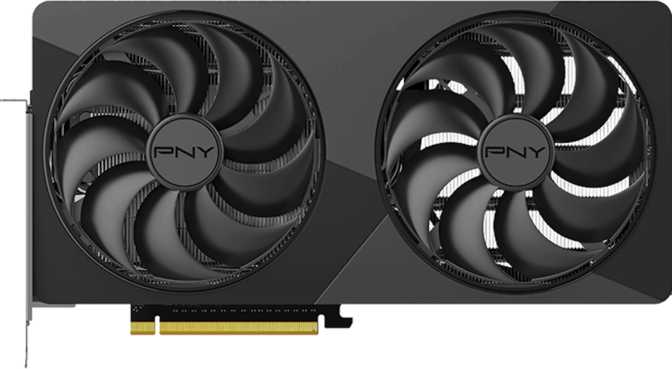
PNY GeForce RTX 5070 Ti Slim Dual Fan: Full Review for Compact Builders
Graphics CardsThe high-end GPU market has a persistent problem: the best-performing cards increasingly demand enormous cases, aggressive cooling setups, and substantial physical real estate. The PNY GeForce RTX 5070 Ti Slim Dual Fan takes direct aim at that assumption. Built on NVIDIA's latest Blackwell architecture with a footprint that fits comfortably into mid-tower and even some compact cases, it makes a compelling case that serious performance no longer requires a serious sacrifice in space.
This is not a budget card with compromises hidden in the specs. It is a full-tier, flagship-adjacent GPU that happens to ship in a restrained physical form. Whether that trade-off serves you depends entirely on how you build and what you expect — and that is exactly what this review works through.
Overall Review Score
Rated across five key performance dimensions
Design and Build Quality
Small by choice, not by compromise
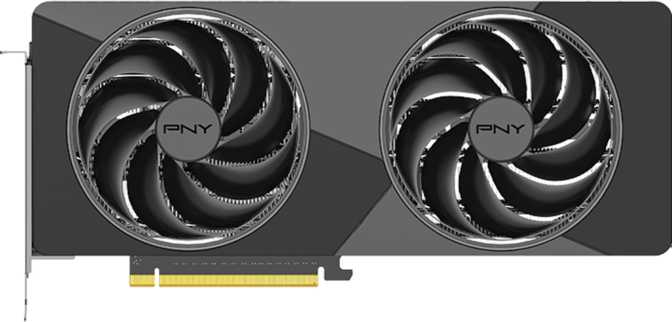
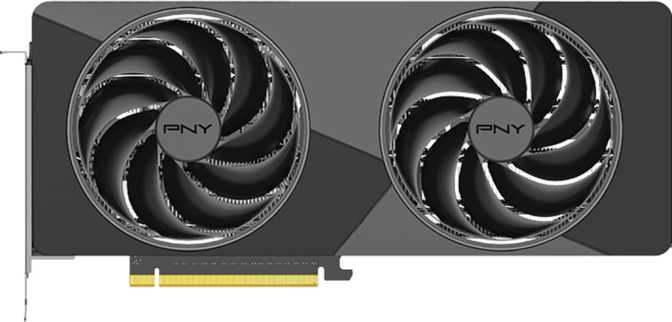
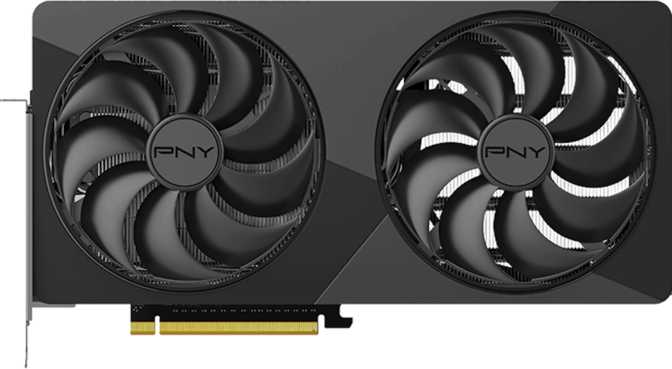
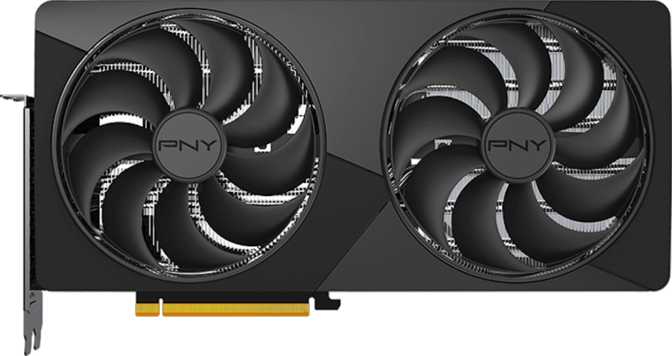
At 290mm in length and 150mm in height, the PNY RTX 5070 Ti Slim is meaningfully shorter than the triple-fan behemoths that typically occupy this performance bracket. Many competing cards at this tier run 320–340mm or longer and add a third fan to manage the thermal load. PNY achieves a dual-fan solution within these tighter dimensions — a genuine engineering challenge, not just a marketing label.
The "Slim" designation is the defining characteristic of this card's identity. It opens up case compatibility that standard RTX 5070 Ti boards simply cannot match. Builders working with smaller mid-towers, home theater PC enclosures, or systems where clearance from front-panel components or radiators is limited will immediately appreciate what these dimensions enable.
Build quality matches the premium tier this card occupies. The dual-fan shroud feels dense and well-assembled, without the flex or rattle that sometimes plagues smaller cards trying to punch above their weight class. The RGB lighting is tasteful by default, controllable through standard software, and there for those who want visual cohesion across their components without dominating the build.
290mm length × 150mm height — fits the vast majority of mid-tower cases with comfortable clearance to spare.
Two fans manage a 300W thermal load — an engineering trade-off that prioritises compactness over peak-load acoustics.
Tasteful RGB accent lighting included and controllable through standard software for build cohesion across components.
Core Performance Analysis
Blackwell architecture meets GDDR7 memory
Architecture and Processing Power
The Blackwell GPU architecture inside this card represents NVIDIA's current-generation design, fabbed at a 5-nanometer process node. Packing over 45 billion transistors into the die, Blackwell delivers substantial generational gains in how efficiently the GPU executes complex workloads — particularly in ray tracing and AI-assisted rendering tasks.
The card houses 8,960 shader processors — the parallel execution cores that do the fundamental work of rendering pixels, running simulations, and handling compute tasks. Combined with 280 texture mapping units, the texture throughput lands at nearly 687 billion texture operations per second. In practice, this means highly detailed, texture-dense game worlds are rendered with minimal hesitation.
The raw floating-point compute capability approaches 44 TFLOPS. This is the kind of throughput that lets you run modern AAA titles at high resolutions with demanding graphical settings without throttling frame rates. For workloads beyond gaming, this compute headroom also benefits creative applications like 3D rendering, video encoding, and AI inference tasks.
Memory Configuration: Generous and Modern
Sixteen gigabytes of GDDR7 video memory sits on a 256-bit memory bus. The combination matters more than either number alone. GDDR7 is the latest generation of graphics memory, and the result here is nearly 900 GB/s of memory bandwidth — the rate at which data moves between the GPU and its memory pool.
That bandwidth figure is consequential. Memory-constrained scenarios — running games at very high resolutions, applying high-resolution texture packs, editing large video timelines, or running demanding AI models — all benefit from rapid memory throughput. At this bandwidth level, the GPU is rarely waiting on its memory to catch up with what it needs to render. The 16GB capacity also provides meaningful headroom for future titles, which have trended toward increasing VRAM demands.
- Shader Processors
- 8,960 Units
- Texture Units (TMUs)
- 280 Units
- Render Outputs (ROPs)
- 96 Units
- Compute Throughput
- 43.94 TFLOPS
- Texture Rate
- 686.6 GT/s
- Pixel Rate
- 235.4 GP/s
- VRAM Capacity
- 16 GB
- Memory Type
- GDDR7
- Memory Bus
- 256-bit
- Bandwidth
- 896 GB/s
- Effective Speed
- 28,000 MHz
- ECC Support
- Yes
Key Features Explained
What the technology actually means in daily use
Ray tracing simulates the physical behaviour of light — reflections, shadows, global illumination — instead of approximating them with traditional rendering shortcuts. Blackwell's dedicated ray tracing hardware substantially reduces the performance tax, making it practical to run with ray tracing enabled at meaningful frame rates rather than as a showpiece setting reserved for screenshots.
NVIDIA's AI-powered upscaling technology has reached a level of maturity on Blackwell hardware where the output is genuinely difficult to distinguish from native resolution in most scenarios. Enabling DLSS can roughly double your effective frame rate, transforming already strong rasterisation performance into numbers that comfortably cover 4K gaming and high-refresh-rate 1440p across essentially any current title.
Three DisplayPort outputs and one HDMI 2.1b port drive up to four displays simultaneously. HDMI 2.1b supports 4K at 144Hz and 8K output — relevant for TV connections or premium monitors. One notable absence: there is no USB-C display output, so users with USB-C monitors will need a DisplayPort or HDMI adapter.
The card connects via PCIe Gen 5 — the current standard — while remaining fully backward compatible with Gen 4 slots common in most existing systems. For gaming and creative workloads, running in a Gen 4 slot incurs no meaningful performance penalty, making this card a viable upgrade path from a wide range of existing platforms.
DirectX 12 Ultimate is the current highest-tier gaming API, covering advanced ray tracing, mesh shaders, and variable rate shading features that modern titles are built around. OpenGL 4.6 and OpenCL 3 extend coverage to professional and compute applications, making this a versatile card for mixed creative and gaming workloads.
Resizable BAR allows the CPU to access the full GPU memory pool at once rather than in small incremental chunks. On compatible systems — which now includes most modern Intel and AMD platforms — this provides a measurable performance improvement across a range of titles with no additional configuration required.
Thermal Management and Power Consumption
The real-world implications of a compact 300W cooler
The Dual-Fan Equation
Running a 300W GPU through two fans instead of three is the central thermal challenge this card's design must solve. The 300W thermal rating is on the higher end for a dual-fan configuration, and PNY's engineers have clearly worked to maximise airflow density within the compact shroud.
Under sustained, demanding loads — extended gaming sessions or overnight 3D rendering tasks — the fans will work harder than they would on a triple-fan card of equivalent power. This may translate to slightly higher fan speeds and potentially more audible operation at peak load compared to larger competing designs. Under light-to-moderate workloads, thermal behaviour will be entirely normal and unobtrusive.
For builders prioritising near-silent operation during intense workloads, this is worth factoring into the decision. For builders prioritising case compatibility or physical footprint, the trade-off is likely acceptable or even preferable to the alternative of a larger card that simply won't fit.
Power Supply Planning
A 300W GPU requires a quality power supply with appropriate headroom. Accounting for a typical desktop CPU under gaming load, total system draw can reach 500–550W at peak.
- 750W PSUSafe minimum for most standard builds
- 850W PSU — RecommendedComfortable headroom for overclocking or future upgrades
- Upgrading from a mid-range card?Check your existing PSU — you may need to budget for a replacement alongside this GPU
Who This Card Is For — and Who Should Look Elsewhere
Matching the hardware to the right buyer
Ideal Buyers
- The compact build enthusiastRunning a mid-tower with limited GPU clearance, or targeting a smaller enclosure without sacrificing GPU tier — this card was designed specifically for this use case.
- The 1440p high-refresh gamerCapable of saturating a 144Hz or 165Hz display in virtually any current title, with DLSS providing headroom to push into 240Hz territory in competitive games.
- The 4K gamer who uses DLSSWith DLSS Quality mode enabled, this GPU handles 4K gaming with strong, consistent frame rates across the current title library.
- The creative professional who also gamesVideo editors, 3D artists, and content creators will find the 16GB GDDR7 pool and 44 TFLOPS of compute genuinely useful for professional workflows alongside gaming.
Think Twice If...
- Near-silence under sustained load is a priorityA triple-fan design at the same wattage will typically run quieter at peak load. The compact design carries an audible trade-off during extended, high-intensity sessions.
- You need native USB-C display outputThis card includes no USB-C port. If your monitor relies on that connection natively, plan for a DisplayPort or HDMI adapter, or consider an alternative board partner.
- You are primarily a 1080p gamerAt 1080p, this GPU is significant overkill unless you are running competitive titles at 360Hz or using the system heavily for professional non-gaming work.
Competitive Positioning
How the PNY RTX 5070 Ti Slim stacks up against logical alternatives
| Factor | PNY RTX 5070 Ti Slim | Triple-Fan RTX 5070 Ti | RTX 5070 |
|---|---|---|---|
| Performance Tier | Full RTX 5070 Ti | Full RTX 5070 Ti | One step below |
| Physical Length | 290mm | 320–340mm+ | 310–330mm typical |
| Fan Count | 2 Fans | 3 Fans | 2–3 Fans |
| VRAM | 16GB GDDR7 | 16GB GDDR7 | 12GB GDDR7 |
| Peak Thermal Noise | Moderate–High | Moderate | Lower |
| Case Compatibility | Broad | Standard Full Tower | Standard |
| Best Suited For | Compact builders | Standard full builds | Budget-conscious tier |
The direct competitors to this card are other RTX 5070 Ti board partner models. PNY's differentiation is entirely the physical profile — the GPU silicon, memory, and feature set are identical across all RTX 5070 Ti variants. Against the step-down RTX 5070, this card holds a meaningful advantage in compute throughput, VRAM capacity, and memory bandwidth — a gap that widens noticeably at 4K and in professional compute tasks.
Strengths and Weaknesses
An honest look at what this card gets right and where it falls short
Where It Genuinely Excels
The standout virtue here is the combination of full RTX 5070 Ti performance in a physically accessible format. NVIDIA's Blackwell architecture is legitimately strong — the ray tracing hardware has advanced noticeably from previous generations, DLSS at this hardware level is the best it has ever been, and the 16GB GDDR7 memory pool positions the card to remain relevant as VRAM requirements continue to climb in new releases.
The 256-bit memory bus paired with GDDR7 speeds produces bandwidth that keeps texture streaming smooth and eliminates the memory bottlenecks that surfaced in previous-generation cards at high resolutions. Four-display output with HDMI 2.1b adds genuine versatility for multi-monitor setups or living room display configurations.
The three-year warranty is a meaningful differentiator. Many competing board partners offer shorter coverage windows. For a component at this price level, three years of manufacturer backing provides real peace of mind that matters when making a long-term platform investment.
Where It Falls Short
The dual-fan cooling arrangement on a 300W TDP card is the clearest compromise in this design. PNY has made a deliberate trade-off: compactness over maximum thermal overhead. Under extended, high-intensity workloads — hours of ray tracing at 4K or GPU compute tasks running overnight — fan speeds will climb to maintain safe temperatures, and acoustics will reflect that decision.
The absence of USB-C output narrows display compatibility. As USB-C monitors become more prevalent — particularly in professional and ultrawide categories — this omission will matter to a growing number of users. An adapter resolves it practically, but it remains a missing convenience for a card at this price point.
The 300W power draw requires proper power supply planning. Buyers upgrading from mid-range cards may need to budget for a PSU replacement alongside the GPU itself, adding to the real-world cost of the upgrade.
Frequently Asked Questions
Answers to the questions real buyers search for before purchasing
Final Verdict
A clear, direct purchase recommendation
The PNY GeForce RTX 5070 Ti Slim Dual Fan is a well-focused product that solves a specific problem effectively. If the RTX 5070 Ti performance tier is where your budget lands and physical size is any kind of constraint in your build, this card deserves serious consideration — arguably, it should be your default choice within this tier.
The Blackwell architecture delivers meaningful generational advances in ray tracing and AI-accelerated rendering, the GDDR7 memory configuration is genuinely future-conscious, and the compact dimensions open up build flexibility that standard large-format cards simply cannot match.
You want full RTX 5070 Ti performance, value a compact physical form, and can accept the acoustic trade-off under sustained peak load. Compact build enthusiasts, 1440p and 4K gamers, and GPU-accelerated creative professionals all have strong reasons to pick this board over a larger alternative.
Absolute silence under sustained load is a non-negotiable priority, or you require native USB-C display output without an adapter. In either case, a triple-fan RTX 5070 Ti from an alternative board partner will serve you better without the compact-cooler trade-offs.