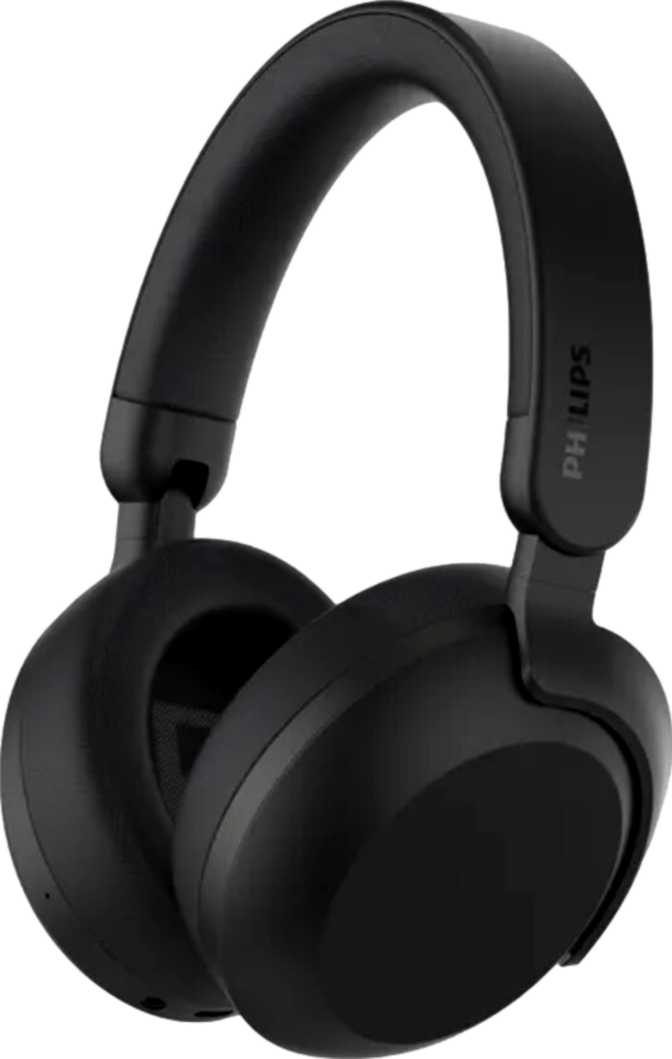
Philips H8000E Full Review - ANC That Actually Lasts All Week
HeadphonesPhilips H8000E at a Glance
An over-ear ANC headphone built around endurance. The battery endurance figure laps the competition and a physically replaceable cell extends the usable lifespan well beyond what sealed rivals can offer.
The Battery Life That Changes Everything
Most wireless headphones force you into a familiar routine: charge every few days, keep the cable handy for long trips, and accept that turning on noise cancellation cuts your endurance significantly. The Philips H8000E was built around rejecting that routine entirely.
At its core, this is an over-ear ANC headphone targeting frequent travelers, long-shift workers, and anyone who has grown tired of battery anxiety. But two features separate it from a crowded market: a battery endurance figure that laps the competition by a wide margin, and a physically removable battery — a feature so rare in modern consumer headphones that it almost feels like a throwback to a more practical era.
Before dismissing that as a niche detail, consider what it means for ownership: you are not on a countdown to obsolescence the moment the battery starts degrading. The question is whether everything else is good enough to justify buying what is, at its heart, a battery-first headphone.
Quick Take
- Category-leading battery endurance
- User-replaceable battery cell
- LDAC for Android hi-res audio
- Bluetooth LE Audio and Auracast
- No auto-pause on ear removal
- No hardware mute button
- No travel case included
Design and Build: Practical Over Premium
How it feels, fits, and folds
How It Sits on Your Head
The H8000E uses a closed-back, over-ear design — the ear cups completely enclose your ears rather than resting on them. This creates a physical seal that contributes directly to noise isolation even before the active electronics activate. For commuters and travelers, that passive seal does real acoustic work.
The headphones fold flat, reducing them to a compact footprint that fits in a bag without awkward protrusion. No travel case is included, so a protective sleeve is advisable when packing.
Cable Situation
The cable is detachable, meaning a frayed or broken cable is a simple replacement rather than a reason to retire the headphone. It also lets you choose your mode: wireless most of the time, wired when you need zero digital processing in the audio chain.
The cable is tangle-resistant — the difference between untangling a knot in your bag and simply pulling the cable out and plugging in. After years of premium headphones shipping with cables that coil into knots, this earns more appreciation than the spec sheet implies.
The Battery Access Point
One design element that is both visually distinctive and practically significant is the externally accessible battery compartment. This is not a sealed unit — the battery can be physically removed and replaced.
Design Spec Checklist
Sound Quality: What the Drivers Deliver
Driver fundamentals and audio performance analysis
The Driver Fundamentals
The H8000E uses 40-millimeter drivers — a well-established size in full-size over-ear headphones that provides enough physical surface area to reproduce bass frequencies without relying purely on electronic enhancement. To give beginners a reference point: the driver is roughly the size of a large coin, and that diameter is the acoustic speaker sitting millimeters from your ear.
Spatial Audio Support
The H8000E supports spatial audio processing — the technology that gives stereo audio a three-dimensional quality, making sounds feel like they come from around you rather than strictly from between your ears. This pairs particularly well with streaming content mixed for immersive formats.
For everyday music listening, the spatial effect ranges from subtle to noticeable depending on the source material and how aggressively the processing is applied. It can be left running without negatively impacting conventional stereo playback.
Noise Cancellation: Two Layers of Quiet
How the H8000E blocks out the world
Passive Isolation
The closed-back over-ear design and the physical seal of the ear cups block sound through sheer physical isolation. No electronics required — effective immediately, at all times, regardless of battery level.
Particularly effective against high-frequency noise: office chatter, keyboard sounds, and high-pitched fan noise that electronic cancellation often struggles with.
Active Noise Cancellation
External microphones continuously sample ambient sound, and the headphone generates an inverted signal to cancel incoming noise before it registers in your ears.
Handles low-frequency noise that passive isolation struggles with: aircraft engine hum, train rumble, and HVAC drone. ANC is what makes a meaningful difference on long flights and in open-plan offices.
Ambient Sound Mode
The ambient mode inverts the purpose of the external microphones: instead of cancelling the world, it pipes the surrounding environment into your ears at a natural level. Catch an airport announcement, hear a colleague, or order at a counter without removing the headphones. A feature that becomes indispensable the first time you need it.
Battery Life: The H8000E's Defining Feature
Why the endurance figures actually matter in daily use
The Numbers in Real-World Terms
With ANC running, the H8000E delivers fifty hours of continuous playback. Without ANC, that extends to seventy hours. Most premium ANC headphones in this category offer between twenty and forty hours with ANC active. The H8000E exceeds the top end of that range by a significant margin — and then keeps going.
The Replaceable Battery
Unlike the overwhelming majority of wireless headphones, the H8000E has a user-removable battery. When capacity finally diminishes after years of use, you replace the battery rather than the headphone.
In a market where virtually every wireless headphone is sealed — where a degraded battery means the whole unit becomes unusable — this is a genuinely different ownership proposition.
Connectivity: Codecs, Range, and Multi-Device Use
The wireless audio formats that determine sound quality in transit
Bluetooth Audio Codec Support
The codec your headphones support determines the actual quality of audio transmitted wirelessly. Not all Bluetooth audio is equal — the format in which audio is compressed and sent has a real impact on what you hear.
LDAC
Transmits audio at data rates up to three times higher than standard Bluetooth quality. For Android users with LDAC-capable phones, this delivers the closest thing to wired audio quality over a wireless connection — the H8000E's strongest audio argument.
AAC
Apple's preferred wireless audio codec, supported automatically when pairing with iPhone, iPad, or Mac. Delivers quality meaningfully better than baseline Bluetooth. For Apple users, this is how the H8000E performs at its best on their devices.
LE Audio
The next-generation Bluetooth audio standard — designed for better quality at lower power consumption than older formats. Not yet universal, but its inclusion positions the H8000E for the transition the broader wireless audio industry is actively making.
No aptX Family
The H8000E does not support any Qualcomm aptX variant — standard, HD, Adaptive, or Low Latency. Android users whose phones support aptX but not LDAC will fall back to AAC or standard SBC. Verify LDAC support on your phone before purchasing.
Auracast: Broadcast Audio
The LE Audio standard enables Auracast — the ability for a compatible transmitter to broadcast audio to any number of compatible headphones simultaneously, without traditional pairing requirements.
Think airport gate announcements delivered directly to your headphones, fitness studios streaming instructor audio, or sharing music with a group of compatible listeners. Adoption is in early stages and usefulness grows as compatible broadcast infrastructure expands in public venues and transit systems.
Multi-Device and Range
The H8000E maintains active connections to two Bluetooth devices simultaneously — multipoint connectivity. Your laptop and phone both stay connected, and audio from whichever device is active comes through automatically without manual re-pairing.
Bluetooth range extends to approximately ten meters in open conditions — standard for the category and adequate for most seated use.
Features and Daily Controls
Microphone quality, on-device controls, and notable gaps
Microphone Performance
The built-in microphone uses noise-canceling processing specifically designed for transmitted voice — separate from the ANC that affects what you hear. The microphone suppresses background noise being sent to your caller, not just what reaches your ears.
For remote workers making frequent video calls, this is the difference between being heard clearly and making callers strain through ambient room noise. The H8000E functions fully as a headset for calls and conferencing.
On-Device Controls
All physical controls sit on the ear cups. There is no in-line remote on the cable. The on-ear controls handle playback, volume, and mode switching between ANC and ambient sound.
For most seated use cases this is entirely sufficient. Users who prefer inline cable controls — to manage playback without touching the headphones while moving — will need to rely on their device's controls instead.
Complete Feature Checklist
- Active Noise Cancellation (ANC)
- Ambient sound / transparency mode
- Noise-canceling microphone for calls
- Two-device multipoint Bluetooth
- On-ear playback and volume controls
- Wired and wireless playback modes
- Battery level indicator
-
No auto-pause on ear removalPlayback continues when you pull the headphones down — no on-ear detection to trigger an automatic pause.
-
No hardware mute buttonMuting your microphone on a video call requires reaching for the call software, not the headphone itself.
-
No inline cable controlOn-device controls only — the cable has no playback or call management remote.
-
No wireless chargingUSB-C cable required — no charging pad support.
Who Should Buy the Philips H8000E
Matching the headphone to the right kind of listener
Built For These Buyers
-
Frequent Travelers and Long-Haul FlyersANC headphones that last through multi-leg journeys without searching for a charging point at layovers. The battery figures make charging stops optional, not mandatory.
-
Remote Workers on Long ShiftsWorn for eight or more consecutive hours throughout the week. The battery should not be a variable you manage — and with the H8000E, it effectively isn't.
-
Android Users Who Prioritize Audio QualityLDAC-capable Android phones unlock the H8000E's best wireless performance — a meaningful advantage for listeners who care about codec quality.
-
Long-Term Ownership ThinkersA replaceable battery means the headphone remains serviceable as the years accumulate — a significant advantage over sealed competitors that become disposable once the battery degrades.
-
Forward-Looking UsersAuracast and Bluetooth LE Audio capabilities that become more useful as adoption grows in public spaces and commercial venues.
Probably Not Your Best Choice
-
iPhone Users Wanting the Best CodecAAC is perfectly competent, but Apple users won't access LDAC. The H8000E's strongest audio advantage is simply unavailable on iOS devices.
-
Video Call ProfessionalsThe absent hardware mute is a real workflow disruption for all-day meeting participants who expect headset-level call control at the hardware level.
-
Auto-Pause Dependent UsersWithout on-ear detection, playback continues when you pull the headphones down. A habitual convenience the H8000E simply does not offer.
-
Gym and Exercise UsersNo sweat or water resistance is indicated in the specifications. The closed over-ear design is oriented toward stationary listening environments — not physical activity.
-
Buyers Expecting a Complete KitNo carrying case in the box. An unusual omission for a travel-positioned headphone — a protective sleeve must be sourced separately.
How the Philips H8000E Compares
Positioned against the most logical alternatives buyers commonly consider
| Feature | Philips H8000E | Premium ANC Rival | Mainstream ANC Rival |
|---|---|---|---|
| ANC Battery Life | ~50 hours | ~30 hours | ~24 hours |
| Total Battery Life | ~70 hours | ~40 hours | ~35 hours |
| User-Replaceable Battery | |||
| Hi-Res Wireless Codec | LDAC | Varies by model | Typically No |
| Bluetooth LE Audio / Auracast | Rare | ||
| Two-Device Multipoint | |||
| Auto-Pause on Removal | |||
| Hardware Mute Button | |||
| NFC Pairing | Some models | ||
| Travel Case in Box | |||
| Wireless Charging | Some models |
Comparison reflects typical category specifications. Verify current specifications of specific models before purchasing as variants may differ.
Honest Assessment
A balanced look at where the H8000E earns its place — and where it doesn't
Where It Excels
The battery story is not marketing inflation. Seventy hours of wireless playback is genuinely rare at any price, and the ability to physically replace the battery changes the long-term ownership equation in a way that no competitor currently matches. When a sealed headphone's battery finally degrades to uselessness, the only options are factory service or replacement. The H8000E sidesteps that outcome entirely.
The codec selection — LDAC paired with Bluetooth LE Audio and Auracast — reflects a deliberate preference for high-fidelity wireless and emerging standards over the Qualcomm ecosystem. For Android users with LDAC-capable phones, this is the optimal choice in the category.
The dual-layer noise approach combines active cancellation with the physical seal of the closed-back design. Two-device multipoint pairing addresses the real-world complexity of most people's device situations without requiring any manual management throughout the day.
Where It Falls Short
The missing auto-pause will frustrate users who have learned to rely on it. It is a feature that, once habitual, becomes difficult to give up — and the H8000E does not offer it. Every time you pull the headphones down, you will need to pause manually.
The absent hardware mute represents a more significant gap than it might appear. For video calls — a daily reality for remote workers and hybrid employees — being unable to mute at the headphone level is a workflow interruption that surfaces multiple times per day.
No travel case in the box is a curious omission for a headphone positioned for travelers. The folding design helps, but a case provides protection and keeps accessories together. The non-neodymium driver design is not automatically a deficiency, but it is an unusual engineering choice at this tier that only direct listening can fully evaluate before purchase.
Questions Real Buyers Ask Before Purchasing
Answers to the most common search queries about the H8000E
Final Verdict
A battery-first headphone that earns its place through a clear and deliberate trade-off
The Philips H8000E makes a clear, specific bet: that battery life and long-term durability matter more than the convenience features that competitors have prioritized.
The replaceable battery alone separates it from a field where sealed, non-serviceable construction is the unchallenged norm. Add LDAC for Android users, Bluetooth LE Audio and Auracast for forward-looking connectivity, and fifty-plus hours of ANC endurance, and this is a technically forward-thinking product with a genuinely differentiated value proposition.
But it earns that distinction through real trade-offs. The absent auto-pause, missing hardware mute, and no included travel case are genuine concessions — not theoretical ones. These are features competing products have made standard, and their absence will surface in daily use.
Best For
Android users who travel frequently, wear headphones for long stretches, and want a set that lasts for years without becoming a disposal problem when the battery ages. Long-shift workers and anyone who has simply had enough of charging every other day.
Harder Sell For
iPhone users seeking the best codec experience, video call professionals who need a hardware mute, gym users, or buyers who want a complete polished package with every convenience included. The competition is more refined — though it also comes with a sealed battery already counting down to eventual replacement.